What Is the Strongest 3D Printer Filament? A Practical Guide
TL;DR
- What is the strongest 3D printer filament? There is no single winner for every job. For desktop FDM printing, polycarbonate (PC), nylon, and carbon-fiber-reinforced nylon are among the strongest practical choices. For industrial high-temperature printing, PEEK, PEKK, and PEI can outperform common desktop materials, but they require specialized printers. If continuous fiber reinforcement is included, continuous carbon fiber composites can beat ordinary chopped-fiber filaments in the load direction.
- For most users, the best answer is simpler: use PETG for easy functional prints, nylon or PA-CF for tough parts, PC for heat-resistant strength, and PEEK/PEKK only if you have the machine and budget to print them correctly.
- Strength is not only the filament label. Print orientation, layer adhesion, wall count, infill, moisture control, nozzle temperature, annealing, and part geometry can matter just as much.
Introduction
People usually ask "what is the strongest 3D printer filament?" after a print breaks. A bracket snaps at a screw hole. A hook creeps under load. A clip cracks along layer lines. The first instinct is to blame the material, but filament strength is not one number.
A filament can be strong in tension but brittle under impact. It can be stiff but poor at layer bonding. It can survive heat but warp during printing. It can be excellent on an industrial printer and disappointing on an open desktop machine.
That is why the strongest filament is the one that matches the load, temperature, environment, and printer setup. A carbon-fiber nylon bracket may be ideal for a stiff drone mount. A PETG part may survive better as a flexible workshop clip. A PC part may be the better choice near heat. PEEK may be technically superior, but useless if your printer cannot maintain the temperatures it needs.
If you are designing the part before choosing the material, start with geometry. A detailed model from Tripo can help you turn an idea, sketch, or image into a printable 3D asset, and options such as HD Model can help when the shape needs more definition. The strongest result still comes from pairing that geometry with the right filament and print settings.
What "Strong" Actually Means in 3D Printing
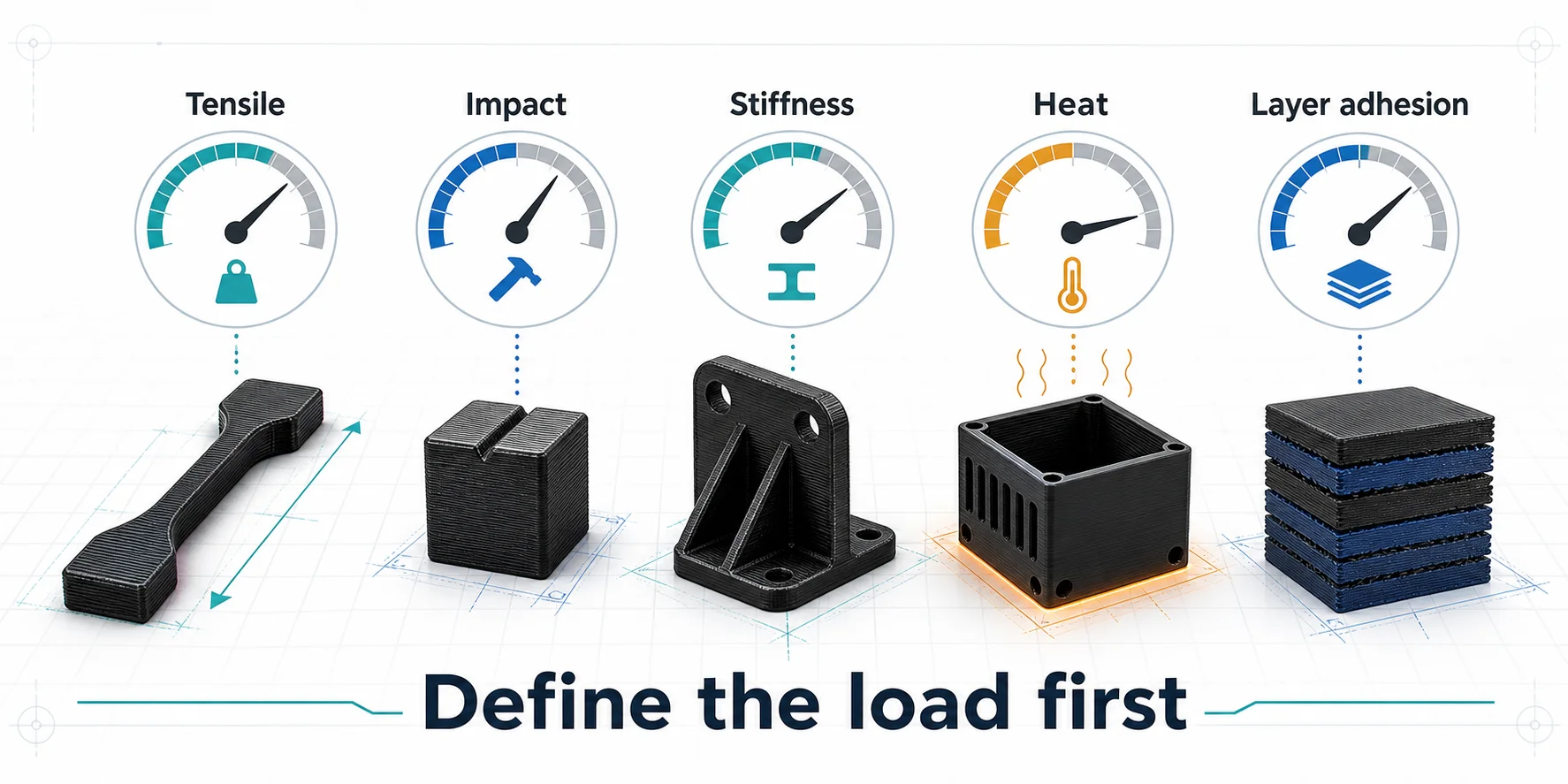
Before naming a material, decide what kind of failure you are trying to avoid.
Tensile strength is resistance to being pulled apart. It matters for straps, links, brackets, and parts under straight pulling loads.
Impact strength is resistance to sudden hits. A material with high tensile strength can still crack if it is brittle.
Stiffness is resistance to bending. Carbon-fiber-filled filaments often shine here, but stiffness is not the same as toughness.
Heat resistance is the ability to stay usable at elevated temperature. PLA can be strong at room temperature but deform in a hot car.
Layer adhesion is the bond between printed layers. A strong raw material can still make weak prints if it splits along layer lines.
Creep resistance is the ability to hold shape under long-term load. Some plastics slowly deform even when they do not snap.
This is why "strongest filament" lists often feel contradictory. They may be ranking different properties.
What Is the Strongest 3D Printer Filament Overall?
For common desktop FDM printing, the strongest practical filaments are usually polycarbonate, nylon, and carbon-fiber-reinforced nylon or polycarbonate blends. They offer a useful mix of toughness, stiffness, and heat resistance when printed correctly.
For industrial FDM, high-performance polymers such as PEEK, PEKK, and PEI sit above ordinary desktop materials. They can handle demanding mechanical and thermal environments, but they require very high nozzle temperatures, heated chambers, careful drying, and expensive hardware.
For composite printing, continuous fiber reinforcement changes the answer again. Continuous carbon fiber, fiberglass, or aramid reinforcement can create parts much stronger in selected directions than normal chopped-fiber filament. But those parts depend on a compatible printer and fiber placement strategy.
So the practical answer is:
Best desktop all-rounder for strong functional prints: nylon or PA-CF.
Best heat-resistant desktop strength: polycarbonate or PC blends.
Best easy strong filament: PETG.
Best industrial high-performance filament: PEEK, PEKK, or PEI.
Best directional strength: continuous fiber composite printing.
Top 5 Strongest 3D Printer Filaments, Ranked
No ranking can cover every load case or every manufacturer's formulation. The list below ranks material systems by their practical mechanical ceiling when they are printed on suitable equipment and used in the direction where they perform best.
1. Continuous fiber composites
Continuous carbon fiber, fiberglass, or aramid reinforcement can carry loads along uninterrupted fiber paths. These systems can exceed chopped-fiber filaments by a wide margin in the reinforced direction, but they require compatible hardware and careful fiber placement.
2. PEEK
PEEK combines mechanical strength, heat resistance, chemical resistance, and creep resistance. It belongs in industrial workflows because it needs a high-temperature hotend, a hot build chamber, strict drying, and controlled processing.
3. PEKK
PEKK sits in the same high-performance polymer family as PEEK. Some grades process more easily because manufacturers can tune crystallization behavior, but the printer requirements and material cost remain far beyond ordinary desktop printing.
4. PC-CF
Carbon-fiber-reinforced polycarbonate offers high stiffness, useful heat resistance, and better dimensional stability than many unfilled desktop polymers. Performance depends heavily on the base resin, fiber loading, drying, and layer bonding.
5. PA-CF
Carbon-fiber-reinforced nylon is a practical choice for stiff brackets, jigs, fixtures, and lightweight functional parts. It is easier to access than PEEK or PEKK, though it still needs dry filament, suitable temperatures, and an abrasion-resistant nozzle.
Plain polycarbonate and nylon remain better choices when impact toughness or flex matters more than maximum stiffness. PETG ranks lower in raw performance but often produces the strongest usable result on an open printer because it is much easier to process correctly.
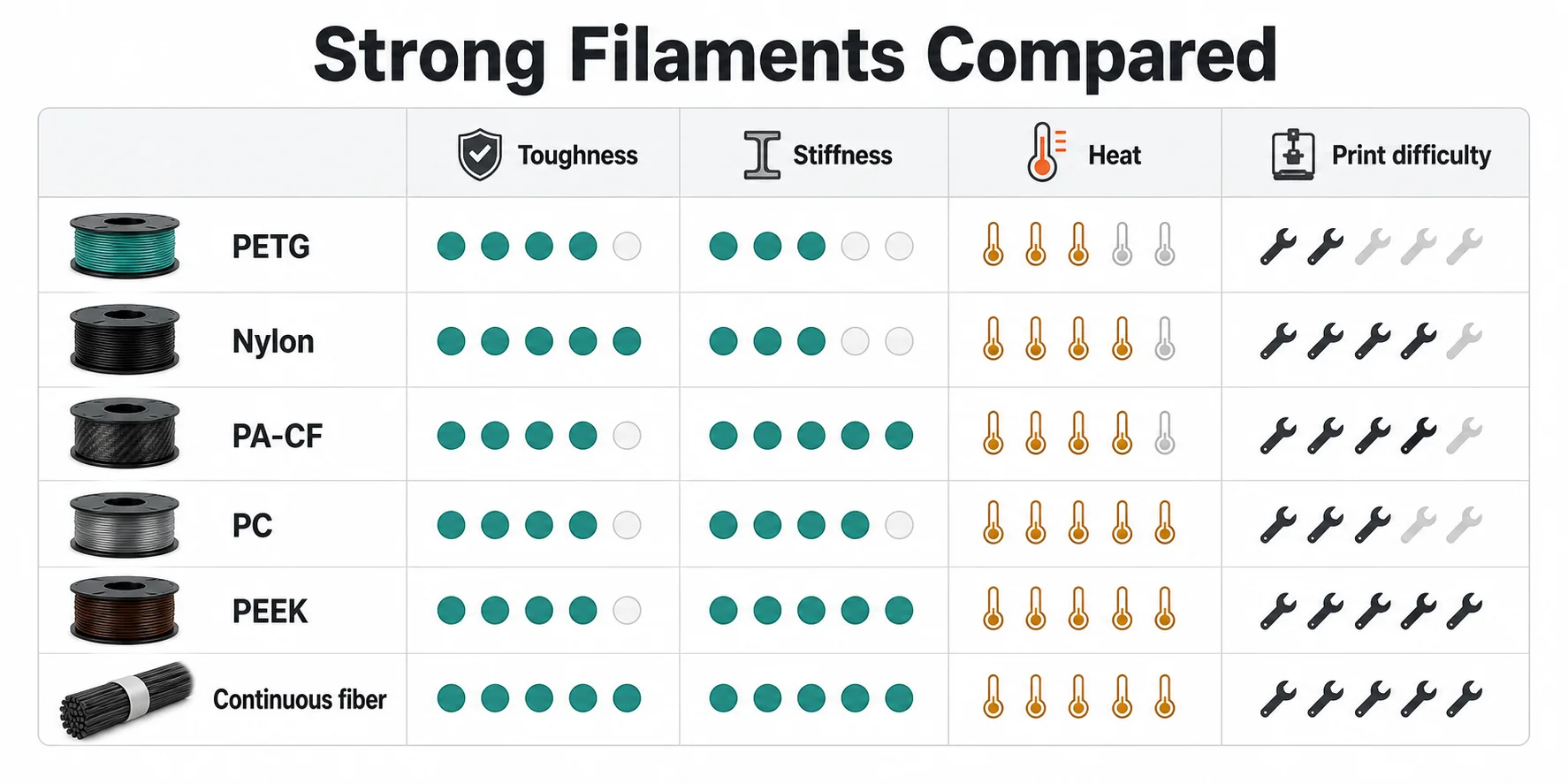
3D Printer Filament Strength Comparison Chart
| Filament | Strength profile | Print difficulty | Best use |
|---|---|---|---|
| PETG | Good toughness and layer adhesion | Moderate | Everyday functional parts |
| ABS | Tough, heat resistant, and finishable | Moderate to hard | Indoor housings and prototypes |
| ASA | ABS-like strength with better weather resistance | Moderate to hard | Outdoor functional parts |
| Nylon | Tough, flexible, and wear resistant | Hard | Hinges, gears, clips, and moving parts |
| PA-CF | Stiff, strong, and dimensionally stable | Hard | Brackets, jigs, drone parts, and fixtures |
| PC | Strong, impact resistant, and heat resistant | Hard | Heat-adjacent functional parts |
| PC-CF | Stiff, heat resistant, and strong | Hard | Structural parts where stiffness matters |
| PEEK | High mechanical, thermal, and chemical performance | Very hard | Aerospace, medical, and industrial parts |
| PEKK | PEEK-class performance with grade-dependent processing | Very hard | High-performance industrial parts |
| PEI | High heat and flame resistance | Very hard | Electrical, aerospace, and industrial applications |
| Continuous fiber composites | Excellent directional strength | Specialized | Load-bearing composite parts |
Polycarbonate: Strong and Heat Resistant
Polycarbonate is one of the strongest filaments available to advanced desktop users. It offers good tensile strength, impact resistance, and heat resistance. It is a common choice for functional parts that need to survive stress and elevated temperature.
PC is useful for:
Electronics housings.
Mechanical brackets.
Fixtures near heat.
Protective covers.
Structural prototypes.
The catch is print difficulty. Polycarbonate likes high nozzle temperatures, a heated bed, dry filament, and often an enclosure. Poor printing conditions can ruin layer bonding and cause warping.
PC blends can be easier than pure PC, but they may trade away some strength or heat resistance. Always check the filament maker's data sheet.
Nylon: Tough, Flexible, and Wear Resistant
Nylon is a favorite for parts that need toughness rather than pure stiffness. It can flex without snapping, handles impact well, and performs nicely in wear applications.
Nylon is useful for:
Gears.
Hinges.
Clips.
Bushings.
Tooling.
Functional prototypes.
The main problem is moisture. Nylon absorbs water from the air, and wet nylon prints poorly. It can bubble, string, lose surface quality, and weaken. Dry storage and pre-print drying are not optional if strength matters.
Nylon also tends to be more flexible than PC or carbon-fiber blends. That can be a benefit or a drawback depending on the part.
Carbon Fiber Filaments: Stiffer, Not Always Tougher
Carbon fiber filament usually means chopped carbon fiber mixed into a base plastic such as nylon, PETG, PLA, ABS, PC, or PET. The fibers increase stiffness and dimensional stability. They can reduce warping and make parts feel more rigid.
But carbon fiber does not automatically make every part stronger.
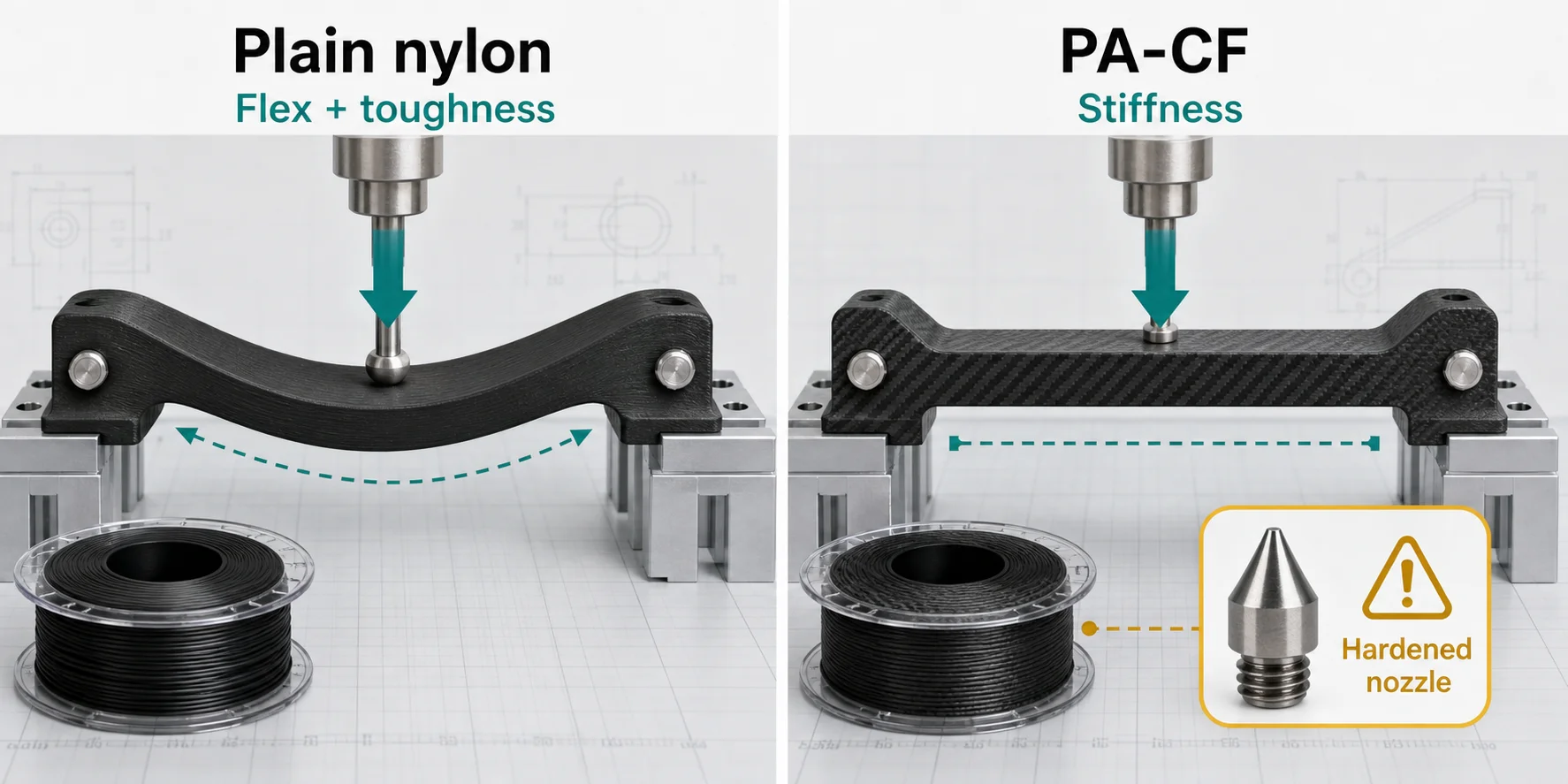
Chopped fibers can make a filament more brittle, especially in impact. They can also reduce layer bonding if the material is not printed correctly. A PA-CF part may be excellent for a stiff mounting bracket, but a plain nylon part may survive bending or shock better.
Use carbon fiber filament when you need stiffness, dimensional stability, and a higher strength-to-weight feel. Use plain nylon or PC when toughness and impact resistance matter more.
You will also need a hardened nozzle. Carbon-fiber-filled filament is abrasive and can quickly wear brass nozzles.
PEEK, PEKK, and PEI: Industrial Strength
PEEK, PEKK, and PEI are high-performance engineering polymers used in demanding environments. They can offer high heat resistance, chemical resistance, and mechanical performance far beyond ordinary desktop materials.
They are not casual filaments.
These materials require very high nozzle temperatures, hot beds, heated chambers, dry storage, and controlled printing conditions. Many consumer printers cannot print them properly, even if the hotend temperature looks high enough on paper.
Use these materials only when the application justifies the cost and machine requirements. For many functional parts, PC, PA-CF, or nylon is a better practical choice.
PETG and ABS: Strong Enough for Many Jobs
PETG and ABS are not usually the strongest filaments in a pure ranking, but they matter because they are accessible.
PETG has strong layer adhesion, good toughness, and low warping. It is often the best "strong enough" filament for open-frame desktop printers.
ABS offers better heat resistance and post-processing than PETG, but it warps more and needs an enclosure. ASA is similar to ABS but better for outdoor use.
For many brackets, organizers, covers, light-duty fixtures, and workshop parts, PETG is the best balance. For heat-adjacent indoor parts, ABS or ASA may be better.
Choosing the Right Strong Filament for Your Use Case
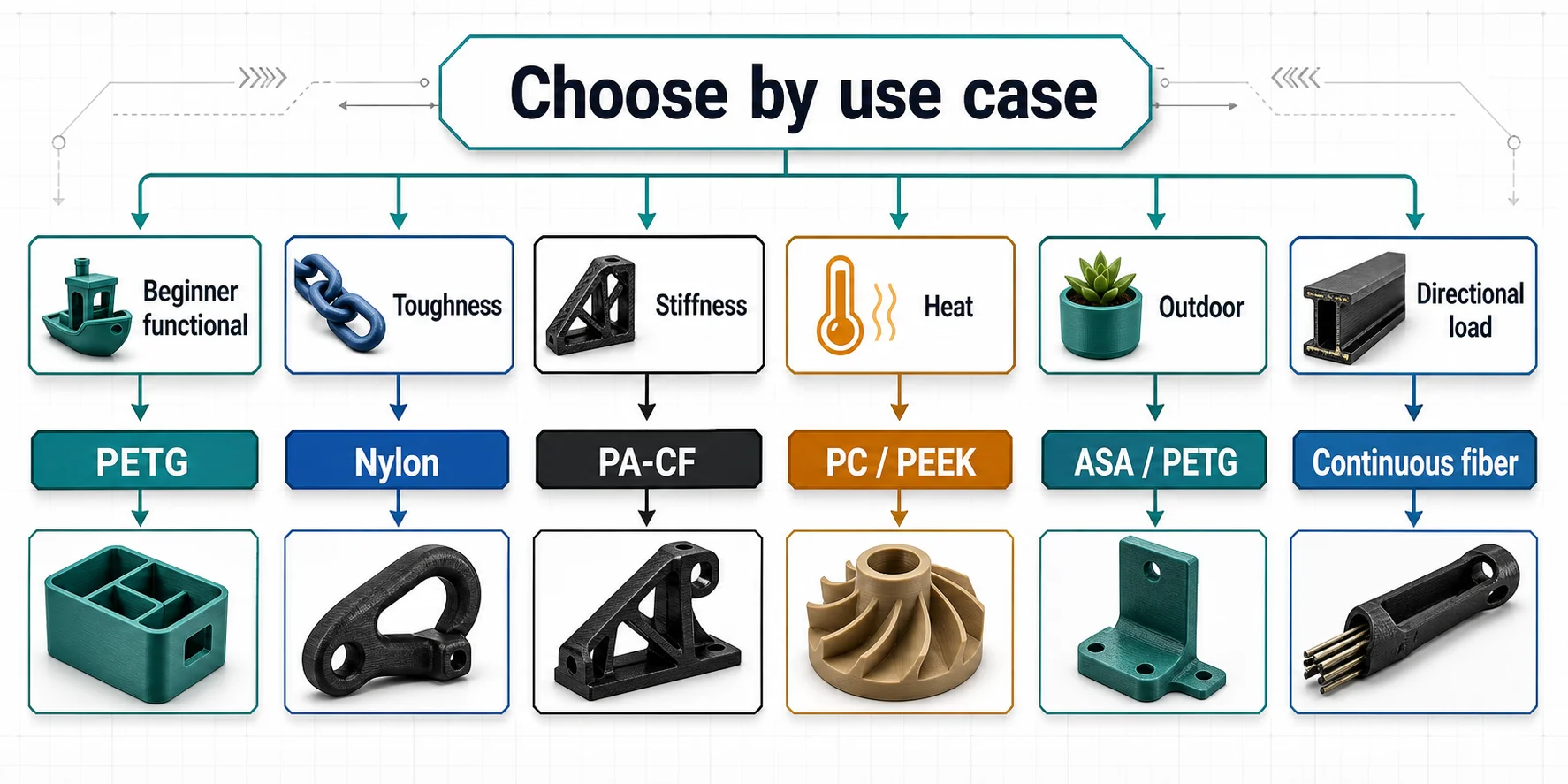
Strongest for Beginners
PETG. It is tougher than PLA in many practical uses and easier than nylon, PC, ABS, or PEEK.
Strongest for Toughness
Nylon. It handles impact and flex well, especially when dry and printed correctly.
Strongest for Stiffness
PA-CF or PC-CF. Carbon fiber blends resist bending and hold shape better than many unfilled plastics.
Strongest for Heat
PEEK, PEKK, PEI, or PC, depending on printer capability. For desktop users, PC is usually more realistic.
Strongest for Outdoor Parts
ASA or some PETG blends. For true outdoor strength over time, check UV resistance and environmental exposure, not just tensile strength.
Strongest for Directional Loads
Continuous fiber composites. These are strongest along the fiber path, not equally in every direction.
How Print Settings Affect Filament Strength
A great filament can still make a weak part.
Layer orientation is often the biggest factor. FDM parts are usually weaker between layers than along extrusion lines. If the load pulls layers apart, the part may fail early.
Wall count matters more than many users expect. More perimeters often improve strength more efficiently than simply raising infill.
Temperature affects layer bonding. Too cold, and layers do not fuse well. Too hot, and details may soften or deform.
Moisture matters for nylon, PC, PETG, and many engineering filaments. Wet filament can cause weak, ugly prints.
Infill pattern matters, but less than geometry and wall thickness. A 100% infill part with poor orientation can still fail.
Part geometry matters most. Fillets, ribs, gussets, thicker screw bosses, and proper hole spacing often improve strength more than switching filament.
Designing Stronger Parts with Tripo
If you are creating a functional part from scratch, design for load before choosing filament. The model should have enough wall thickness, sensible radii, clean holes, and geometry that prints in a strong orientation.
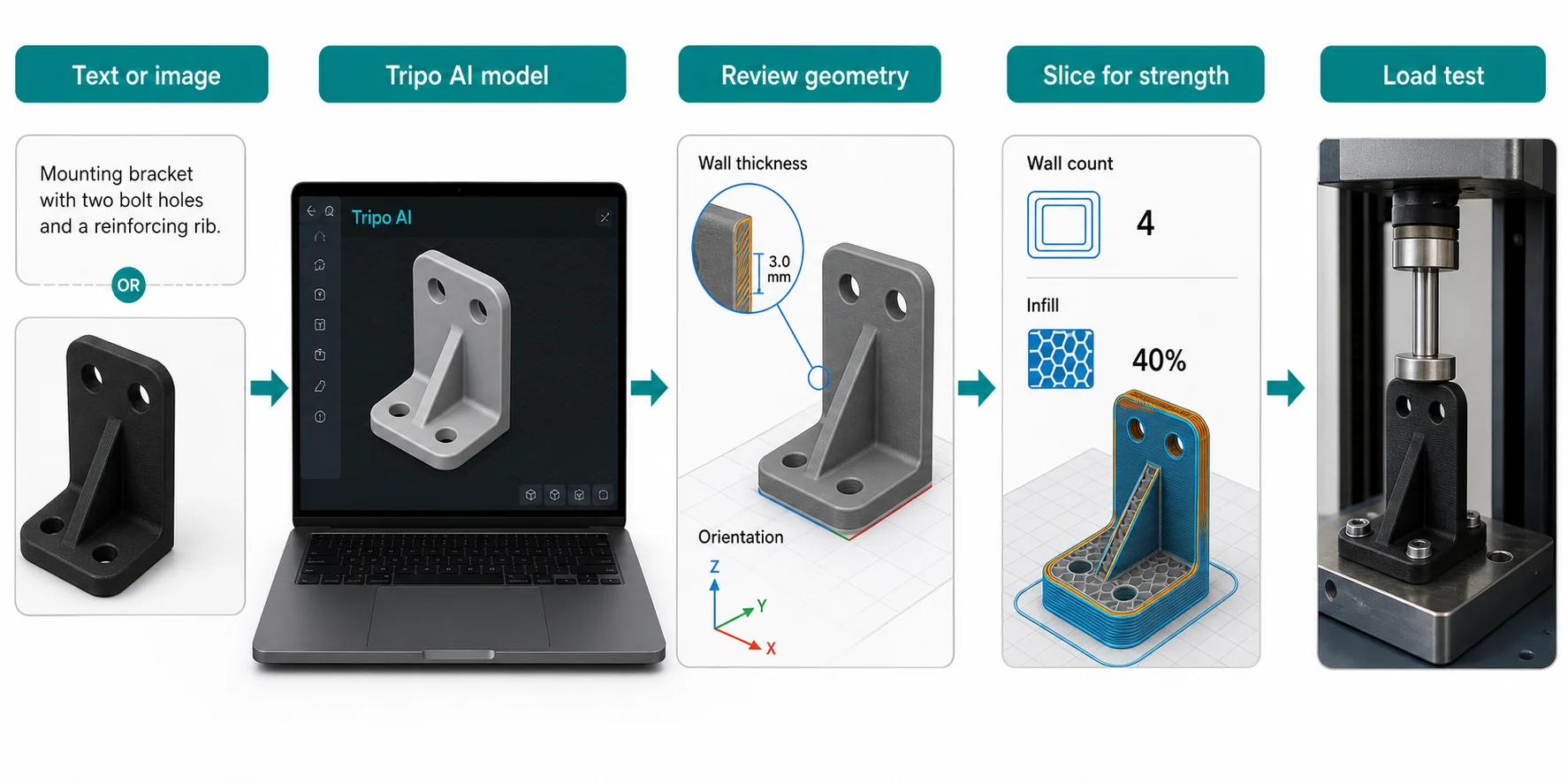
A practical workflow looks like this:
Idea → Text Prompt or Image → Generate Model in Tripo → Review Geometry → Improve if Needed → Export → Slice for Strength → Print → Test Under Real Load
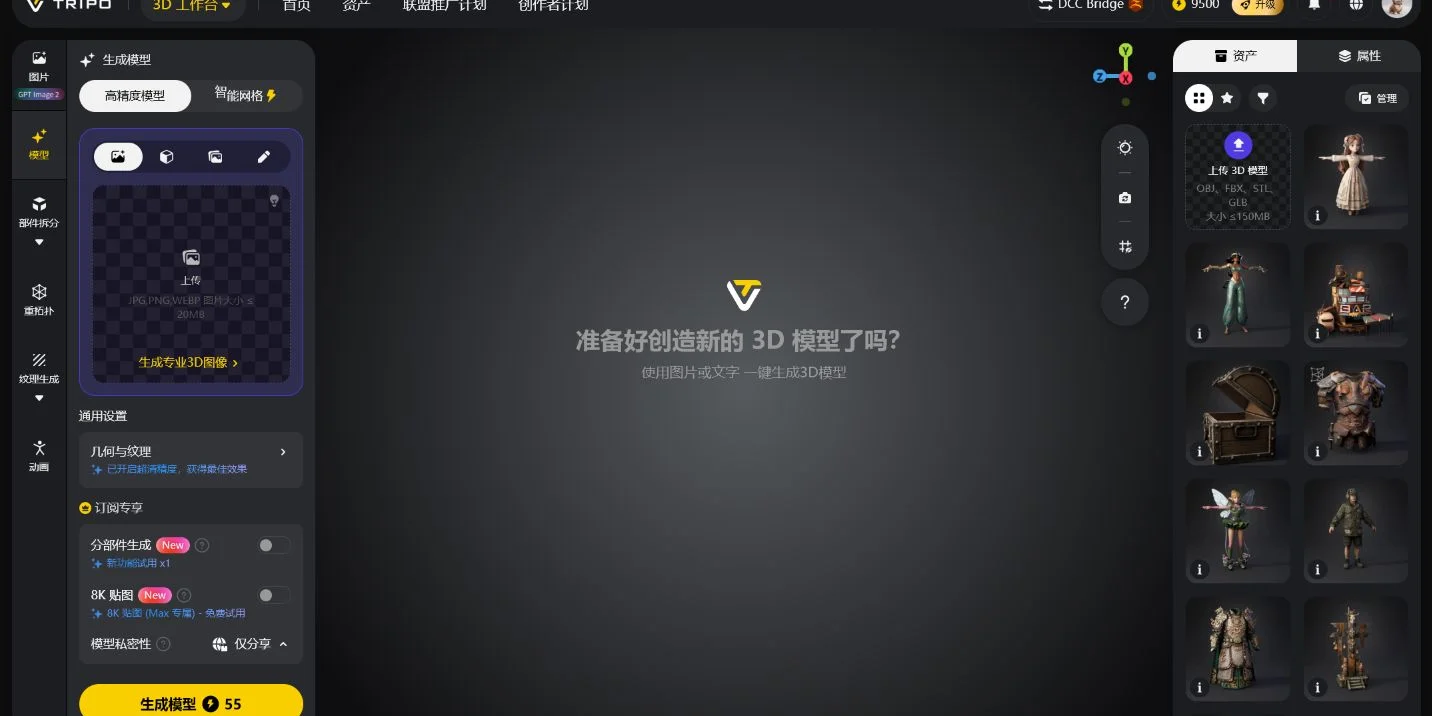
Step 1: Define the load and choose an input
Start with the job. Is the part holding weight, resisting impact, surviving heat, or staying rigid? Use text when the object can be described clearly. Use Tripo Image-to-3D when you have a sketch, product photo, or reference object and want the generated model to follow that shape.
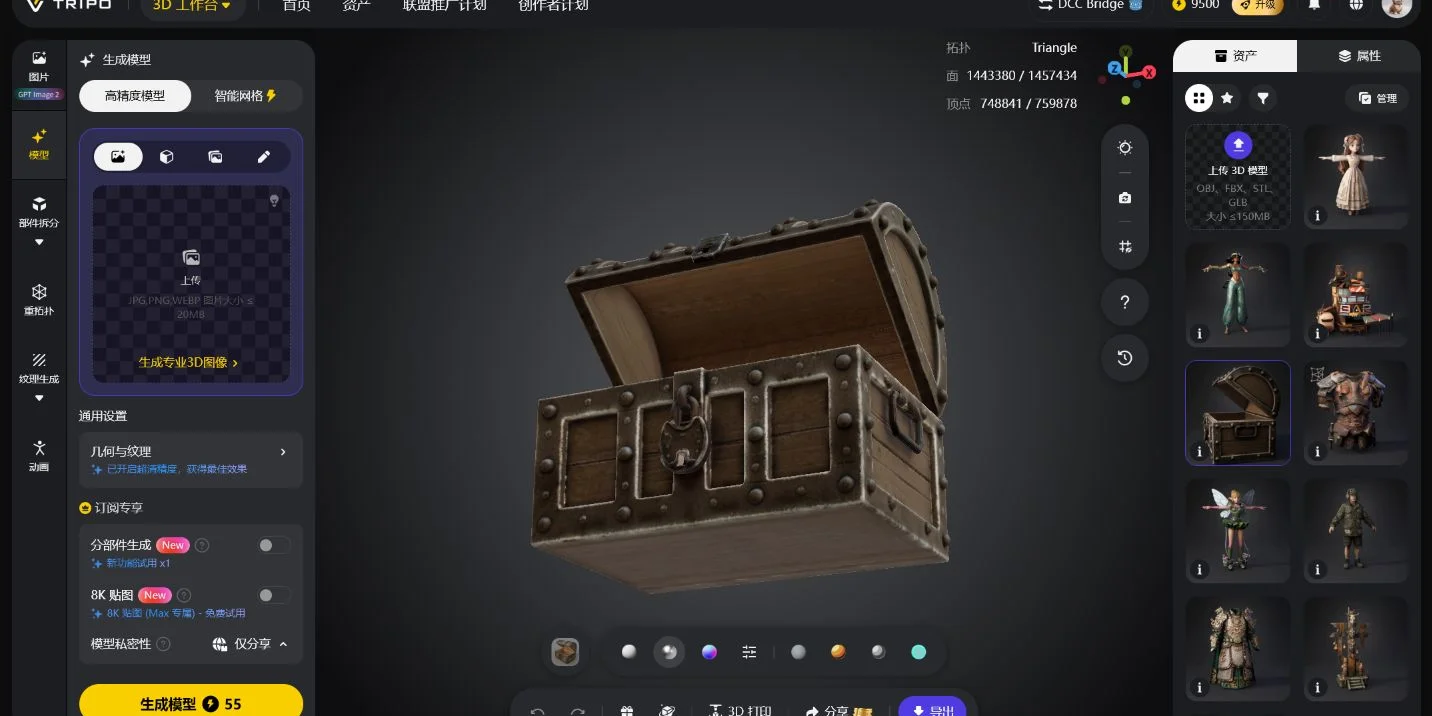
Step 2: Generate and inspect the result
Generate the first model, then rotate it in the Tripo Studio viewport. Check the overall proportions before focusing on surface detail. For a functional concept, pay close attention to thin walls, sharp internal corners, weak screw holes, unsupported tabs, and shapes that would force a poor print orientation.
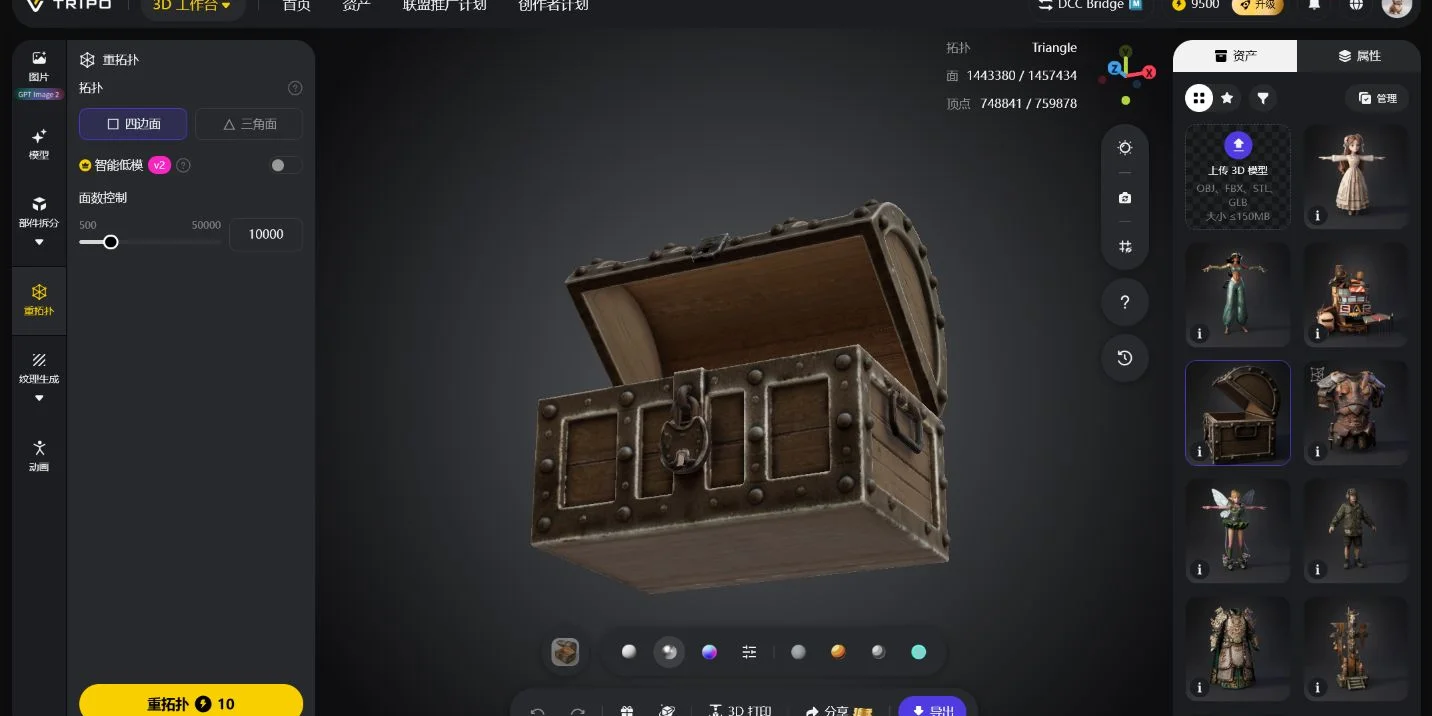
Step 3: Improve the mesh if needed
Strong parts usually need clear, printable geometry rather than extra decorative detail. If the generated asset needs a more manageable mesh, use Smart Mesh and choose a face-count target that suits the next editing or slicing stage. Retopology does not add engineering validation, so dimensions, clearances, wall thickness, and load paths still need separate checks.
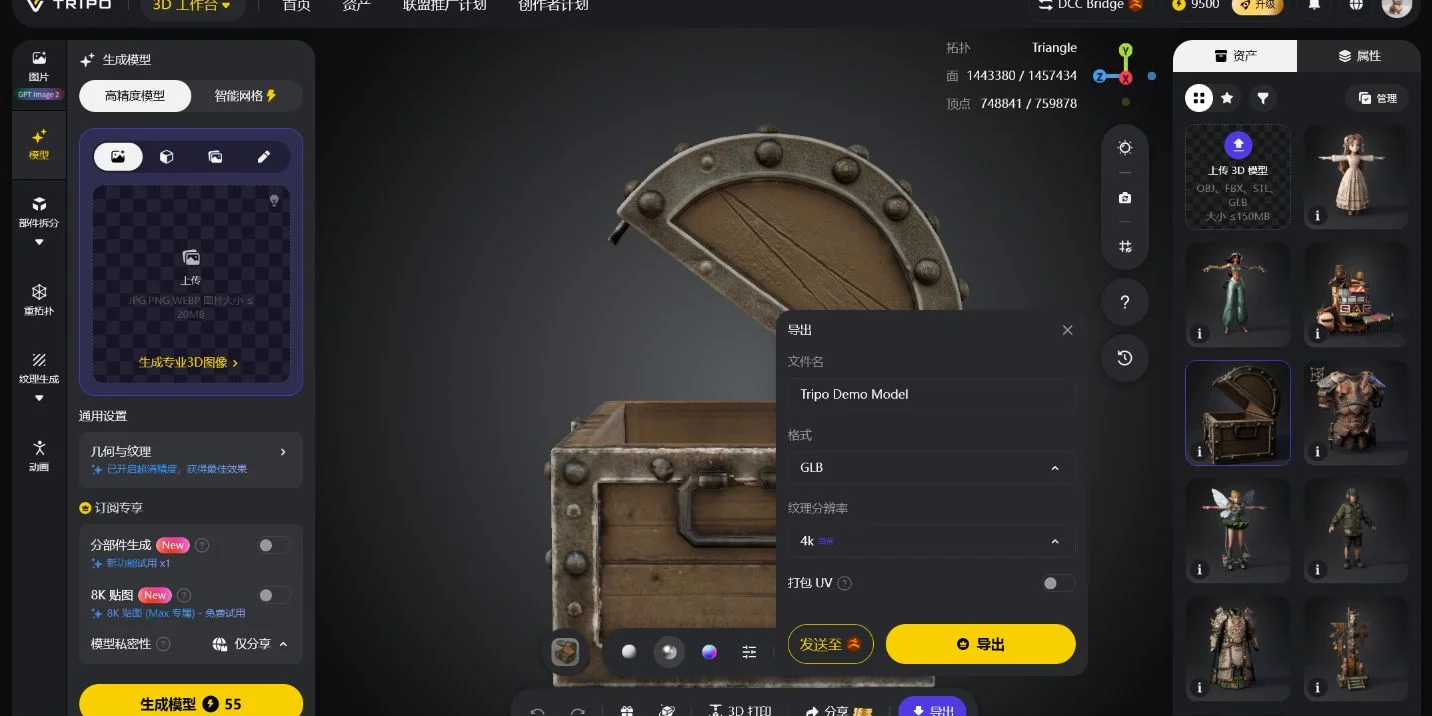
Step 4: Export for the next tool
Open the export panel and choose a format that the next application accepts. After export, use a mesh editor or CAD tool for dimensional work when the part requires precise fits. Then import the finished geometry into the slicer and set orientation, walls, infill, temperature, and filament around the expected load.
Step 5: Print and test under real load
Print a test part using the intended material and orientation. A load-bearing print should be tested before it is trusted. Inspect layer separation, creep, fastener areas, and deformation under realistic temperature and loading conditions.
Common Mistakes When Choosing Strong Filament
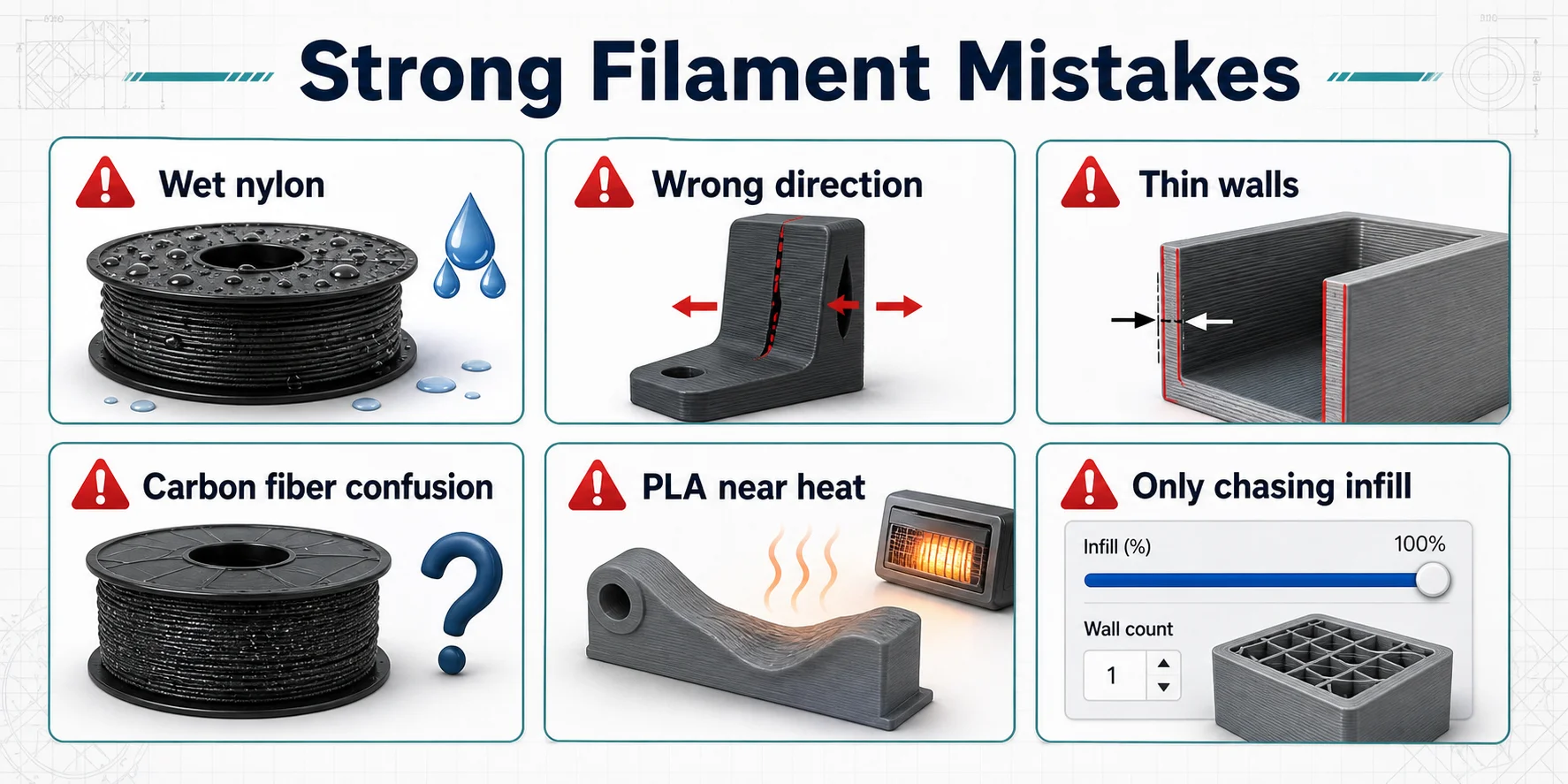
Do not assume carbon fiber always means stronger. It often means stiffer.
Do not print nylon wet. Moisture can ruin strength and surface quality.
Do not use PLA for heat-loaded parts, even if it feels strong at room temperature.
Do not choose PEEK unless your printer can actually handle it.
Do not ignore layer orientation. It can dominate failure behavior.
Do not rely only on infill percentage. Wall count and geometry often matter more.
Do not compare materials from different brands without checking data sheets.
Do not use strong filament to compensate for a weak design.
Frequently Asked Questions
What is the strongest 3D printer filament?
For desktop users, nylon, PA-CF, PC, and PC-CF are among the strongest practical filaments. For industrial users, PEEK, PEKK, and PEI are stronger high-performance options. Continuous fiber composites can be stronger in specific load directions.
Is carbon fiber filament the strongest?
Not always. Chopped carbon fiber filament is usually stiffer, not automatically tougher. PA-CF and PC-CF can be excellent for rigid functional parts, but plain nylon may handle impact or flex better.
Is nylon stronger than PETG?
Nylon is usually tougher and better for wear, flex, and impact. PETG is easier to print and has strong layer adhesion, so it may outperform poorly printed nylon in real desktop use.
Is polycarbonate stronger than nylon?
Polycarbonate is usually stiffer and more heat resistant, while nylon is tougher and more flexible. The stronger choice depends on whether the part needs rigidity, impact resistance, or heat resistance.
Is PEEK the strongest 3D printer filament?
PEEK is one of the strongest and most heat-resistant FDM filaments, but it requires industrial-level print conditions. It is not the best practical choice for most desktop printers.
What is the strongest easy-to-print filament?
PETG is often the strongest easy choice. It is not the strongest overall, but it gives good toughness and layer adhesion without the print difficulty of ABS, nylon, PC, or PEEK.
What filament is best for load-bearing parts?
For load-bearing desktop parts, consider nylon, PA-CF, PC, or PC-CF. Also design the part with enough walls, proper orientation, fillets, and real testing.
Does more infill make a 3D print stronger?
Sometimes, but walls and orientation often matter more. Increasing perimeters can improve strength more efficiently than raising infill from 40% to 100%.
What filament is strongest in heat?
PEEK, PEKK, and PEI lead in high-temperature industrial applications. For advanced desktop users, polycarbonate is often a more realistic heat-resistant option.
How does Tripo help with strong 3D printed parts?
Tripo can help create the starting 3D model from text or images. The strength still depends on geometry review, material choice, slicer settings, orientation, and testing.
Conclusion
So, what is the strongest 3D printer filament? If you mean common desktop printing, start with nylon, PA-CF, PC, or PC-CF. If you mean industrial high-performance printing, look at PEEK, PEKK, and PEI. If you mean directional composite strength, continuous fiber reinforcement changes the category completely.
For most users, the best filament is not the strongest on a chart. It is the strongest material you can print correctly on your machine for the part’s real load, temperature, and environment.
Start with a good model, choose the material for the job, and test the result. If you need to create a custom bracket, fixture, enclosure, or product concept before printing, you can begin in Tripo Studio, then tune the print around the filament that actually fits the job.