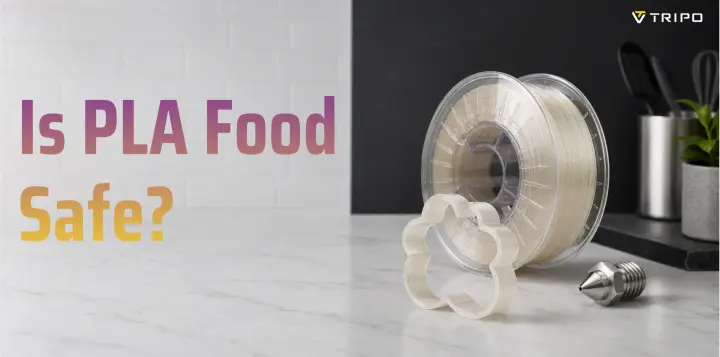
Is PLA Food Safe? What 3D Printing Users Should Know
TL;DR
- Is PLA food safe? It can be suitable for certain food-contact applications, but a hobby filament or finished FDM print is not automatically food safe.
- The base polymer is only one part of the answer. Pigments and additives may lack food-contact documentation, a printer can introduce residue, layer lines make cleaning harder, and standard PLA can deform under heat. For occasional contact with cool, dry food, a carefully made part may be reasonable for personal use. Hot food, repeated washing, long-term storage, commercial use, and products for children call for a different material or an indirect workflow.
Introduction
PLA is the default filament for many desktop 3D printers. It prints at moderate temperatures, holds detail well, and comes in almost every color and finish. Those qualities make it tempting for cookie cutters, cake stamps, measuring tools, and custom kitchen parts. They also lead to a deceptively simple question: is PLA food safe?
The answer depends on the exact material, printer, object, food, temperature, contact time, and cleaning method. A PLA resin used in commercial packaging is not equivalent to a metallic hobby filament pushed through a well-used brass nozzle. Likewise, an authorization covering a substance under defined food-contact conditions does not certify every finished object made from it.
This guide separates those issues. It explains what food safety means for PLA, what the FDA actually regulates, why printed surfaces create additional concerns, and how to build a lower-risk workflow. It also shows how Tripo can help create a mold master or kitchen-adjacent model without implying that model generation makes the final print suitable for food.
What Is PLA and What Does the FDA Say?
PLA, or polylactic acid, is a thermoplastic commonly produced from fermented plant-derived sugars. It is used in products ranging from packaging to disposable serviceware and medical applications. Its bio-based origin does not make every PLA formulation food safe.
In the United States, the FDA regulates substances that come into contact with food according to their identity, intended use, manufacturing conditions, and potential migration into food. Its food-contact substance inventory covers authorized substances and specified conditions of use. Separate Food Contact Notifications can be manufacturer-specific.
That distinction matters. The phrase "FDA approved PLA filament" is often too broad. The FDA may authorize a substance or component for a defined food-contact use; it does not follow that every colored filament, printer setup, or printed cup is approved. The manufacturer should provide documentation for the exact filament formulation and color, together with the applicable use conditions.
PLA filament may contain colorants, impact modifiers, plasticizers, matting agents, glitter, wood powder, metal particles, carbon fiber, or other fillers. Unless the supplier documents those components for the intended food contact, the spool should not be treated as food grade. Natural or uncolored PLA with traceable documentation is a more defensible starting point than glow, silk, wood-filled, or metallic PLA.
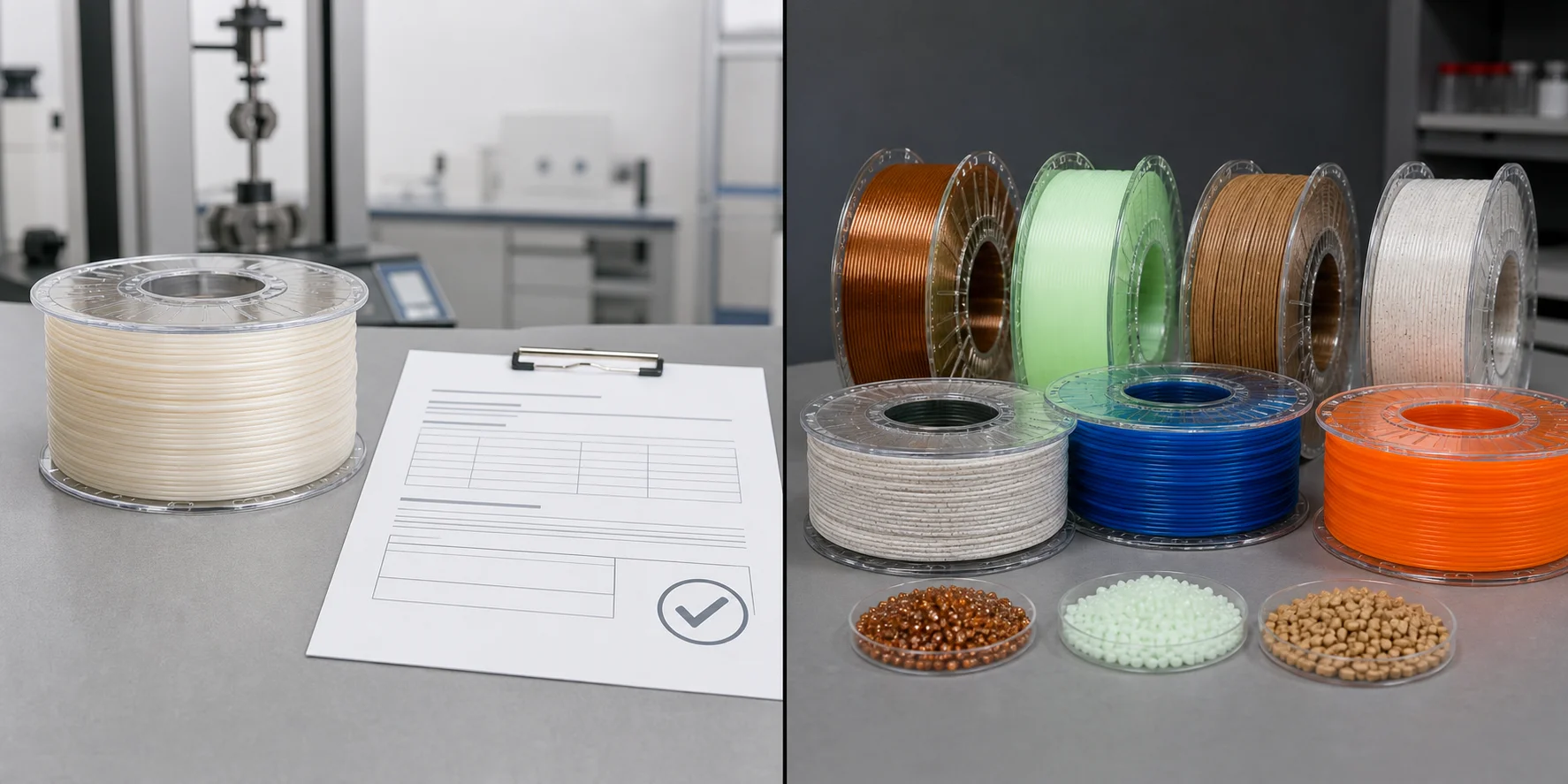
Is 3D Printed PLA Food Safe?
A printed PLA object adds variables that are absent from a raw-material datasheet. FDM printing builds the surface from adjacent extrusion lines. Even a good print contains ridges, seams, corners, and small gaps where residue can remain.
Lower layer heights can make the surface look smoother, but appearance is not the same as cleanability. Sanding may reduce ridges while creating scratches or exposing new pores. A reusable food-contact item needs to withstand cleaning without cracking, absorbing residue, or deforming.
The printer can also introduce contamination. A nozzle may retain material from earlier jobs, especially after abrasive or composite filaments. Build-plate adhesives, lubricants, dust, and handling all become part of the production environment. Brass nozzles can contain lead, so a dedicated stainless steel nozzle is the more cautious choice for food-contact work.
Standard PLA also has limited heat resistance. Hot water, a dishwasher, a microwave, or a hot car can soften or distort a print. A deformed surface becomes harder to clean and may no longer function as intended.
For those reasons, short contact with cool, dry food carries less concern than a reusable cup, soup bowl, cutting board, or storage container. The intended use controls the decision.
4 Reasons 3D Printed PLA Is Often Not Food Safe
1. The complete filament formulation may be unknown
PLA is rarely the only ingredient in a finished filament. A supplier's statement about the base resin does not automatically cover its pigments, fillers, or processing additives. Check documentation for the exact product and color.
2. Layer lines make thorough cleaning difficult
Food and moisture can remain in seams and recessed details. Simple, open geometry is easier to wash than a part with deep lettering, internal channels, ornate texture, or hollow cavities.
3. The printer can contaminate the part
Residue from earlier materials, nozzle metals, build-plate products, workshop dust, and handling can reach the printed surface. A documented filament cannot compensate for an uncontrolled printer path.
4. PLA does not tolerate common kitchen heat well
Many PLA prints soften at temperatures reached during dishwashing or hot-food use. Heat can warp the part, open gaps, damage coatings, and change the fit of lids or seals. Standard PLA is a poor choice for hot drinks, boiling water, or repeated dishwasher cycles.
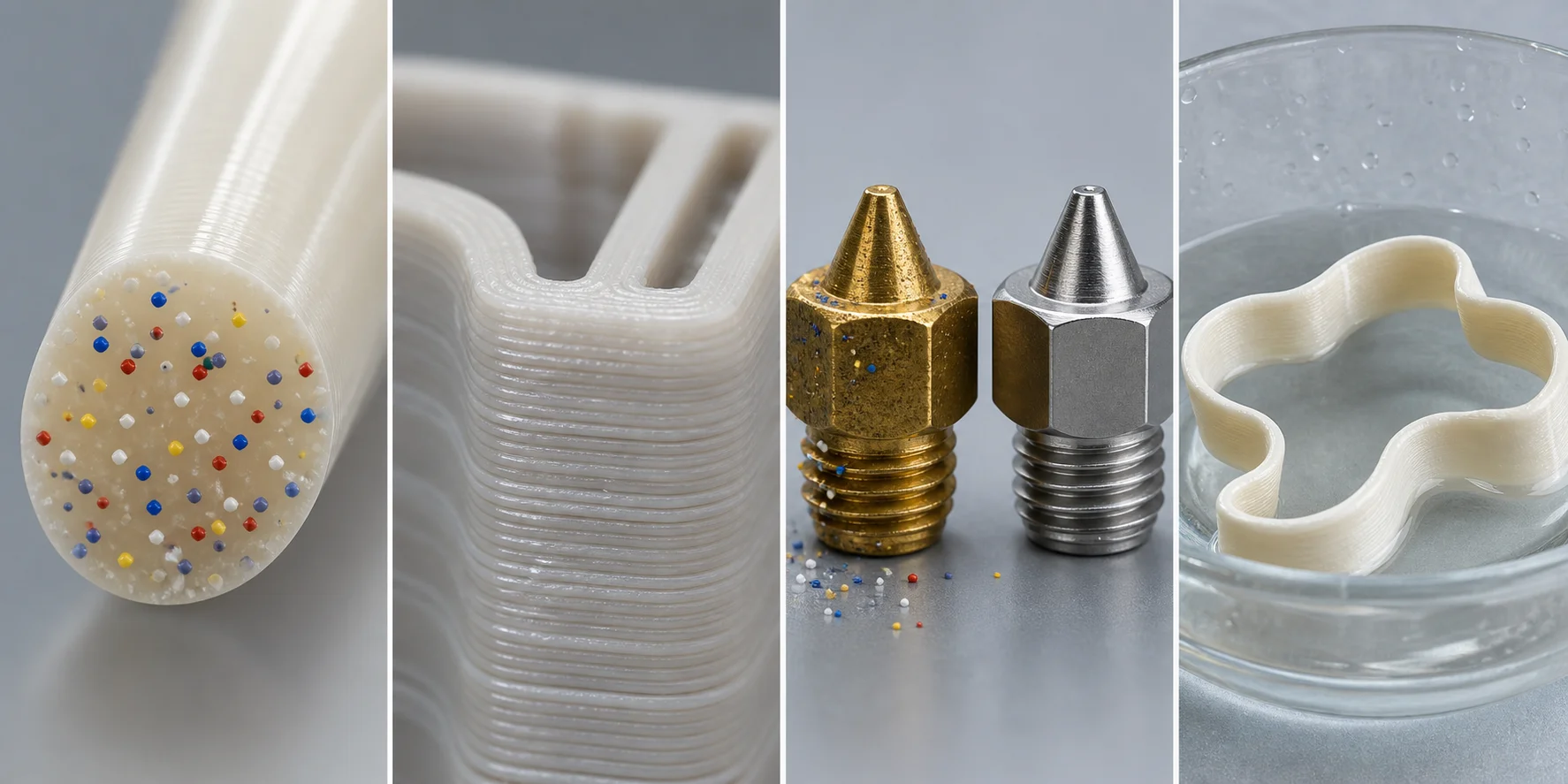
Does PLA Give Off Microplastics?
PLA can shed small particles when a printed surface is cut, sanded, scraped, abraded, or degraded. That makes particle release plausible for worn utensils, rough food-contact surfaces, and parts repeatedly scrubbed during cleaning. It does not establish how much a specific printed object releases during normal use or what health effect that amount would cause.
The evidence needs careful wording. In 2025, an EFSA literature review found that food-contact materials can release micro- and nanoplastic particles, while also identifying major differences in study methods and gaps in the data. EFSA's current microplastics and nanoplastics overview states that knowledge about dietary exposure and potential human-health effects remains limited. A full EFSA risk assessment is still in progress.
For practical use, inspect PLA parts for scratches, rough edges, flaking coatings, or wear. Retire damaged items. Avoid using printed PLA as a cutting surface or in applications that repeatedly grind, scrape, or flex the material against food.
When PLA May Be Reasonable Around Food
Lower-risk uses share several features: contact is brief, the food is cool or dry, the geometry is easy to clean, and the item is for controlled personal use.
Examples include a cookie cutter used briefly on dough, a simple fondant stamp, an occasional dry-food scoop, or a template separated from food by parchment. A printed master used to produce a separately certified food-safe silicone mold is a better option because the PLA does not become the final food-contact surface.
Non-contact kitchen projects are simpler still. Drawer organizers, label holders, appliance knobs, bag-clip handles, and spice-rack brackets can be useful without raising direct food-contact questions.
Avoid standard PLA for hot drinks, wet or oily food storage, reusable cups and bowls, dishwasher-cleaned utensils, baby products, pet bowls, or commercial food equipment without appropriate validation.
How to Make PLA Food Safe (Step-by-Step)
No home workflow can guarantee that an arbitrary PLA print is food safe. The steps below reduce avoidable risks and help determine when direct contact should be abandoned.
Step 1: Define the food-contact conditions
Write down the food type, temperature, contact time, cleaning method, and expected number of uses. A dry cookie cutter and a reusable coffee cup are different engineering problems.
Step 2: Choose documented filament
Use a filament whose supplier provides food-contact documentation for the exact formulation and color. Avoid specialty fillers and decorative effects unless they are explicitly covered.
Step 3: Prepare a dedicated printer path
Install a clean stainless steel nozzle and use clean filament handling, a clean build surface, and food-appropriate production practices. Do not assume a nozzle used for unknown or abrasive materials is suitable.
Step 4: Design for cleaning
Use smooth curves, open shapes, thick walls, rounded internal corners, and minimal texture. Remove trapped cavities and narrow recesses. If an area cannot be reached during washing, redesign it.
Step 5: Print and inspect
Use consistent extrusion and avoid visible gaps, cracks, under-extrusion, or loose strands. Reject a part with defects on a food-contact surface.
Step 6: Finish only with a suitable system
A properly selected food-contact coating can help seal layer lines, but it introduces its own requirements. Follow the coating manufacturer's mixing, application, curing, temperature, and use instructions. Retire the part if the coating chips, cracks, or wears.
Step 7: Hand wash and limit the use
Unless the complete material system is rated otherwise, keep standard PLA away from dishwashers, microwaves, boiling water, and hot food. Wash by hand, dry completely, inspect before reuse, and replace damaged parts.
For higher-risk applications, use the print as a mold master and make the final object from a certified food-contact material.
PLA vs PETG: Which Is More Food Safe?
| Factor | PLA | PETG |
|---|---|---|
| Heat resistance | Lower; standard prints can deform in hot-water and dishwasher conditions | Usually better than PLA, but not automatically dishwasher safe |
| Printing difficulty | Generally easier | More prone to stringing and surface marks |
| Food-contact availability | Some documented formulations exist | Some documented formulations exist |
| Surface hygiene | FDM layer lines remain a concern | FDM layer lines remain a concern |
| Printer contamination | Must be controlled | Must be controlled |
| Best cautious use | Cool, brief contact or mold masters | Cool applications needing somewhat better toughness and heat resistance |
PETG is often the more practical material when toughness and moderate heat resistance matter, but it is not automatically more food safe. The same questions apply: exact formulation, pigments, printer path, layer structure, cleaning, and intended use. A documented PLA used correctly is a better choice than an undocumented PETG printed on a contaminated machine.
Using Tripo for a Safer Indirect Food Workflow
Tripo fits best at the design stage, particularly when the printed part will be a mold master rather than the final food-contact object.
Idea → Text Prompt or Image → Generate Model in Tripo → Review Geometry → Improve if Needed → Export → Slice → Print Master → Make a Food-Safe Mold
Step 1: Start with text or a reference image
Use text for an object that can be described clearly. Use Tripo Image-to-3D when a reference shape already exists. Keep the reference uncluttered and make the silhouette easy to read.
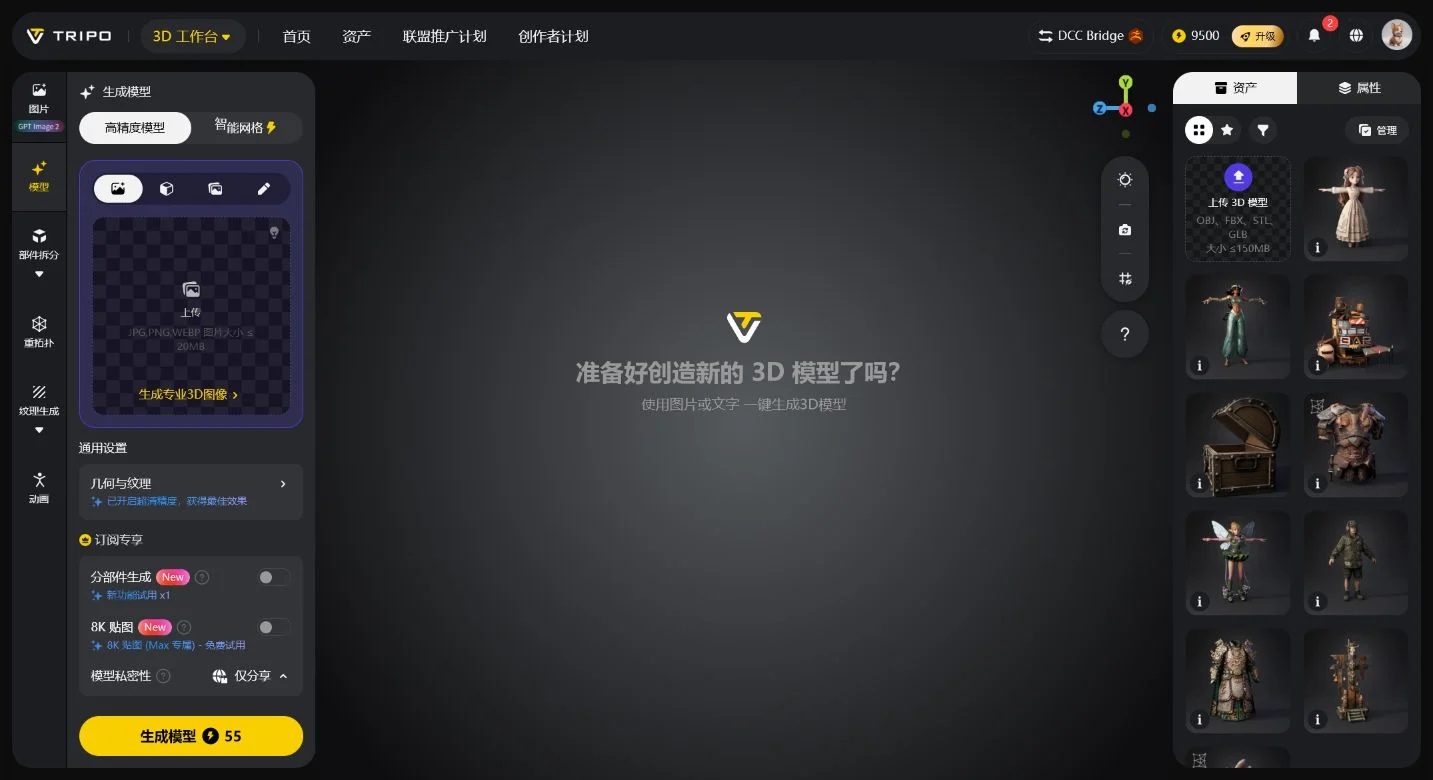
Step 2: Check the generated result
Rotate the model and inspect the back, underside, thin walls, internal corners, and recessed details. For a mold master, remove features that would trap molding material or make demolding difficult.
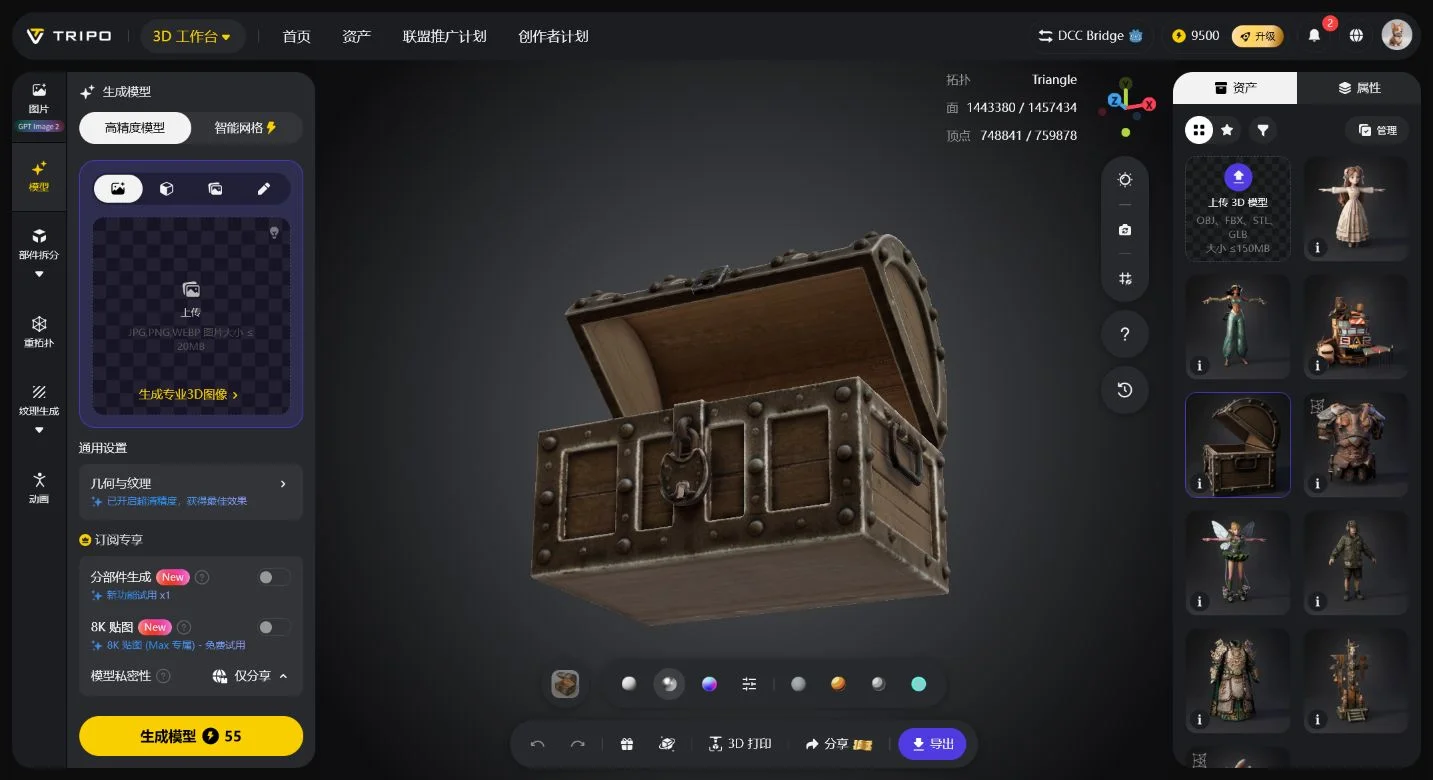
Step 3: Improve the geometry if needed
Use HD Model or Smart Mesh only when the result is worth keeping and needs a more suitable level of detail or mesh structure. Detail should serve the mold or final shape. Fine grooves that look attractive in a render may create difficult surfaces in a kitchen workflow.
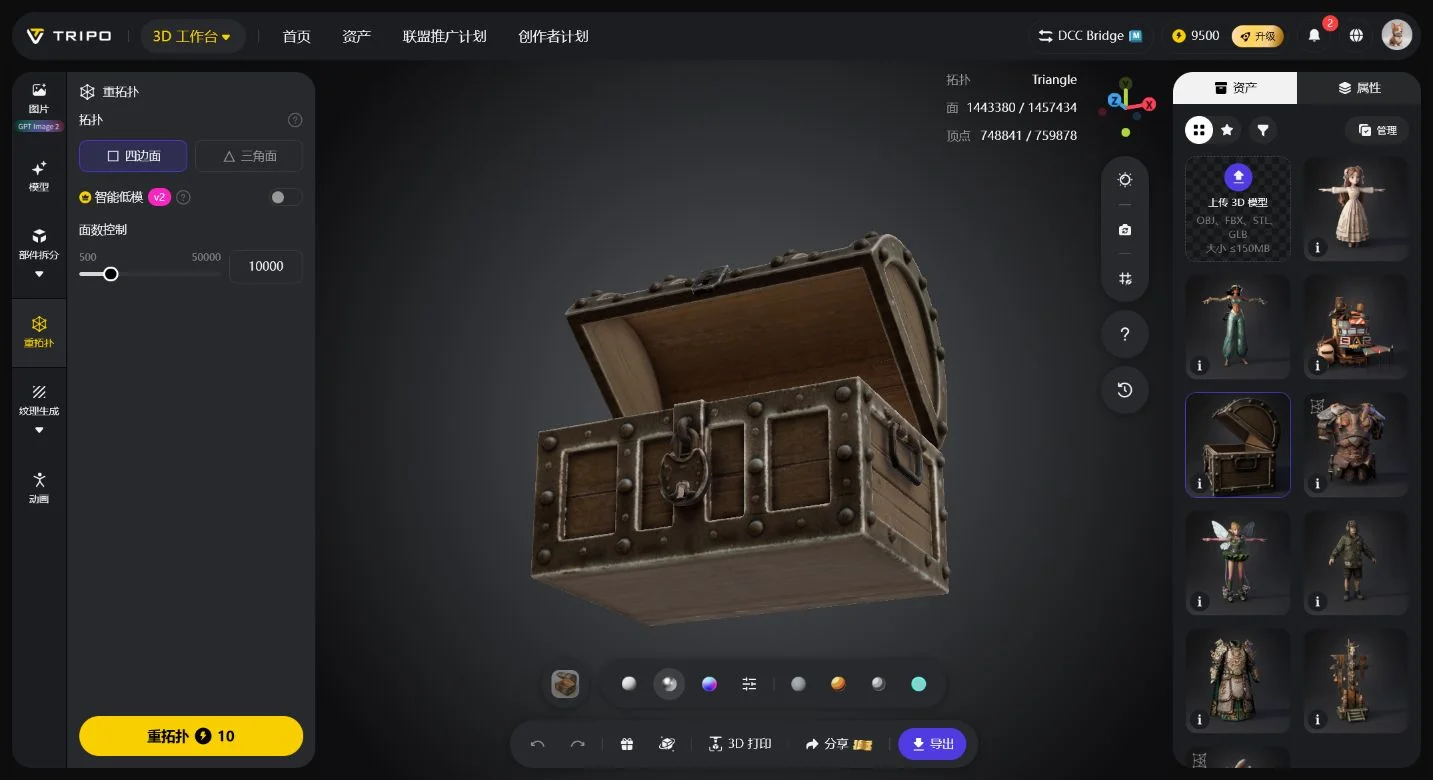
Step 4: Export for slicing
Choose the format required by the next application. Confirm scale after import, then inspect the mesh in the slicer before printing.

Step 5: Print a master instead of direct-contact serveware
Smooth and prepare the master according to the mold-material manufacturer's instructions. Then create the final food-contact surface from a suitable certified silicone or other approved material. Check compatibility between the master, release agent, mold material, food type, and use temperature.
Common Mistakes to Avoid
- Do not assume every PLA spool is food safe.
- Do not describe a filament or print as "FDA approved" without documentation covering the exact claim and intended use.
- Do not use a dirty or mixed-material nozzle path for food-contact work.
- Do not rely on sanding alone to make a print hygienic.
- Do not put ordinary PLA in a dishwasher or microwave.
- Do not assume a coating remains safe after scratches, chips, or wear.
- Do not sell food-contact prints without understanding the rules in the target market.
- Do not confuse biodegradable or bio-based with safe for food contact.
Frequently Asked Questions
Is PLA food safe?
Certain PLA formulations can be suitable for specified food-contact uses, but a printed PLA object is not automatically food safe. The filament, additives, printer, geometry, temperature, cleaning, and contact time all matter.
Is PLA filament FDA approved?
Avoid that blanket phrase. FDA food-contact authorization applies to specified substances, manufacturers, uses, and conditions. Ask the filament supplier for documentation covering the exact product and color.
Can I drink from a PLA cup?
It is not a good routine use. Heat sensitivity, cleaning difficulty, layer lines, and wear make glass, stainless steel, ceramic, or certified drinkware better choices.
Are PLA cookie cutters food safe?
They are a comparatively low-risk use because contact is brief and cool, but they still require documented material, a clean printer path, simple geometry, hand washing, and regular inspection.
Can PLA go in the dishwasher?
Most standard PLA prints should not. Dishwasher heat can soften or warp the part, and layer gaps may remain difficult to clean.
Does PLA release microplastics?
PLA can shed particles through abrasion, cutting, sanding, or degradation. Evidence is not yet sufficient to quantify the health risk from a particular printed kitchen item, so worn or scratched parts should be retired.
Does sanding make PLA food safe?
No. Sanding may reduce visible ridges, but it can also leave scratches or expose pores. It does not address additives, printer contamination, heat resistance, or cleaning limits.
Is a food-safe coating enough?
Not by itself. The coating must be suitable for the food, temperature, and contact duration, applied and cured correctly, and replaced if it cracks or wears.
Is PETG safer than PLA for food contact?
PETG generally offers better heat resistance, but both materials require a documented formulation, controlled printer setup, cleanable design, and appropriate use conditions.
How can Tripo help with food-related prints?
Tripo can create the geometry for a cutter, stamp, packaging concept, or mold master. Food safety is determined later by material selection, printing, finishing, cleaning, and whether the print contacts food directly.
Conclusion
So, is PLA food safe? The base material can be suitable under defined conditions, but a hobby filament and an FDM print introduce additional uncertainty. Additives, layer lines, printer residue, heat, wear, and cleaning all affect the finished object.
For occasional contact with cool, dry food, use documented filament, a dedicated stainless steel nozzle, simple geometry, and careful hand washing. For hot, wet, reusable, commercial, or safety-sensitive applications, avoid direct PLA contact. Printing a master and transferring the design to a certified food-contact material is usually the more defensible route.
To create a cutter concept or mold master, start the geometry in Tripo Studio, inspect it carefully, and treat generation as the beginning of the manufacturing workflow rather than proof of food safety.