AI 3D Modeling Career Guide: Roles & Skills for 2026
TL;DR
- AI is reshaping 3D modeling careers, not eliminating them.
- New roles include AI 3D artist and generative pipeline specialist.
- AI-fluent artists can create assets faster and stay more competitive.
- Tripo AI helps generate export-ready 3D models from text or images.
An AI 3D modeling career is real, growing, and increasingly relevant across games, animation, ecommerce, product visualization, AR/VR, and digital content. The opportunity is not about replacing every 3D artist with AI. It is about learning how to direct AI tools, refine their output, and turn generated meshes into production-ready assets. Artists who combine traditional 3D judgment with AI-assisted workflows are better positioned for the next stage of the industry.
What Is an AI 3D Modeling Career?
An AI 3D modeling career is a hybrid creative and technical path. It means using AI-powered tools to generate, refine, optimize, and deliver 3D assets inside real production workflows.
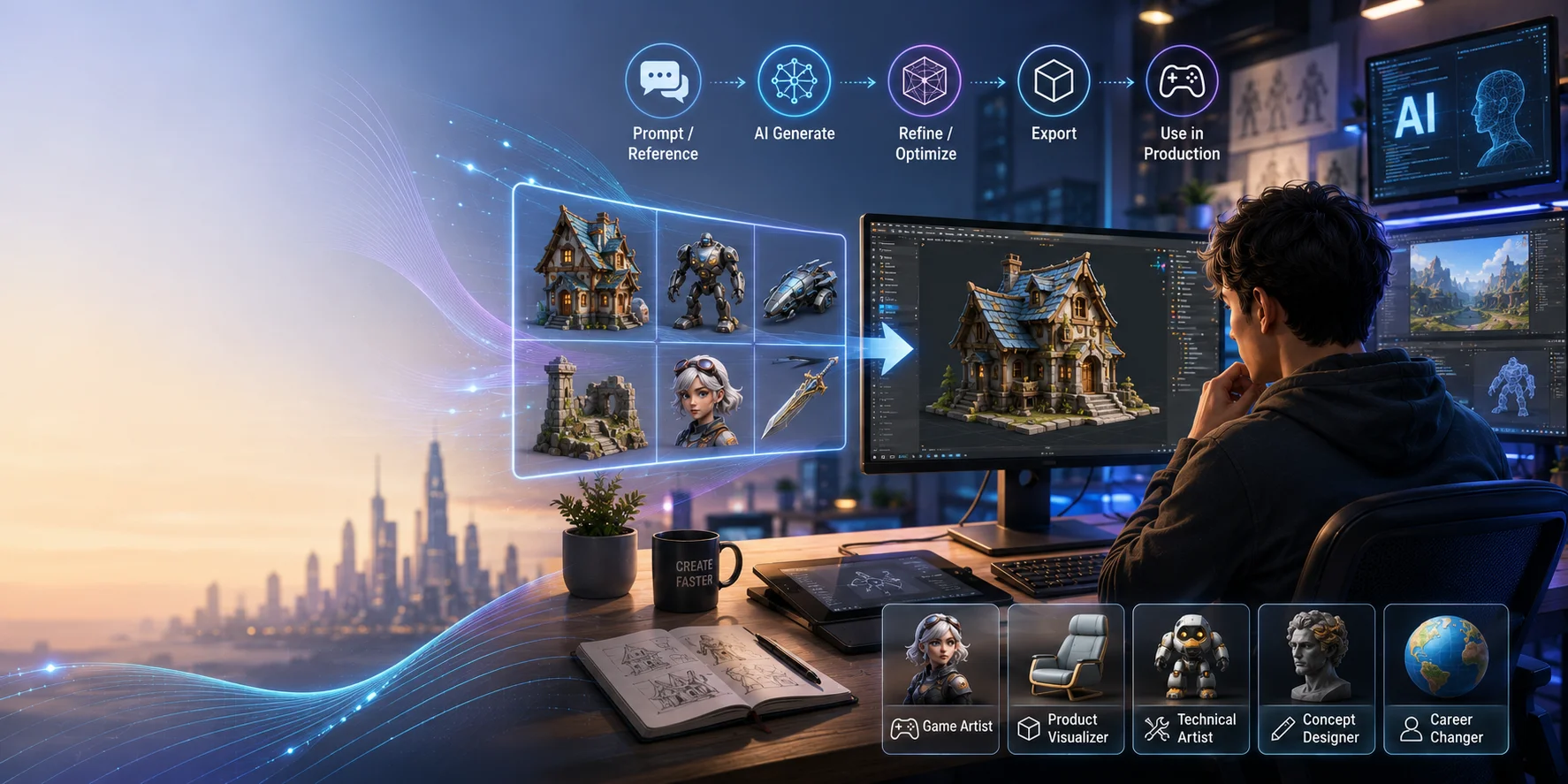
This role is different from traditional 3D modeling. A traditional artist may start from a blank Blender or Maya scene and build the model manually. An AI-fluent artist may start with a prompt, concept image, or reference sketch, generate a first-pass mesh, then clean, adjust, export, and test it in Blender, Unity, Unreal, or a web viewer.
The value is not simply “knowing AI tools.” The value is knowing how to use AI output professionally.
The Shift From Manual Modeling to AI-Assisted Pipelines
The old workflow relied heavily on manual modeling, UVs, sculpting, retopology, and texture creation. The new workflow is more hybrid: AI creates faster first drafts, while artists guide style, fix problems, optimize assets, and ensure production quality.
This is not pure replacement. It is a workflow upgrade.
Who This Career Path Is For
This path fits existing 3D artists, game artists, concept designers, indie developers, technical artists, product visualization teams, and career changers. It is especially useful for people who already understand visual design but want to produce 3D assets faster.
Will AI Replace 3D Modeling Jobs?
AI tools can automate or accelerate parts of 3D work, especially early concept exploration, variations, and first-pass assets. The effect on individual jobs varies by studio, workflow, quality requirements, and the type of asset being produced.
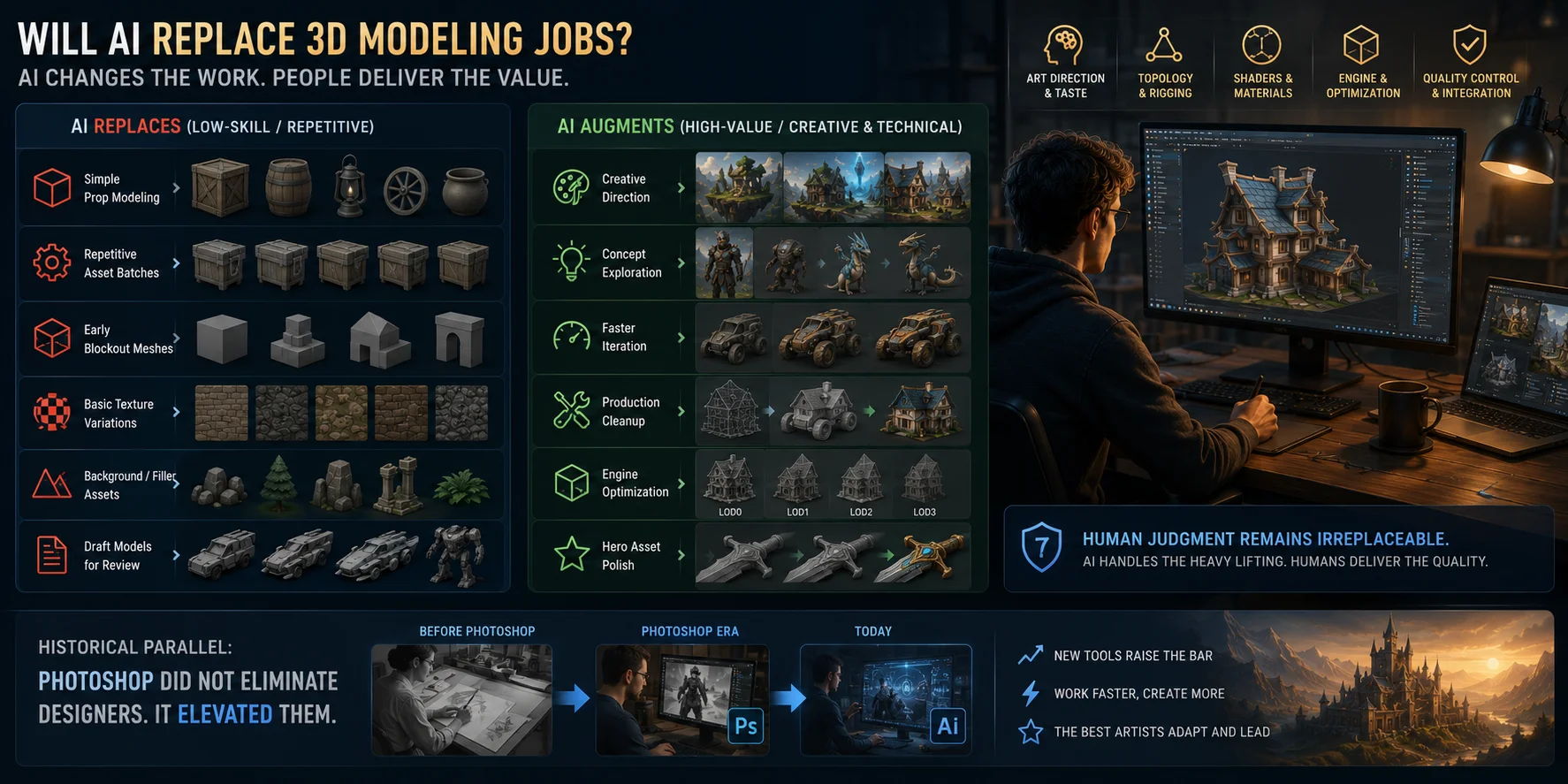
Higher-value work still needs humans. Art direction, style consistency, topology cleanup, rigging, shaders, engine optimization, and final quality control all require judgment.
Types of Work AI Replaces vs. Types It Augments
| Tasks AI may help accelerate | Tasks that still need human review |
|---|---|
| Simple prop concepts | Creative direction |
| Asset variations | Concept selection |
| Early blockout meshes | Production cleanup |
| Basic texture exploration | Topology, materials, and rig checks |
| Draft assets for review | Engine optimization and integration |
AI is strongest when speed, volume, and variation matter. Human artists remain essential when quality, taste, precision, style consistency, and final integration matter.
A Historical Comparison: How Digital Tools Change Work
Digital tools such as Photoshop changed design workflows and the skills employers expected. AI may similarly change how 3D work is produced, reviewed, and delivered.
A portfolio that shows both 3D fundamentals and AI-assisted workflow can help demonstrate relevant capabilities.
New Career Roles in AI-Assisted 3D Modeling
AI-assisted 3D production is changing how existing art and technical roles are performed. The role labels below describe possible responsibilities rather than standardized job titles.
AI 3D Artist
An AI 3D artist uses AI tools to generate, select, refine, and deliver 3D assets. This role requires visual judgment, prompt control, mesh cleanup, material awareness, scale checking, and export knowledge.
The job is not just typing prompts. A strong AI 3D artist knows when to regenerate, when to edit manually, and when an asset is not production-ready.
Generative Asset Pipeline Engineer
A generative asset pipeline engineer builds workflows that connect AI tools with Blender, Maya, Unity, Unreal, asset libraries, version control, and review systems.
This is a more technical role, especially valuable for studios that need large volumes of consistent, production-ready assets.
Technical Art Director, AI-Fluent
An AI-fluent technical art director uses AI to explore ideas faster while protecting style consistency and production quality. They decide which assets can be AI-generated, which require manual work, and what quality standards apply.
This role matters because AI output can vary widely. Creative direction and technical judgment are still essential.
3D Prompt Specialist
A 3D prompt specialist turns creative briefs into reliable AI-generated outputs. This role requires visual vocabulary, style awareness, and the ability to describe forms, materials, camera views, and asset types clearly.
How to Evaluate AI 3D Career Opportunities
AI-focused 3D responsibilities are not standardized across employers. Compare current job listings by location, seniority, production context, and required deliverables to understand how a role is actually defined.
Role expectations vary by industry, studio size, seniority, and whether the work leans more artistic, technical, or pipeline-focused.
How AI Fluency Changes Role Requirements
AI fluency is useful when a role values faster iteration, asset cleanup, format handling, or workflow integration. Candidates should demonstrate that they can generate assets, evaluate outputs, clean meshes, manage export formats, and integrate AI-assisted work into a production pipeline.
Freelance Opportunities in AI 3D Asset Creation
Freelancers can also benefit from this shift. Indie game developers, ecommerce brands, AR/VR teams, tabletop creators, and product designers all need faster 3D asset creation.
AI-fluent freelancers can offer game prop packs, product visualization models, 3D printing assets, stylized character drafts, or ecommerce-ready GLB models.
Is AI Good for 3D Modeling? A Practical Look
Yes, AI is good for 3D modeling when the goal is speed, iteration, and first-pass asset creation. It is especially useful for concept meshes, props, background assets, product mockups, and rapid visual exploration.
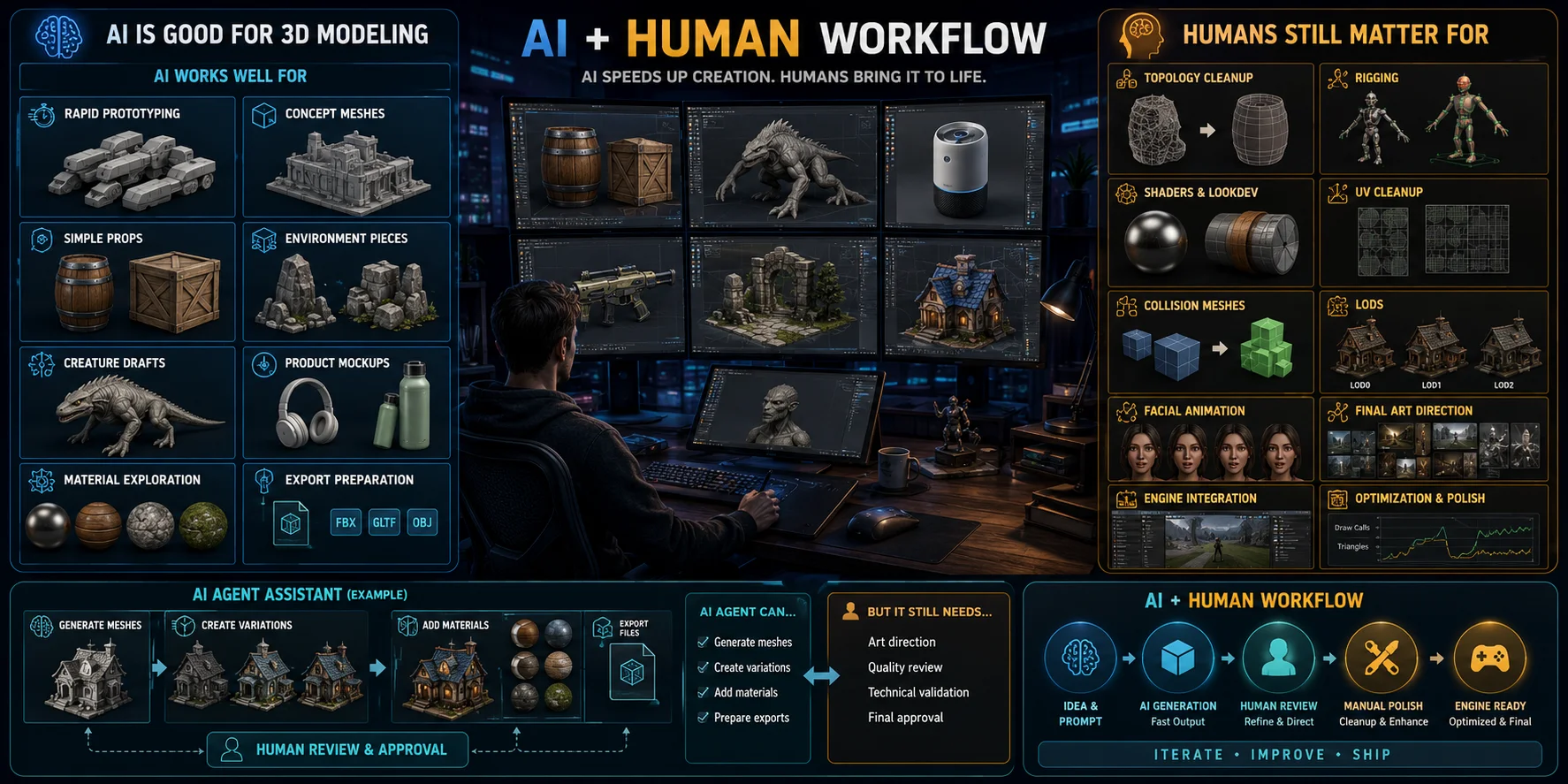
But AI is not perfect. It can still struggle with precise engineering tolerances, complex topology, custom rigs, facial animation, and strict style consistency across large projects.
The best workflow is AI plus human cleanup.
What AI Handles Well
AI handles rapid prototyping, concept meshes, simple props, environment pieces, creature drafts, product mockups, and material exploration. It is useful when you want to test many visual directions quickly.
For games, it can help create barrels, crates, rocks, weapons, signs, fantasy props, and early enemy concepts.
Where Manual Skills Still Matter
Manual skills still matter for topology, rigging, shaders, UV cleanup, collision meshes, LODs, facial animation, and final art direction. If a model must deform perfectly, match exact dimensions, or meet strict engine requirements, human expertise is still essential.
AI gives speed. Traditional 3D skills give control.
Can an AI Agent Do 3D Modeling?
An AI agent can already perform parts of 3D modeling. It can generate static meshes from text or images, create variations, add materials, and prepare files for export.
However, fully autonomous end-to-end production is not here yet. A game-ready asset still needs human review: Does it match the style? Is the mesh too dense? Are textures usable? Does the rig deform correctly? Does it import cleanly into the engine?
Tripo AI is close to this agent-like workflow because it supports text-to-3D, image-to-3D, topology-oriented output, and common export formats. Still, professionals should treat it as an intelligent production assistant, not a replacement for creative and technical judgment.
How Tripo AI Is Shaping the New 3D Career Skill Stack
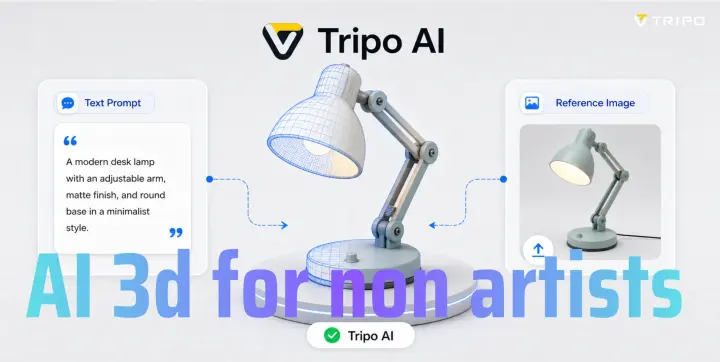
Tripo AI is important for AI 3D careers because it turns generation into a practical production workflow. Instead of only creating preview images, it helps artists generate export-ready 3D models from text prompts or images.
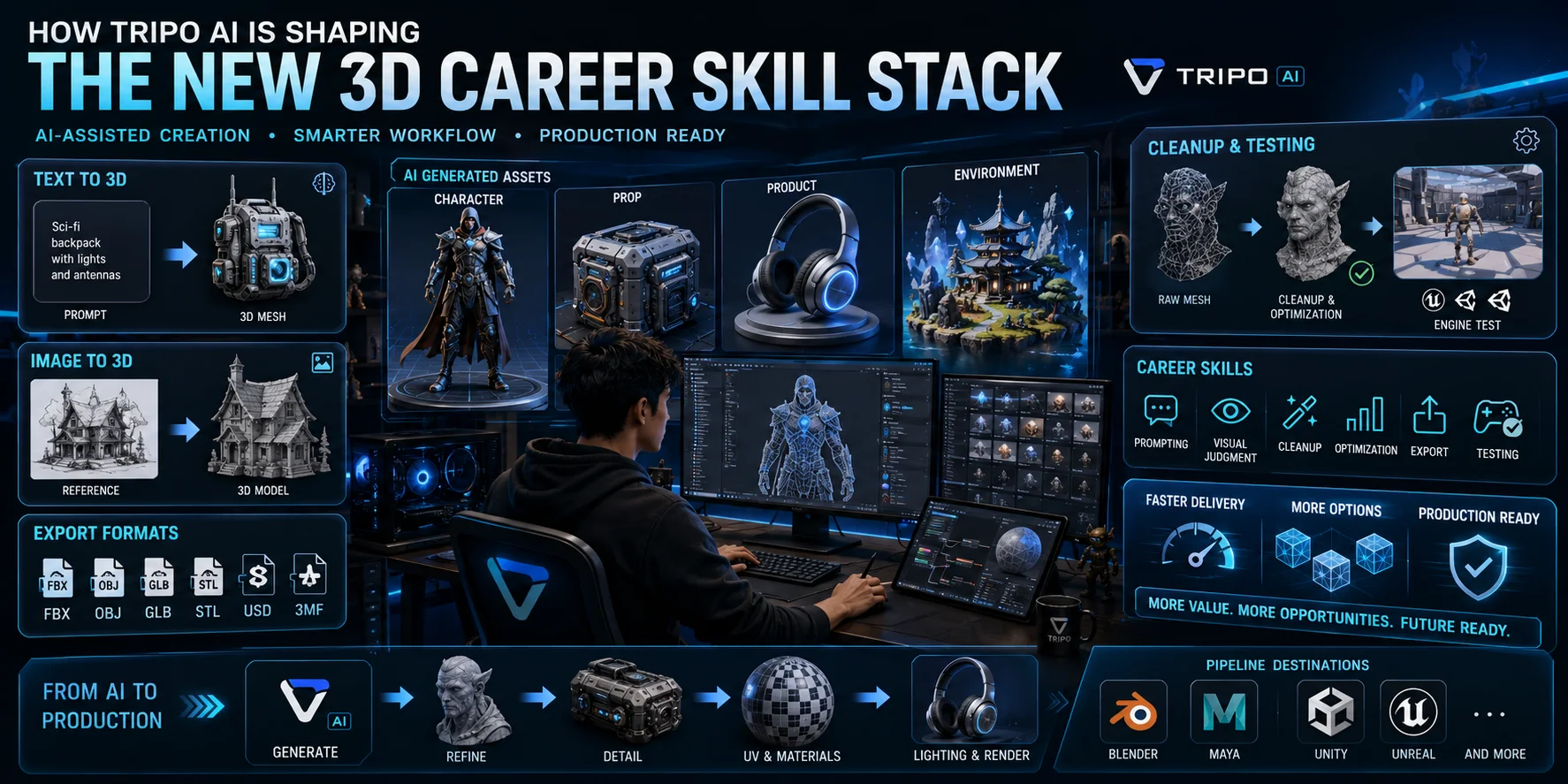
Tripo's current homepage lists GLB, STL, and OBJ export options for game and 3D-printing workflows. Choose the export format that matches the requirements of the downstream tool or platform.
A traditional artist may model one asset manually. An AI-fluent artist can generate multiple options, choose the strongest, clean it, optimize it, and deliver faster. That speed can directly improve production value, portfolio quality, and client appeal.
Text-to-3D and Image-to-3D as Core Production Tools
Text-to-3D is useful when you need fast concept assets. You describe the model, generate a mesh, review the output, and refine it.
Image-to-3D is useful when concept art already exists. A character sketch, prop drawing, product image, or visual reference can become a first-pass mesh. The artist can then move it into Blender, Maya, Unity, Unreal, or another tool for cleanup and final use.
A Practical AI-Assisted 3D Workflow
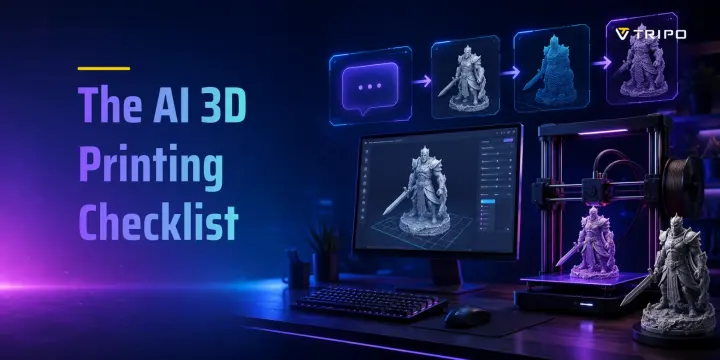
- Start with a text prompt or image reference and generate a first-pass 3D model.
- Inspect the geometry, materials, scale, and silhouette; iterate or regenerate when the result does not fit the brief.
- Refine the selected model in a DCC tool or game engine, including cleanup and use-case-specific checks.
- Export the format required by the downstream workflow and test the asset in its intended environment.
How Learning Tripo AI Builds Workflow Skills
Learning Tripo AI helps artists demonstrate practical AI fluency. You can show that you understand prompt-based generation, reference-based modeling, export formats, cleanup, and production testing.
Use a portfolio to show how you turn AI output into usable assets: document the prompt or reference, the generation result, the cleanup steps, and the final delivery format.
AI 3D Modeling Career Requirements: What You Actually Need
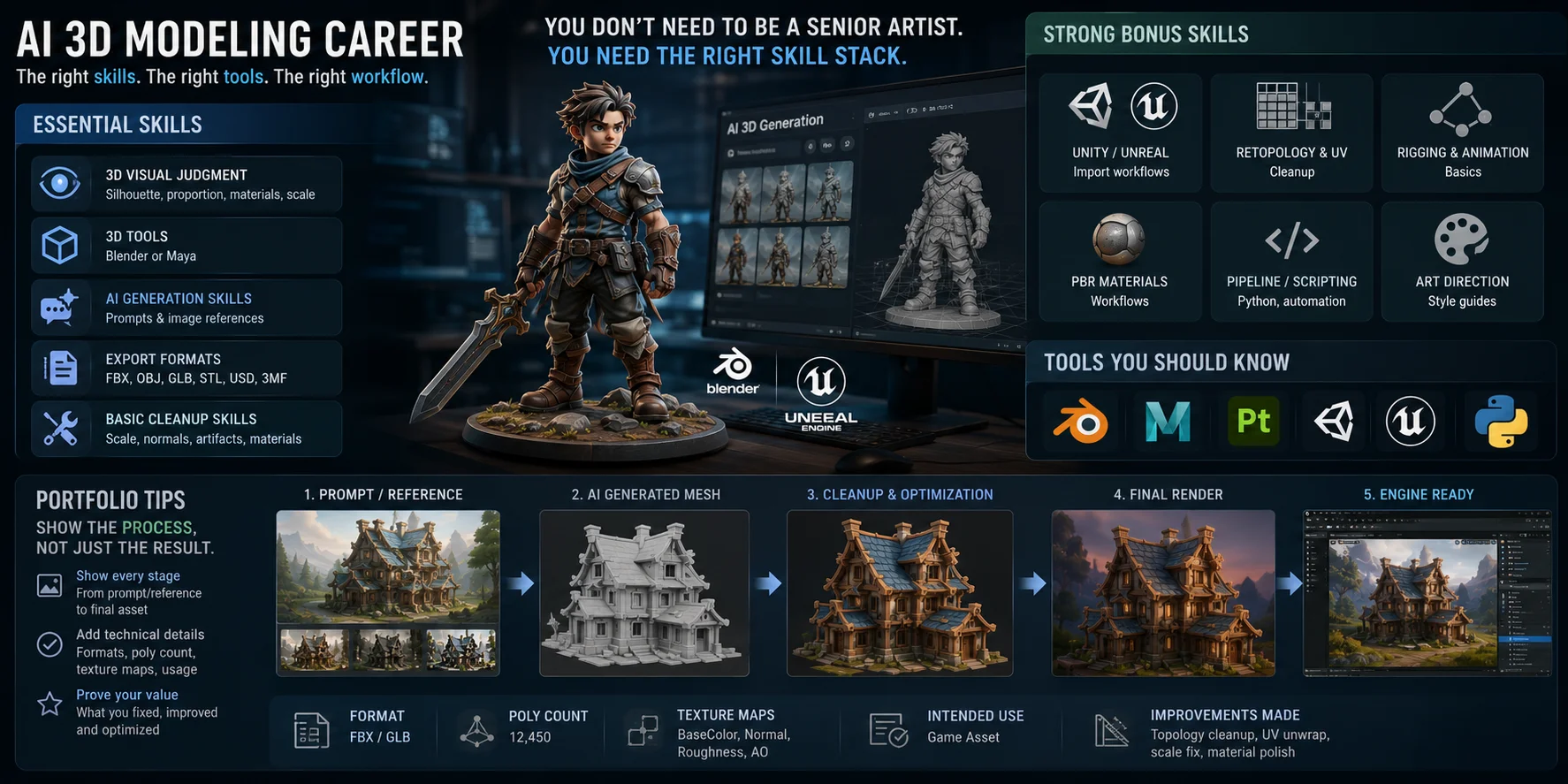
You do not need to be a senior 3D artist to start building an AI 3D modeling career. But you do need a mix of creative and technical skills.
Essential Skills for an AI-Fluent 3D Career
Must-have skills:
- Basic 3D visual judgment: silhouette, proportion, material quality, and scale.
- Familiarity with at least one 3D tool, such as Blender or Maya.
- AI generation skills, including prompts and image references.
- Understanding of export formats such as FBX, OBJ, GLB, and STL.
- Basic cleanup skills: scale, normals, artifacts, and material checks.
Strong bonus skills:
- Unity or Unreal import workflows.
- Retopology and UV cleanup.
- Rigging and animation basics.
- PBR material workflows.
- Python, scripting, or pipeline automation.
- Art direction and style guide experience.
Start with AI generation plus Blender basics, then add engine and pipeline skills over time.
Portfolio Tips for AI-Era 3D Artists
Your portfolio should show process, not just final images. Include the prompt or reference image, raw AI mesh, cleanup stage, final render, and engine-ready result.
Also include practical details: format, poly count, texture maps, intended use, and what you manually improved. This proves that you can direct a workflow, not just generate random models.
Frequently Asked Questions
Will AI replace 3D modeling jobs?
Not entirely. AI is automating repetitive asset production, but creative roles involving art direction, rigging, topology, and stylized character work are still valuable. Artists who adopt AI tools are becoming more competitive, not less.
Is AI good for 3D modeling?
For speed and iteration, yes. AI tools like Tripo AI can generate usable meshes from text or images in seconds, cutting concept-to-prototype time dramatically. For high-precision technical work, human oversight is still essential.
Is 3D modelling a good career?
Yes, especially with AI fluency. Opportunities for 3D work vary across games, film, ecommerce, AR/VR, and product visualization. Artists who combine traditional fundamentals with AI tools are in a strong position heading into the late 2020s.
Can an AI agent do 3D modeling?
AI can generate 3D meshes from text or images and automate parts of the modeling process. But a fully end-to-end pipeline, from brief to game-ready asset, still requires human judgment at key stages. Tools such as Tripo AI can support parts of that workflow.
What is a career in AI-driven 3D modeling?
It is a career path that combines 3D fundamentals with AI-assisted generation, review, cleanup, and delivery. The exact responsibilities depend on the studio, product, and downstream workflow.
What is an AI 3D modeling career path for beginners?
Start by learning basic 3D concepts such as scale, silhouette, materials, and file formats. Then build a small portfolio that documents a prompt or reference, the generated model, your cleanup steps, and the final result.
Conclusion
An AI 3D modeling career is real, growing, and full of opportunity for artists who adapt early. The future is not about AI replacing every 3D artist; it is about artists learning to direct AI tools and turn faster output into production-ready assets.
The best strategy is to build a hybrid skill set: traditional 3D fundamentals, AI generation, prompt control, cleanup, export formats, and pipeline integration. That combination makes you faster, more flexible, and more valuable.
See what Tripo AI can do for your workflow at Tripo AI and start generating production-ready 3D assets today.