AI Photo to 3D Object Tool Fixing Flat Surface Errors for 3D Printing
Streamlining Additive Manufacturing with Professional Planar Rectification
In the additive manufacturing landscape of 2026, the transition from a 2D photograph to a 3D printable asset is often hindered by "planar distortion." Traditional AI models frequently struggle to differentiate between subtle textures and actual depth, resulting in warped or "pillowed" flat surfaces that fail to print correctly. An advanced AI photo to 3D object tool fixing flat surface errors for 3D printing is essential for creators who require engineering-grade precision. Tripo AI provides a comprehensive solution, utilizing a massive parameter scale to ensure that flat surfaces remain perfectly planar while organic details are captured with high fidelity. This guide explores how an AI photo to 3D object tool fixing flat surface errors for 3D printing streamlines the production of high-quality, manufacture-ready 3D models.
Key Insights
- An AI photo to 3D object tool fixing flat surface errors for 3D printing uses advanced depth estimation to prevent the warping of geometric planes, ensuring parts fit together perfectly.
- The platform operates on the refined Algorithm 3.1, leveraging over 200 billion parameters to distinguish between surface texture and volumetric depth.
- The platform maintains a strict separation between Tripo Studio and the Tripo API; the API is an independent product line with its own billing and is not an add-on for Studio subscribers.
- Pricing & Quota: The Free plan provides 300 credits per month. 3D models generated under Tripo's Free plan do not support commercial use. The Pro plan ($19.90/month) provides 3,000 credits per month. Check Pricing for details.
- By generating watertight, manifold geometry, an AI photo to 3D object tool fixing flat surface errors for 3D printing eliminates the need for manual mesh repair in CAD software.
The Challenge of Planar Integrity in Image-to-3D Conversion
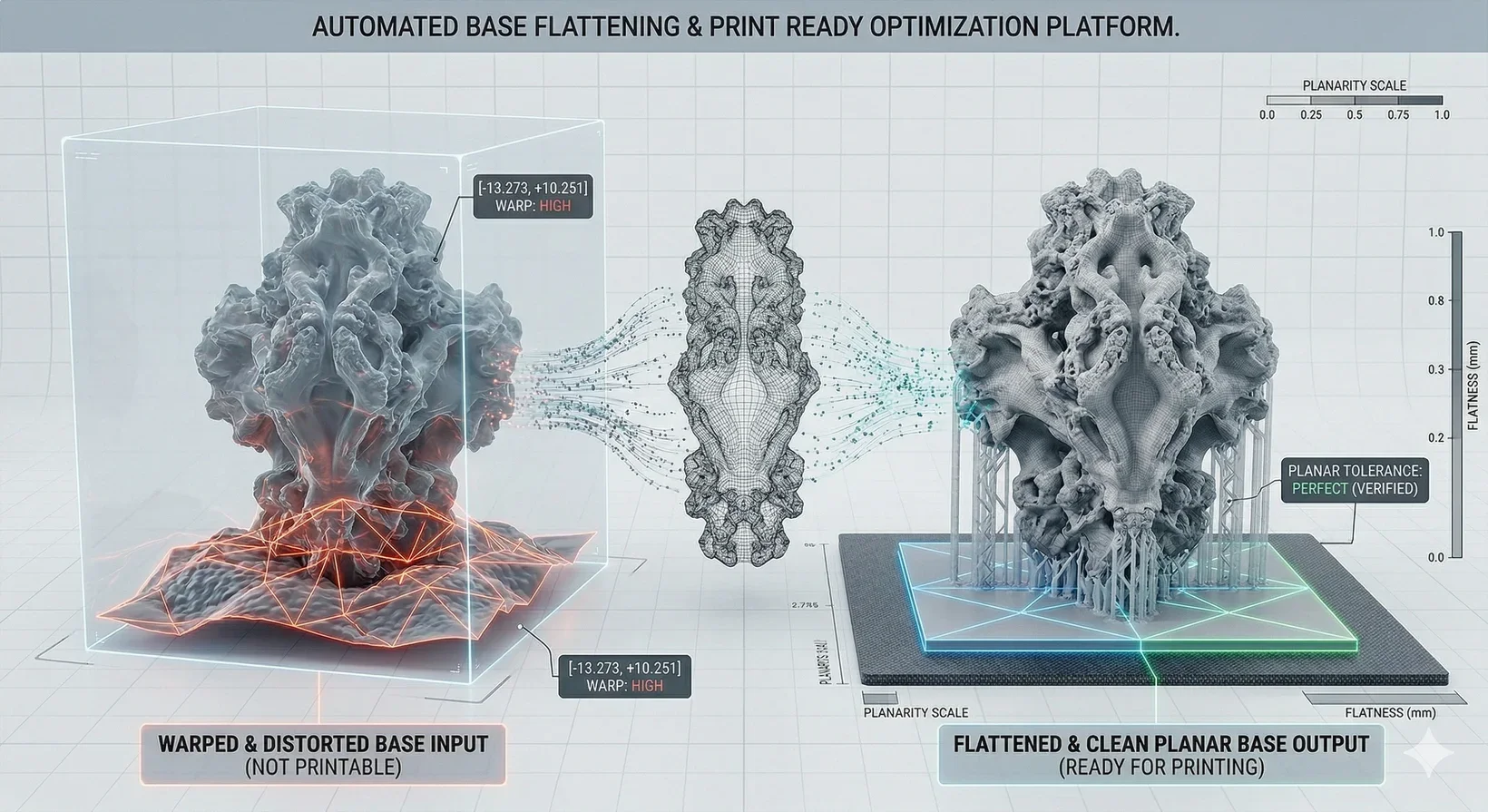
An AI photo to 3D object tool fixing flat surface errors for 3D printing solves the common problem of "surface noise" where flat areas appear bumpy or distorted after AI generation, ensuring the model's base and mechanical faces are print-ready. When a standard AI processes a single photo, it often hallucinates depth where none exists, particularly on flat, textured surfaces like tabletops or mechanical casings. This results in models that are aesthetically pleasing but physically unprintable due to uneven bases. An AI photo to 3D object tool fixing flat surface errors for 3D printing uses Algorithm 3.1 to perform "Normal Map Calibration." This process ensures that detected planes are locked into a flat coordinate space. By maintaining planar integrity, the image to 3D model workflow ensures that the resulting files can be placed flat on a 3D printer's build plate without the need for excessive rafts or manual sanding.
Structural Optimization and Manifold Geometry
By utilizing an AI photo to 3D object tool fixing flat surface errors for 3D printing, creators can generate "watertight" models that are free from non-manifold edges, which are the primary cause of slicing errors. For a 3D model to be printable, it must be a closed volume with a clearly defined "inside" and "outside." Many AI generators produce "shell-only" models with holes or self-intersecting faces. An AI photo to 3D object tool fixing flat surface errors for 3D printing automatically repairs these topological defects during the generation process. The AI 3D model generator ensures that every output is a manifold mesh. This means that when you use an AI photo to 3D object tool fixing flat surface errors for 3D printing, the resulting file is ready for your slicer software immediately, bypassing the traditional hours spent in mesh-repair tools.
From Photo to Slicer: A Seamless Manufacturing Workflow
The integration of an AI photo to 3D object tool fixing flat surface errors for 3D printing into the design pipeline allows for a direct path from image input to G-code generation, drastically reducing the time required for rapid prototyping. In 2026, the efficiency of a 3D printing workflow depends on the speed of the "Concept-to-Print" cycle. An AI photo to 3D object tool fixing flat surface errors for 3D printing serves as the bridge. Once the system generates the rectified 3D object, it can be exported via 3D format conversion in USD, FBX, OBJ, STL, GLB, 3MF formats. These files are natively compatible with slicers such as Cura, PrusaSlicer, and Bambu Studio. Because the AI photo to 3D object tool fixing flat surface errors for 3D printing has already corrected surface errors and ensured wall thickness consistency, the slicing process becomes a simple "one-click" operation.
Independent Ecosystems: Tripo Studio vs. Tripo API
The provider offers a web-based AI photo to 3D object tool fixing flat surface errors for 3D printing through two distinct product lines, tailored for individual creators and enterprise developers respectively. Users should be aware that Tripo Studio and the Tripo API are completely independent product lines. The API is intended for developers who want to embed generation capabilities into their own apps. It has a separate billing system and is not an add-on for Studio subscribers. For individual users, the Free plan provides 300 credits per month. 3D models generated under Tripo's Free plan do not support commercial use. The Pro plan ($19.90/month) is the industry standard for professionals, offering 3,000 credits and full commercial rights.
Technical Foundation: Algorithm 3.1 and 200 Billion Parameters
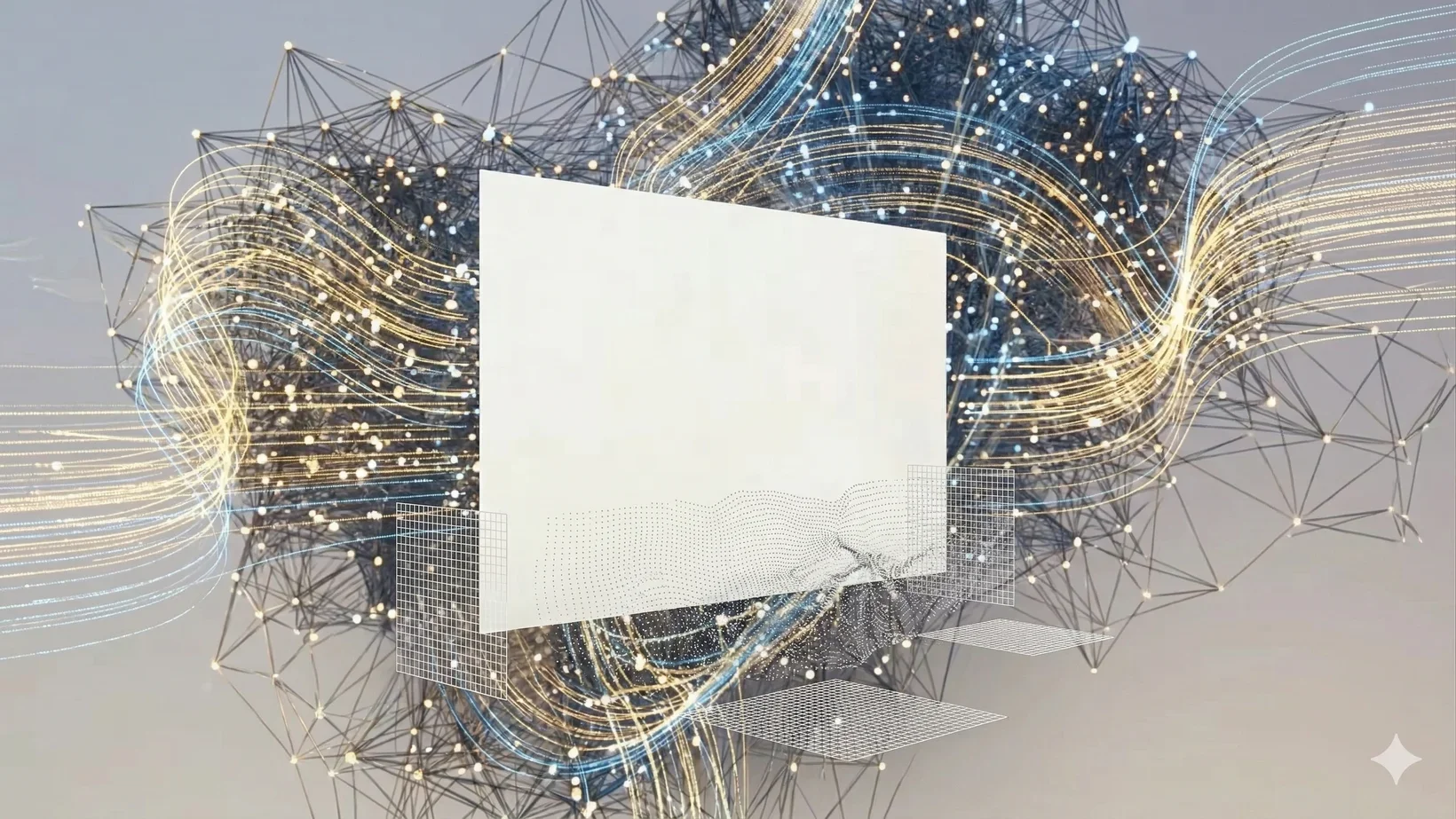
The precision of an AI photo to 3D object tool fixing flat surface errors for 3D printing is driven by its massive over 200 billion parameters architecture, which enables the system to understand complex spatial relationships and material properties. Algorithm 3.1, the core of the system in 2026, represents a significant leap in generative spatial computing. While previous generations struggled with thin walls and flat planes, this over 200 billion parameters model has been trained on vast datasets of mechanical and organic objects. This scale allows the AI photo to 3D object tool fixing flat surface errors for 3D printing to "reason" about the object's structure. For example, if it sees a photo of a smartphone, it knows the screen and back should be perfectly flat. This contextual understanding is what makes it an advanced AI 3D editor compared to generic 3D generators.
Advanced Features: Smart Retopology and PBR Texturing
An AI photo to 3D object tool fixing flat surface errors for 3D printing not only fixes geometry but also optimizes the mesh density through smart retopology, making models easier for slicers to process without losing detail. A common issue with AI-generated models is an excessively high polygon count. The platform includes "Smart Low Poly" features within its AI photo to 3D object tool fixing flat surface errors for 3D printing suite. This reduces the polygon counts to a manageable level while preserving sharp edges and flat planes. Additionally, the tool provides high-definition 4K texture generation. This means that if you are using a full-color 3D printer, the output from the AI photo to 3D object tool fixing flat surface errors for 3D printing will not only be structurally sound but also visually indistinguishable from the original photograph.
Conclusion: The Future of AI-Driven Additive Manufacturing
The development of an AI photo to 3D object tool fixing flat surface errors for 3D printing has effectively removed the "quality barrier" for non-experts in 3D modeling. By combining the power of Algorithm 3.1 with a cloud-native workspace, anyone can turn a single photo into a high-precision, 3D-printable object. As we move further into 2026, the reliance on a specialized AI photo to 3D object tool fixing flat surface errors for 3D printing will become the standard for rapid prototyping, e-commerce, and personalized manufacturing worldwide.