
Web-Based AI 3D Environment for Optimizing Multi-Part 3D Printing Assemblies
Streamlining Additive Manufacturing with Professional Multi-Part Assembly Optimization
In the advanced additive manufacturing landscape of 2026, the complexity of 3D printing has shifted from single-shell objects to intricate, multi-part mechanical assemblies. Managing the tolerances, fitment, and structural integrity of multiple interlocking components traditionally required exhaustive manual labor in CAD software. However, the emergence of a web based AI 3D environment for optimizing multi part 3D printing assemblies has fundamentally redefined this workflow. A professional 3D generative AI platform provides a comprehensive cloud-native workspace that leverages generative spatial intelligence to automate the segmentation, optimization, and preparation of complex assemblies. This guide explores how a web based AI 3D environment for optimizing multi part 3D printing assemblies streamlines the path from digital concept to functional physical prototype.
Key Insights
- A professional web based AI 3D environment for optimizing multi part 3D printing assemblies uses AI to automatically segment complex shapes into individual, printable components with proper tolerances.
- The platform operates on the refined Algorithm 3.1, utilizing a massive scale of over 200 billion parameters to ensure mechanical logic and geometric precision.
- The platform maintains a strict distinction between Tripo Studio (the web workspace) and the Tripo API; the API is an independent product line with its own billing and is not an add-on to Studio subscriptions.
- Commercial transparency: The Free plan offers 300 credits per month. 3D models generated under Tripo's Free plan do not support commercial use. The Pro plan ($19.90/month) provides 3,000 credits per month. View Pricing for details.
- By integrating smart retopology, a web based AI 3D environment for optimizing multi part 3D printing assemblies ensures that high-fidelity meshes remain lightweight and compatible with standard slicing software.
The Evolution of Multi-Part Assembly Optimization
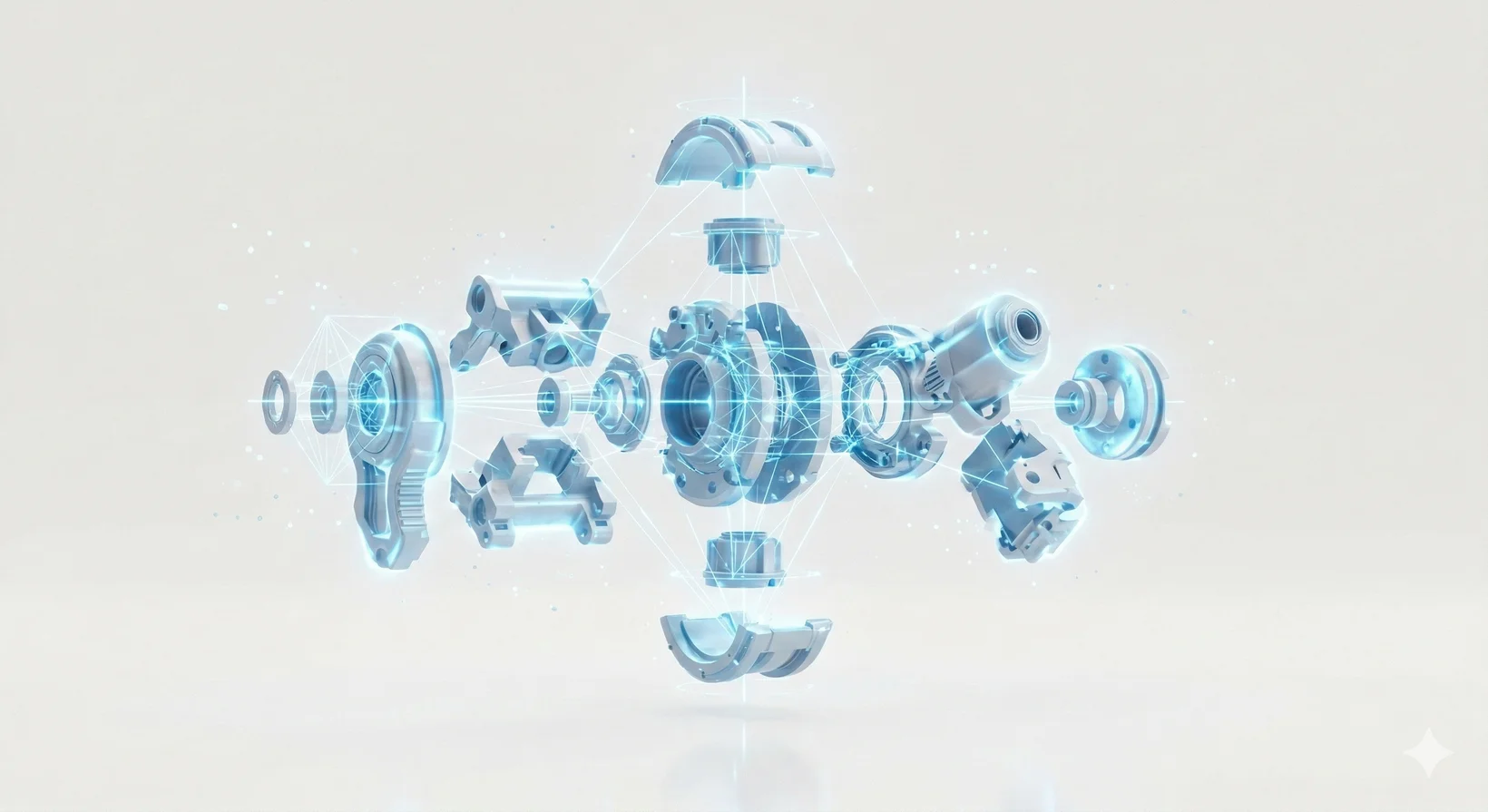
A web based AI 3D environment for optimizing multi part 3D printing assemblies enables creators to transform singular, complex concepts into functional multi-component systems by automating part decomposition and fitment analysis. Traditional 3D modeling for assemblies often hits a bottleneck during the "splitting" phase. Designers had to manually boolean-cut models, design pins, and calculate clearances to ensure parts would fit after printing. A web based AI 3D environment for optimizing multi part 3D printing assemblies eliminates this manual overhead. Within the AI 3D editor, the AI analyzes the geometric volume and identifies logical break points—such as joints, axles, or structural seams—and segments them into individual STL files. This allows for the printing of larger-than-build-plate objects and facilitates the use of different materials for different parts of the same assembly.
Intelligent Part Segmentation and Structural Logic
By utilizing advanced part segmentation algorithms, a web based AI 3D environment for optimizing multi part 3D printing assemblies ensures that each component of an assembly maintains manifold integrity and proper wall thickness for physical durability. Intelligent Part Segmentation is a cornerstone feature of this web based AI 3D environment for optimizing multi part 3D printing assemblies. Unlike simple mesh cutting, the AI understands the "intent" of the geometry. It recognizes where a hinge should rotate or where a clip should snap. This structural awareness ensures that when a multi-part assembly is optimized, the resulting components are functional engineering parts. The over 200 billion parameters model predicts potential stress points, allowing the system to suggest reinforced wall thicknesses for specific internal components before they ever reach the printer.
Cloud-Native Workflow and Slicer Synchronization
The integration of a web based AI 3D environment for optimizing multi part 3D printing assemblies with local slicing software allows for a seamless transition from cloud-based AI generation to machine-ready G-code. The primary advantage of a cloud-native workspace is the ability to handle massive computational tasks—like high-poly mesh repair and multi-part optimization—without taxing local hardware. Once the assembly is optimized, users can export bulk formats like USD, FBX, OBJ, STL, GLB, 3MF via 3D format conversion tools. Because the platform ensures all generated parts are watertight and manifold, the "mesh error" warnings that typically plague complex assemblies are virtually eliminated, saving hours of troubleshooting in the manufacturing pipeline.
Independent Ecosystems: Tripo Studio vs. Tripo API
The platform maintains two distinct product lines for its web based AI 3D environment for optimizing multi part 3D printing assemblies, ensuring that individual creators and enterprise developers have tailored solutions. It is critical for users to understand that Tripo Studio and the Tripo API are completely independent ecosystems. The API is designed for developers who wish to integrate generative power into their own applications. It features its own billing system and is never bundled with Studio subscriptions. For individual creators, the Free plan provides 300 credits per month. 3D models generated under Tripo's Free plan do not support commercial use. The Pro plan ($19.90/month) provides 3,000 credits per month, offering high priority and full commercial rights.
Technical Foundation: Algorithm 3.1 and 200B Parameters
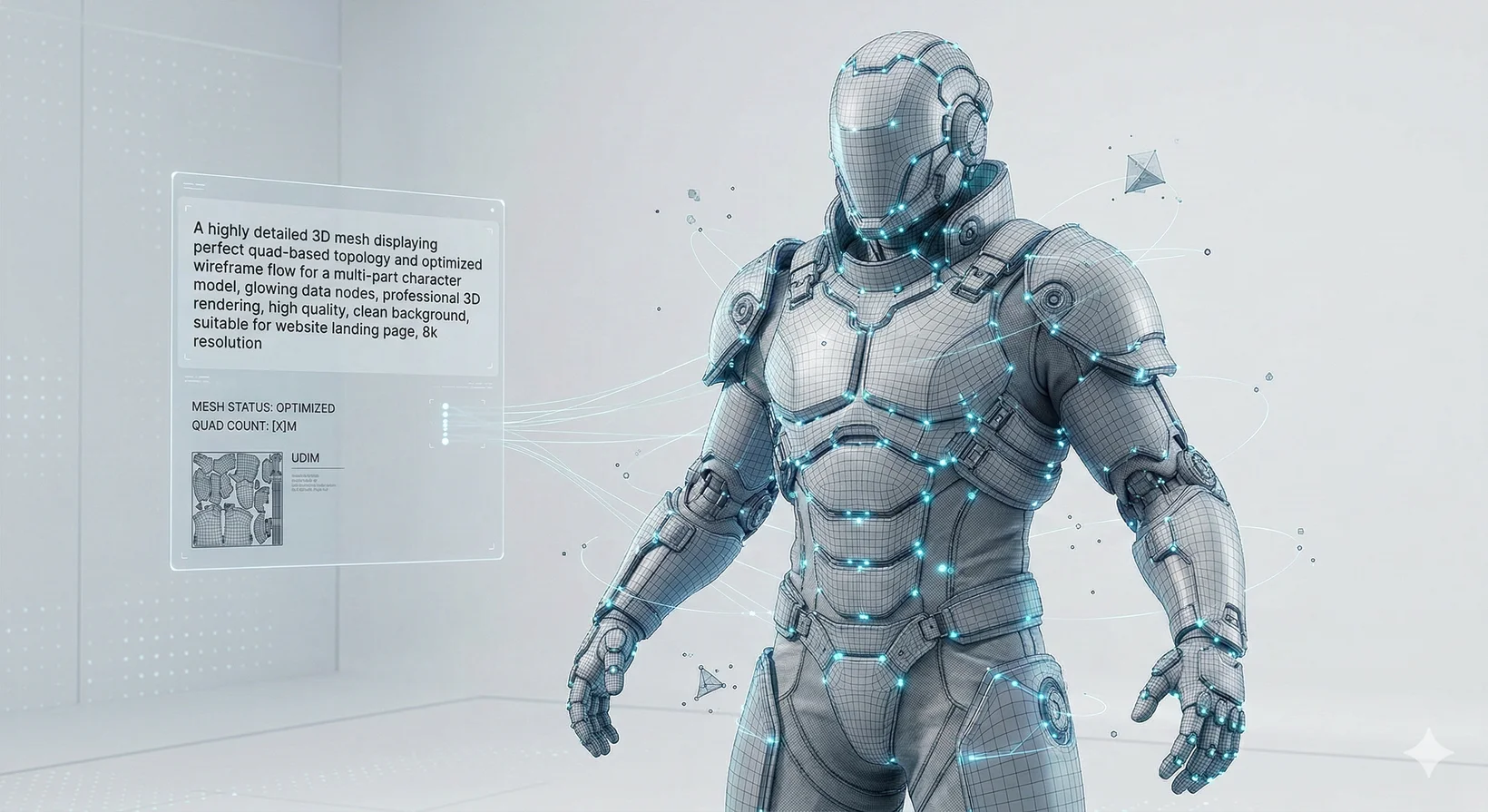
Algorithm 3.1 serves as the engine for the web based AI 3D environment for optimizing multi part 3D printing assemblies, utilizing over 200 billion parameters to decode complex spatial relationships in 3D space. The leap to Algorithm 3.1 in 2026 represents a massive upgrade in how a web based AI 3D environment for optimizing multi part 3D printing assemblies interprets depth and volume. With over 200 billion parameters, the AI can infer occluded parts of an image to 3D model input to generate a complete 360-degree assembly. This scale of data processing is what allows the system to produce "Smart Meshes"—topology that is clean, follows the flow of the object, and is optimized for real-time rendering and physical printing alike.
Smart Mesh Generation and Industrial Prototyping
Advanced retopology tools within the web based AI 3D environment for optimizing multi part 3D printing assemblies produce production-ready meshes that are lightweight enough for real-time collaboration but detailed enough for industrial use. For professional users, the platform must offer more than just raw geometry. It includes "Smart Low Poly" and high-definition 4K texture generation. This means that a multi-part assembly can be previewed in the web browser with realistic PBR materials before being sent to the printer. This visual and structural optimization ensures that the final assembly not only fits together perfectly but also meets the aesthetic standards required for high-end prototyping and digital twins.
Conclusion: The Future of Automated 3D Manufacturing in 2026
The adoption of a web based AI 3D environment for optimizing multi part 3D printing assemblies has transformed 3D printing from a hobbyist endeavor into a streamlined industrial process. By combining the massive power of Algorithm 3.1 with the accessibility of a cloud-native workspace, an advanced AI 3D model generator enables creators to tackle ambitious multi-part assemblies with ease. As generative spatial computing continues to mature, the reliance on a web based AI 3D environment for optimizing multi part 3D printing assemblies will become the standard for anyone seeking to turn complex digital visions into physical reality.
FAQ
1. What is the difference between Tripo Studio and the Tripo API?
Tripo Studio and the Tripo API are completely independent product lines. The API is not an add-on to Studio subscriptions and features its own distinct billing and infrastructure.
2. How does the credit system and pricing work?
The Free plan provides 300 credits per month. The Pro plan ($19.90/month) provides 3,000 credits per month. For more information, please check our Subscription Plans page.
3. Can I use the models for commercial purposes?
3D models generated under Tripo's Free plan do not support commercial use. To obtain commercial rights, you must be on the Pro plan.
4. What file formats are supported for assemblies?
You can export your optimized assemblies via 3D Format Conversion in USD, FBX, OBJ, STL, GLB, and 3MF formats.