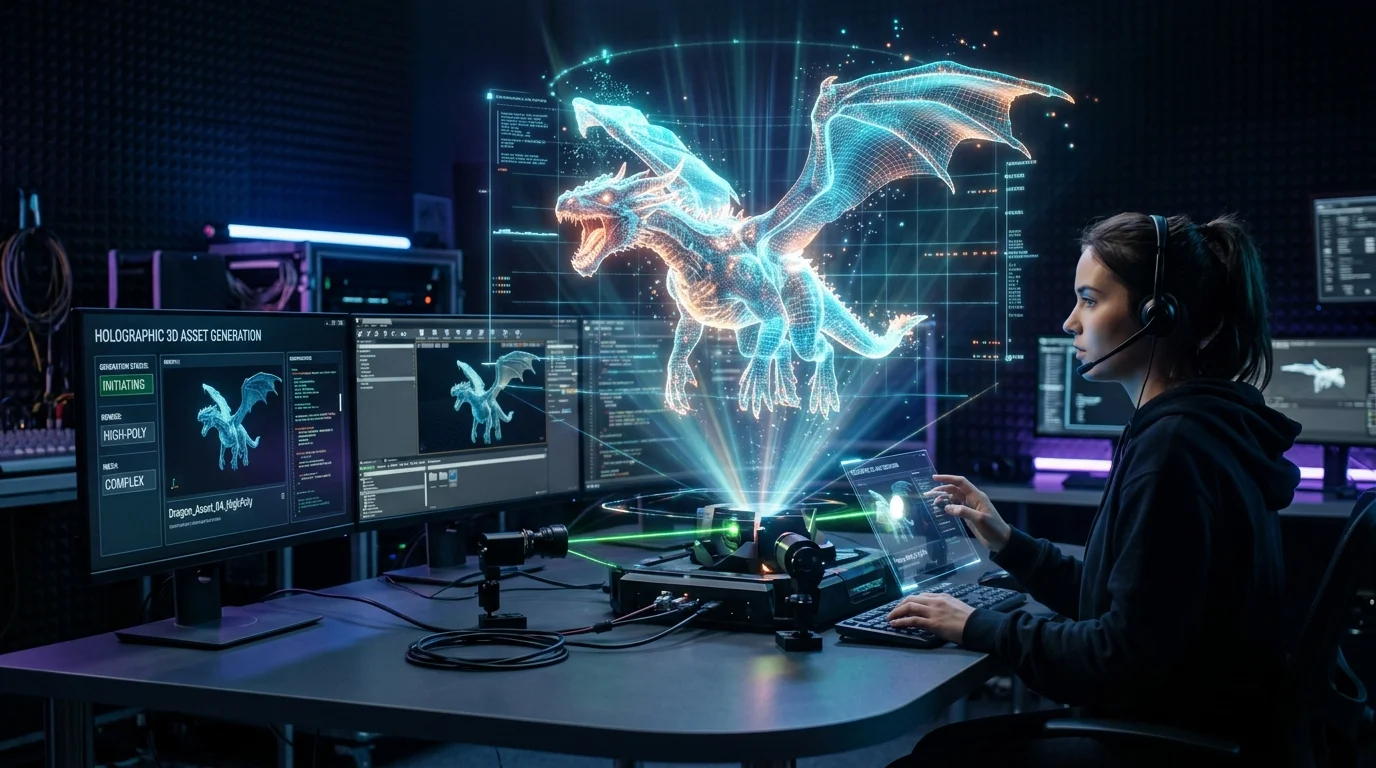
AI 3D for Film Production: Cut Costs with Tripo
Accelerating Cinematic Pre-visualization and Virtual Production with Advanced Generative AI
Modern film production often encounters severe bottlenecks during the expensive, labor-intensive pre-visualization and asset creation phases. As studio budgets tighten and timelines compress, relying entirely on manual polygon modeling creates unsustainable friction that delays principal photography and inflates post-production costs. Tripo AI provides a definitive solution, rapidly transforming reference art and text prompts into production-ready 3D assets to drastically reduce overhead and accelerate project delivery.
Key Insights
- Generative AI reduces 3D asset creation time from weeks to seconds, fundamentally altering media production schedules.
- Tripo AI supports standard cinematic formats including USD, FBX, OBJ, STL, GLB, and 3MF for seamless pipeline integration.
- Studio pipelines optimize resources by shifting artists from manual modeling to curation, refinement, and art direction.
- Commercial film projects require professional tier subscriptions to ensure strict legal compliance and professional generation capacity.
The Evolution of AI 3D for Film Production in 2026
AI 3D for film production fundamentally accelerates pre-visualization, virtual production, and VFX pipelines. By utilizing advanced neural networks, filmmakers can now generate complex set pieces and props in seconds rather than weeks, dramatically lowering budget overhead.
In 2026, industry benchmarks indicate that studios utilizing generative workflows save up to 85% of standard pre-production time on environmental props. The demand for high-fidelity digital assets has never been higher, particularly with the widespread adoption of LED volume stages and real-time rendering engines for virtual production. Traditional methods struggle to keep pace with these exhaustive demands, often forcing directors to wait weeks to review a single background element. A reliable AI 3D model generator serves as the critical bridge between conceptualization and execution, allowing art directors to populate virtual sets with an unprecedented volume of unique, highly detailed assets.
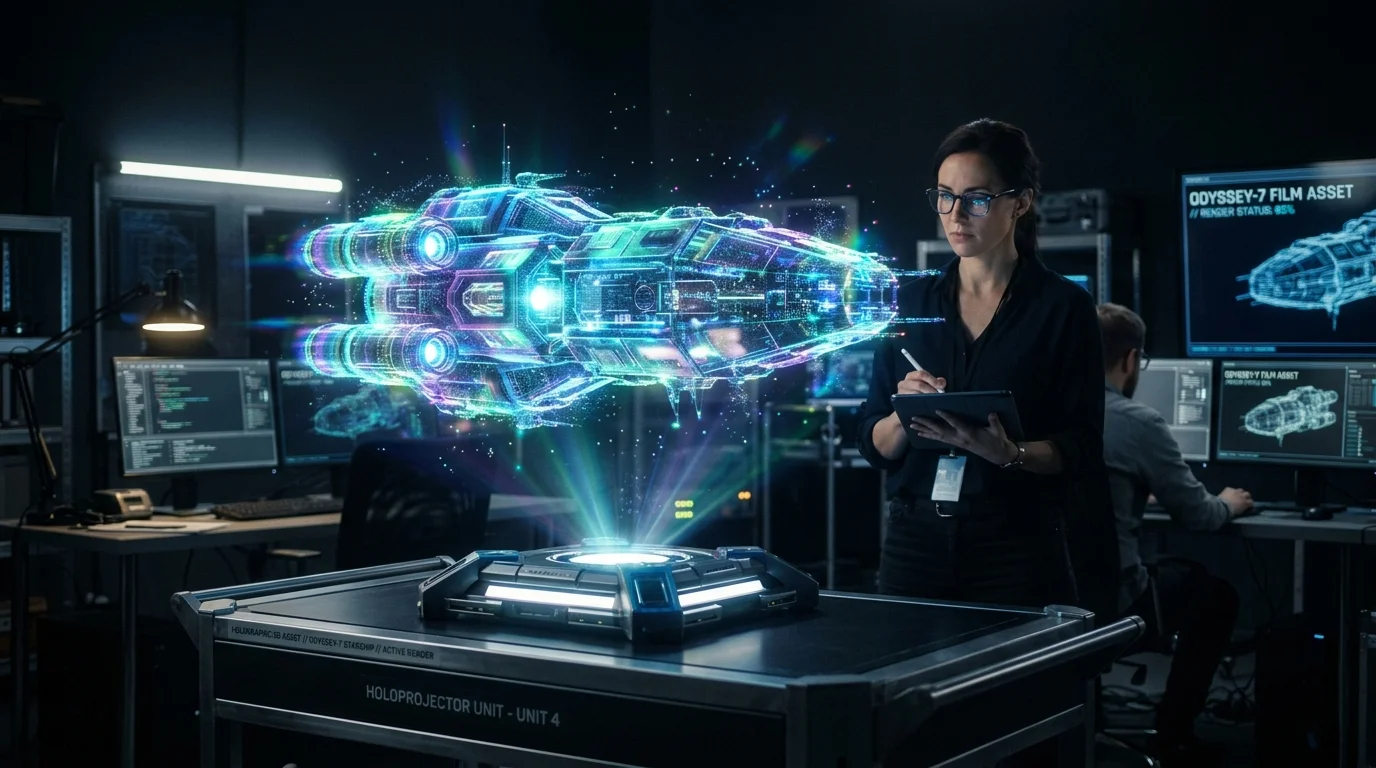
How Tripo AI Powers Cinematic Workflows
Tripo AI leverages Algorithm 3.1 to translate text or 2D images into high-fidelity 3D models instantly. This enables art departments to prototype and finalize assets at unprecedented speeds without compromising on industry-standard quality.
The core engine driving this extraordinary generation capability is built upon a foundation of over 200 Billion parameters. This massive technological scale allows the system to accurately interpret complex spatial relationships, intricate geometry, and physically accurate proportions required for cinematic framing. The platform excels at analyzing nuanced design cues from rough concept sketches and translating them into tangible, lit geometry ready for immediate review. By using a rapid image to 3D model conversion capability, studios can ensure that background elements, crowd props, and environmental dressing are finalized long before the cameras begin to roll.
Supported Film-Ready Formats
To ensure absolute compatibility with industry-standard digital content creation tools, Tripo AI exports universally recognized file types:
- USD (Universal Scene Description): Vital for modern film pipelines, allowing non-destructive collaboration.
- FBX: The steadfast standard for rigging and animation workflows in software like Maya.
- OBJ & STL: Cater to hard-surface refinement and practical prop 3D printing.
- GLB & 3MF: Streamlined solutions for web-based asset review systems.
Tripo Workflow vs. Traditional Workflow
| Evaluation Metric | Tripo AI Workflow | Traditional 3D Modeling Workflow |
|---|---|---|
| Speed & Turnaround | 15 seconds per asset draft; instant iteration. | 4.5 days per asset; slow revision cycles. |
| Cost Efficiency | High; fixed monthly credit allocation. | Low; high hourly rates for manual labor. |
| Learning Curve | Minimal; intuitive text and image inputs. | Steep; requires years of specialized training. |
| Scalability | Infinite; generate thousands of props instantly. | Limited; requires hiring additional senior artists. |
| Resource Allocation | Artists focus on high-level curation and polish. | Artists bogged down by base mesh and UV mapping. |
Navigating Tripo Pricing and Commercial Rights for Studios
Studios must align their production needs with Tripo's credit system and licensing rules. While the platform offers an accessible entry point, commercial film projects require professional tiers to ensure legal compliance.
Commercial Usage Rules
Assets generated under the Free tier are NOT permitted for commercial use. Any 3D asset destined for a monetized feature film, television show, or commercial broadcast must be generated under a paid professional tier. This ensures that studios retain the necessary intellectual property protections.
Tripo Studio vs. Tripo API Independence
Tripo Studio (the web interface) and the Tripo API are completely independent products. A subscription to one does not grant access to the other. Studios must choose the solution that best fits their infrastructure. For more information on industry-specific applications, visit our Media Production Hub.
FAQ
1. Can I use Tripo Free tier assets in commercial films?
No, free tier assets are strictly restricted from commercial use. Studios must operate on a paid professional tier to legally utilize generated models in any distributed film, television show, or commercial project.
2. What is the core technology behind Tripo AI?
The platform is powered by Algorithm 3.1, a highly advanced generative neural network utilizing a massive scale of over 200 Billion parameters. This ensures superior geometric accuracy and high-fidelity texturing.
3. Do I get a daily login bonus for more credits?
No, the platform operates strictly on a monthly allocation system. Accounts receive either 300 credits for the Free tier or 3000 credits for the Pro tier. These balances refresh on a monthly billing cycle.