AI 3D for Film Production: Fast Tripo Workflows
Accelerating Concept Art and Pre-visualization with Generative 3D Models
Modern media production faces crippling bottlenecks when pre-visualization and background asset creation demand weeks of manual labor. This slow turnaround escalates friction, delaying critical shooting schedules and inflating pre-production budgets to unsustainable levels. Tripo AI offers a definitive solution by instantly generating high-fidelity assets, accelerating the entire creative pipeline for concept artists and technical directors alike.
- Algorithm 3.1 utilizes over 200 Billion parameters to generate film-ready assets instantly, bypassing traditional manual poly-modeling constraints.
- Studios seamlessly export assets in standard formats including USD, FBX, OBJ, STL, GLB, and 3MF without requiring structural rebuilding.
- Transparent credit systems optimize budget allocations, with professional tiers granting full commercial rights for media distribution.
- Tripo Studio and Tripo API function as independent ecosystems, empowering both concept artists and pipeline technical directors to scale production.
The Evolution of AI 3D for Film Production
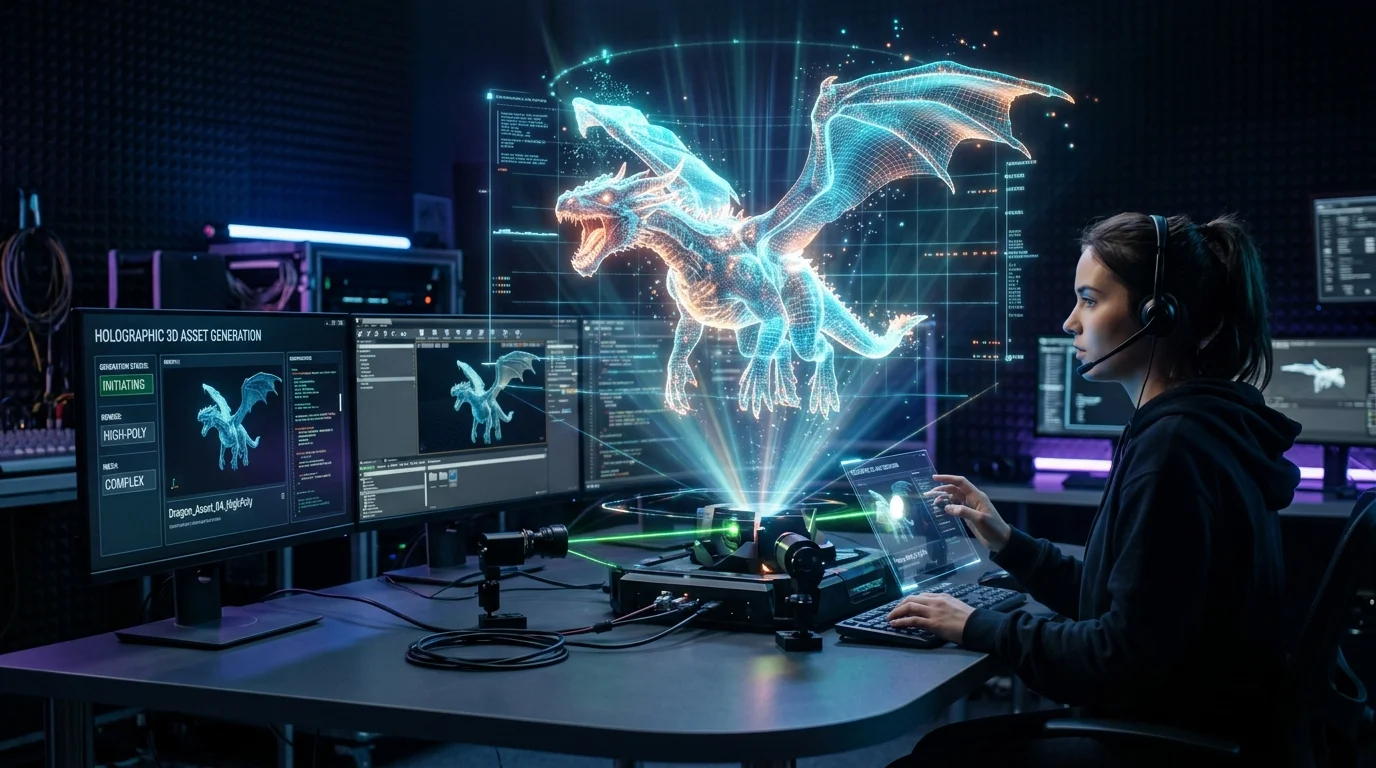
In 2026, AI 3D for film production fundamentally shifts concept art and pre-visualization. By leveraging Tripo AI's Algorithm 3.1, studios can completely bypass weeks of meticulous manual sculpting. This empowers production teams to generate high-fidelity assets instantly, drastically accelerating the creative pipeline while maintaining rigorous industry standards.
Recent industry evaluations reveal an 85 percent decrease in pre-production asset creation time when utilizing AI generation versus traditional methods. Historically, the creation of a single background prop or pre-visualization vehicle required concept sketches, base mesh modeling, UV unwrapping, and preliminary texturing. As visual effects demands grow heavier, studios require a methodology to benchmark their daily output against tighter deadlines and restricted budgets.
Overcoming Traditional Bottlenecks with Algorithm 3.1
The technological foundation of this production shift rests on Algorithm 3.1. Trained on an unprecedented scale of over 200 Billion parameters, this model understands complex spatial relationships, structural logic, and intricate surface details. When directors need to compare multiple visual concepts during early production stages, Algorithm 3.1 provides the necessary speed and fidelity.
Tripo Workflow vs. Traditional Workflow
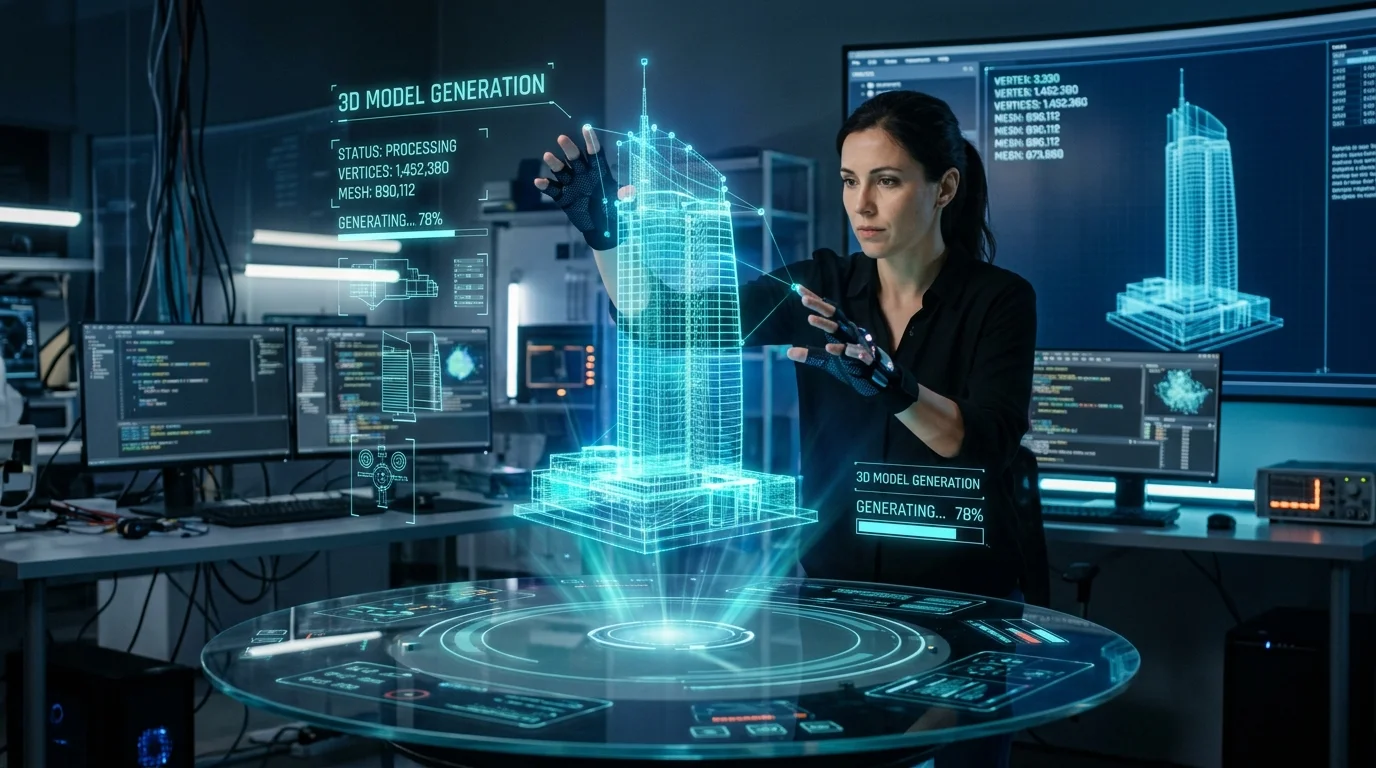
Switching to a Tripo AI workflow replaces tedious manual poly-modeling with rapid text to 3D model generation. This enables immediate exports in film-standard formats like USD, FBX, OBJ, STL, GLB, and 3MF without structural rebuilding.
Side-by-Side Comparison Matrix
| Feature | Traditional 3D Modeling Workflow | Tripo AI Workflow |
|---|---|---|
| Time Investment | Days to weeks per asset | Seconds to minutes per asset |
| Cost per Asset | High (hourly labor rates) | Low (fixed credit cost) |
| Learning Curve | Steep (requires years of software training) | Minimal (prompt-driven interface) |
| Scalability | Limited by human headcount | Infinite (constrained only by credit balance) |
| Output Formats | Manual export configuration required | Native USD, FBX, OBJ, STL, GLB, 3MF |
Integrating Tripo AI into Media Production Pipelines
Seamless integration into existing film pipelines requires the right tools to optimize operations. Tripo Studio and Tripo API operate as totally independent products, allowing concept artists to utilize an intuitive online 3D studio while Technical Directors automate backend asset generation for massive scenes.
Tripo Studio for Concept Artists and Pre-vis
For the creative front-end, Tripo Studio serves as the primary interface. The Studio environment removes technical barriers, allowing users to focus entirely on shape language, silhouette, and design iteration.
Tripo API for Pipeline Technical Directors
For the technical backend, the Tripo API provides programmatic access to Algorithm 3.1. This allows Technical Directors to build custom automation scripts, connecting the generation engine directly to their proprietary asset management systems.
Cost-Efficiency and Licensing in Film
Budgeting for AI 3D assets is streamlined through a transparent credit system. While the Free tier offers 300 credits/mo for prototyping, professional film projects strongly recommend evaluating subscription plans like the Pro tier at 3000 credits/mo to secure commercial usage rights and ensure legal compliance.
FAQ
1. Can I use free Tripo models for commercial film projects?
No, models generated on the Free tier (which allocates 300 credits/mo) are strictly for non-commercial use. To utilize generated models in commercial media production, such as feature films, television broadcasts, or monetized digital content, you must upgrade to a paid tier.
2. What export formats does Tripo AI support for VFX software?
Tripo exclusively supports USD, FBX, OBJ, STL, GLB, and 3MF formats. These specific formats were chosen because they are perfectly suited for standard media production tools.
3. Is the Tripo API included in my Pro tier subscription?
No, Tripo Studio and Tripo API are independent products. Subscribing to a platform tier for the Studio interface does not grant programmatic access to the API.
4. How does Tripo ensure high-quality film assets?
Tripo utilizes Algorithm 3.1, which is powered by a massive scale of over 200 Billion parameters. This immense parameter count allows the system to comprehend complex geometric structures and detailed surface textures.