Lead with the outcome
State the user-visible outcome first, then list the systems that must cooperate to produce it.
Explore Claude Opus 5 prompt for an explorable Three.js castle world: a Claude Opus 5 3D example featuring Three.js, Vite. Preview the result and adapt the prompt for your project.
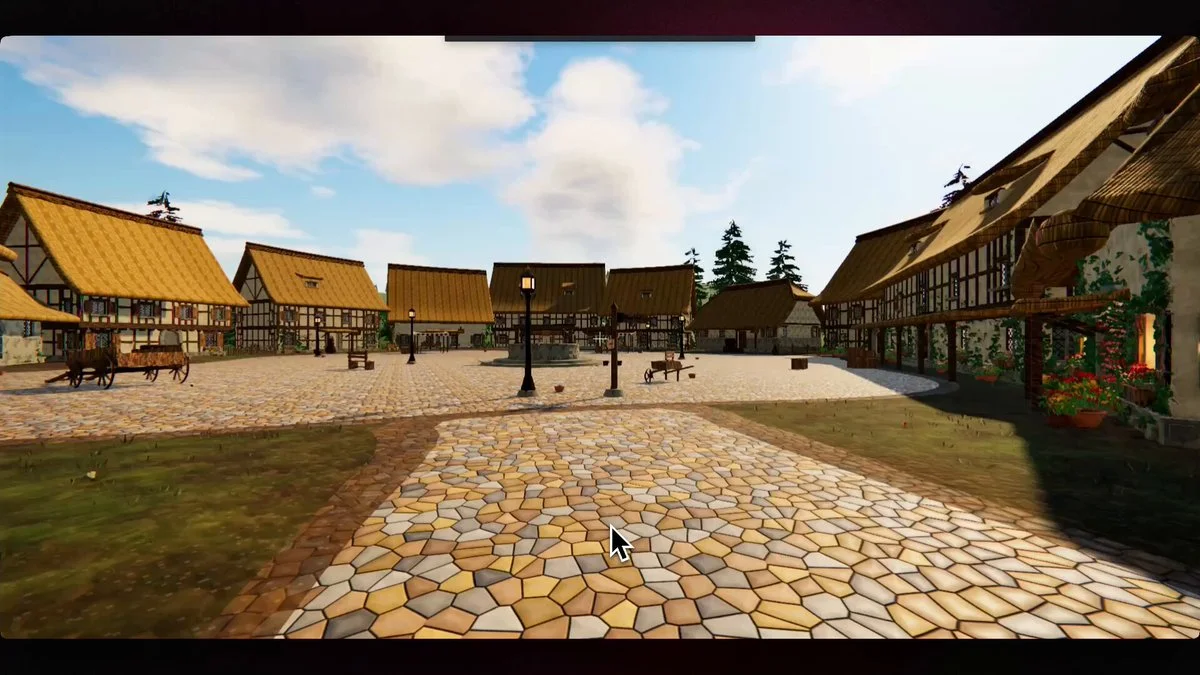
We are going to build a large, explorable 3D world with Three.js and Vite. At the center, create a massive castle on a hill that the player can walk toward, enter, and explore.
Really focus on making the world feel alive and cinematic.

Prioritize detailed lighting, volumetric clouds, dense grass, wind simulation, particle effects, god rays, atmospheric fog, and polished camera effects.

The castle should feel AAA-quality, with imposing architecture, a functional drawbridge, outer walls, towers, and a large interior courtyard.

Make the entire experience feel cohesive, immersive, and visually incredible.
Prompt breakdown
Explore “Claude Opus 5 prompt for an explorable Three.js castle world”, a Claude Opus 5 3D example about Claude Opus 5, Three.js, Vite. Check the evidence label to see whether the text is an original prompt or a brief adapted from the public source.
Keep the core outcome, then specify the camera, controls, lighting and what a successful result should do. Test that first before adding more visual detail.
State the user-visible outcome first, then list the systems that must cooperate to produce it.
Make controls, state transitions, collisions and reset behavior explicit; do not leave core interaction rules implied.
Ask for asset budgets, responsive controls and graceful fallbacks so the prototype remains usable beyond a desktop demo.
Your prompt builds the game or scene. Bring it to life with more detailed characters and props, created in Tripo to replace simple placeholder models.
Build an explorable 3D world in Three.js based on the attached image. Requirements First-person controls (WASD + mouse look), collision detection, no clipping through geometry AAA visuals: PBR materials, HDRI-based lighting, real shadows, post-processing (tone mapping, bloom, AA) Physics on anything that moves or can be interacted with 60fps on a mid-range GPU Process Split the work into independent streams: terrain, props/geometry, materials/textures, lighting, physics, controls/camera, performance. Assign one sub-agent per stream. Each sub-agent owns its stream end to end and reports what it built plus what is still weak. Integrate, then run a review pass: walk the world, list every visible defect, fix them. Repeat that loop until a full pass produces zero defects, or until 5 loops. Report anything unresolved either way. Deliver a single runnable project plus launch instructions.
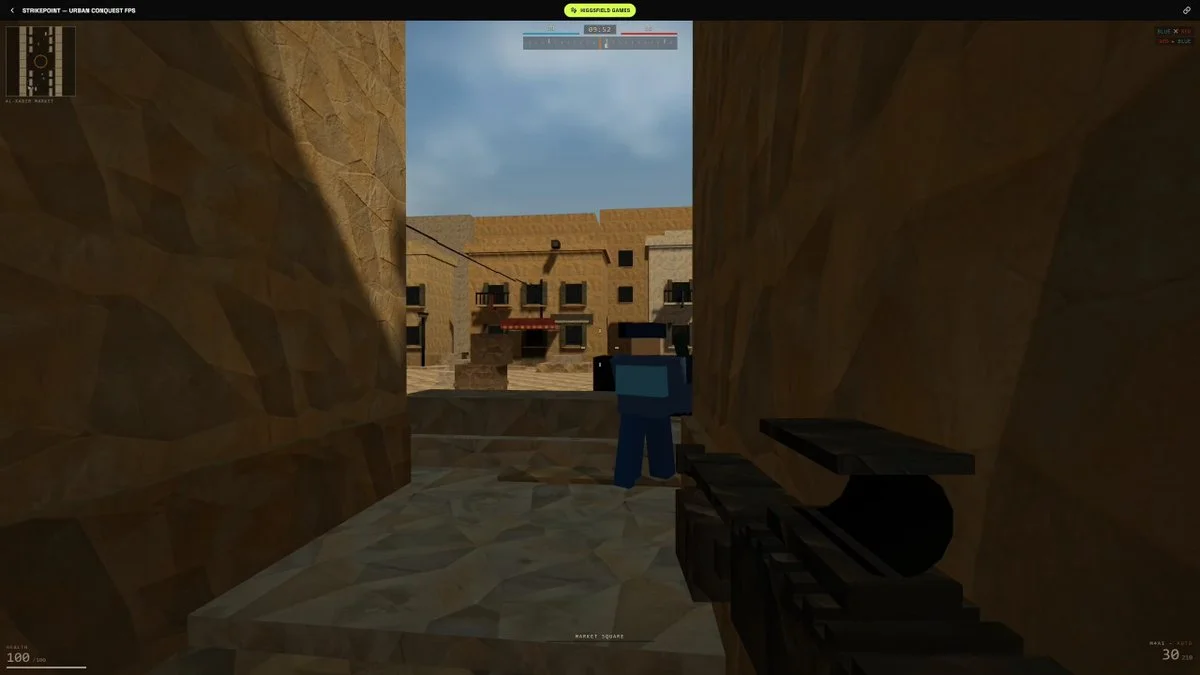
try making a first-person shooter that's a mix of CS2 and Battlefield.
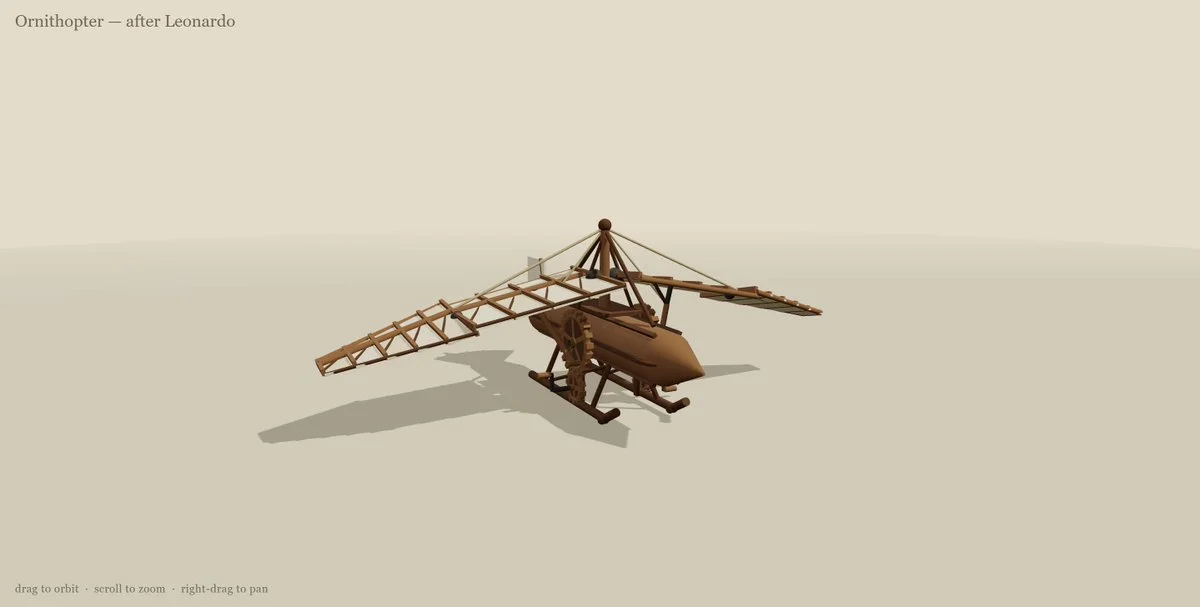
leonardo da vinci ornithopter in three js