Lead with the outcome
State the user-visible outcome first, then list the systems that must cooperate to produce it.
Explore Claude Opus 5 AAA shooter game prompt: a Claude Opus 5 3D example featuring first-person shooter, ThreeJS. Preview the result and adapt the prompt for your project.
Recently, the Call of Duty game created by Claude Opus 5 has been going viral, with the author claiming it was achieved with just one prompt. Many people are skeptical, and the author has directly open-sourced the code and prompt.

I originally thought the prompt would be very complex, but it turned out to be just a short few hundred words. The key among them is the loop.

Here is the prompt:

"I want you to develop a first-person shooter game that reaches the level of the latest Call of Duty. It must be flawless, with stunningly beautiful graphics, from textures to physics effects—all the elements you can think of must reach AAA-level quality.

You need to create multiple sub-agents and have each sub-agent handle every detail separately to ensure the game reaches perfection. You should /loop each project and have an independent sub-agent perform a visual inspection to ensure it reaches AAA-level standards. This independent sub-agent should be extremely strict; if it doesn't reach AAA-level standards, it should continue checking.

Do not stop until every sub-agent, after comparing with the Call of Duty game, is utterly amazed by the game's graphics quality. It should be able to compare the two games side by side without even looking at the visuals and point out which one is better. Use ThreeJS to complete this work. /loop until the game reaches perfection. Create multiple sub-agents and use UltraCode for optimization."
Prompt breakdown
Explore “Claude Opus 5 AAA shooter game prompt”, a Claude Opus 5 3D example about Claude Opus 5, first-person shooter, ThreeJS. Check the evidence label to see whether the text is an original prompt or a brief adapted from the public source.
Keep the core outcome, then specify the camera, controls, lighting and what a successful result should do. Test that first before adding more visual detail.
State the user-visible outcome first, then list the systems that must cooperate to produce it.
Make controls, state transitions, collisions and reset behavior explicit; do not leave core interaction rules implied.
Ask for asset budgets, responsive controls and graceful fallbacks so the prototype remains usable beyond a desktop demo.
Your prompt builds the game or scene. Bring it to life with more detailed characters and props, created in Tripo to replace simple placeholder models.
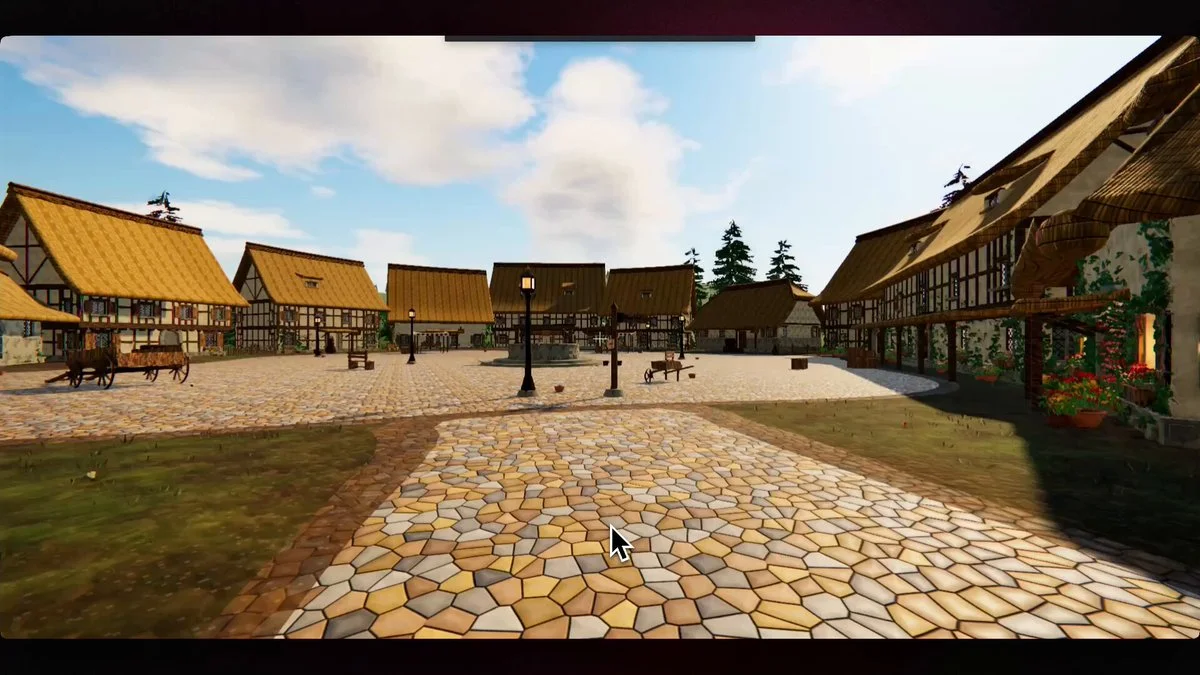
Build an explorable 3D world in Three.js based on the attached image. Requirements First-person controls (WASD + mouse look), collision detection, no clipping through geometry AAA visuals: PBR materials, HDRI-based lighting, real shadows, post-processing (tone mapping, bloom, AA) Physics on anything that moves or can be interacted with 60fps on a mid-range GPU Process Split the work into independent streams: terrain, props/geometry, materials/textures, lighting, physics, controls/camera, performance. Assign one sub-agent per stream. Each sub-agent owns its stream end to end and reports what it built plus what is still weak. Integrate, then run a review pass: walk the world, list every visible defect, fix them. Repeat that loop until a full pass produces zero defects, or until 5 loops. Report anything unresolved either way. Deliver a single runnable project plus launch instructions.
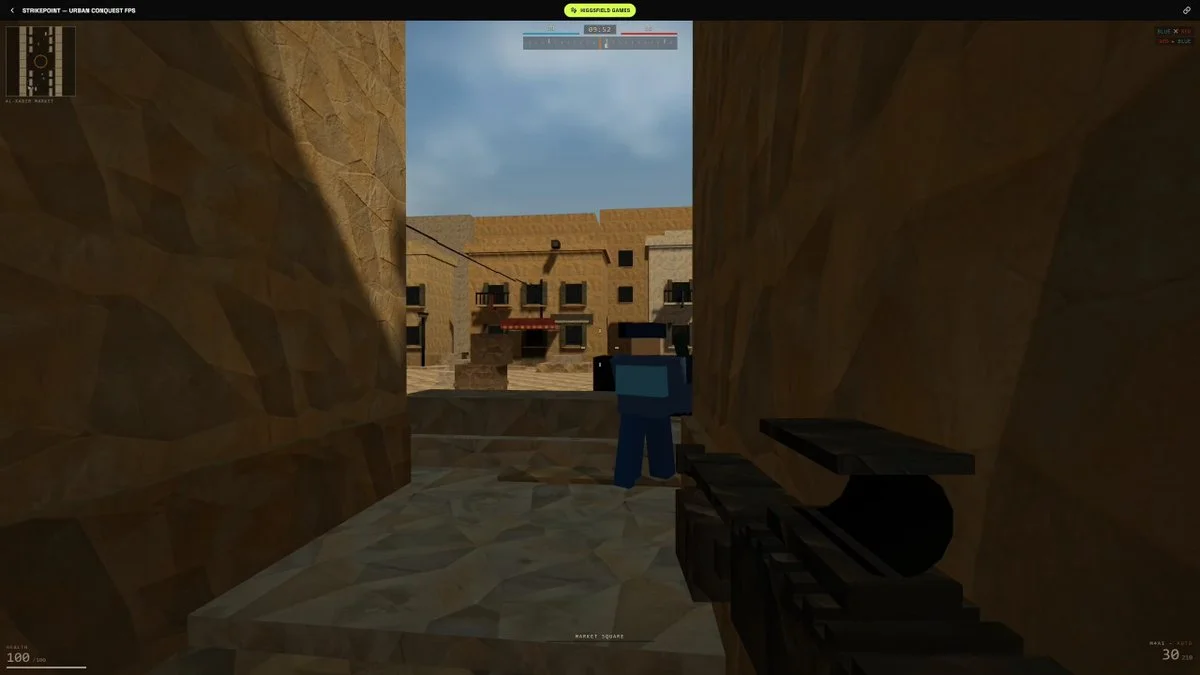
try making a first-person shooter that's a mix of CS2 and Battlefield.
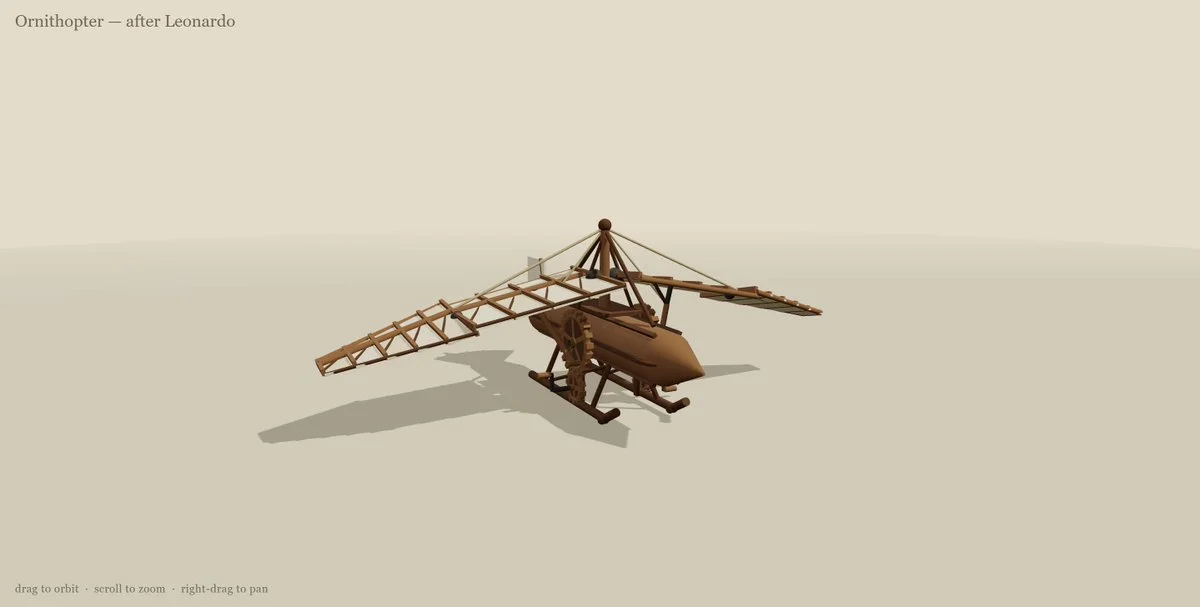
leonardo da vinci ornithopter in three js