Learning from Uncertainty: Tripo AI × Jissen Women’s University
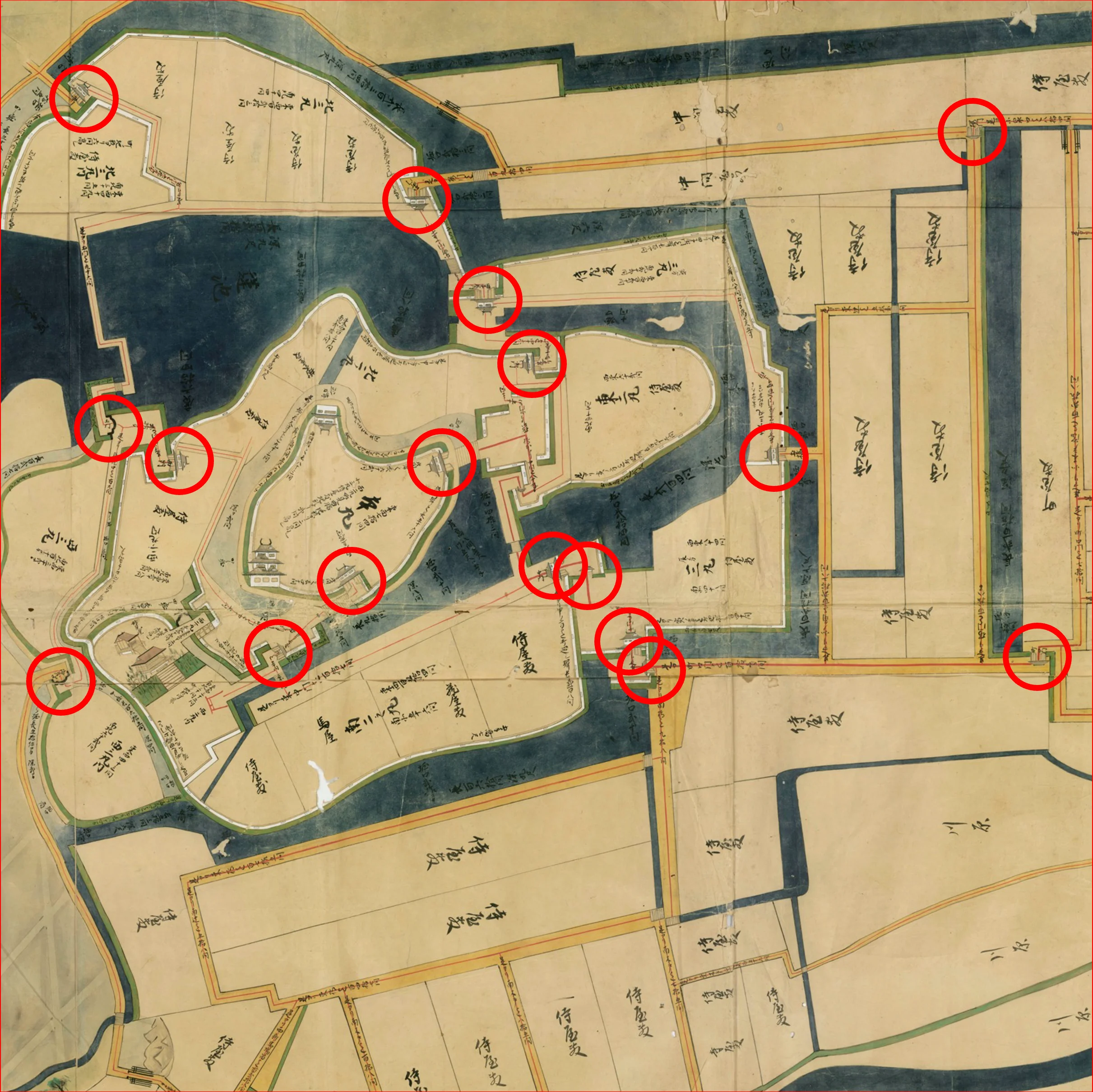
Beginning with 19 lost gates depicted in the historic Shōhō Castle Map, Tripo AI, Jissen Women’s University, STYLY, ORIE, and local partners are exploring a central educational question: when history leaves no complete answer, can generative 3D become a medium for observation, interpretation, and renewed understanding?
A historical map can record roads, walls, rivers, and the locations of city gates. It cannot always tell us exactly how a gate looked, how it was constructed, what materials it used, or how it occupied space hundreds of years ago.
In Soma, Fukushima Prefecture, Japan, an ongoing educational and artistic project is using 19 gates depicted in the Shōhō Castle Map to examine the distance between historical evidence, contemporary interpretation, and digital form.
The project is being developed by the Hajime Shimoyama Laboratory in the Department of Aesthetics and Art History at Jissen Women’s University, together with Katsuhiko Sakuyama of ORIE CO., LTD., Eishi Saito of STYLY, Inc., and Tripo AI.
Images from the Shōhō Castle Map are provided courtesy of the Soma City Board of Education.
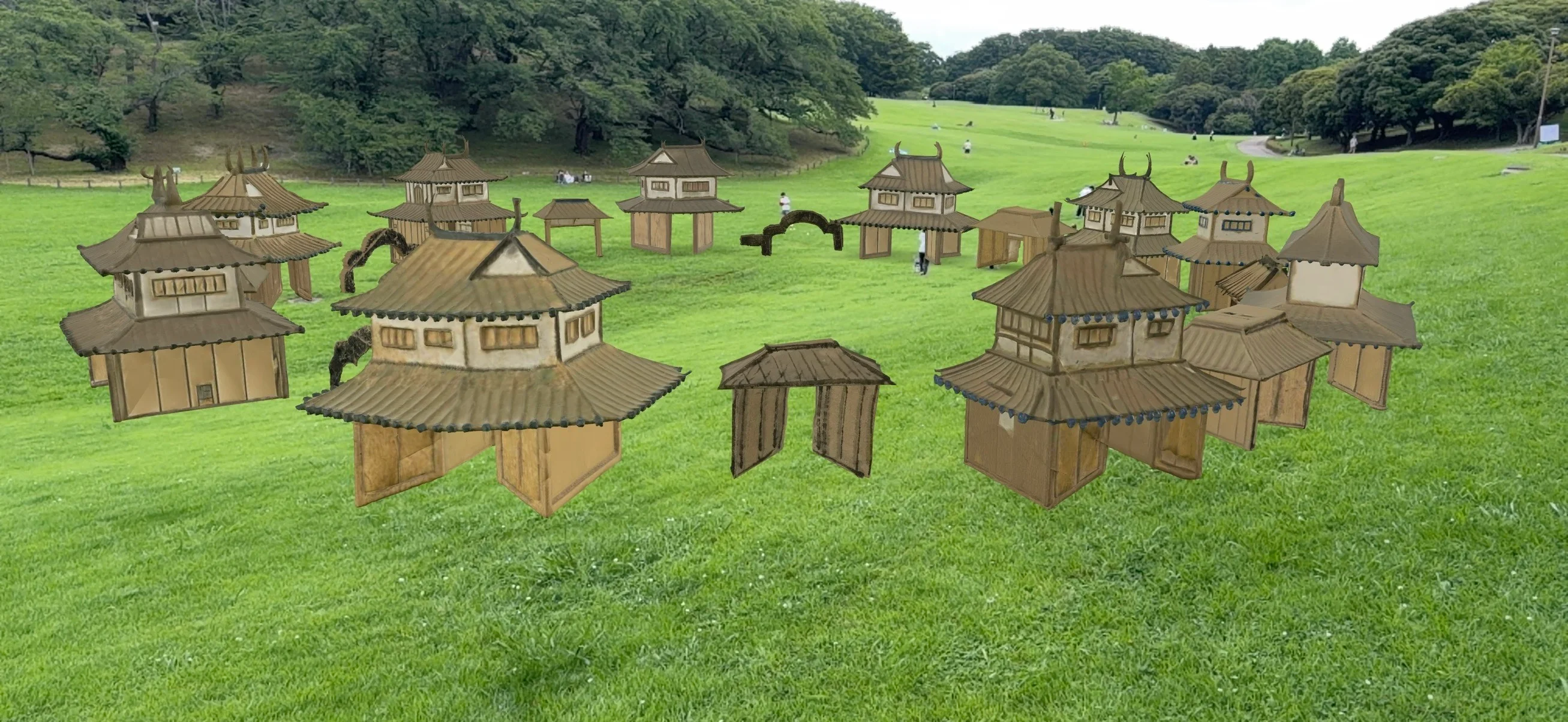
Using Tripo AI, the team is translating two-dimensional historical illustrations into 3D models. The models are then brought into contemporary physical spaces through STYLY WebAR, allowing gates that have disappeared from the city to reappear as virtual objects.
Initial models of all 19 gates have now been completed. The project is scheduled to be publicly presented as a WebAR artwork on September 26, 2026, at the annual conference of the Institute of Environmental Art and Design, or IEAD, held at Tokyo University of the Arts.
When One Historical Source Produces 19 Different Answers
During the project, a phenomenon that could easily have been treated as a generation error gradually became its most important discovery.
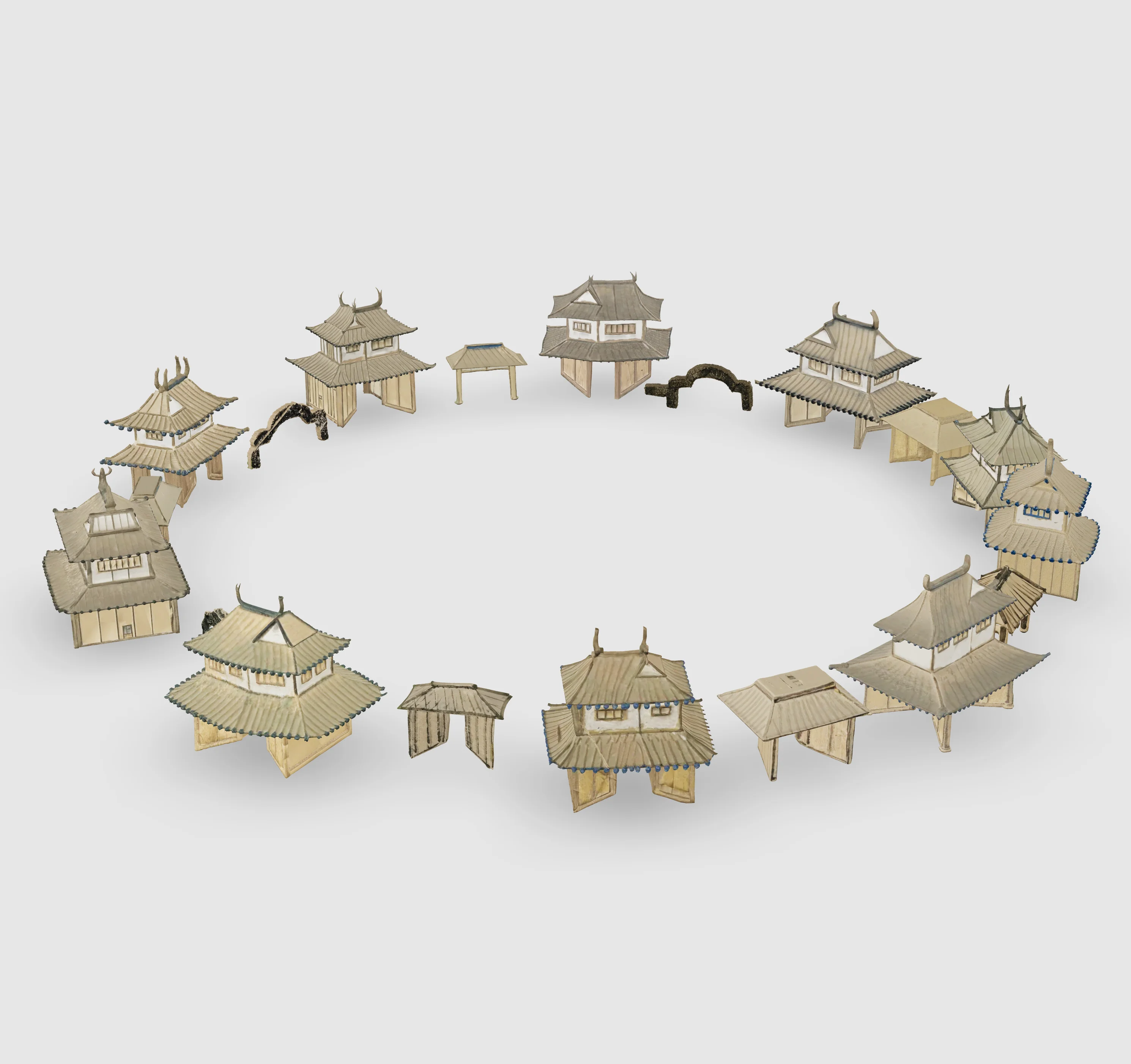
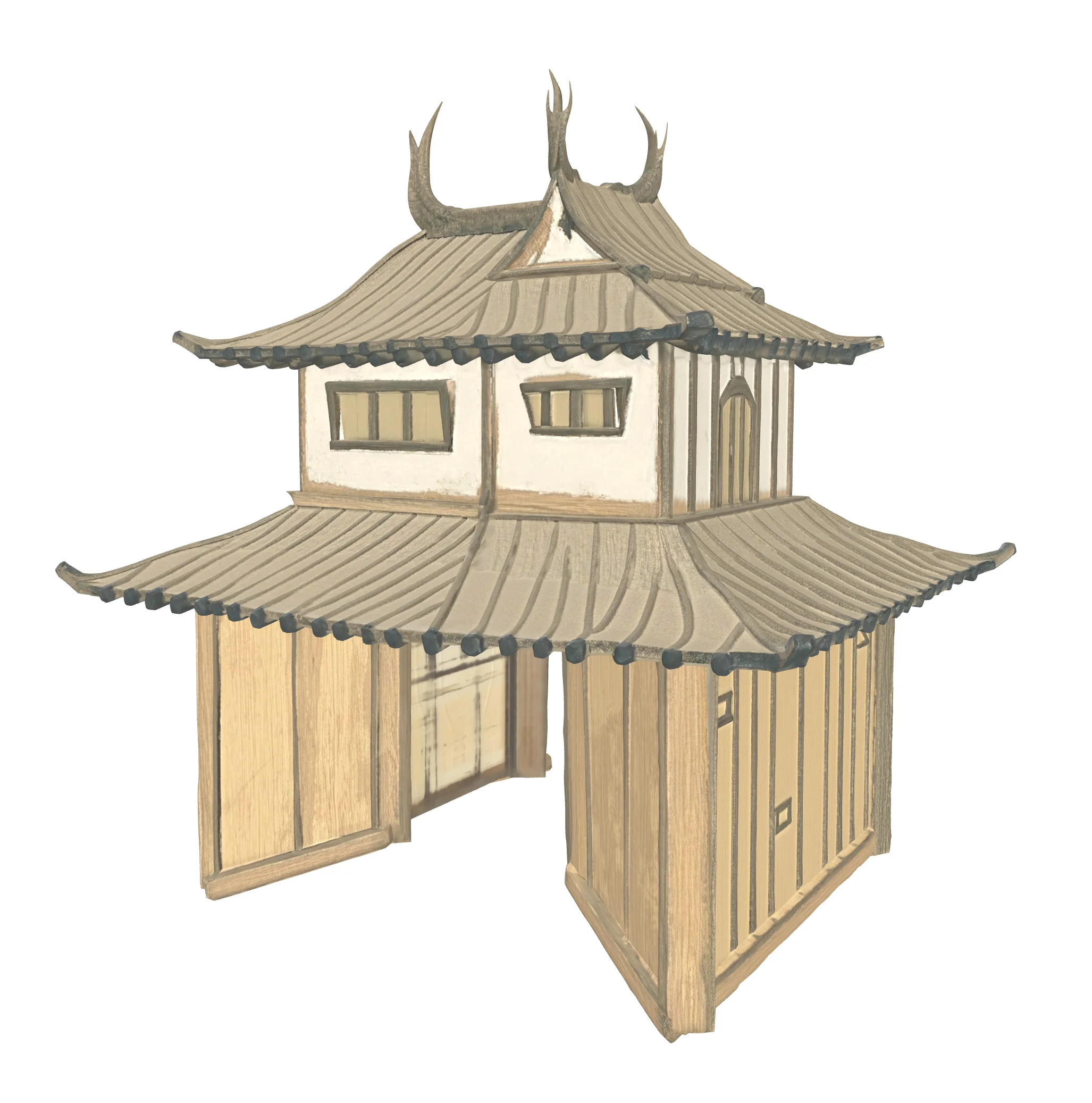
Although the source illustrations shared very similar compositions and visual information, the 19 models generated through Tripo AI developed noticeably different individual characteristics.
Some gates appear heavy and enclosed. Others feel lighter or more open. Some follow recognizable architectural structures, while others contain unusual forms that extend beyond the information visible in the original image.
They resemble 19 different interpretations growing from a similar body of historical evidence.
In a project focused only on precise reconstruction, these variations might first appear as problems to be corrected. In 19 Portals, the team chose to pause and examine the inaccuracy itself.
A two-dimensional image with limited structural detail must be completed when it becomes a three-dimensional object. Which parts of that completion come from historical evidence? Which come from human expectations? Which emerge from the model’s interpretation of shape and structure?
When AI offers several answers to information that history has left incomplete, how should we evaluate, select, and explain them?
These questions expand the role of AI 3D beyond asset production. The generated models become materials for comparison, research, and discussion.
For Hajime Shimoyama, the value of the project may lie in discovering something interesting, beautiful, or meaningful beyond the conventional expectation of a single “correct answer.”
Inaccuracy Can Become a Starting Point for Learning
Educational technology is often evaluated by its ability to provide more accurate, consistent, and controllable results.
Yet many questions in art, cultural heritage, and historical interpretation do not have one fully verifiable answer. Historical records may be incomplete. Researchers may propose different interpretations. Images also change as they are copied, translated, and passed between generations and media.
The project therefore does not present the AI-generated gates as historical facts. A model that looks convincingly old is not treated as the final outcome.
The most important learning takes place after generation.
When facing 19 different models, participants must return to the original map and examine which characteristics are supported by visible evidence, which represent reasonable interpretation, and which appear to be freely supplemented by the AI system.
They must decide which results are worth preserving, which require adjustment, and how the distance between the model and the historical source should be communicated to an audience.
This process develops skills that go far beyond prompting or software operation.
It asks learners to work with uncertainty, distinguish evidence from inference and imagination, form their own visual judgments, and explain the reasoning behind a creative decision.
AI’s “inaccuracy” therefore becomes visible educational material.
The assumptions involved in historical reconstruction are often hidden behind a polished final image. Generative AI makes variation and speculation easier to observe, giving students, educators, and audiences an opportunity to ask how a historical form is actually reconstructed.
Moving from Finding Answers to Making Questions
The project also reflects a broader educational approach that Hajime Shimoyama has continued to explore through his teaching and creative practice.
Many projects begin by defining a concept and asking students to produce an outcome that fits it. Yet genuinely new value does not always appear clearly at the beginning. It may emerge through making, rapid prototyping, sharing results, and repeatedly observing what has been created.
A creator may first make a form, experience its effect, and only later understand the question that the work is asking. Unexpected results that do not fit the original concept can become the most valuable direction for further development.
In 19 Portals, Tripo AI accelerates this process of experimentation.
The team can generate multiple three-dimensional interpretations from similar historical images and examine their differences side by side. The models function not only as final assets, but also as intermediate materials that move research and learning forward.
For higher education, this suggests a different way of working with generative AI.
Students do not need to focus only on producing the most attractive or accurate model in a single attempt. Through generating, comparing, selecting, modifying, and explaining, they can investigate how technology participates in the formation of visual culture and how historical materials change as they move between media.
Bringing Historical Interpretation Back into Physical Space with STYLY WebAR
After the initial 3D generation process, the 19 gates will enter physical environments through STYLY WebAR.
Using a phone, audiences will be able to view virtual architectural forms derived from the historical map within contemporary spaces. The vanished gates, the city as it exists today, and AI-generated interpretations of the past can appear within the same field of view.
STYLY WebAR therefore carries meaning beyond convenient presentation.
When a model is placed back into physical space, its scale, direction, structure, and relationship with the surrounding environment become more tangible. A form that appears convincing on a screen may feel entirely different when encountered at architectural scale.
The work remains open to interpretation.
If a gate once stood here, what might it have looked like? How much of the object in front of us comes from historical evidence, and how much comes from contemporary interpretation?
From the original map to Tripo AI and then to STYLY WebAR, the project moves through several layers of translation. Each transition adds new information and introduces new interpretation.
That process of translation is itself part of what the project seeks to teach.
When an Artwork Becomes a Research Outcome
On September 26, 2026, 19 Portals will receive its first public presentation at the IEAD annual conference at Tokyo University of the Arts.
IEAD brings together artists, educators, and creators connected with universities across Japan. Alongside academic papers, the community recognizes the creation and presentation of artworks as meaningful research outcomes.
Within this context, the 19 gates operate simultaneously as WebAR artworks and as a research practice examining historical imagery, generative AI, visual interpretation, and public education.
The project does not tell the audience, “This is exactly what the historical gates looked like.”
Instead, it reveals how an incomplete historical source can gradually become a new visual form through the combined participation of research, technology, and contemporary imagination.
Public presentation also allows the educational process to move beyond the classroom. Educators, researchers, technology partners, and audiences can discuss the same set of models, while their different responses and interpretations become material for the project’s next stage.
From 19 Gates to a Digital History Museum
19 Portals remains an ongoing project.
Building on this work, the team has submitted a proposal for the Soma Castle Town Digital History Museum to the City of Soma and is preparing to develop it into a joint public–private initiative.
The long-term vision is to expand from the 19 gates toward the castle, streets, historical buildings, and the wider castle town, before potentially connecting with cultural resources across the Sōsō region and the wider Hamadōri area.
As higher-resolution historical images, local archives, and community memories become available, Tripo AI can continue supporting rapid prototyping and comparison between possible historical forms.
Researchers can provide evidence, verification, and interpretation. Students can participate in asset creation, spatial storytelling, and public presentation. Local residents can contribute personal memories and place-based knowledge.
The proposed digital history museum can therefore become a continuously evolving educational space: one that collects evidence, raises questions, and enables people to understand local history together.
Using AI to Ask Better Questions
The Tripo AI Education Program aims to support more than faster access to a finished 3D model.
We want AI 3D to become part of real learning, research, and creative practice—helping students turn abstract questions into three-dimensional outcomes that can be observed, compared, discussed, and continuously revised.
In 19 Portals, generative AI does not replace historical research, artistic judgment, or educator guidance. It makes the interpretive space within incomplete historical evidence more visible, allowing participants to encounter evidence, inference, deviation, and imagination at the same time.
From the two-dimensional lines of the Shōhō Castle Map, to 19 distinct Tripo AI models, and finally to STYLY WebAR experiences placed in physical space, the collaboration raises an important question for AI education:
When technology cannot provide one correct answer, can we still learn from its uncertainty?
Education does not always need to eliminate every inaccuracy as quickly as possible.
It can also help learners understand how to respond to uncertainty, ask better questions, and discover new value within the creative space that history has left unfinished.
Universities, faculty members, and research teams interested in exploring research, course, or student-project collaborations with the Tripo Education Program can contact: