Building the Virtual Silk Roads: Tripo AI × Shanghai Jiao Tong University
Through AI 3D generation, API integration, and technical collaboration, Tripo joined Shanghai Jiao Tong University in building the Virtual Silk Roads research project—and brought its AI-powered virtual heritage workflow to the global academic community at IASTE 2026.
Cultural heritage research often begins with evidence: architectural drawings, historical photographs, archaeological records, written archives, oral histories, and years of academic interpretation.
Yet turning that research into a world people can actually enter presents a very different challenge.
To reconstruct vanished cities, historical buildings, cultural objects, and spatial narratives, research teams must create a large volume of 3D assets that can be rendered in real time, explored online, and continuously expanded. For a project spanning multiple cities, historical periods, and cultural regions, digital asset production can quickly become one of the most demanding parts of the entire workflow.
This was one of the central challenges behind Virtual Silk Roads, a digital heritage research project initiated by the School of Design and the Laboratory on Spatial Intelligence and Virtual-Real Fusion Design at Shanghai Jiao Tong University.
To address this challenge, Tripo, the AI 3D generation platform developed by VAST, began a research collaboration with the team led by Huaqing Huang, Associate Professor at the School of Design, Shanghai Jiao Tong University.
Through the Tripo API, AI 3D generation capabilities, and ongoing technical support, the collaboration explored how historical images, heritage materials, and spatial references could be transformed more efficiently into 3D assets for real-time rendering, virtual reconstruction, interactive exhibitions, and public education.
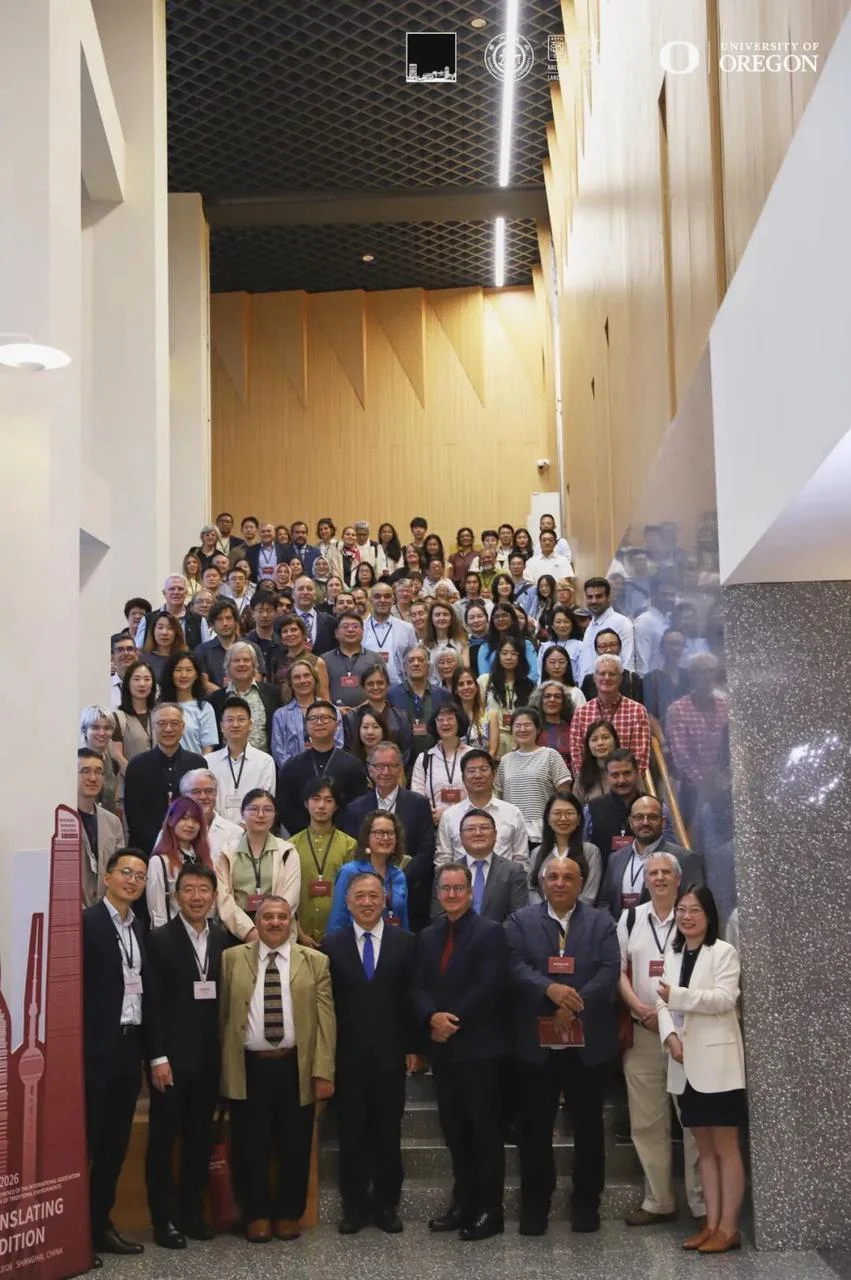
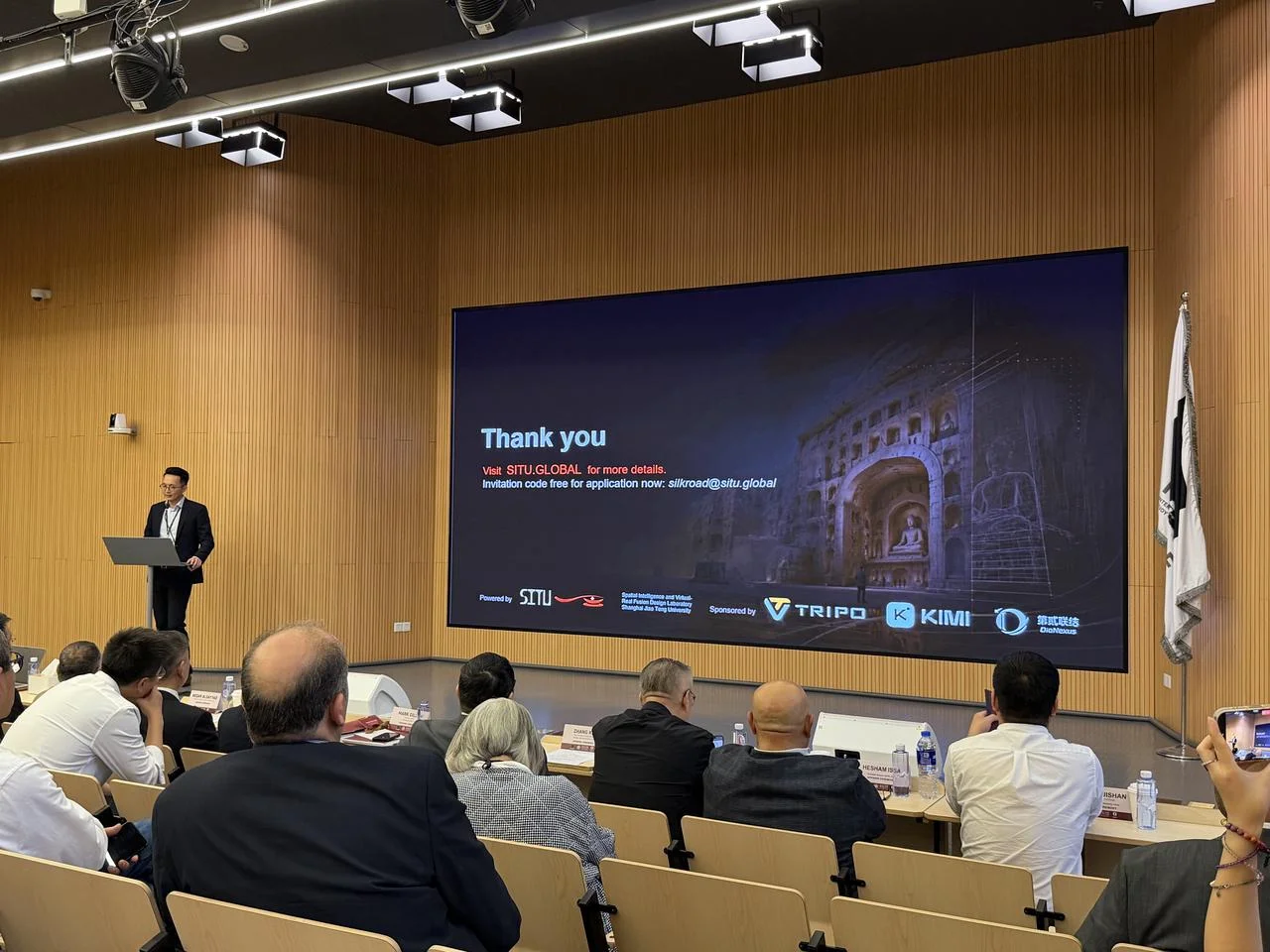
In June 2026, Virtual Silk Roads and its public-facing cultural heritage intelligence platform, SITU, were officially presented to the international academic community during IASTE 2026, hosted by the School of Design at Shanghai Jiao Tong University.
Building a 3D Memory of the Silk Roads
For more than two thousand years, the Silk Roads connected cities, ports, religious centers, trading communities, and cultural traditions across Asia, Europe, and Africa.
Today, many of these historical environments survive only through ruins, excavation records, archival images, and written descriptions. Others remain under pressure from climate change, armed conflict, urban expansion, and the gradual loss of physical and cultural context.
Virtual Silk Roads was created to explore how these dispersed forms of knowledge could be reorganized into a shared, continuously evolving 3D digital memory archive.
The project brings together research on urban history, architectural history, material culture, trade routes, religious spaces, and individual stories. It then translates that research into interactive digital environments that can be explored through virtual exhibitions, real-time experiences, academic research, and public education.
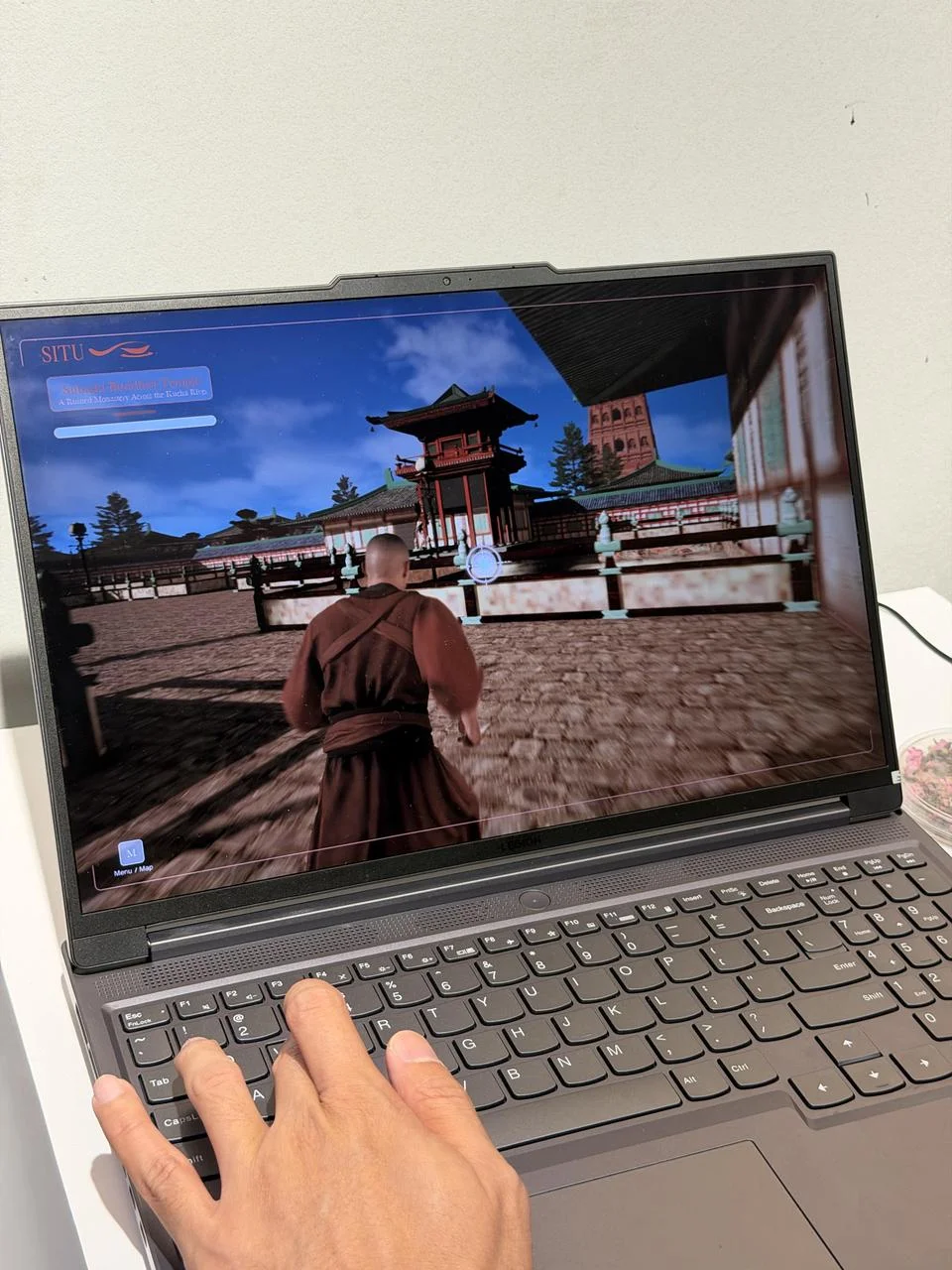
Visitors can return to Chang’an and the Great Ci’en Temple, follow Xuanzang’s journey toward Nalanda, enter the maritime trading ports of the Song dynasty, or explore caravan stations, grasslands, and other historical environments along the Silk Roads.
In this form, academic research moves beyond papers, archives, and static imagery. It becomes a digital space that can be entered, explored, discussed, and continuously developed.

SITU is the cultural heritage intelligence system and digital platform through which Virtual Silk Roads is made accessible to researchers and the public. It brings together historical materials, academic research, 3D assets, spatial experiences, and public interaction within one evolving system.
The Production Challenge Behind a Virtual Heritage World
The Shanghai Jiao Tong University team had already spent years developing the academic foundation of the project through research, graduate projects, interdisciplinary studios, and digital heritage practices.
The challenge emerged when that research had to become a functioning virtual world.
Buildings, sculptures, artifacts, landscapes, and spatial elements all needed to be transformed into 3D content suitable for real-time engines and online environments. Each asset also required review, adjustment, and spatial organization before it could enter the final experience.
When a project covers dozens of cities, several historical periods, and multiple cultural regions, relying entirely on traditional modeling workflows can create significant demands in time, technical expertise, and production resources.
Tripo was introduced into this process as an AI-powered 3D generation layer.
Through the Tripo API, the project team could use historical imagery, cultural heritage materials, and design references to generate initial 3D assets more efficiently. Researchers and production teams could then review, refine, reorganize, and integrate those assets into the larger virtual environment.
The resulting workflow connected historical research, visual reference preparation, AI-assisted generation, academic review, manual refinement, spatial construction, real-time rendering, and public presentation.
AI helped accelerate asset production and early experimentation. Historical interpretation, evidence-based judgment, and final academic decisions remained in the hands of the university research team.
This distinction is especially important in cultural heritage research. Generative technology can help researchers test ideas and produce assets more efficiently, but it cannot replace the academic responsibility required to interpret history, evaluate evidence, and determine how a cultural site should be represented.
From Research Materials to Interactive Heritage Experiences
By integrating Tripo into the project’s broader production pipeline, Virtual Silk Roads could move more efficiently from historical evidence toward spatial experience.
Visual references and research materials first provided the basis for initial asset generation. These assets were then reviewed and refined by the project team before being placed into real-time environments and interactive scenes.
The goal was never to automate the entire reconstruction process. The value of AI 3D lay in reducing the production barrier between academic knowledge and a usable visual prototype.
That shorter path allowed researchers to test spatial interpretations earlier, explore alternative reconstruction approaches, and devote more attention to historical accuracy, environmental storytelling, interaction design, and public communication.
It also enabled cultural heritage research to reach new formats. A city described in an archive could become an explorable environment. A building reconstructed through historical evidence could become part of an online exhibition. A collection of artifacts and spatial records could be organized into an interactive learning experience.
Through SITU, these elements could be experienced as part of the wider Virtual Silk Roads world rather than as isolated models or static documentation.
Presenting Virtual Silk Roads at IASTE 2026
On June 25, 2026, Virtual Silk Roads and SITU were officially presented during the 21st conference of the International Association for the Study of Traditional Environments, or IASTE.
The 2026 conference was hosted by the School of Design at Shanghai Jiao Tong University under the theme Translating Tradition.
The event brought together more than 250 scholars and researchers from over 30 countries and regions, working across architecture, traditional environments, cultural heritage, urban studies, museums, digital humanities, spatial design, and design education.
Within this international academic setting, Virtual Silk Roads offered one possible interpretation of “translating tradition”: using AI 3D, real-time rendering, and spatial computing to transform historical research into digital environments that can be entered and explored.
The project demonstrated how emerging technologies could support the communication of complex heritage research while creating new opportunities for public engagement and international academic collaboration.
VAST Founder and CEO Simon Song commented:
“
“When AI meets the millennia-old Silk Roads, we are not simply reproducing history. We are creating a new form of civilizational memory that can be entered and experienced. VAST is honored to contribute Tripo’s AI 3D technology to Virtual Silk Roads.”
Tripo at the Official IASTE 2026 Side Event
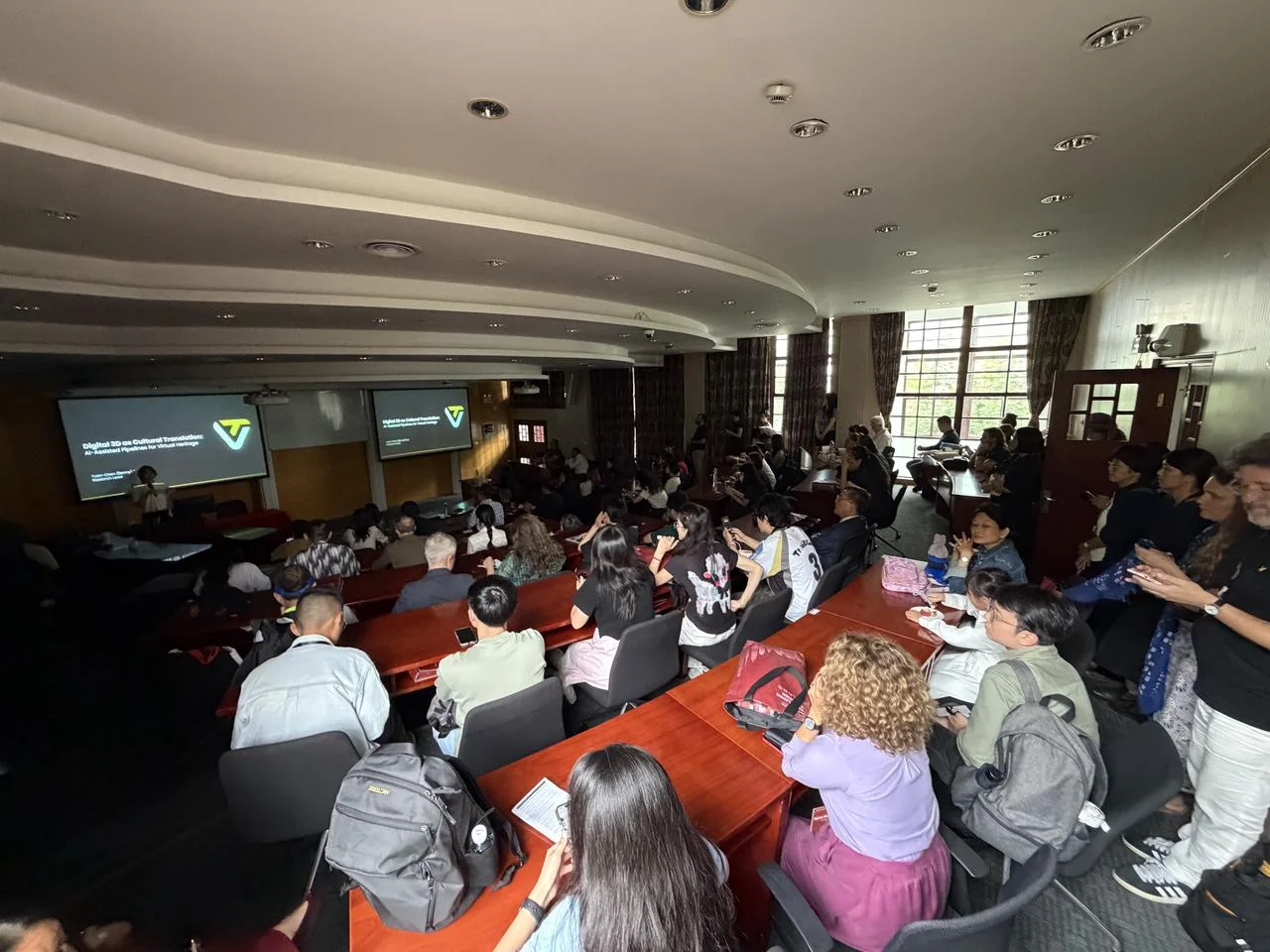
On June 27, SITU and Tripo jointly hosted an official IASTE 2026 Side Event:
Virtual Silk Road Luncheon: Virtual Heritage and AI-Powered Pipeline
Held at Shanghai Jiao Tong University’s Xuhui Campus, the session welcomed IASTE participants, university faculty, researchers, and invited guests.
The event was hosted by Huaqing Huang, Associate Professor at the School of Design, Shanghai Jiao Tong University, and Co-founder of SITU. Huang introduced the research background of Virtual Silk Roads and the team’s ongoing effort to transform cultural heritage along the Silk Roads into a continuously expanding digital environment.
Heden, Product Manager of SITU, then presented the platform’s structure, content, and interactive experience, explaining how Virtual Silk Roads had developed from a collection of individual digital scenes into a broader system connecting research materials, 3D assets, spatial experiences, and public access.
Yuan-Chen “Benny” Guo, Research Scientist at VAST, delivered the Tripo technology presentation.
His session examined how the Tripo API, AI 3D generation, real-time rendering, and digital asset production could contribute to virtual heritage reconstruction, architectural research, online exhibitions, and education.
Rather than presenting Tripo as an isolated generation tool, the session placed it within a complete AI-powered pipeline.
Historical research and visual references could become initial 3D assets. Those assets could then be reviewed, refined, and integrated into research prototypes, virtual environments, online platforms, and public exhibitions.
The discussion focused on what happens after generation: how assets enter real workflows, how researchers maintain academic control, and how universities can use AI 3D to communicate complex spatial and historical knowledge.
Connecting with a Global Academic Community
The Side Event also created a focused opportunity for exchange with scholars working across architecture, cultural heritage, digital environments, museums, and design education.
Before and after the session, members of the team spoke with researchers about the practical and academic questions raised by AI-generated 3D.
Philip Feng, Senior Brand Manager at VAST, engaged with participants on the cultural and social meaning of digital heritage, virtual space, and digitally reconstructed objects.
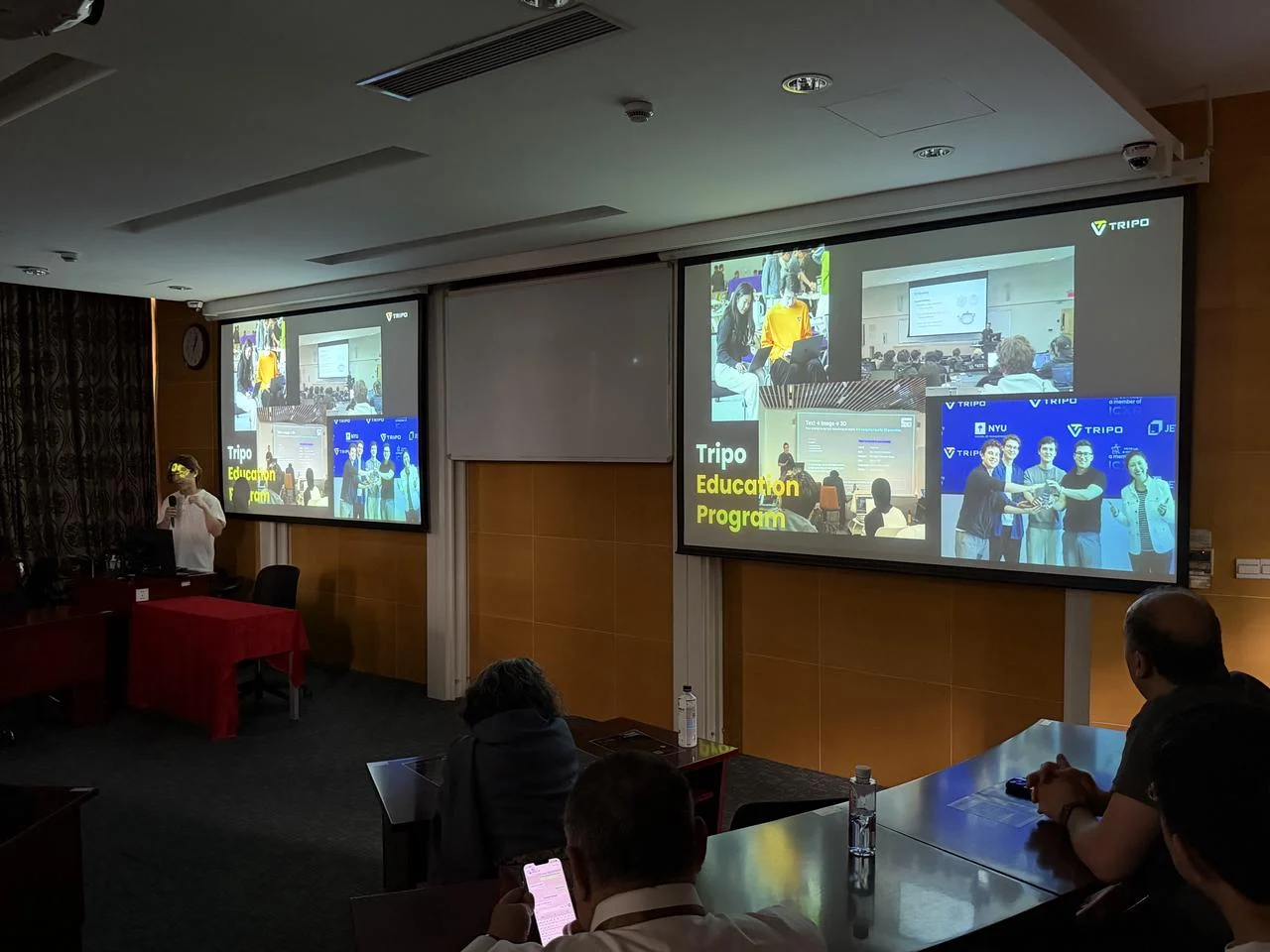
Chris Li, Tripo Education Program Lead, introduced Tripo’s university education and research collaboration program, discussing potential directions including academic workshops, student projects, research collaboration, virtual exhibitions, and future institutional partnerships.
Benny continued the technical conversations around API integration, asset generation, real-time workflows, and the specific requirements of heritage-focused projects.
For Tripo, the value of the event extended beyond presenting technology.
It provided a direct view into the questions researchers are asking: How can AI-generated assets remain traceable to historical evidence? How should universities evaluate accuracy? What level of technical control is required? How can a virtual heritage platform be maintained over time? And how can these technologies contribute to research without weakening academic rigor?
These conversations also connected Virtual Silk Roads with a wider network of universities and research institutions interested in digital heritage, spatial computing, architectural history, museums, and public education.
University Collaboration Can Begin with a Real Research Problem
Virtual Silk Roads represents one model of collaboration within the Tripo Education Program.
The project did not begin with a generic product presentation or a one-off workshop. It began with a concrete research and production problem: how to transform a large body of cultural heritage research into an interactive 3D world that could be rendered in real time, expanded continuously, and opened to the public.
Shanghai Jiao Tong University contributed the academic foundation, historical research, spatial interpretation, and heritage framework. Tripo contributed AI 3D generation, API access, technical coordination, and workflow support.
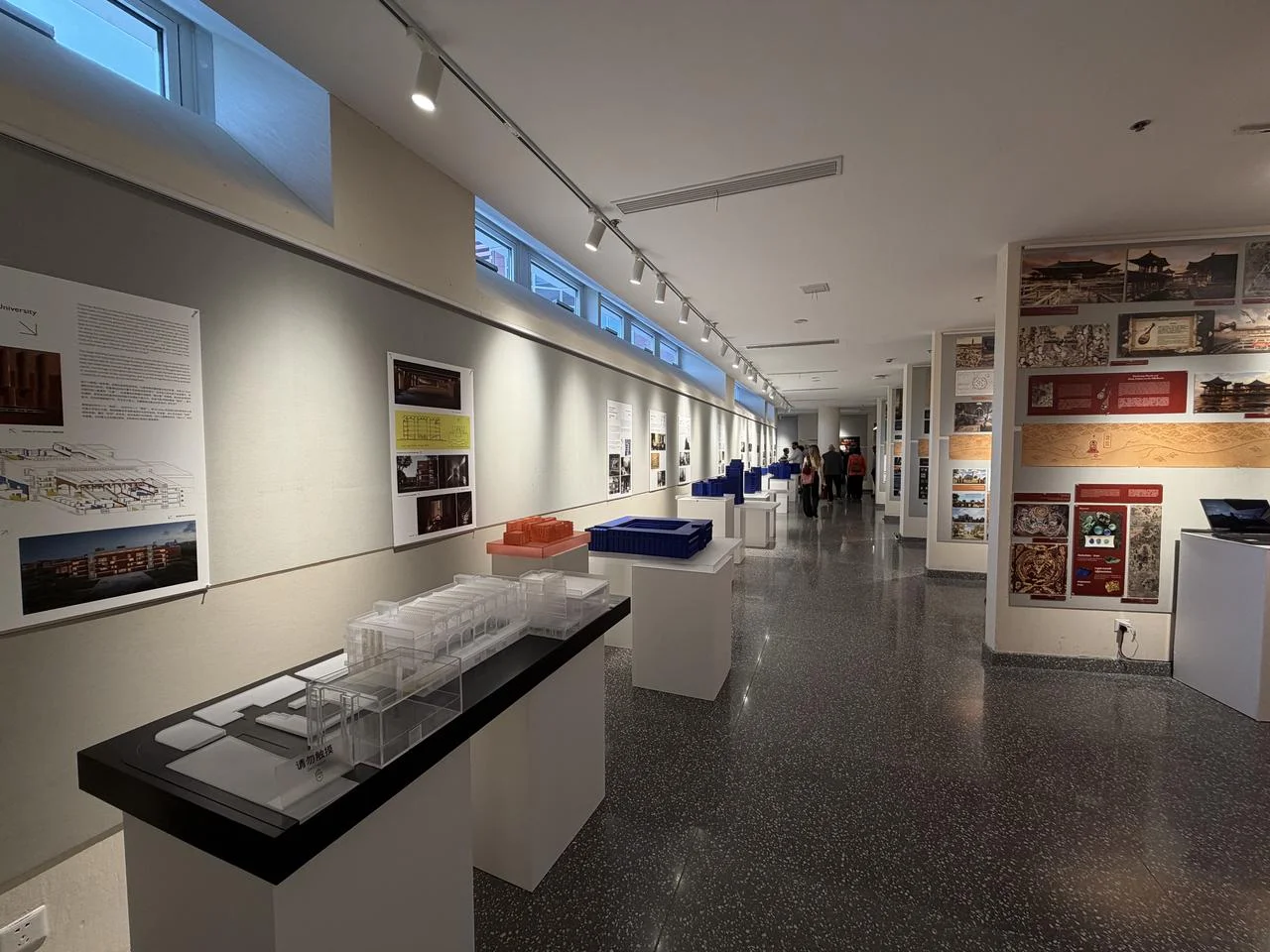
The resulting work was then shared through SITU, a physical exhibition, and IASTE 2026—bringing the collaboration from research and production into public and international academic contexts.
This process connected research, technology, exhibition, education, and international exchange.
It also demonstrated a role for AI 3D in universities that extends beyond traditional game, animation, or modeling courses.
For architecture, cultural heritage, museums, and digital humanities, AI 3D can shorten the distance between academic knowledge and visual experience. Researchers can devote more time to evidence, interpretation, spatial reasoning, and cultural storytelling, while using generative tools to accelerate the production and testing of digital assets.
Research that once existed primarily through text and images can gradually become an environment that people can observe, enter, question, and continue developing.
For the Tripo Education Program, the collaboration offers a clear example of how university partnerships can develop from real research needs: identify a production challenge, integrate AI 3D into an existing academic workflow, and bring the outcome into platforms, exhibitions, and global scholarly dialogue.
Virtual Silk Roads remains an ongoing project. Tripo will continue exploring how generative 3D can contribute to university research, virtual heritage, public engagement, and international academic collaboration.
Explore Virtual Silk Roads
Experience Virtual Silk Roads through SITU:
situ.global
Universities, faculty members, and research teams interested in exploring research, course, or student-project collaborations with the Tripo Education Program can contact: