AI Agent Hackathon: Tripo AI × NYU Shanghai & Fudan University
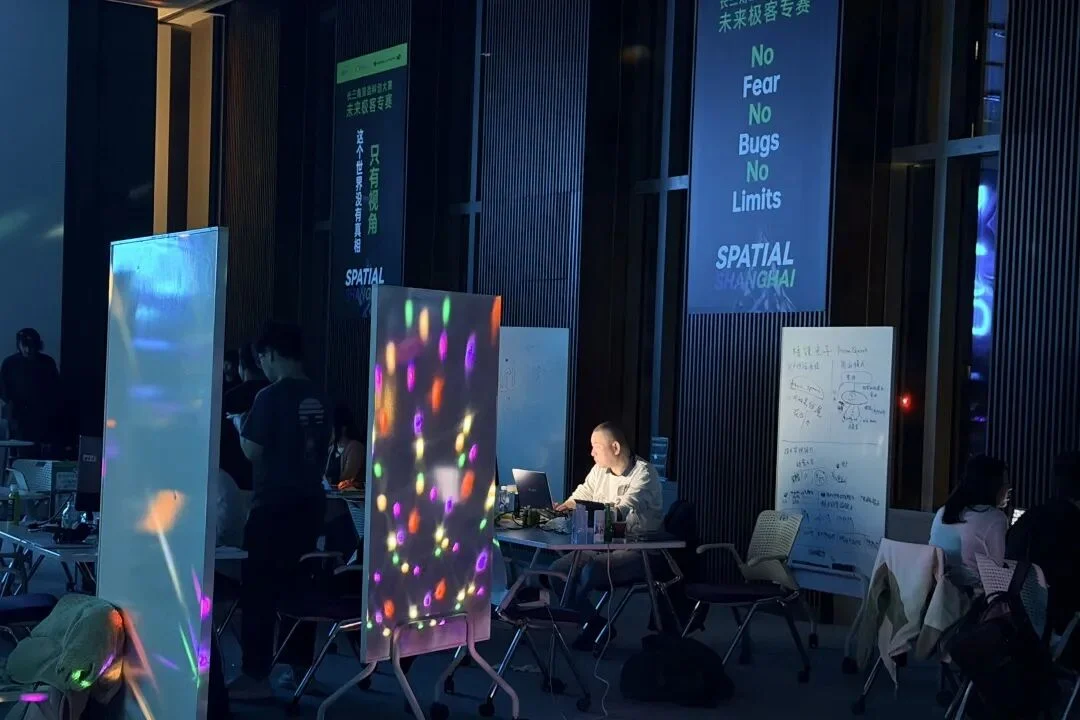
On April 25 and 26, 2026, 70 students and creators from universities including Fudan University, NYU Shanghai, Shanghai Jiao Tong University, Columbia University, University College London, and the University of Manchester gathered at NYU Shanghai’s Qiantan campus for a 24 hour sprint from idea to interactive 3D product. As one of the core 3D creation tools used during the event, Tripo AI enabled teams to generate 3D assets at speed and bring generative 3D directly into workflows combining AI agents, coding, and WebXR.
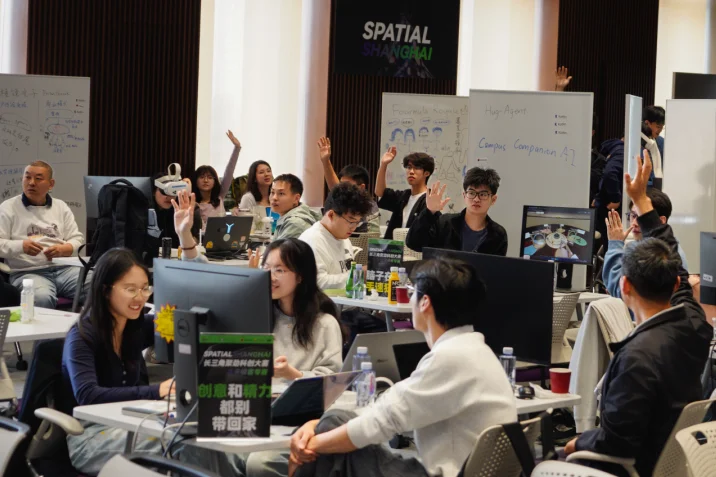
70 creators, 24 hours, one working product
The hackathon was part of the Future Geeks track of the Yangtze River Delta Innovation and Entrepreneurship Competition, jointly organized by the School of Management at Fudan University and NYU Shanghai.
Centered on the theme of agent engineering, the competition challenged participants to explore three broad areas: the future of organizations and work in the age of AI, new approaches to university teaching and research, and real problems contributed by technology companies.
The 70 participants formed 12 cross university teams, bringing together backgrounds in computer science, artificial intelligence, biomedicine, architecture, social sciences, business, and design. The youngest participant was a 20-year-old first-year student at NYU Shanghai, while the oldest was 51.
Within just 24 hours, teams had to define a problem, design a product, develop the code, create 3D content, and deliver something that could actually be demonstrated.
Claude, Gemini, Z.ai GLM, JetBrains, v0 by Vercel, WebXR, and Tripo were brought together across the development process. Tripo API provided rapid 3D asset generation, helping teams turn ideas that existed in prompts and code into environments, objects, and interactive spatial experiences.
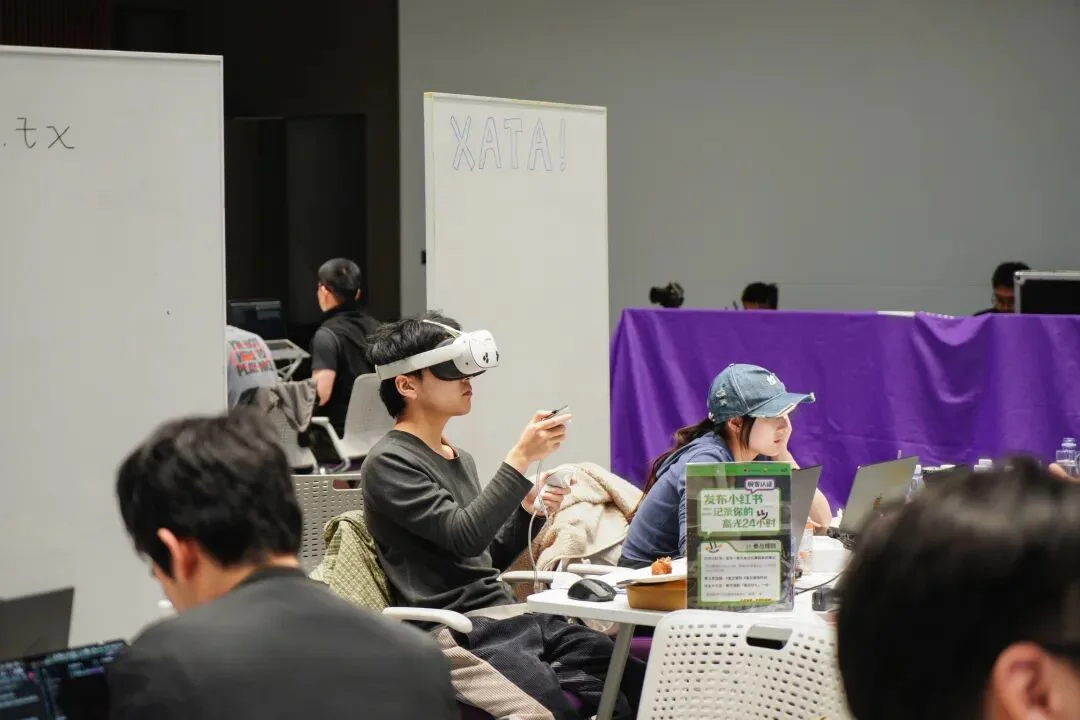
Bringing generative 3D into the AI development workflow
For teams working on spatial products, creating the 3D content can quickly become one of the biggest constraints.
A VR learning tool may need laboratory equipment. A digital twin needs spaces and objects. A simulation platform may require machinery, environments, and interactive elements. In a 24 hour competition, building all of these assets through a traditional 3D workflow is difficult to fit into the schedule.
Tripo AI gave teams a more direct route from concept to usable 3D content. Assets could be generated based on the needs of a product, then brought into the rest of the development workflow for further building and interaction.
Combined with AI coding tools, agents, and WebXR, generative 3D made it possible for small teams to prototype spatial products that would normally require a broader mix of technical and creative roles.
The result was a field of projects that went well beyond conventional AI demos.
From protein research to digital twins
The Visionary Geek Grand Prize went to Van der View, a cross university team formed by students from University College London, the University of Manchester, and NYU Shanghai.
Their project was a protein drug visualization tool for higher education. Using VR, WebXR, and AI agents, the team created an experience that allows students and researchers to enter a three dimensional environment, examine molecular structures, and explore concepts related to drug design.
Another team, Prism Photon, developed an interactive 3D digital twin for commercial and entertainment venues. One of its members, NYU Shanghai graduate Xiaozao Wang, was preparing to continue her studies at Harvard University. The team explored how virtual spaces could extend physical venues while also generating new forms of behavioral data around how users move through and interact with them.
Other projects included a public speaking practice platform, factory simulation training, a space station simulation, and a virtual classroom without walls.
Two first year NYU Shanghai students, inspired by their own experience of feeling nervous during presentations, helped create a platform where users could practice speaking in front of AI generated audiences and environments. Another project imagined a classroom where students could step into Monet’s world to see the water lilies, then move into a philosophy setting to engage with ideas associated with Socrates and Confucius.
Across very different disciplines, the same pattern kept appearing. Ideas that were difficult to express through text or a flat interface became easier to understand once they could be turned into interactive 3D space.
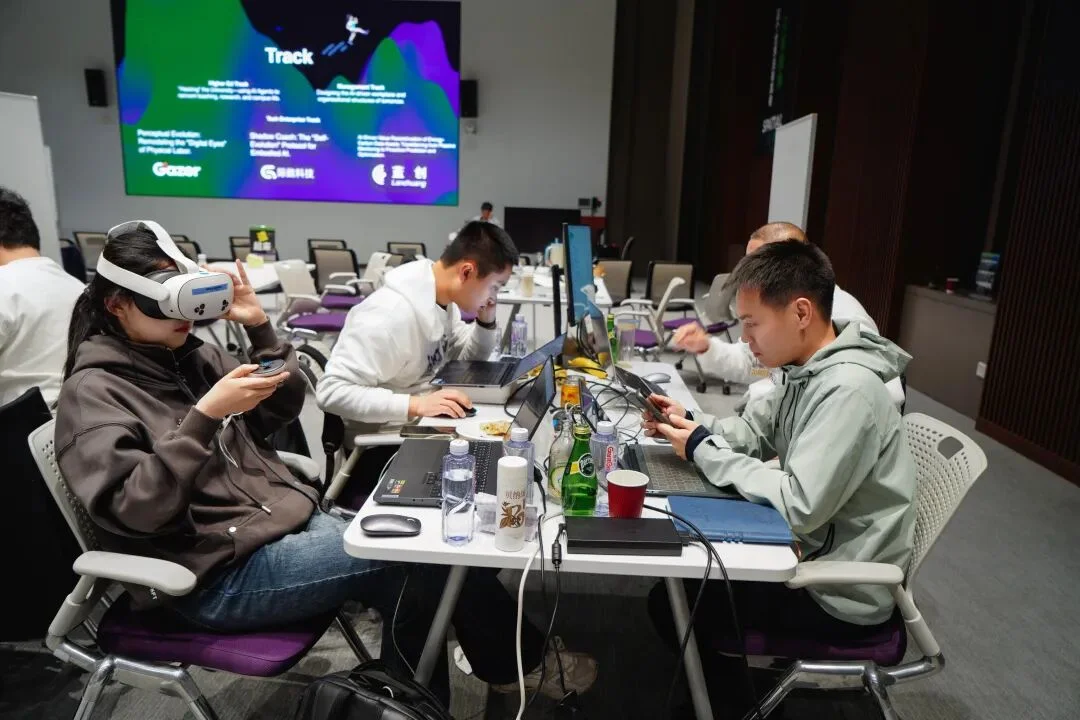
Best Tripo Usage Award: bringing chemistry experiments into 3D
The Jiangnan Four Talented Women team received the Best Tripo Usage Award for its project, a 3D practical training tool for chemistry experiments.
The team explored how generative 3D could make experimental learning more visual and interactive, giving students a digital environment in which to understand laboratory equipment, procedures, and spatial relationships.
For Tripo Education, the project reflects a broader opportunity for 3D in learning.
Chemistry experiments, engineering training, vocational education, biomedical learning, and many other subjects involve knowledge that is inherently spatial. As creating 3D content becomes faster and more accessible, teachers and students can begin turning that knowledge into environments that can be observed, explored, and interacted with.
3D becomes part of how students learn, explain, and create.
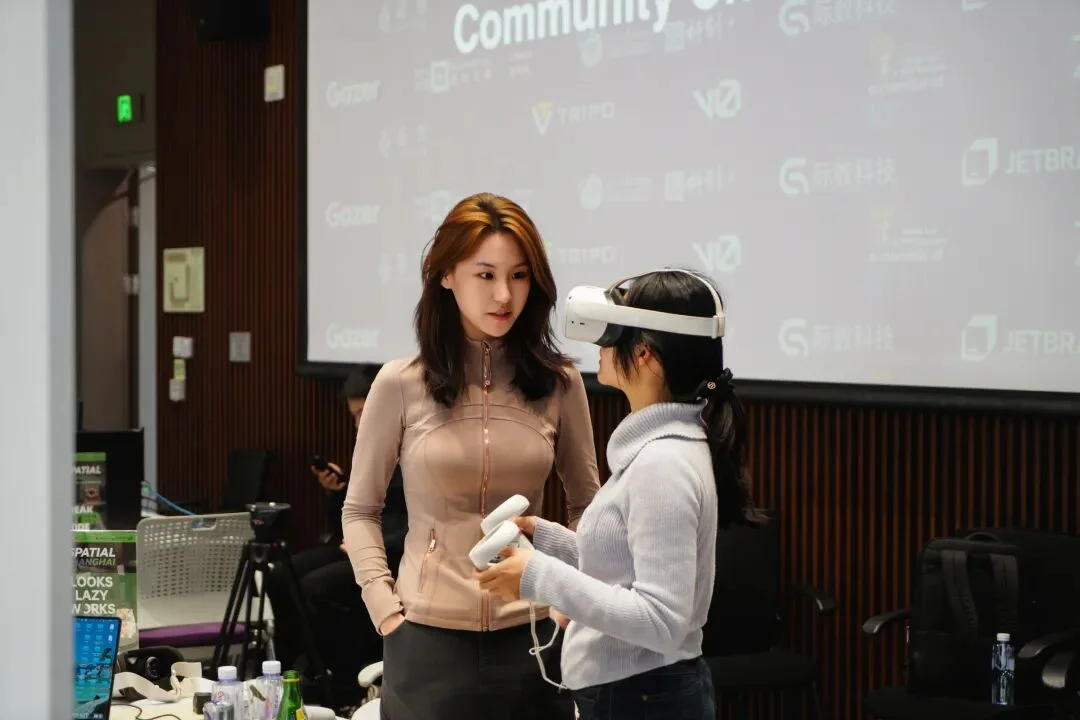
From a student XR community to a cross university AI hackathon
The origins of the event go back roughly three years, when a small group of students began gathering around NYU Shanghai Library’s Extended Reality Space to experiment with XR and interactive technologies.
As the community grew, the university continued supporting student led exploration across its interactive spaces. In 2026, the event partnered with Fudan University for the first time and became an official Future Geeks track within the Yangtze River Delta competition.
What began with a few students experimenting with XR had grown into a cross university event bringing together 70 creators, multiple disciplines, and a new generation of AI tools.
For Tripo AI, the hackathon also offered a glimpse of how student development workflows are changing.
Students can already use AI to write code, work with agents, and prototype product logic. Generative 3D is now entering that same workflow, making it possible to create the spatial content those products need just as quickly.
After 24 hours, the teams left with more than 12 prototypes. They had also tested a new way of building, where AI, code, and 3D come together in the same creative process.
Explore Tripo AI Education
Universities, faculty members, and student teams interested in using Tripo AI for courses, hackathons, research projects, or student creation can contact Tripo Education: