The 2% That Wins: How Tripo Visualizes an Engineering Pitch
Quan stared at the comment his boss left on the presentation script: skip this part, text is enough. He deleted it.
Quan leads digital automation at an engineering company that builds post-tensioning structures. Bridges, stadiums, nuclear plants. In this business, winning a contract comes down to a single 3D visualization.
You walk the client through the whole maintenance process on screen: every crane in position, every robot on its cable. Miss a piece and the trust breaks.
The part his boss wanted to skip was about 20 seconds of a 15-minute presentation. Less than 2% of screen time. It was also the 2% that separates "we can do this" from "we are doing this."
"It itches me"
Quan studied how competitors handled it. Every one skipped the auxiliary equipment. The boom truck, the cable inspection robot. A line of text, and move on. The industry had decided this was acceptable. Quan could not.
"It itches me a lot," he says. "I always keep in my mind: to be better and to be creative."
So he asked his construction site cameraman to film the real operations. The boom truck unfolding on the bridge deck. The robot crawling a cable stay. Real footage as the blueprint for virtual simulation.
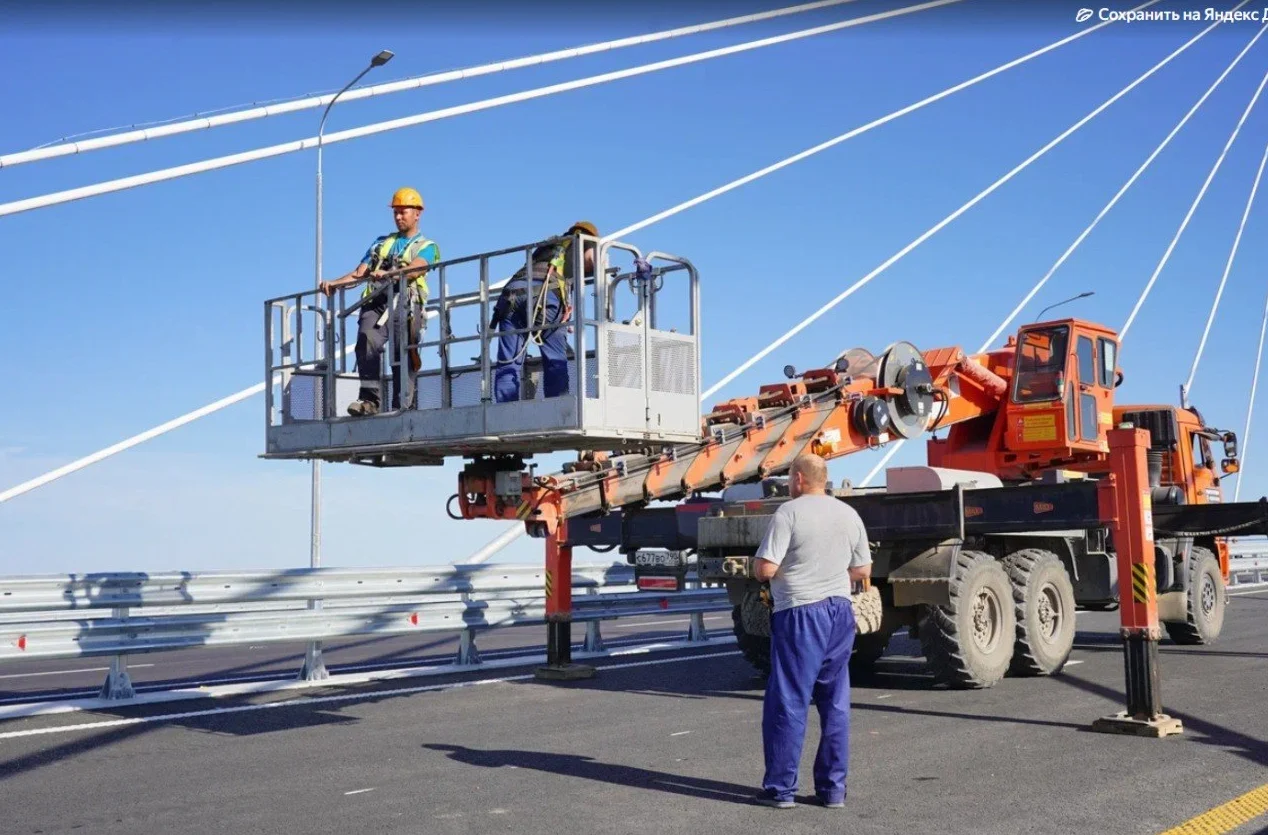
"To be better and to be creative"
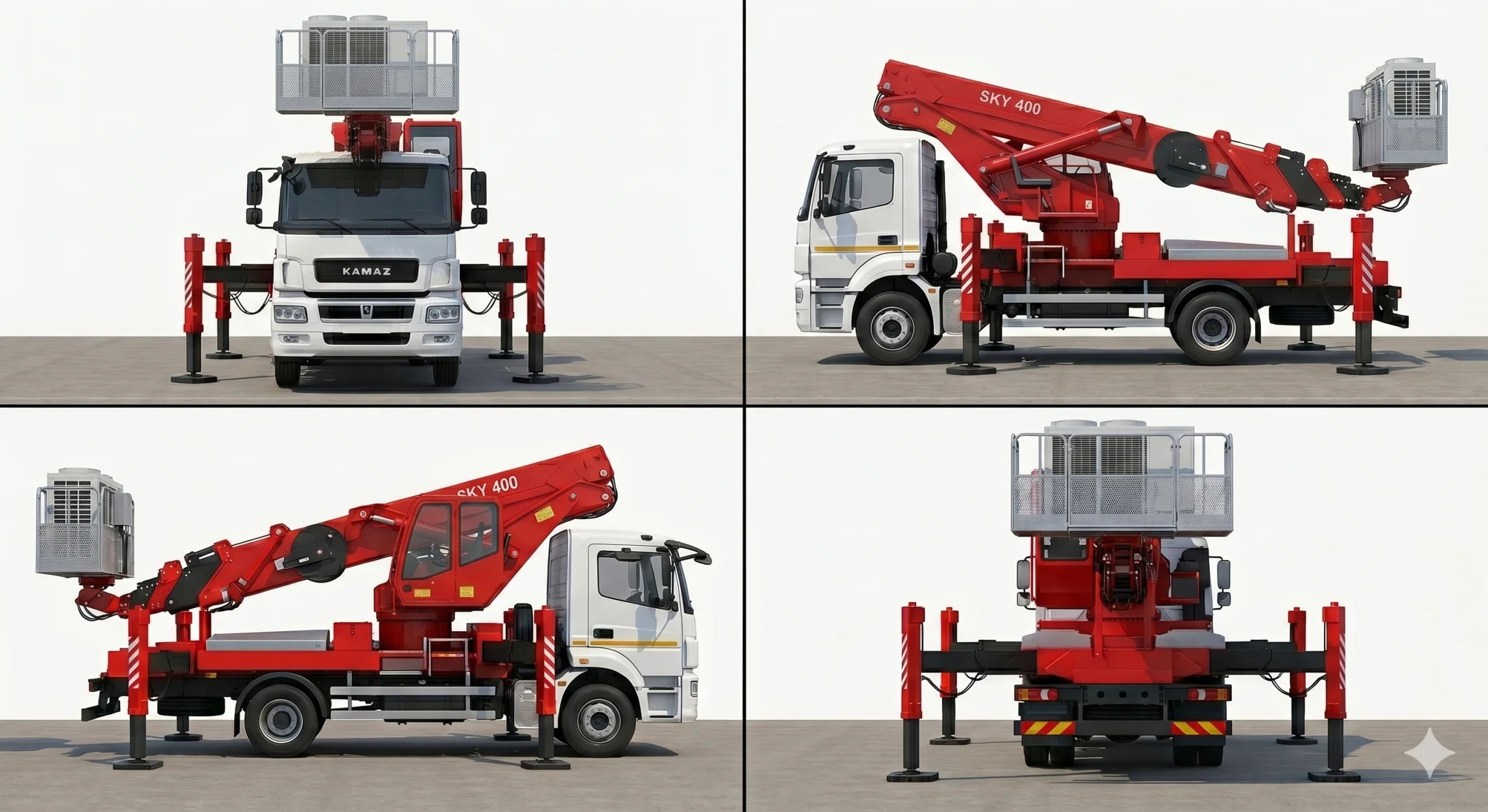
He had the reference. The models did not exist. The rental company only provides 2D CAD drawings. The robot supplier shares technical specs and nothing else. No model, no catalog render, nothing downloadable anywhere.
Building either from scratch in Blender: 2 to 3 days per object, for something on screen for seconds. The math never works.
Quan fed his site photos and Gemini-generated references into Tripo. The boom truck came back segmented, each mechanical part separate, ready for animation rigging.
The robot was harder. No single reference was good enough, so he dug through research papers and supplier videos until one combination finally produced a usable shape.
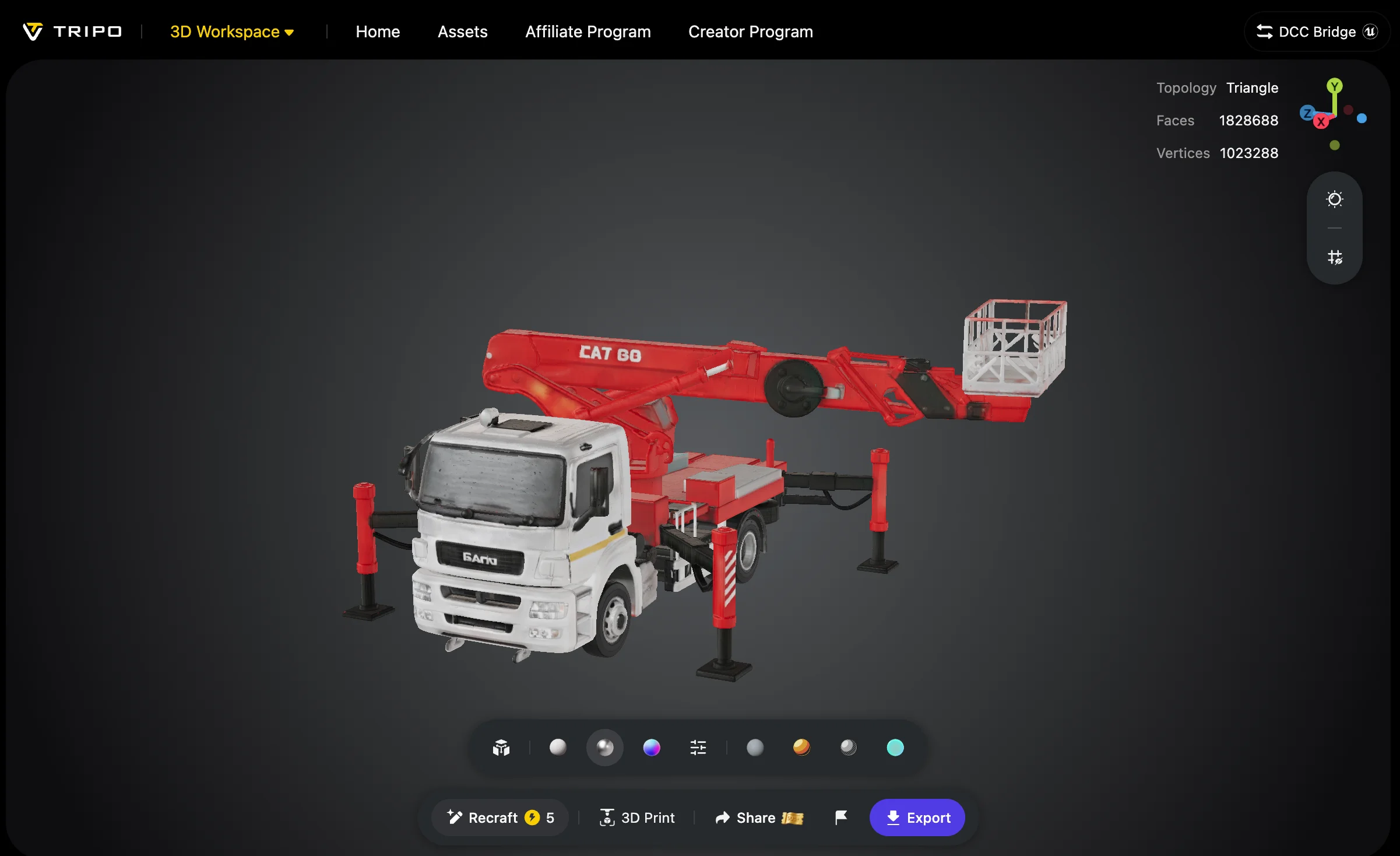
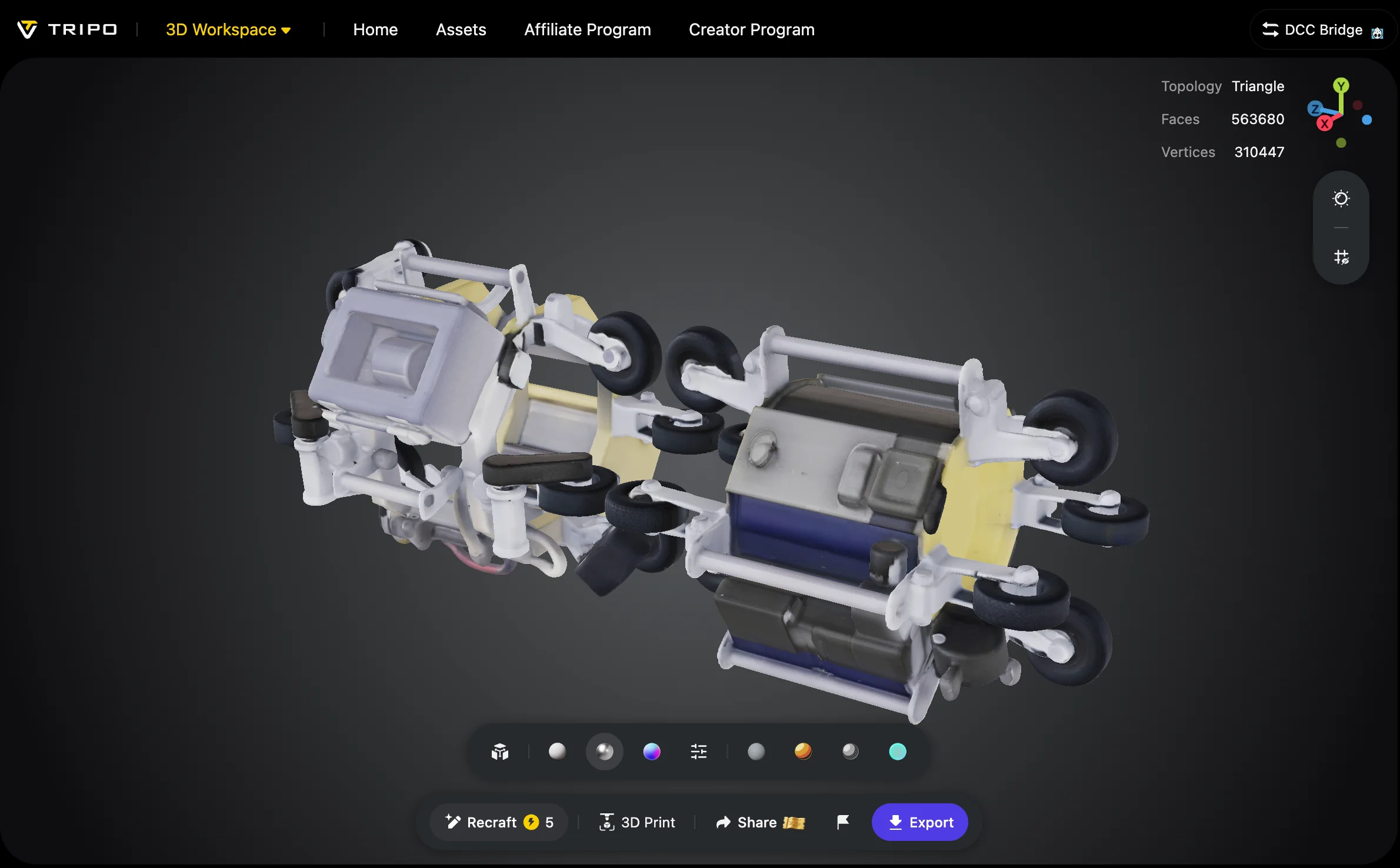
From reference to render
Both models went through Rhino 3D for geometry cleanup, then Unreal Engine 5 for animation. Tripo generated the textures too. By hand, Quan would have separated each component by color and assigned materials individually, work nobody justifies for a supporting object.
Two objects, done in an afternoon each instead of the 2 to 3 days apiece the old way would have cost. Roughly 5 days of work saved. The boom truck unfolds exactly as it does in the real footage. The robot crawls at the right angle, the right speed.

The 2% that changes everything
His boss and branch manager watched the final cut. "Very pleased." The section everyone had agreed to skip became the part people stopped to watch.
When a client sits through two proposals, one with a text slide reading "boom truck will be deployed," one with an animation showing exactly how, the gap is not subtle. That is what the 2% buys. Not screen time. Trust.
When the cost of showing everything drops from days to hours, the standard for a credible engineering presentation moves permanently. Clients recalibrate. Text slides become a visible weakness. One person's refusal to skip, backed by a pipeline that makes not-skipping possible, raises the floor for an entire industry.
Building 3D visualizations for engineering, architecture, or infrastructure? See how Tripo fits into professional workflows at tripo3d.ai, or share your project in our Discord community.