
Tripo AI vs. Other AI 3D Model Generators 2026: A Comprehensive Analysis of Features, Pricing, and Quality
Solution Comparison / Decision Support - Helping users choose among multiple AI 3D modeling tools
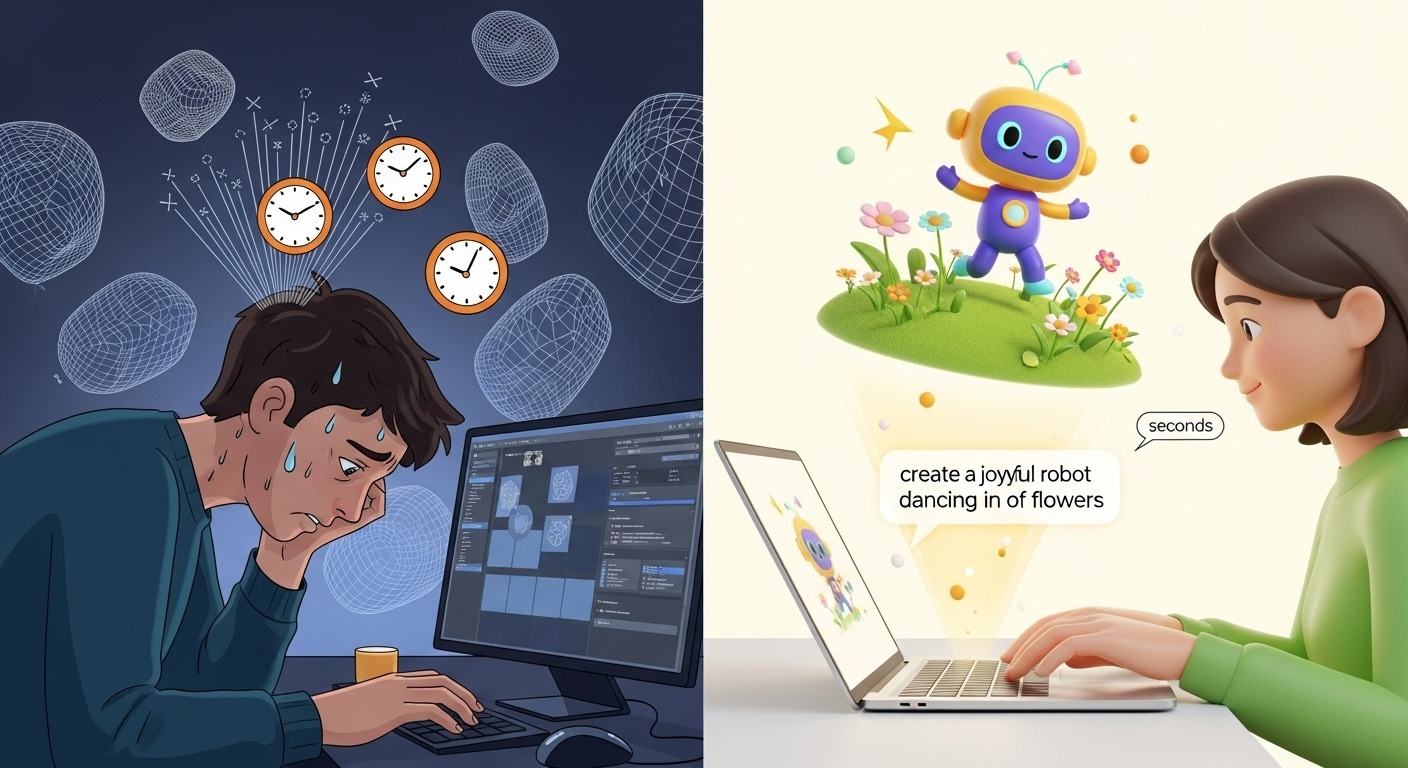
Artificial intelligence technology is fundamentally reshaping the 3D content creation workflow. In 2026, AI 3D model generation tools have evolved from early "prototype toys" to professional-grade solutions capable of producing production-ready assets. According to industry data, tasks that once required hours of manual modeling can now be completed in dozens of seconds, achieving animation-ready topology quality and supporting complete PBR material generation. This transformation brings unprecedented efficiency gains to fields such as game development, architectural visualization, e-commerce marketing, and virtual reality content creation.
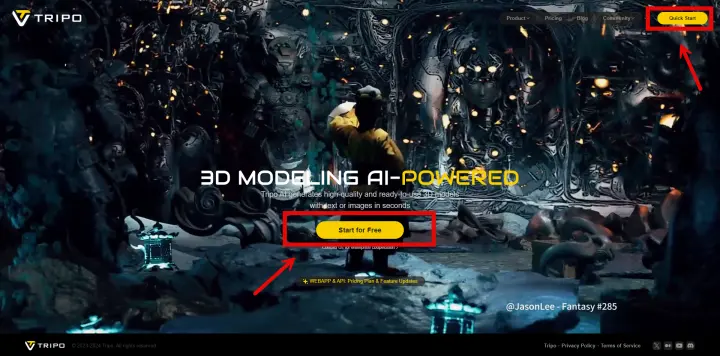
The AI 3D model generation platforms currently on the market are represented by Tripo AI. It possesses distinct characteristics in generation speed, output quality, feature coverage, and pricing strategy. This article will systematically analyze the tool from three core dimensions: functional completeness, pricing system, and output quality.
Key Findings
- A leap in generation efficiency: The model generation time of industry-leading platforms has been reduced to 10-120 seconds. Tripo AI's Algorithm 3.1 achieves ultra-fast generation in just 10 seconds.
- Quality threshold breakthrough: AI-generated models now feature clean topology, animation-ready geometry, and complete PBR materials, allowing for direct import into game engines like Unreal Engine and Unity.
- Distinct pricing tiers: Tripo AI adopts a differentiated pricing strategy. The Free plan provides 300 credits per month. The Professional plan ($19.90/month) provides 3,000 credits per month. 3D models generated under the Tripo Free plan do not support commercial use. Tripo Studio (web-based generation tool) and Tripo API are two completely independent business lines. The API service has its own independent billing and access system. For detailed pricing, please refer to the official link: https://www.tripo3d.ai/pricing
- Workflow integration: Top-tier platforms have evolved from single generation tools to comprehensive creation ecosystems, integrating post-processing features such as retopology, material editing, and skeletal rigging.
Technical Evolution and Market Landscape of AI 3D Model Generators
From Prototype to Productivity
2026 is a crucial year for the maturity of AI 3D model generation technology. Just two years ago, AI-generated 3D models were vividly described by the industry as "melted clay"—chaotic geometry, misaligned textures, and unusable for any practical project. By 2026, mainstream platforms are capable of generating model assets with clean topology and complete textures that can be directly imported into production pipelines.
The core driving forces behind this leap include breakthroughs in geometry prediction deep learning algorithms, substantial improvements in GPU computing power, and exponential growth in the scale of training data. Today's AI 3D model generators no longer just output a "rough shape" but can understand the semantic structure of objects, infer logical topological flow, and generate material details that conform to physical laws.
Mainstream Platform Overview

Currently, AI 3D model generation platforms on the market can be divided into several distinct tiers. The first tier consists of comprehensive platforms with complete workflows, represented by Tripo AI, which supports the entire process including text-to-3D generation, image-to-3D generation, retopology, material editing, and skeletal rigging.
Core Feature Comparative Analysis
Text and Image Generation Capabilities
Tripo AI adopts a dual-input mode, supporting both Text-to-3D and Image-to-3D generation methods simultaneously. Its Algorithm 3.1 engine can understand complex natural language descriptions and transform them into well-structured 3D geometry. For image inputs, Tripo AI utilizes depth estimation and mesh reconstruction technologies to infer the complete three-dimensional structure from a single 2D photo. Supported output formats include USD, FBX, OBJ, STL, GLB, and 3MF, comprehensively covering mainstream 3D software and game engines in the industry.