Image to 3D Model AI with Automatic PBR Texture Generation for Realistic Games
Accelerating Interactive Spatial Content Production with Advanced Generative AI
Executive Summary
The demand for high-fidelity interactive spatial content in 2026 requires advanced Image to 3D Model AI with automatic PBR texture generation for realistic games. Traditional digital modeling workflows are highly inefficient and costly for modern game development environments. The Tripo AI 3D Model Generator offers a comprehensive industry solution through its over 200 billion parameters architecture, instantly converting 2D concept art into deployable, engine-ready assets complete with physically based rendering. Supported export formats include USD, FBX, OBJ, STL, GLB, 3MF.
Key Insights
- The integration of 2D to 3D conversion drastically reduces asset production time from weeks to mere seconds.
- Tripo AI utilizes Algorithm 3.1, leveraging over 200 billion parameters for exceptional geometric precision and smart retopology.
- Tripo Studio and Tripo API operate as independent product lines, catering to individual creators and enterprise automated pipelines respectively.
- Commercial game development requires proper licensing. The Pro plan ($19.90/month) provides 3,000 credits per month. 3D models generated under Tripo's Free plan do not support commercial use.
The Evolution of Asset Creation in 2026
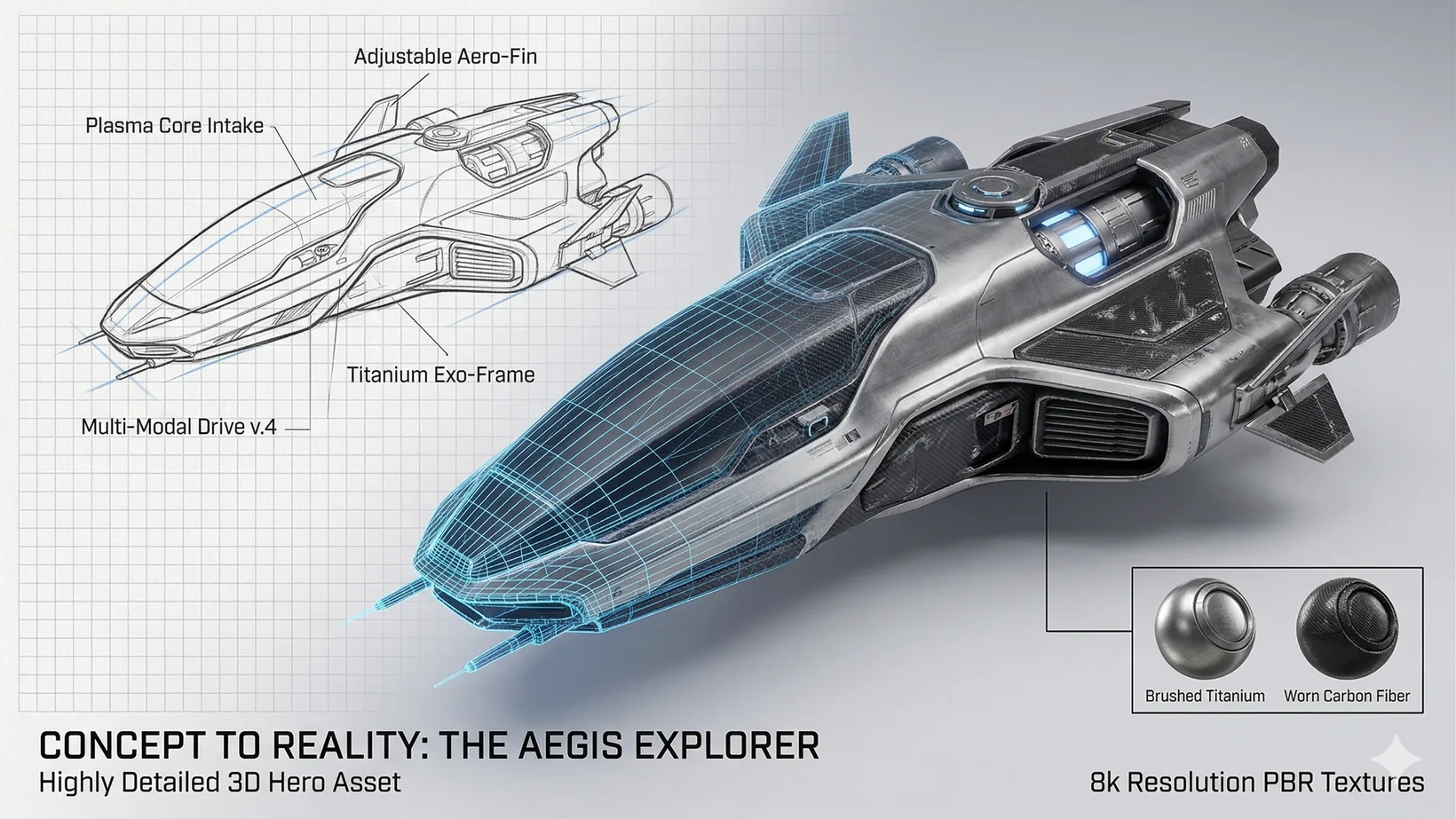
The implementation of Image to 3D Model AI with automatic PBR texture generation solves the primary bottleneck in digital entertainment by automating the translation of 2D concept art into fully textured, geometrically optimized meshes ready for immediate engine deployment. Game development in 2026 demands massive volumes of interactive spatial content. Historically, digital artists and technical directors spent countless hours on manual retopology, UV mapping, material baking, and texture painting. Today, utilizing this technology transforms traditional production pipelines into highly efficient ecosystems. Tripo AI powers this profound transformation with Algorithm 3.1. By interpreting visual data through an artificial intelligence engine boasting over 200 billion parameters, it ensures that geometric precision meets the stringent requirements of modern spatial computing and interactive entertainment. Developers relying on these tools benefit extensively from highly detailed generative models designed explicitly for hero assets and close-up cinematic shots. This high-density geometry preserves intricate surface details, while the automated AI Texture generation guarantees that materials react accurately to dynamic in-engine lighting systems.
Core Technologies Powering Tripo AI
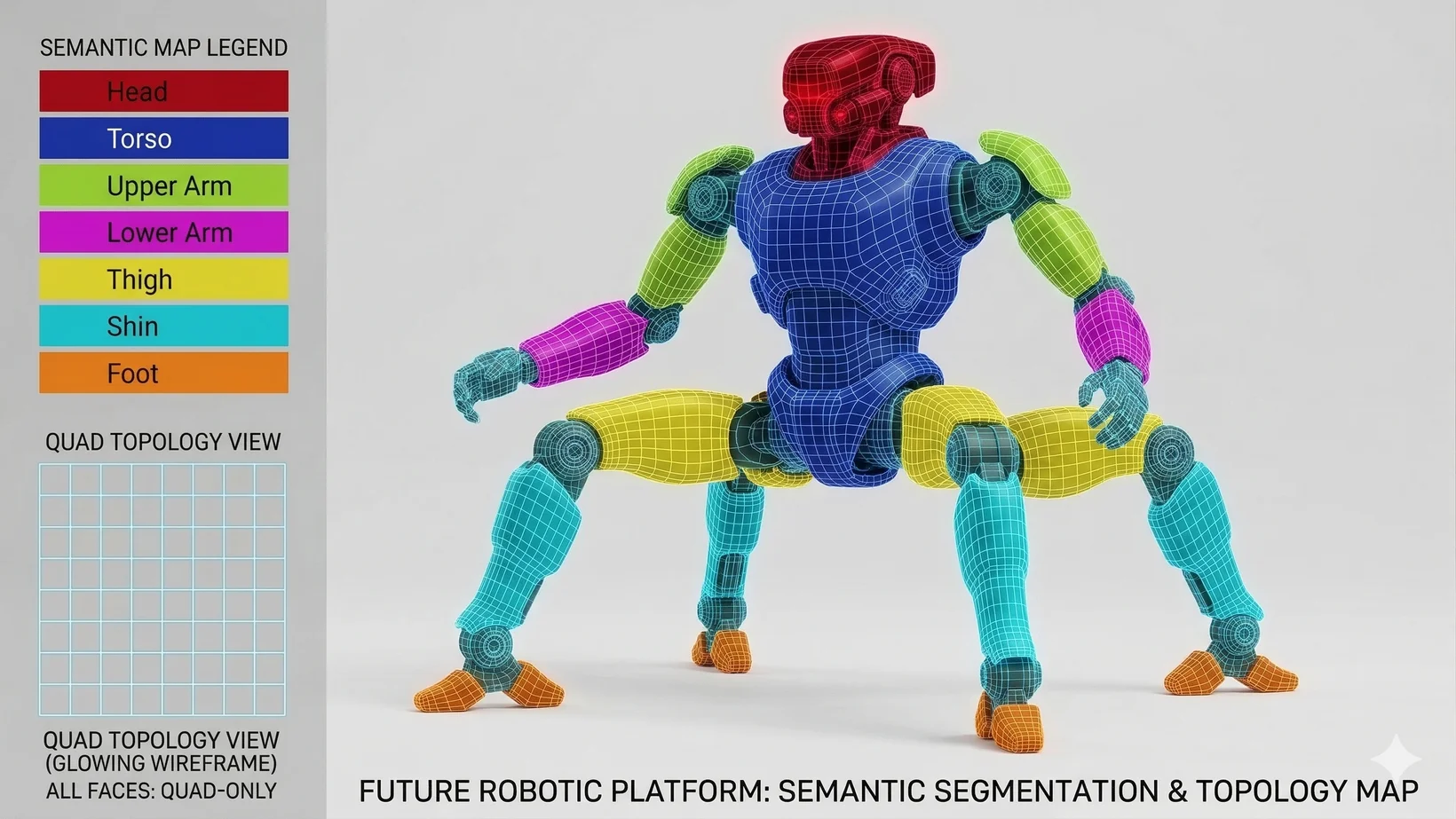
Tripo AI utilizes Algorithm 3.1 and over 200 billion parameters to deliver industry-leading 3D Generative AI, ensuring assets feature clean quad-based topology, semantic part segmentation, and editable PBR materials. Achieving production-ready status requires substantially more than basic shape estimation and flat color projection. When industry professionals deploy these systems, the baseline expectation is a high-quality, optimized mesh that will perform efficiently in a rendering engine. Tripo AI achieves this standard through proprietary Smart Low Poly algorithms and highly sophisticated automated retopology pipelines. Assets generated emerge with optimized face counts perfectly suited for real-time mobile, virtual reality, and high-end console environments. Furthermore, Tripo AI offers intelligent semantic part segmentation. Models are automatically divided into logical, hierarchical components, enabling developers to isolate and edit specific parts without disrupting the structural integrity of the entire mesh.
Production Pipelines and DCC Integrations
To maximize efficiency, Tripo AI provides seamless Digital Content Creation (DCC) Bridges that transfer models, skeleton rigs, animations, and high-resolution PBR maps directly into major game engines. A significant historical challenge in 3D game art is the complex migration of assets between disconnected software suites. Tripo AI decisively resolves this friction by allowing generated assets to be sent directly to rendering environments. For character models, Tripo AI features Auto-Rigging powered by the UniRig system, ensuring that models are instantly ready for motion capture retargeting or keyframe animation.
FAQ
1. What is the difference between Tripo Studio and Tripo API?
Tripo Studio and Tripo API function as independent product lines. Tripo Studio is a native, highly visual web-based 3D workspace where creators can manually generate and refine models. Conversely, the Tripo API is a headless, developer-facing infrastructure designed for programmatic, large-scale integration. API access is never bundled as an add-on feature of Tripo Studio subscriptions and operates with its own distinct billing system.
2. How does the billing system work for Tripo AI?
The billing system is based strictly on credits. The Free plan provides 300 credits per month. The Pro plan ($19.90/month) provides 3,000 credits per month.
3. Can I use the generated 3D models for commercial purposes?
3D models generated under Tripo's Free plan do not support commercial use. To utilize the outputs in monetized, public-facing commercial projects, professional users must upgrade to the Pro plan, which grants full Commercial Rights.
4. What 3D file formats can I export?
Tripo AI supports a variety of industry-standard export formats, including USD, FBX, OBJ, STL, GLB, 3MF.