AI 3D Modeling Tools With Automatic UV Mapping And Retopology For Games
Streamlining Game Asset Production with Advanced AI Workflows
The digital entertainment landscape of 2026 demands significant asset volume and visual quality, making traditional asset creation pipelines a major production bottleneck. Industry professionals require advanced 3D Generative AI tools with automatic uv mapping and retopology for game development to transform basic concepts into fully optimized, engine-ready meshes instantly. Tripo AI provides a comprehensive ecosystem that delivers clean geometry, seamless texture coordinates, and professional-grade performance optimization without manual intervention.
Key Insights
- Instant Asset Optimization: Modern workflows replace manual decimation with smart algorithms, generating quad-based or triangle-based topologies instantly for high performance.
- Production-Ready Textures: Advanced solutions autonomously generate artifact-free surface coordinates and physically based rendering (PBR) materials.
- Massive Parameter Scale: The core generative engine leverages over 200 billion parameters to ensure geometric precision and structural integrity.
- Seamless Engine Transfer: Dedicated DCC plugins bridge the gap between web-based generation and real-time environments like Unreal Engine and Unity.
- Scalable Commercial Models: Distinct subscription tiers and independent API infrastructures allow studios to scale production transparently and cost-effectively.
The Evolution of AI 3D Modeling Tools With Automatic UV Mapping And Retopology For Games
As the video game industry matures in 2026, AI 3D modeling tools with automatic uv mapping and retopology for games have transitioned from experimental utilities to foundational infrastructure. These platforms eliminate the most tedious aspects of pipeline asset creation, allowing developers to convert 2D concepts into fully optimized, engine-ready 3D meshes in seconds rather than days using Image to 3D Model workflows.
The demand for massive, highly detailed virtual worlds has outpaced the speed of manual 3D asset creation. Historically, constructing a single environmental prop or background character required hours of poly-modeling, followed by meticulous mesh cleanup, unwrapping, and painting. Today, the deployment of AI 3D modeling tools with automatic uv mapping and retopology for games has revolutionized this timeline. By inputting Prompt to Mesh descriptions or single reference images, developers can summon high-fidelity assets instantly.
At the forefront of this technological shift is Tripo AI, which utilizes a massive neural network containing over 200 billion parameters. This immense computational scale ensures that the resulting geometry is not merely a rough approximation, but a structurally coherent model suitable for interactive media. The release of Algorithm 3.1 marks a critical milestone in this evolution. Algorithm 3.1 delivers sharper edges, cleaner surfaces, and stable meshes that remain coherent even when representing highly complex, non-manifold structures.
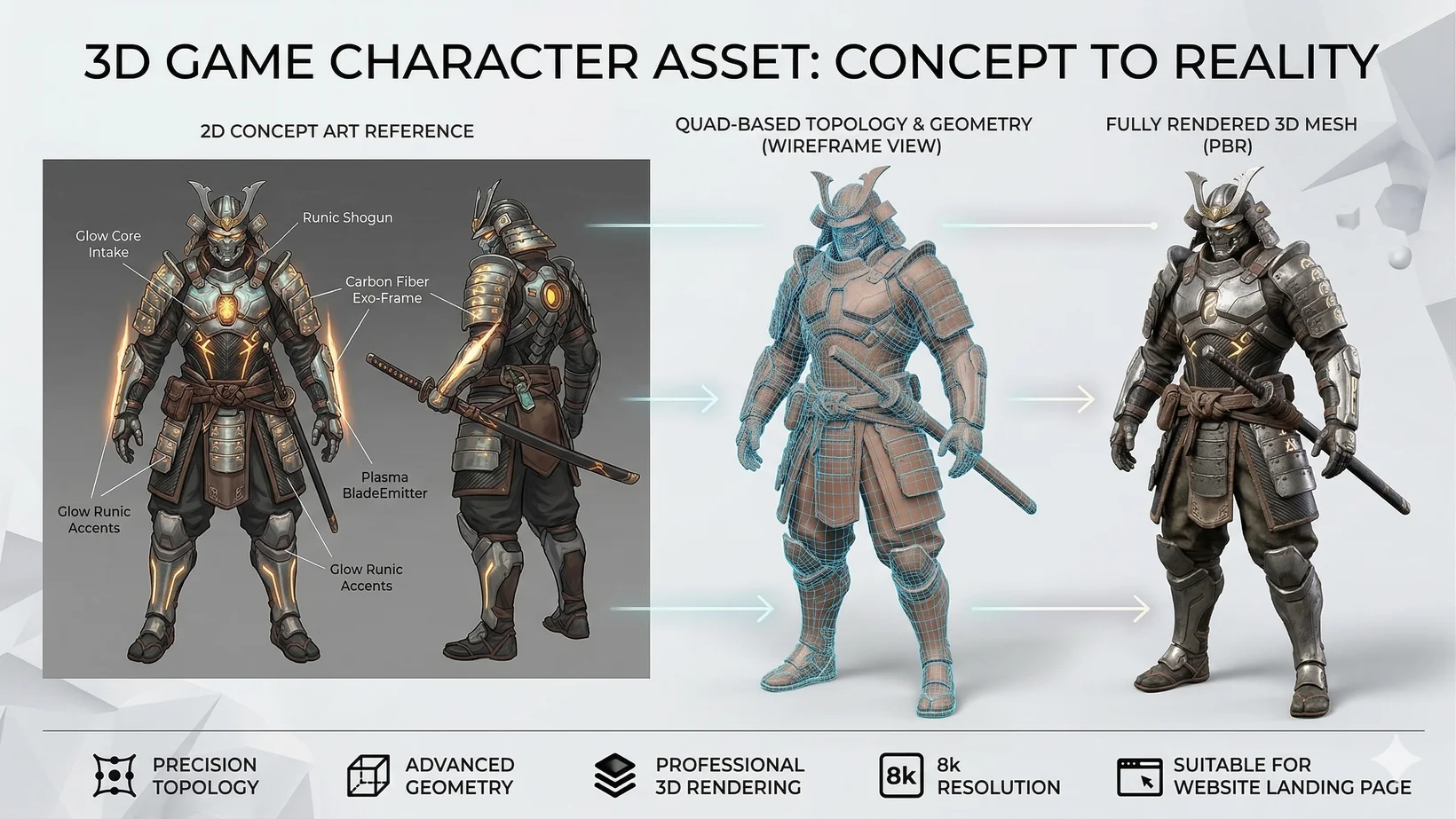
For game developers, the integration of AI 3D modeling tools with automatic uv mapping and retopology for games means that initial prototypes can immediately serve as final production assets. Tripo AI handles the translation of 2D data into spatial coordinates with high precision, bypassing the traditional bottlenecks of the conceptualization phase. The availability of high-detail output options, such as the Tripo H3.1 model, further guarantees that hero assets and close-up models maintain visual integrity without requiring extensive manual sculpting.
Overcoming Pipeline Bottlenecks: Smart Retopology and Mesh Optimization
Efficient edge flow and polygon reduction are critical for interactive environments. Modern AI 3D modeling tools with automatic uv mapping and retopology for games utilize advanced algorithms to instantly generate quad-based or triangle-based topology, ensuring assets meet strict performance budgets without requiring hours of manual vertex manipulation.
Raw generated meshes, whether originating from photogrammetry scans or early generative models, often suffer from excessively high polygon counts and chaotic edge flows. This dense, disorganized geometry causes severe performance degradation in game engines and complicates the animation process. The implementation of AI 3D modeling tools with automatic uv mapping and retopology for games directly addresses this vulnerability. Instead of relying on destructive manual decimation techniques that often obliterate crucial geometric details, developers utilize smart algorithms that understand the physical contours of the object.
Within the AI 3D Editor environment, the retopology process is handled autonomously. The Smart Low Poly feature produces meshes with hand-crafted precision, identifying which structural elements require higher polygon density and which areas can be safely simplified. This intelligent reduction is a hallmark of professional AI 3D modeling tools with automatic uv mapping and retopology for games. Developers can easily toggle between quad-based meshes, which are ideal for organic characters requiring smooth deformation during animation, and triangle-based meshes, which are standard for static environmental props in real-time rendering engines.
Furthermore, Algorithm 3.1 ensures that polycount constraints are strictly adhered to, allowing technical artists to specify exact face limits. By embedding these optimization features natively, AI 3D modeling tools with automatic uv mapping and retopology for games guarantee that every generated asset is lightweight, performant, and structurally sound. Clean meshes not only improve rendering speeds and reduce file sizes, but they also prevent the visual artifacts that commonly plague poorly optimized geometry during lighting and shading calculations.
Streamlining Textures: Automatic UV Mapping and PBR Generation
Proper surface texturing requires seamless UV coordinates, a process historically prone to stretching and overlap errors. Advanced AI 3D modeling tools with automatic uv mapping and retopology for games autonomously unwrap meshes and apply physically based rendering (PBR) materials, delivering instant high-fidelity textures that are ready for immediate deployment.
Unwrapping a 3D model to prepare it for 2D texture application is traditionally one of the most tedious tasks in game development. When handled manually, it requires careful placement of seams to prevent texture stretching and distortion. Advanced AI 3D modeling tools with automatic uv mapping and retopology for games bypass this manual labor entirely. The artificial intelligence mathematically analyzes the geometry, calculates the most efficient seam placements, and generates flattened coordinate maps instantly.
Once the coordinates are established, AI 3D modeling tools with automatic uv mapping and retopology for games apply highly realistic textures. Tripo AI excels in this domain by outfitting models with comprehensive 4K Texture Generation maps. These materials accurately simulate real-world light physics, utilizing precise metallic and roughness values to differentiate between materials like brushed steel, matte plastic, or glossy ceramic. Under the updated Algorithm 3.1 architecture, texture-image alignment has been significantly improved, ensuring that colors and micro-patterns map faithfully to the intended surfaces without bleeding or misalignment.
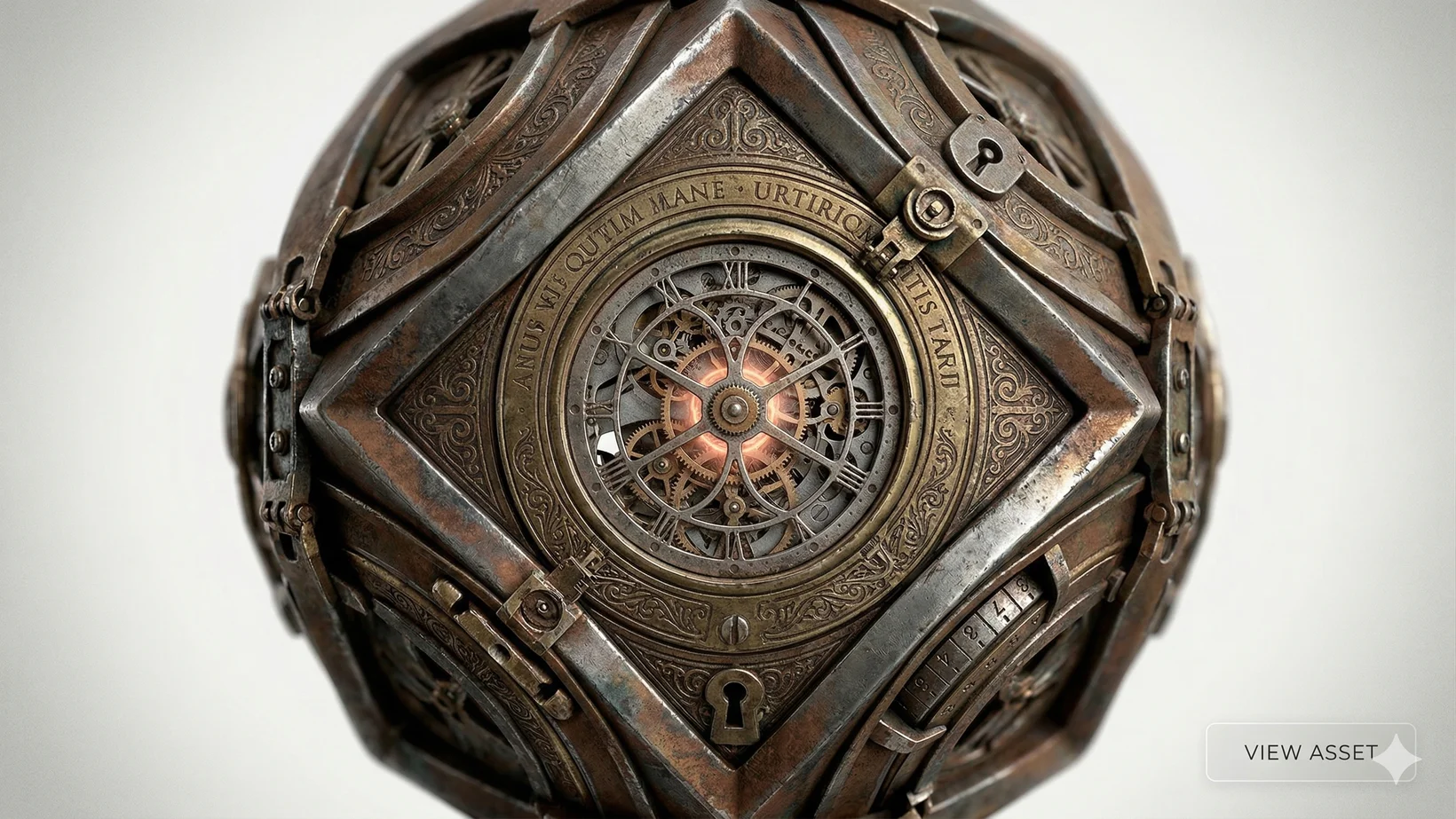
The texturing suite within Tripo Studio extends beyond simple generation. Features like the Magic Brush allow developers to perform targeted, partial texture repainting. If a specific area of a model requires weathering, rust, or custom insignia, the developer can select the region and prompt the AI to generate localized texture variations. This granular control confirms that AI 3D modeling tools with automatic uv mapping and retopology for games are not merely automated asset factories, but sophisticated digital art platforms that respect the specific stylistic needs of the art director.
Game Engine Integration: From Tripo Studio to Unreal and Unity
For an asset to be truly viable, it must seamlessly transfer into the target development environment. Leading AI 3D modeling tools with automatic uv mapping and retopology for games feature dedicated DCC bridges, allowing developers to export optimized meshes in comprehensive formats including USD, FBX, OBJ, STL, GLB, and 3MF, complete with auto-rigged skeletons and baked materials, directly into engines like Unreal and Unity.
Creating an asset is only the first half of the equation; implementing it into a playable build is the primary goal. The true value of AI 3D modeling tools with automatic uv mapping and retopology for games is realized when the generated assets slide effortlessly into standard Digital Content Creation (DCC) pipelines. Tripo AI facilitates this transfer through dedicated bridge plugins designed specifically for industry-standard software, including Unreal Engine, Unity, and Blender. Using 3D Format Conversion pipelines ensures seamless asset compatibility across all major platforms.
These lightweight plugins connect the target engine directly to the Tripo Studio interface. When developers utilize AI 3D modeling tools with automatic uv mapping and retopology for games, they can send the completed, textured, and retopologized assets straight into their game scenes with a single click. This eliminates the cumbersome process of manually downloading files, checking import settings, and reconnecting scattered texture nodes. The DCC Bridge automatically configures materials according to the engine's specific render pipeline, whether it is Unity's URP/HDRP or Unreal's advanced rendering systems.
Moreover, Tripo AI simplifies character integration through Auto-Rigging technology. AI 3D modeling tools with automatic uv mapping and retopology for games now encompass skeletal binding for varied anatomy types. Humanoid and creature models generated in Tripo Studio can be exported directly in a T-Pose, complete with precise skin weights and hierarchical bone structures. This means an asset generated from a simple concept sketch can be dropped into a game engine, assigned an animation blueprint, and set into motion in a matter of minutes.
Commercial Licensing and Platform Economics for Developers
Understanding the economic structure of AI 3D modeling tools with automatic uv mapping and retopology for games ensures studios can scale production cost-effectively. Tripo AI offers clear tier distinctions. The Free plan provides 300 credits per month. 3D models generated under Tripo's Free plan do not support commercial use. The Pro plan ($19.90/month) provides 3,000 credits per month. For comprehensive details, please review the Pricing.
As studios integrate AI 3D modeling tools with automatic uv mapping and retopology for games into their permanent production pipelines, platform economics become a critical consideration. Predictable costs and clear commercial licensing are mandatory for independent developers and large enterprises alike. Tripo AI establishes a highly transparent billing and usage structure built strictly around credits.
For initial evaluation and hobbyist projects, users can test the platform. The Free plan provides 300 credits per month. While this tier allows creators to thoroughly evaluate the capabilities, 3D models generated under Tripo's Free plan do not support commercial use. Professional developers must transition to a commercial tier. The Pro plan ($19.90/month) provides 3,000 credits per month. This fully grants commercial rights for all generated assets. This structured approach ensures that AI 3D modeling tools with automatic uv mapping and retopology for games remain accessible to beginners while providing robust legal protections for commercial studios. To explore these options, visit our Subscription Plans page.
Furthermore, enterprise developers integrating AI capabilities directly into their own software applications must navigate the Tripo API. It is imperative to understand that Tripo Studio (the web-based visual creation platform) and the Tripo API are completely independent product lines. The API service operates on its own dedicated billing system and is never bundled as an add-on feature of Studio subscriptions. This strict separation allows large-scale game publishers to build proprietary, high-volume generation tools without being bound by the interface limits of consumer-facing AI 3D modeling tools with automatic uv mapping and retopology for games.
By combining over 200 billion parameters, the refined Algorithm 3.1, and seamless engine integration, Tripo AI has established the professional standard for modern asset production. As the industry continues to evolve in 2026, relying on intelligent automation for routine modeling tasks is no longer a luxury, but a fundamental requirement for competitive game development.
FAQ
1. Can AI-generated meshes be used commercially?
Yes, 3D models generated under the Pro plan are fully licensed for commercial use. Assets generated on the Free plan are for evaluation purposes only and do not support commercial use.
2. Does the tool support auto-rigging for characters?
Yes, Tripo AI includes Auto-Rigging technology that generates skeletal binding in T-Pose for humanoid and creature models, ready for game engine animation.
3. Can I use these models in Unreal Engine and Unity?
Absolutely. Tripo AI offers dedicated DCC bridge plugins and supports industry-standard formats like FBX, USD, and GLB for seamless integration into Unreal Engine, Unity, and Blender.