AI 3D Model Generation vs Procedural Workflows in Open Worlds
Scaling High-Fidelity Environments for Modern Game Engines
The development of expansive open-world environments has traditionally relied on procedural generation to manage the sheer volume of assets required to populate digital landscapes. However, as player expectations for visual fidelity increase in game development, the limitations of rule-based proceduralism have become apparent.
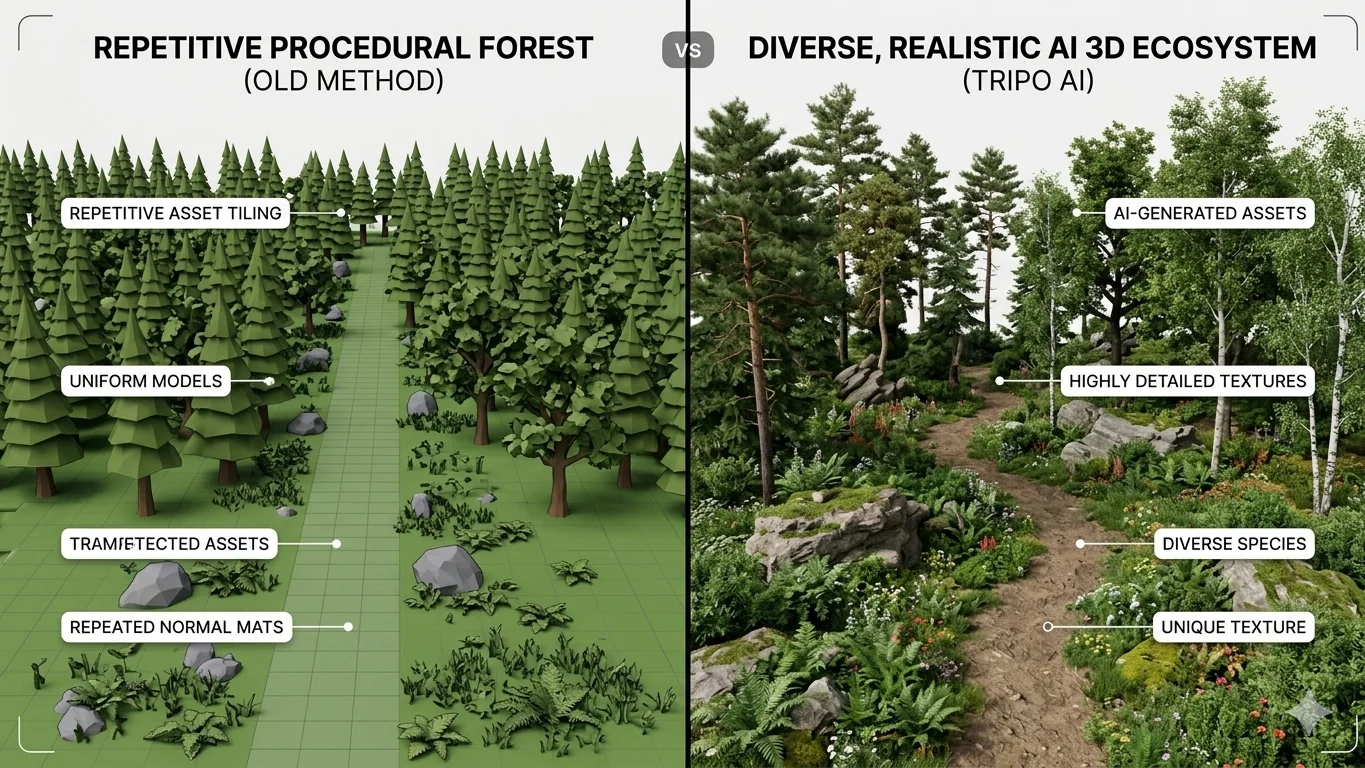
Tripo AI represents a paradigm shift, offering a 3D Generative AI alternative that produces bespoke, high-quality 3D assets in seconds. By moving toward advanced AI 3D model generation technology, studios can now deploy unique assets at a scale previously reserved for simplified algorithms.
The Evolution of Open World Asset Creation
AI 3D model generation has superseded traditional procedural generation by offering unique, non-repetitive geometry. While procedural generation uses mathematical rules, Tripo AI generates objects based on semantic understanding. Industry data from 2026 suggests that the integration of Algorithm 3.1 has redefined the speed of production. By utilizing over 200 billion parameters, the system recognizes intricate details that older methods would overlook. This ensures that every plant or rock is a unique, production-ready asset. For creators starting from existing visuals, image-to-3D or 2D-to-3D conversion workflows provide an intuitive path to high-fidelity results.
Technical Architecture: Algorithm 3.1 and 200B Parameters
The performance of generative AI is tied to the scale of its underlying model. Tripo AI leverages an architecture with over 200 billion parameters to ensure advanced geometric accuracy.
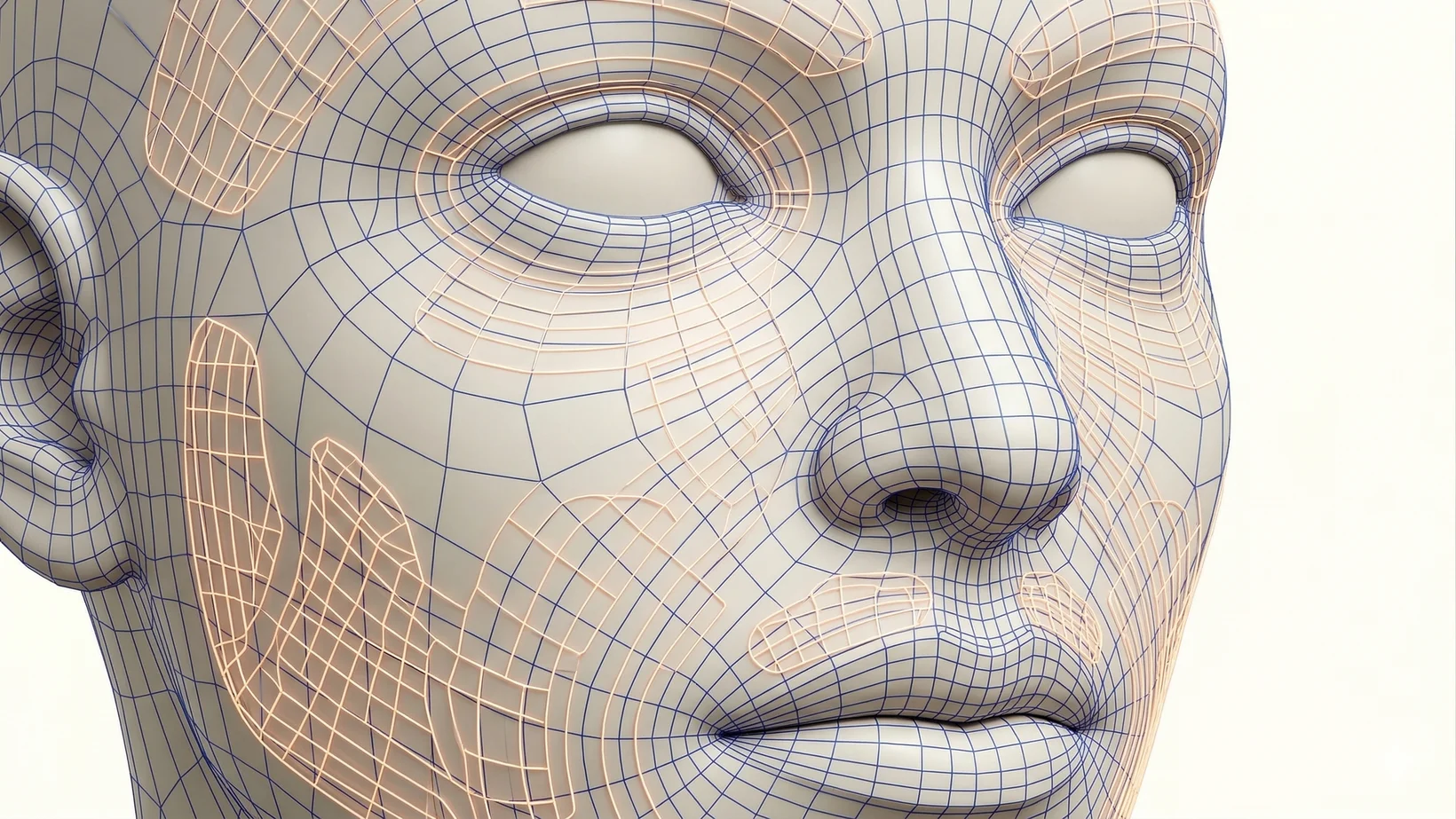
This vast parameter count allows Algorithm 3.1 to predict complex topology, including proper edge loops and UV layouts essential for engines like Unreal Engine and Unity. Unlike tools that require extensive cleanup, the outputs are designed for immediate deployment or minimal refinement within the AI 3D Editor.
Scaling Production with Tripo API and Tripo Studio
Tripo AI distinguishes its offerings through two independent product lines: Tripo Studio for manual creator control and Tripo API for automated, high-volume enterprise integration. It is critical for developers to understand that the Tripo API is a standalone service with its own dedicated billing system; it is not a feature within the standard Studio subscription tiers. For those focusing on character design, auto-rigging capabilities further streamline the pipeline from prompt-to-mesh to animation.
Economic Feasibility: Credit-Based Resource Management
The transition to AI-driven pipelines is supported by a transparent credit-based economy. Under the 2026 pricing structure, The Free plan provides 300 credits per month. It is important to note that 3D models generated under Tripo's Free plan do not support commercial use. For professional projects, The Pro plan ($19.90/month) provides 3,000 credits per month and includes full commercial rights. This subscription plan allows for predictable budgeting when generating a vast library of environment props.
Production-Ready Outputs
The advantage of AI 3D model generation is cemented by its ability to produce engine-compatible meshes with 4K texture generation directly from a prompt. Tripo AI generates coherent UV maps and AI texture maps (Albedo, Normal, Roughness) that respect physical properties. For final deployment, the 3D file converter ensures compatibility, supporting formats including USD, FBX, OBJ, STL, GLB, 3MF. This hybrid approach represents an efficient workflow for developing the immersive open worlds of the future.
FAQ
1. What are the core capabilities of Algorithm 3.1?
Algorithm 3.1 utilizes over 200 billion parameters to generate high-fidelity 3D models with professional topology and textures in approximately 20 seconds.
2. Does the Free plan support commercial projects?
No. 3D models generated under Tripo's Free plan do not support commercial use. To access commercial rights, users should upgrade to the Pro plan.
3. How many credits do I get with each plan?
The Free plan provides 300 credits per month, while The Pro plan ($19.90/month) provides 3,000 credits per month. For more details, visit our official pricing page.
4. Which export formats are supported for 3D models?
Tripo AI supports comprehensive 3D format conversion for industry-standard formats including USD, FBX, OBJ, STL, GLB, 3MF.
5. Is the Tripo API included in the Tripo Studio subscription?
No. Tripo Studio and Tripo API are two completely independent product lines. The API service requires a separate integration and billing system tailored for scalable enterprise needs.