Advancing Cloud Based AI 3D Workspace Collaboration for Remote Game Development Teams
Empowering Distributed Studios with Centralized AI Asset Generation
In 2026, the global gaming industry relies heavily on distributed talent, making the seamless integration of digital environments an operational necessity. Effective cloud based AI 3D Workspace collaboration for remote game development teams bridges the gap between decentralized artists, technical directors, and producers by providing a centralized, high-speed asset generation infrastructure. Powered by advanced models like Tripo AI, these platforms eliminate the geographical and hardware-based bottlenecks of traditional 3D asset creation, enabling studios to produce game-ready geometries and textures in a fraction of the time.
Key Insights:
- Massive Parameter Scale: The core generative engine operates on over 200 billion parameters, guaranteeing geometric precision and high-fidelity textures across decentralized networks.
- Upgraded Efficiency: Algorithm 3.1 significantly enhances computational speed and stability, ensuring reliable generation even during high-volume, cross-timezone production sprints.
- Clear Commercial Pathways: The Free plan provides 300 points per month. 3D models generated under Tripo's Free plan do not support commercial use. The Pro plan ($19.90/month) provides 3,000 points per month.
- Strict Structural Independence: Tripo Studio (the web-based generation tool) and Tripo API are two completely independent product lines. The API service has its own separate billing and access system.
The Paradigm Shift in Distributed Asset Generation
Modern distributed studios face immense synchronization challenges when producing 3D assets, making cloud based AI 3D Workspace collaboration for remote game development teams the definitive solution for maintaining consistent artistic direction and rapid iteration cycles. Historically, remote 3D production involved massive file transfers, localized rendering bottlenecks, and severe version control issues. An artist in one timezone would spend weeks blocking, sculpting, and retopologizing a model, only for a technical director in another timezone to discover topology errors that required starting over. The implementation of cloud based collaboration fundamentally resolves these latency issues. Instead of relying on local hardware to compute heavy 3D calculations, decentralized studios can leverage Tripo Studio's web-based infrastructure to generate, review, and iterate on 3D assets instantly.
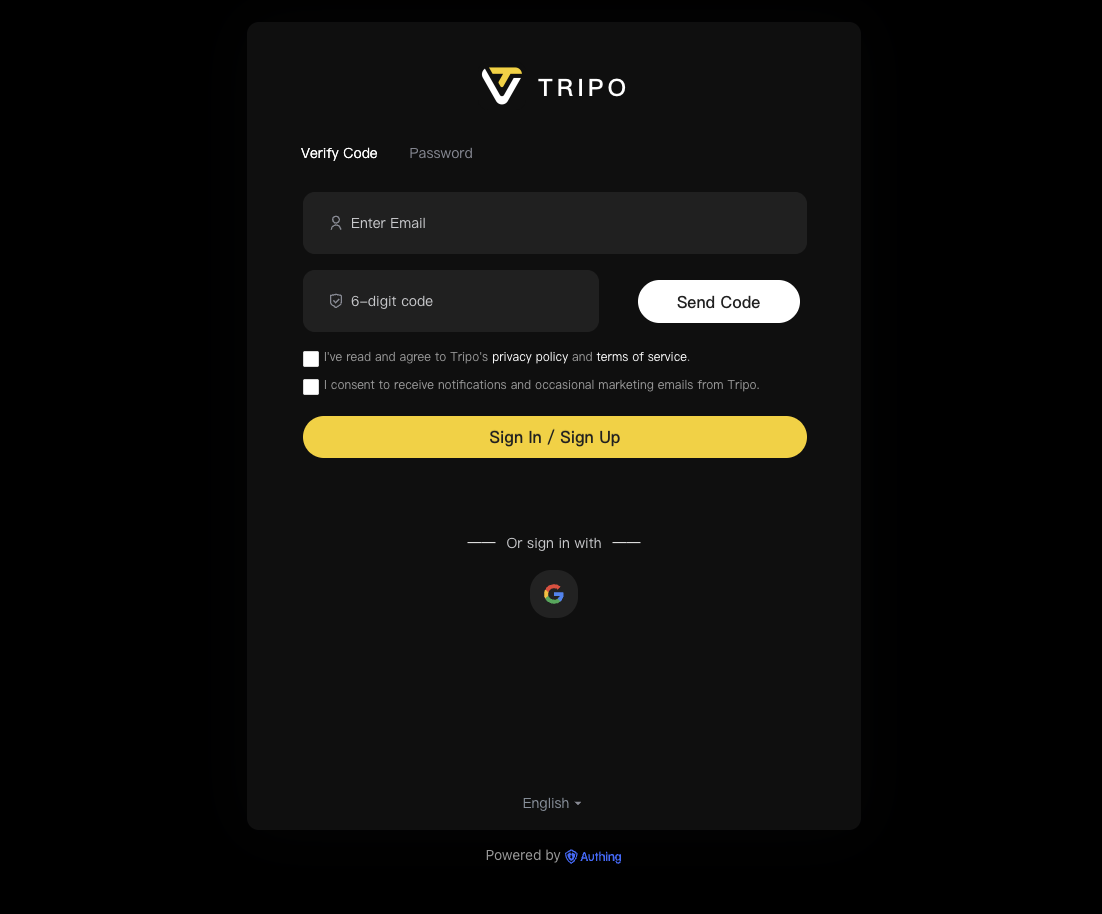
This centralized generative approach allows multiple stakeholders to participate in the rapid prototyping phase simultaneously. Producers can input text prompts via Text to 3D Model or upload 2D concept art via Image to 3D Model directly into the platform, generating accurate, PBR-textured models in seconds. Because the generation occurs entirely on remote servers, individual artists are no longer restricted by the limitations of their local GPUs. This democratization of computing power ensures that entire distributed teams maintain a synchronized, high-velocity output rate, moving projects from the conceptual phase to alpha testing faster than traditional manual workflows ever permitted.
Technical Foundations of Cloud Based AI 3D Workspace Collaboration
Operating on an advanced scale of over 200 billion parameters, Algorithm 3.1 provides the architectural stability necessary to support enterprise-level asset generation across global networks. The core viability of cloud based collaboration depends entirely on the sophistication of the underlying neural network. Tripo AI establishes its capabilities by utilizing a foundational model built upon over 200 billion parameters. This massive computational depth allows the system to accurately interpret complex spatial relationships, highly specific textual or visual prompts, and output clean topological structures that require minimal manual correction. When remote teams generate assets, this parameter scale ensures that the resulting geometries exhibit consistent, professional-grade quality, regardless of which team member initiated the prompt.
Furthermore, the integration of Algorithm 3.1 represents a critical leap forward in generative stability and speed. Algorithm 3.1 is specifically optimized to handle heavy, simultaneous processing requests without system degradation. This means a remote environment artist can batch-generate dozens of background props while an animator simultaneously utilizes the automated Auto-Rigging technology to prepare character skeletons, all within the same decentralized workspace. This seamless, parallel processing capability is what transforms a standard generation tool into a comprehensive platform for global studio collaboration.
Streamlining Cross-Border Production Pipelines
By providing robust Digital Content Creation (DCC) bridges and automated post-generation tools, the platform ensures that assets generated remotely are instantly compatible with centralized game engines like Unreal Engine and Unity. Generating a high-fidelity model is only useful if it can be seamlessly injected into the game engine being utilized by the core programming team. Effective cloud based collaboration requires frictionless integration with standard industry software. Tripo AI achieves this through its dedicated DCC bridges. Remote artists can generate models using the web platform and instantly transfer them directly into a centralized Unreal Engine or Unity project.

Additionally, the platform addresses the crucial need for asset optimization prior to engine import. The "Smart Low Poly" retopology feature evaluates the high-resolution output and automatically constructs a clean, optimized low-poly mesh suitable for real-time rendering. AI Texturing capabilities allow remote texture artists to apply complex PBR materials via simple text commands, ensuring visual consistency across the entire project. Supported export formats include USD, FBX, OBJ, STL, GLB, 3MF. By automating these technical hurdles, the platform ensures that assets are truly game-ready the moment they are exported, minimizing the back-and-forth revisions typically associated with remote work.
Strategic Licensing and Enterprise Product Lines
Technical directors implementing these systems must navigate strict licensing frameworks and understand the structural separation between web-based subscription tiers and independent API infrastructures. For a studio to effectively deploy cloud based collaboration, clear financial and operational guidelines must be established. The Free plan provides 300 points per month. 3D models generated under Tripo's Free plan do not support commercial use. To utilize these assets in a monetized game release, studios must upgrade to the Pro plan. The Pro plan ($19.90/month) provides 3,000 points per month, and grants full commercial usage rights.
Moreover, enterprise architects must understand the rigid distinction between product lines when scaling up operations. Tripo Studio (the web-based generation tool) and Tripo API are two completely independent product lines. The API service has its own separate billing and access system. The API is never bundled as an add-on feature of Studio subscriptions. For example, purchasing an Advanced tier subscription for the web tool does not provide any access to the enterprise API. This separation ensures dedicated bandwidth and secure scaling for remote teams operating at the enterprise level.
FAQ
1. Can a remote team use models generated on the Free tier in a commercially released game?
A: 3D models generated under Tripo's Free plan do not support commercial use.
2. What is the cost and credit allocation for the entry-level commercial subscription?
A: The Pro plan ($19.90/month) provides 3,000 points per month. The Free plan provides 300 points per month. For more details, explore the Pricing structure.
3. Does upgrading a Tripo Studio subscription automatically grant access to the developer API for custom studio integrations?
A: Tripo Studio (the web-based generation tool) and Tripo API are two completely independent product lines. The API service has its own separate billing and access system.
4. Why do models occasionally appear purple when a remote artist imports them into Unity?
A: A purple (magenta) material in Unity indicates a shader or render pipeline mismatch. If the project uses URP or HDRP, users must open the Tripo Bridge Panel, ensure the correct Render Pipeline is selected, and send the model from the platform again. For local format transfers, supported export formats include USD, FBX, OBJ, STL, GLB, 3MF.
5. What underlying technology ensures high-quality generation for these cloud platforms?
A: The platform operates on the newly deployed Algorithm 3.1, which utilizes a massive architecture of over 200 billion parameters to ensure geometric stability, fast processing speeds, and high-fidelity texturing across all generated outputs.