See What Happens When Tripo Enters Different Pipelines? Faster, Smarter, More Creative!
In 3D content creation, complex workflows and steep technical barriers have long slowed down the creative process. Now, with Tripo, creators and teams across industries are reimagining how ideas take shape, from solo developers building entire game worlds on their own, to miniature artists cutting weeks of modeling time down to mere hours, to professional studios integrating AI into production pipelines.
By streamlining how 3D assets are created, Tripo not only speeds up production but also inspires new forms of collaboration, opening up creative possibilities that once felt out of reach. Now, industries everywhere are stepping onto an accelerated path of opportunity powered by Tripo.
Tripo in Model Making: More Freedom to Experiment and Diversify
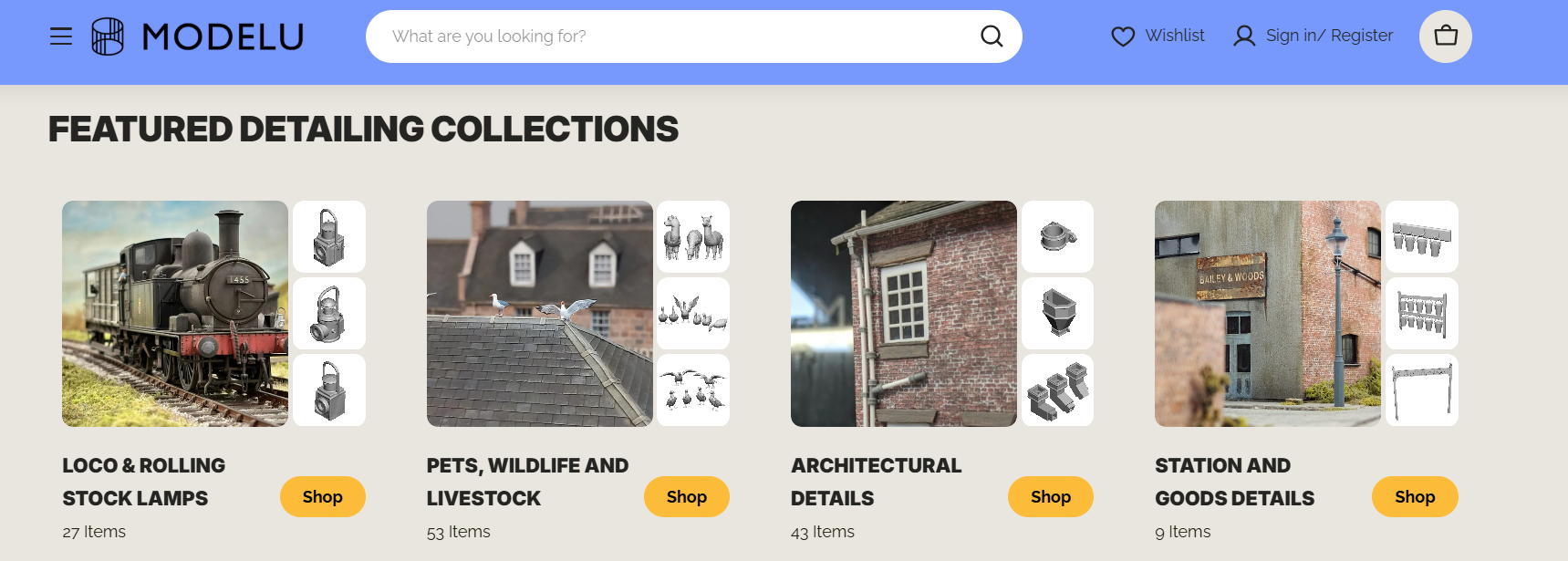
For Harrison, design lead at the British 3D model company Modelu, the arrival of Tripo has quietly reshaped how his team brings miniature worlds to life.
Specializing in 3D scanning and printing of highly detailed scale figures, Modelu has long been known for its railway characters. But as the company expands into military miniatures, personalized figurines, and full-color 3D prints through its new site, efficiency and flexibility have become more and more crucial. That’s where Tripo comes in.
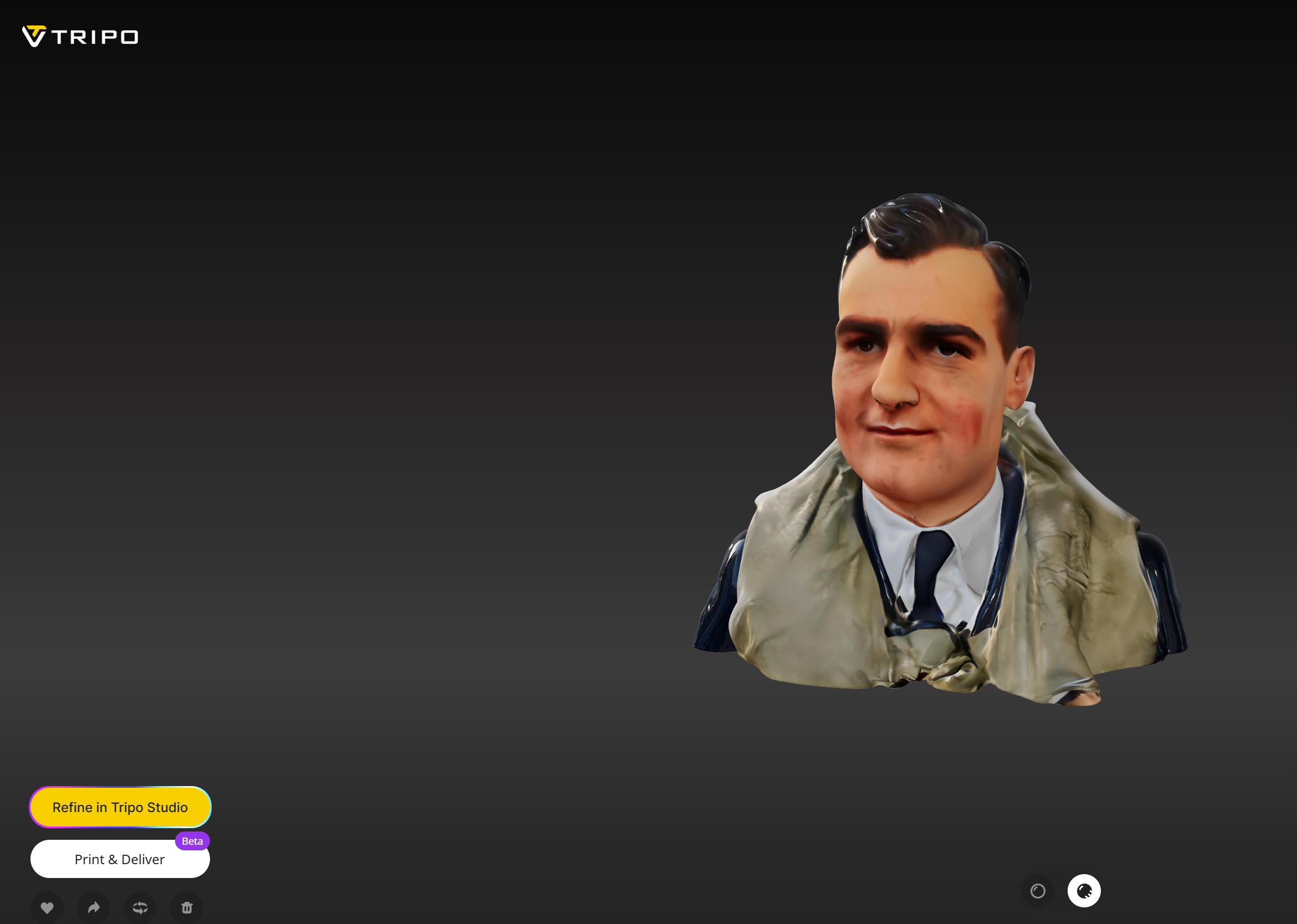
Harrison uses Tripo as an enhancement layer within their established 3D pipeline. Based on historical photographs or scene references, he generates heads, accessories, or object components directly from images with Tripo. For example, if the team scans the same person five times in different poses or outfits, each scan might have different clothing, and the team then uses Tripo to generate different heads that can then be combined with these scans. This allows Harrison and his colleagues to offer a wide variety of products on their website without needing to rescan the entire body for each variation. By doing so, they can create multiple unique figurines efficiently and provide customers with diverse options without extra production overhead.
Once downloaded, the OBJ files from Tripo are scaled up to match Modelu’s own scan dimensions, refined in ZBrush for surface detailing, and then printed using one of the company’s six in-house 3D printers. Models range from tiny figures to larger prints. While smaller models require less surface detailing, larger figures demand precise definition to maintain clarity in the printed product, and Harrison says Tripo performs well in this regard.
Harrison praises the quality of color texture produced by Tripo: “The textures are very good, the colors look quite natural. Even if the skin tone isn’t always perfect, it’s still impressive.”
More importantly, Tripo fits seamlessly into Modelu’s workflow, bridging AI-generated creativity with precision 3D scanning. It gives Harrison and his team the freedom to experiment, diversify, and scale production faster than ever.
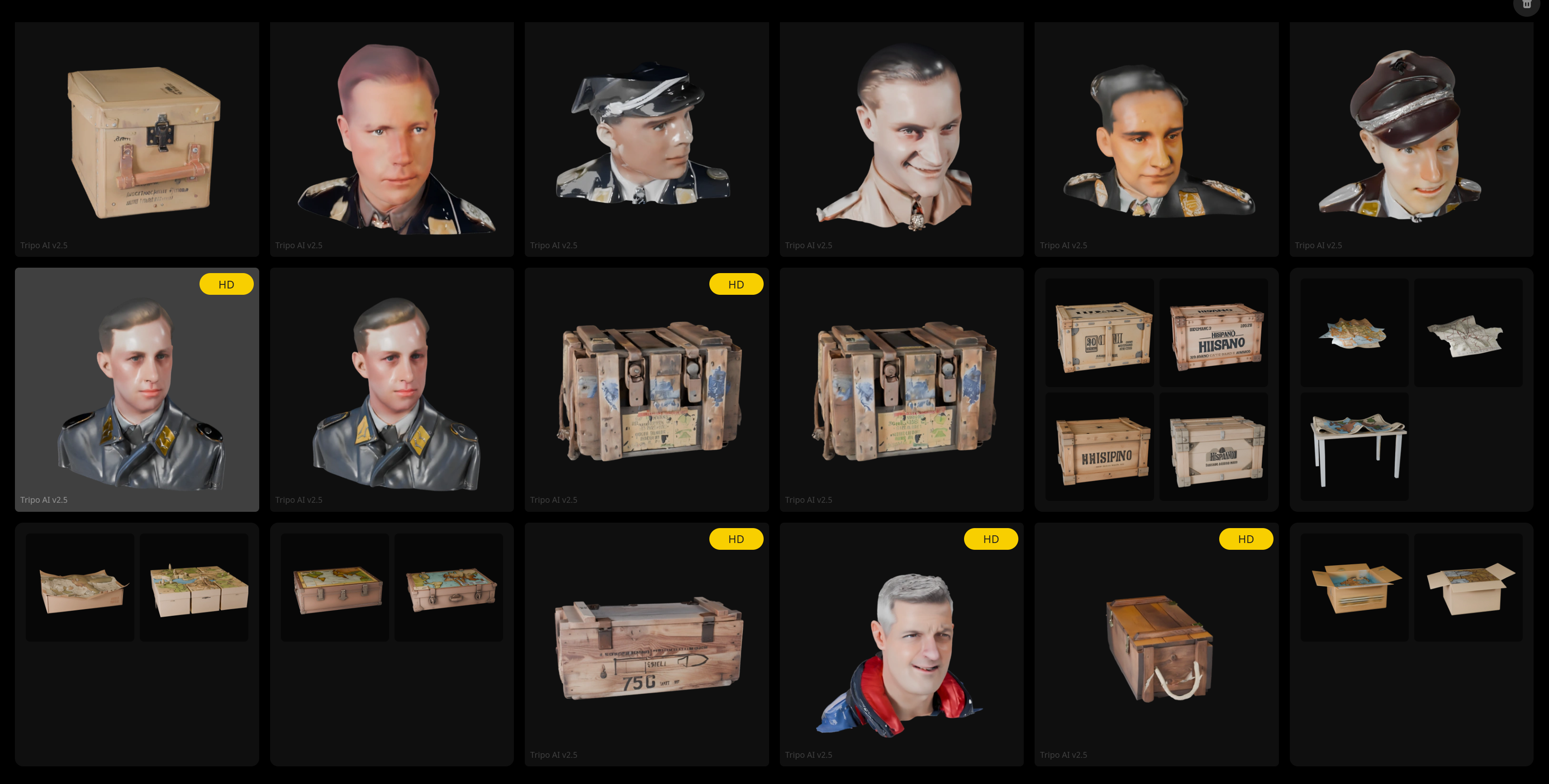
By simplifying how 3D components are created and customized, Tripo transforms production from a manual, time-intensive process into a fluid cycle of iteration and creation, and that’s exactly where Modelu’s next chapter begins. What used to require multiple manual scans and sculpting sessions can now be executed in a fraction of the time, allowing the team to explore ambitious designs and expand into new miniature genres while keeping quality consistent across every figure.
Tripo in Game Design: How a Solo Developer Efficiently Manages the Entire Game Production
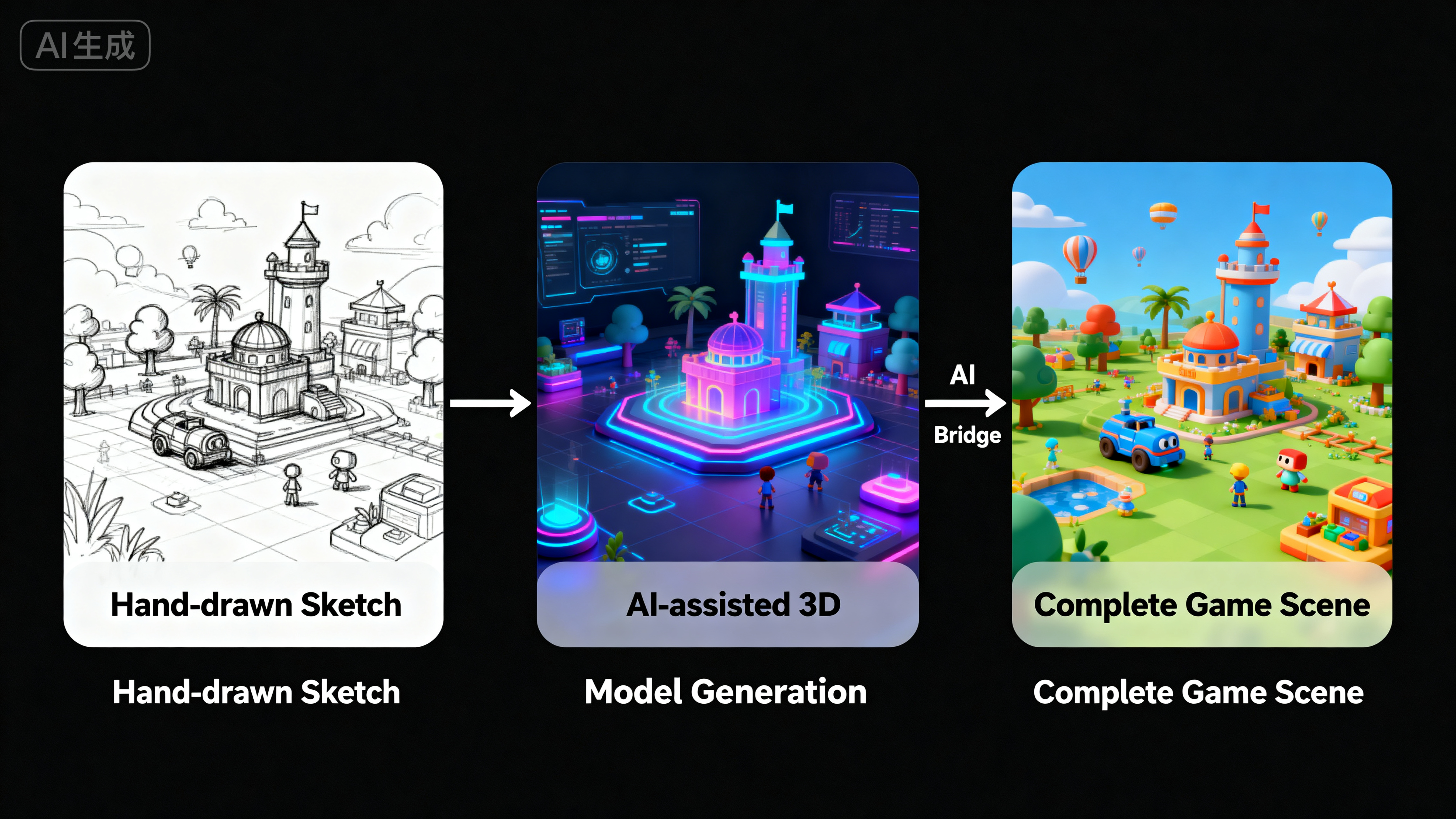
Ivan Weinreb, an independent game developer from Venezuela, runs his own small studio, handling everything from game design to asset creation. Tripo has become his indispensable partner in 3D content creation, integrated into his daily workflow alongside Blender and Unreal Engine (UE). It serves as a bridge between his initial ideas and fully usable digital assets, allowing him to iterate quickly without losing artistic fidelity. Also, it enables him to transform client sketches into printable 3D models efficiently.
In his process, Ivan first generates concept sketches using AI tools like MidJourney. These sketches are then fed into Tripo, which produces base 3D models. Tripo’s ability to generate clean topology and accurate quads ensures that these models are immediately compatible with downstream tools, reducing the time spent on retopology and mesh cleanup. He subsequently imports these models into Blender and ZBrush for detailed sculpting, refinement, and preparation for Unreal Engine integration. This combination of Tripo and professional tools allows him to maintain high artistic standards while drastically cutting production time.
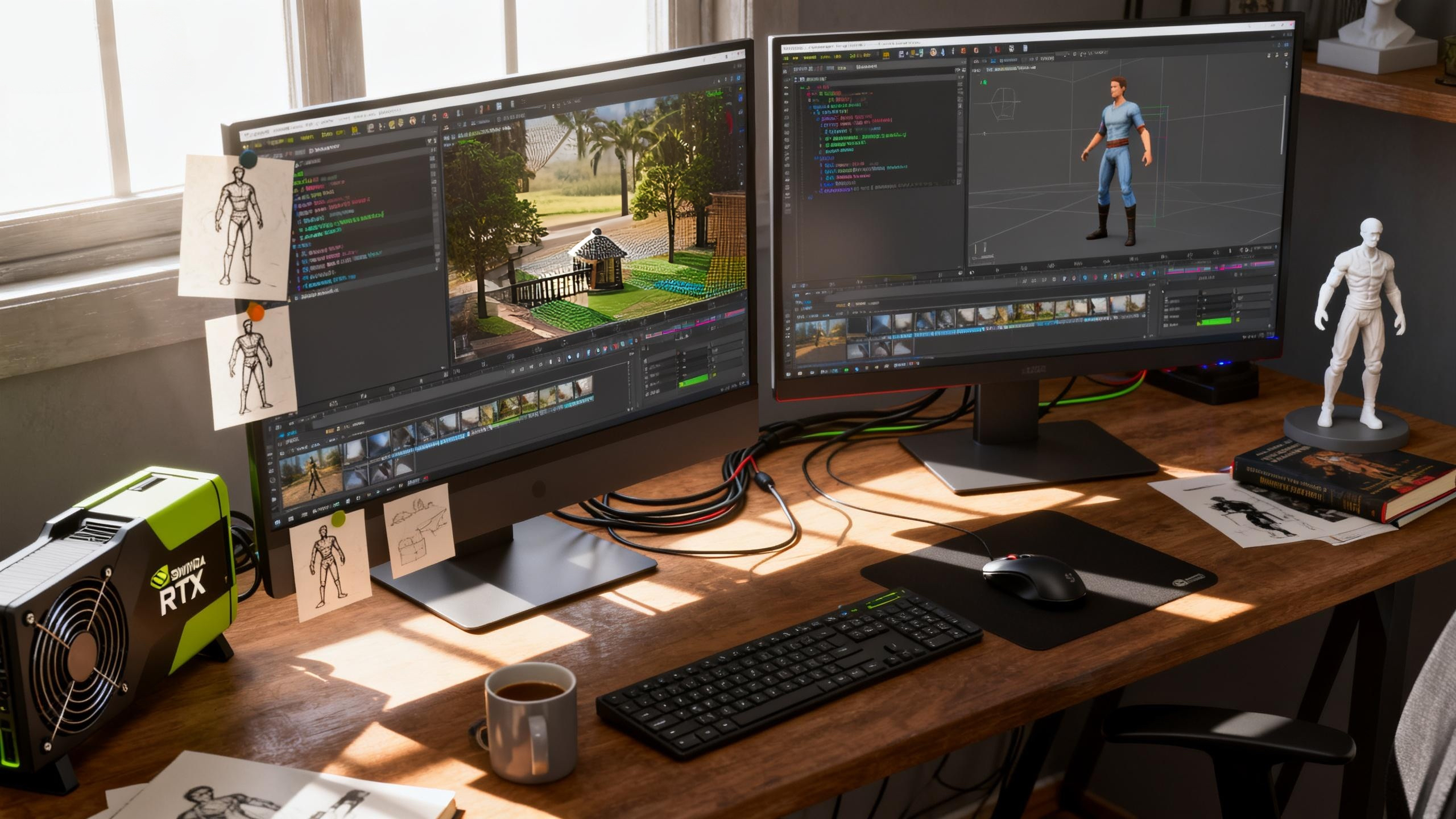
Ivan highlights the efficiency Tripo brings: “What used to take a full week for modeling game levels now takes just two hours with Tripo.” He also praises its cost-effectiveness: a Pro membership for $20 per month provides 3000 credits, enough to generate 30–50 models. For a solo developer, this low-cost access to high-quality 3D generation is transformative, freeing resources for other aspects of game production.
Beyond personal use, Ivan actively participates in VAST’s various creator programs. He is very willing to contribute models to the Tripo Gallery, helping showcase what the platform can achieve. In Ivan’s hands, Tripo has become his most trusted creative partner, transforming how a solo studio produces 3D content and empowering a single person to achieve far more, fully unleashing his potential.
Looking Forward
Across industries, Tripo is making creative workflows smarter and faster. Instead of spending hours learning complex 3D modeling techniques or fine-tuning every detail, creators can now focus on what truly matters — turning their ideas and business visions into reality with ease. By lowering the barriers to high-quality 3D content, Tripo enables bold experimentation and ambitious innovation, empowering individuals and small teams to achieve what once required entire studios. As more creators push the boundaries of possibility, Tripo will evolve alongside them, shaping the next era of 3D creation and inspiring a new generation to rethink what can be accomplished with creativity and determination.
