
Reliable AI Text to 3D Generator Fixes Fails
Advanced 3D Modeling and Printing Workflows
The manufacturing and prototyping sectors demand extreme precision, making the adoption of a reliable AI 3D Model Generator reducing print failures a necessity in 2026. Printability issues such as non-manifold geometry, floating islands, and weak supports historically disrupted digital fabrication workflows.
The Mechanics of a Reliable AI Text to 3D Printable Model Generator
A reliable AI text to 3D printable model generator utilizes advanced algorithmic frameworks to output manifold meshes that prevent common slicing errors. By automating retopology and mesh repair, it ensures exported files like STL, OBJ, and GLB slice smoothly without floating islands.
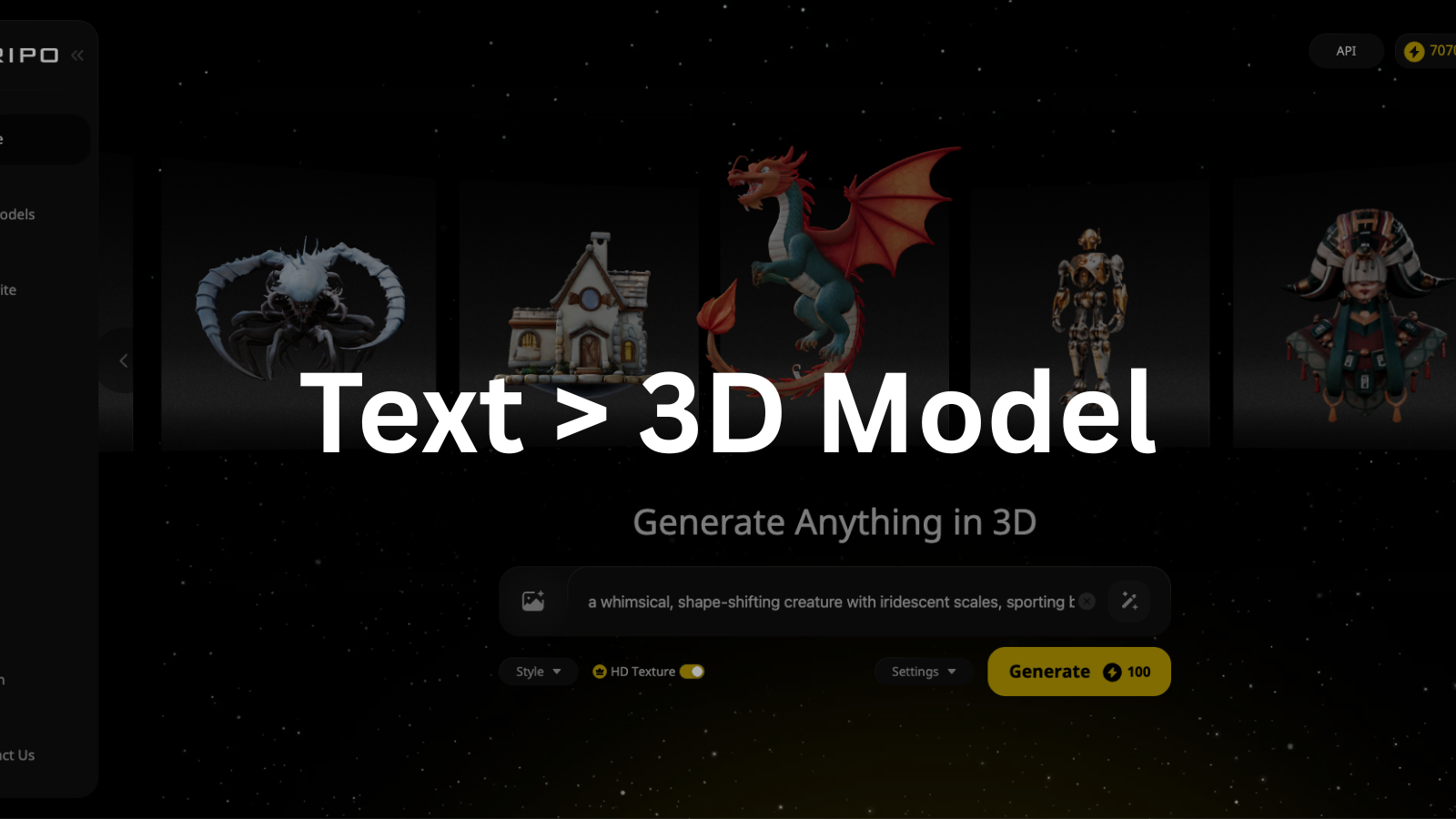
Advancements in Algorithm 3.1
Powered by over 200 billion parameters, Algorithm 3.1 processes linguistic inputs with superior spatial understanding, ensuring that the generated output is not merely a visual representation but a physically viable object.
Tripo Studio and Tripo API
Tripo Studio and Tripo API are independent product lines with separate billing systems, catering to individual designers and large-scale industrial pipelines respectively.
Subscription Tiers
- Free Plan: 300 points/month (Non-commercial).
- Pro Plan: 3,000 points/month ($19.90/month, Commercial rights included).
Post-Processing and Slicer Optimization
To complement the generator, proper slicer configuration—such as 15-25% infill density and correct support placement—is essential for high-quality output.
FAQ
1. What are some basic concepts required before starting 3D printing?
A: It is necessary to learn printer capabilities, available materials, and print quality limits. Starting with easy designs like "3DBenchy" helps test printer settings.
2. How can 3D printing transform creative ideas into reality?
A: 3D printing turns digital ideas into real objects using design and slicing software.
3. What are some popular 3D printing ideas that merge practicality with creativity?
A: Popular items include earbud organizers, custom key holders, and unique home vases.
4. Can 3D printing be used in home decor, and if so, how?
A: Yes, it allows for custom planters, lighting fixtures, and furniture accents that make the home unique.
5. Are there any 3D printed items that can help with organization?
A: Yes, cable holders, headphone hangers, and desk organizers are excellent for improving efficiency.