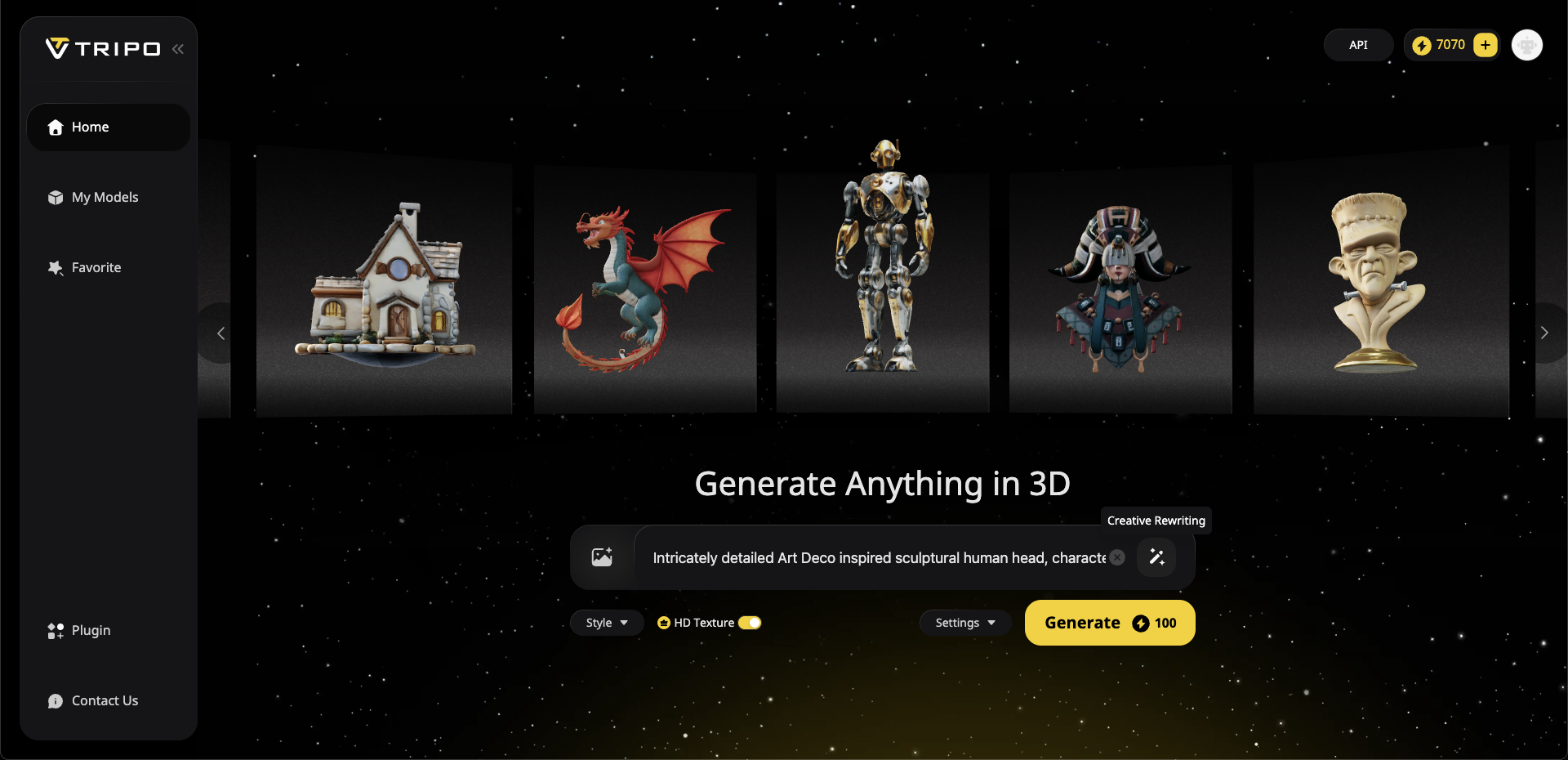
AI Assisted 3D Modeling Tool For Additive Manufacturing
Professional Workflows for High-Quality 3D Printing and Mesh Optimization
The landscape of additive manufacturing in 2026 requires precise geometric structures and optimized meshes for flawless physical production. An AI 3D Model Generator bridges the gap between conceptual design and physical realization by automating complex topology generation. By leveraging advanced algorithmic foundations, professionals can rapidly deploy generative assets into slicer software with unprecedented structural integrity and dimensional accuracy.
Key Insights
- Algorithmic Superiority: The deployment of Algorithm 3.1 drives modern AI-assisted 3D modeling capabilities, powering models with over 200 billion parameters for exact geometric replication.
- Structural Optimization: Automated mesh repair and retopology workflows are integral, ensuring generated files are natively prepared for additive manufacturing environments.
- Product Ecosystem Distinction: Tripo Studio (the web-based generation tool) and Tripo API are two completely independent product lines. The API service has its own separate billing and access system.
- Commercial Licensing: 3D models generated under Tripo's Free plan do not support commercial use.
The Evolution of Geometry Optimization
An AI-assisted 3D modeling tool drastically reduces manual retopology efforts by utilizing sophisticated generative engines to produce print-ready meshes instantly. The complexity of preparing three-dimensional data for physical fabrication has historically been a significant bottleneck. Traditional workflows often involve complicated software, concerns about printability issues like weak supports, or distorted scaling. By incorporating Tripo AI, the structural integrity of complex geometries can be verified prior to the slicing phase. Whether using Text to 3D Model or Image to 3D Model workflows, the translation to manifold meshes is seamless. The current generation automatically corrects normal directions and removes internal overlaps.
Core Technologies Powering Generation
Tripo utilizes a massive neural network exceeding 200 billion parameters, specifically powered by Algorithm 3.1, to ensure geometric accuracy. This massive scale ensures that it restores geometric precision, delivering professional AI Texturing that meets industry standards. The implementation of Algorithm 3.1 specifically targets the nuanced demands of additive manufacturing, inferring logical internal structures and maintaining appropriate wall thicknesses. Tripo Studio offers professional-grade workflow support, allowing for fine mesh and topology control.
Structural Integrity and Slicer Software Integration
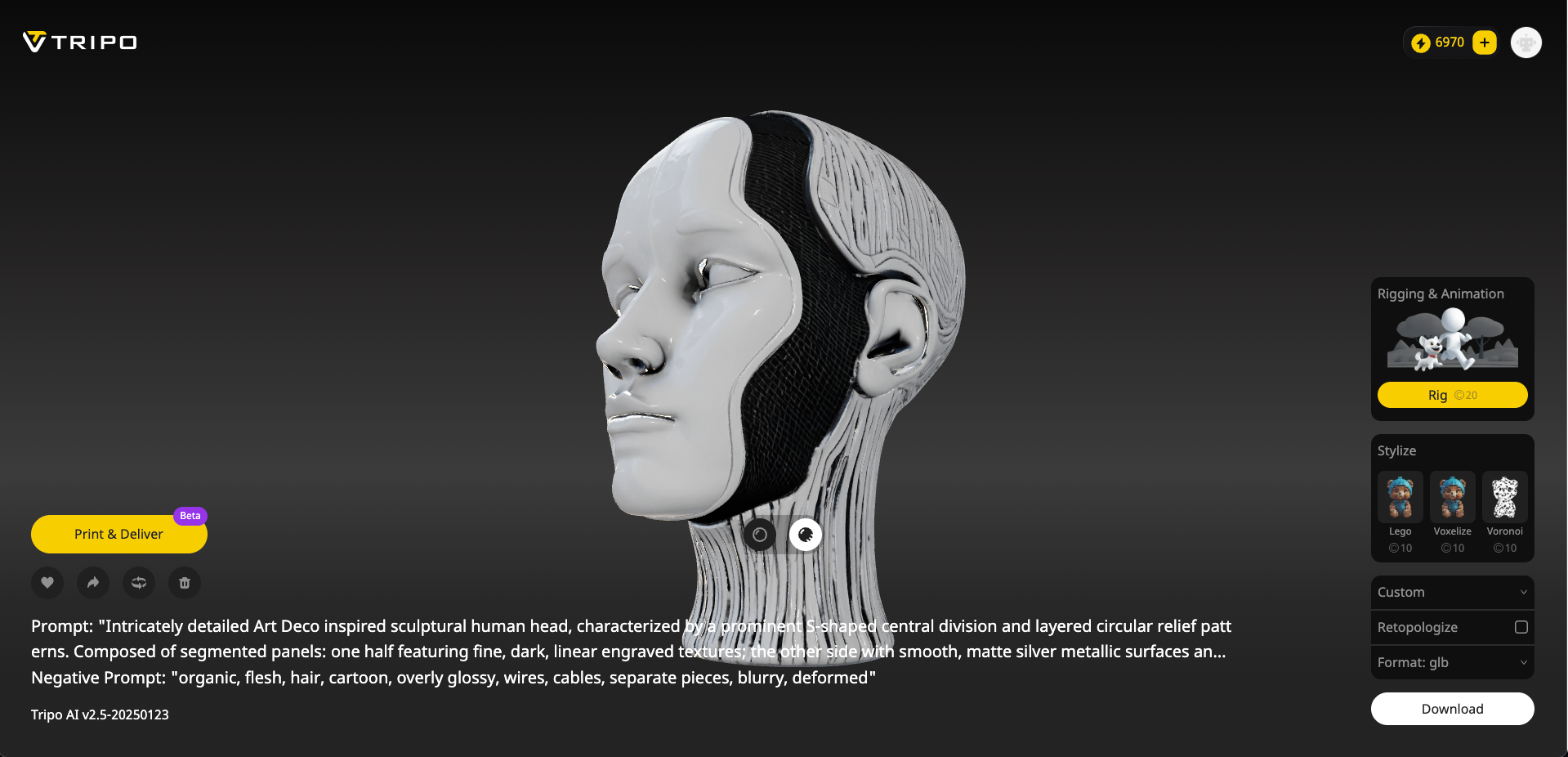
Seamless integration between an AI-assisted 3D modeling tool and slicing software is critical. Once a complex mesh is generated, it must be translated into toolpaths. Supported export formats include USD, FBX, OBJ, STL, GLB, and 3MF. Tools like 3D Format Conversion can assist if specific downstream applications require alternate extensions. Quality control is the final stage, ensuring the Auto-Rigging and structural outputs meet physical specifications.
Product Ecosystem and Enterprise Implementation
Tripo Studio and Tripo API operate as independent services. Understanding the credit and licensing structure across Subscription Plans is essential for professional users. The Free plan provides 300 points per month for non-commercial exploration. The Pro plan ($19.90/month) provides 3,000 points per month and grants the necessary commercial rights to utilize the generated meshes in final products.
FAQ
1. What are the basic concepts required before starting 3D printing?
A: Initially, understand your printer's capabilities, compatible materials, and the limits of print quality and size. Starting with standardized designs like the "3DBenchy" allows you to test printer settings and identify optimal configurations.
2. How does 3D printing transform creative ideas into reality?
A: 3D printing converts digital concepts into physical objects. By utilizing Tripo Studio for high-quality modeling and professional slicing software to generate hardware instructions, you can create entirely new designs or refine existing ones.
3. What are some popular 3D printing ideas that combine practicality with creativity?
A: Popular projects include cable organizers, custom key holders, and unique geometric vases. These projects blend functional utility with your personal aesthetic preferences.

4. Can 3D printing be utilized for home decor?
A: Absolutely. 3D printing enables the creation of custom home items such as planters, lighting fixtures, and furniture accents, providing a unique touch to your living space.
5. Are there specific 3D printed items that assist with organization?
A: Yes, 3D printing is excellent for creating organizational tools. This includes cable management systems and headphone hangers for professional workspaces, as well as custom containers and desk organizers that improve space efficiency.