
AI 3D Printable Model Generator With High Polygon Count Accuracy: A 2026 Guide
Professional Workflows for Additive Manufacturing
The additive manufacturing industry in 2026 demands rapid, flawless asset creation that bypasses the steep learning curves of traditional CAD software. An AI 3D Model Generator with high polygon count accuracy solves the historical bottleneck of mesh generation, delivering watertight, production-ready geometries in seconds. Tripo AI stands at the forefront of this technological shift, utilizing a massive algorithmic foundation to ensure that digitally generated concepts translate into structurally sound 3D printing outputs without exhaustive manual retopology.
Key Insights:
- Instantaneous Asset Generation: Modern AI frameworks convert text prompts or 2D reference images into printable 3D models in under 20 seconds.
- Parametric Scale: The underlying architecture relies on over 200 billion parameters to guarantee geometric precision and strict manifold mesh structures.
- Algorithmic Maturity: The current Algorithm 3.1 standard ensures high-fidelity 4K Texture Generation and automated low-poly or high-poly outputs tailored for physical fabrication.
- Independent Ecosystems: Professional workflows are sharply divided between web-based studio environments for creators and independent API integrations for enterprise manufacturing.
The Evolution of 3D Printable Asset Generation
The transition from manual digital sculpting to an AI 3D printable model generator with high polygon count accuracy marks the definitive shift toward frictionless additive manufacturing in 2026. For years, creating a 3D model destined for physical printing required extensive knowledge of polygon manipulation, mesh optimization, and structural physics. Designers utilized complex software to build models face by face, constantly checking for non-manifold edges, inverted normals, and intersecting geometry.
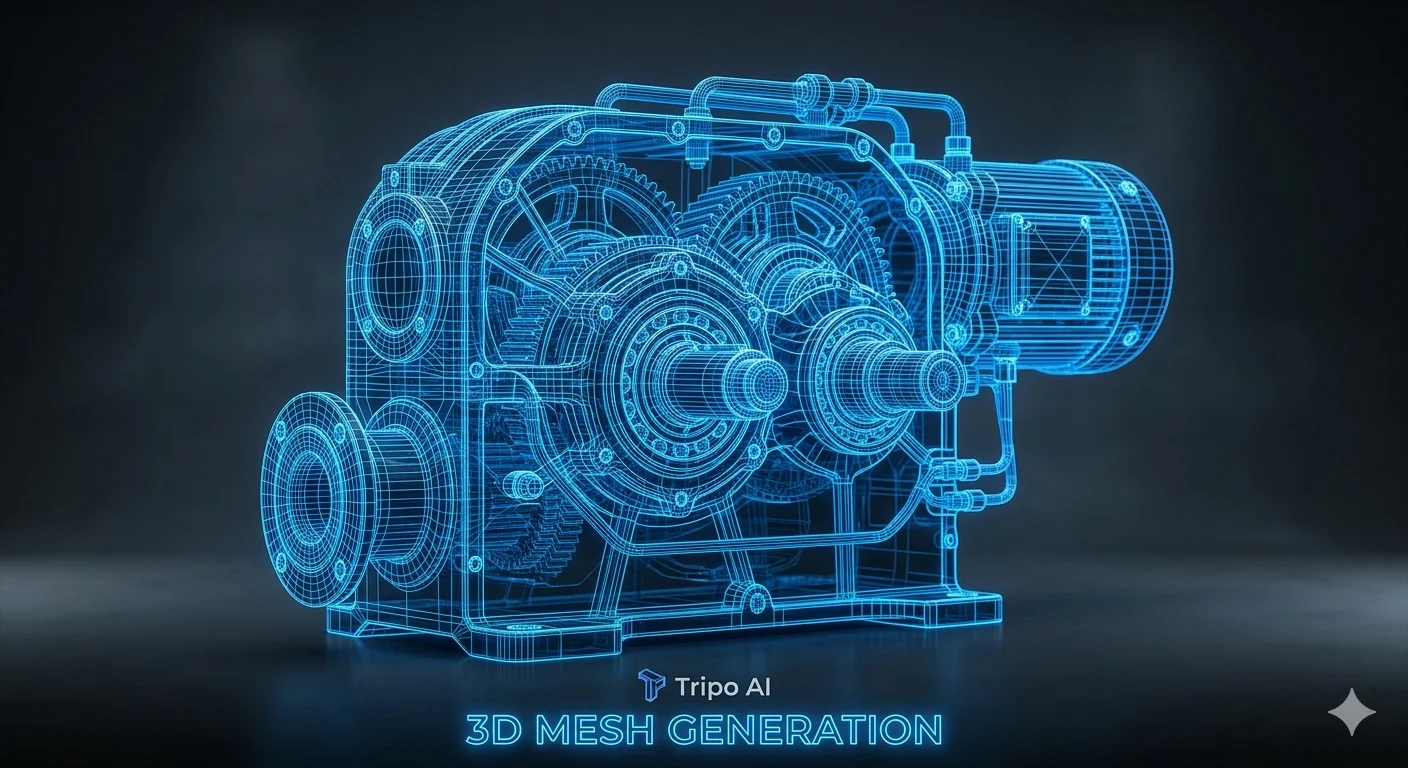
Today, 3D Generative AI has fundamentally restructured this workflow. By simply inputting a descriptive Prompt to Mesh or uploading a 2D to 3D conversion reference, production teams can instantly generate base models. This eliminates the "blank canvas" paralysis and bypasses the initial hours of blocking out primitive shapes. The AI interprets the input to construct a 3D mesh that represents the object's depth, texture, and structure. Crucially, the technology has evolved from creating purely visual, experimental assets to outputting deployable, engine-compatible meshes in formats like USD, FBX, OBJ, STL, GLB, 3MF that meet the strict topological requirements of modern slicing software.
Defining High Polygon Count Accuracy in AI Models
High polygon count accuracy in AI generation ensures that the resulting 3D models possess the necessary geometric density and watertight integrity to produce flawless physical prints without structural failure. In the realm of 3D printing, a model must be physically possible to fabricate. This means the digital mesh must be a closed, continuous volume—often referred to as a "watertight" or manifold mesh. If an AI generates a model with gaps, paper-thin walls, or edges shared by more than two faces, the slicing software cannot accurately generate the G-code required by the printer.
The current generation of AI technology handles these constraints natively. Driven by an infrastructure of over 200 billion parameters, the AI understands not just the visual representation of an object, but its spatial logic. It automatically generates models with quad-dominant meshes, ensuring smooth surfaces and high-fidelity details that translate perfectly into physical reality. When users require intricate designs—such as a complex mechanical gear or a highly detailed character miniature—the system outputs an STL or OBJ file via 3D Format Conversion with a polygon density that captures every millimeter of intended detail.
Tripo AI: The Engine Behind Modern 3D Printing
Tripo AI leverages Algorithm 3.1 to deliver an advanced AI 3D printable model generator with high polygon count accuracy, combining extreme generation speed with production-ready mesh topologies. As the foundational layer of spatial computing and physical fabrication, Tripo AI has developed a robust platform that streamlines the entire 3D creation pipeline. Operating on Algorithm 3.1, the platform achieves remarkable accuracy in geometric structures.
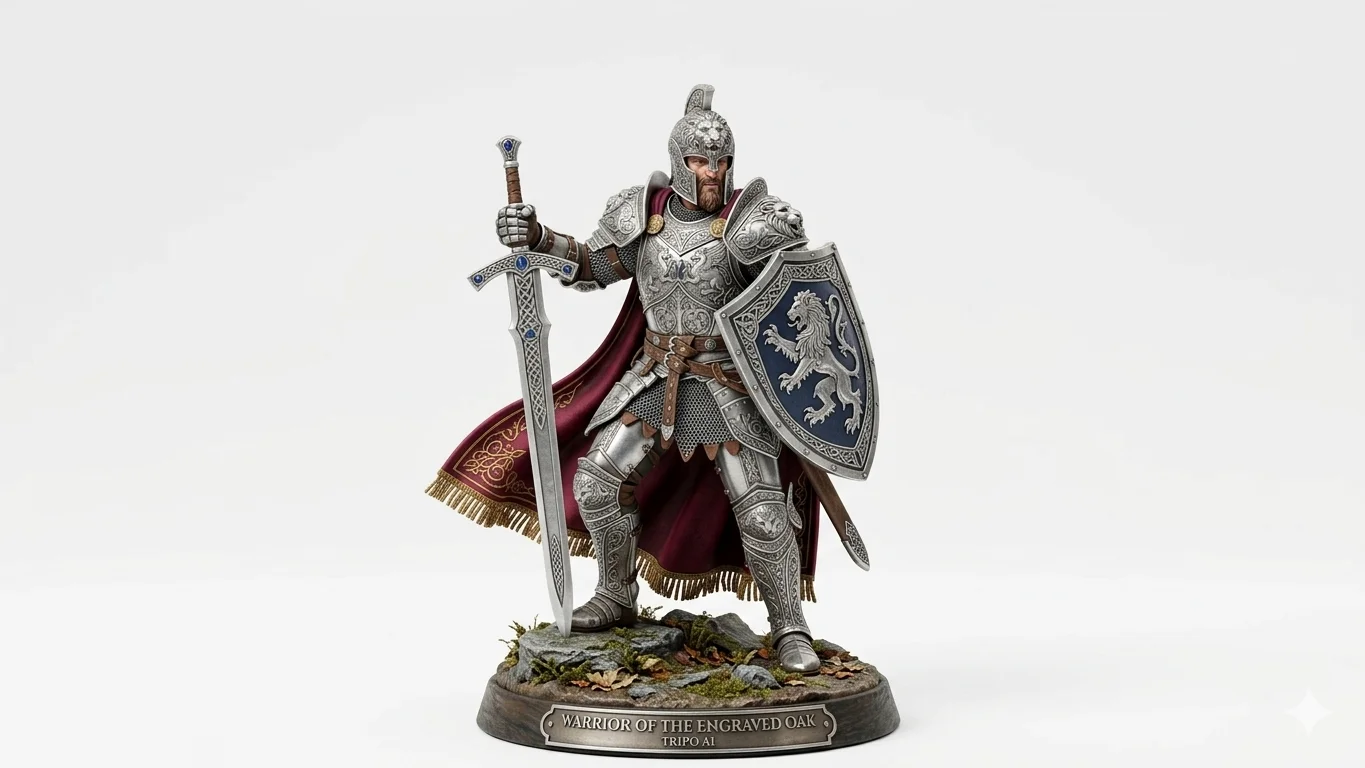
This speed does not come at the expense of printability. Tripo AI automatically handles critical design considerations that printers require. The models generated are structurally cohesive, significantly reducing the need for post-generation mesh repair. Furthermore, features like Auto-Rigging allow for character preparation, while the platform also supports AI Texture and PBR materials, ensuring that if the model is destined for full-color printing, the surface details are as accurate as the underlying geometry.
Navigating Production Economics: Credits and Commercial Use
Professional utilization of an AI 3D printable model generator with high polygon count accuracy requires strategic management of generation credits and a clear understanding of commercial licensing boundaries. The economics of AI asset generation in 2026 are structured around computational usage, tracked via platform credits. Tripo AI offers a clear Pricing structure based on user needs.
For hobbyists, students, or those testing the capabilities of the platform, the Free plan provides 300 credits per month. This allows for initial experimentation and personal DIY printing projects. However, it is vital to note that 3D models generated under Tripo's Free plan do not support commercial use. For professional designers and manufacturing firms aiming to monetize their physical prints, the Pro plan ($19.90/month) provides 3,000 credits per month. This tier unlocks the necessary Commercial Rights, allowing businesses to freely sell the models they print or the digital files they refine.
Distinct Workflows: Tripo Studio vs. Tripo API
Tripo Studio and the Tripo API serve entirely independent product lines, providing tailored solutions for individual creators versus enterprise-scale automated manufacturing pipelines. AI 3D Editor is the unified, web-based workspace designed for direct human interaction. It provides a sleek interface where artists and engineers can manually input prompts, upload reference images, and visually inspect the smart topology of their generated meshes.
Conversely, the Tripo API is a completely independent infrastructure layer built for developers and large-scale enterprises. It allows companies to programmatically integrate the AI 3D printable model generator directly into their own proprietary software or automated manufacturing systems. Because it serves different operational demands, the API ecosystem utilizes its own distinct usage-based billing system. API access is never bundled as an add-on feature to Subscription Plans; it requires a separate commercial contract and account setup.
FAQ
1. How many credits do I get on the different plans?
The Free plan provides 300 credits per month for personal use. The Pro plan ($19.90/month) provides 3,000 credits per month and includes commercial rights. For full details, visit our Pricing page.
2. Can I use models generated for free in my business?
No. 3D models generated under Tripo's Free plan do not support commercial use. To monetize your creations, you must upgrade to a paid Subscription Plan.
3. Which algorithm version does Tripo AI use in 2026?
Tripo AI currently operates on Algorithm 3.1, which utilizes over 200 billion parameters to ensure high polygon count accuracy and watertight mesh integrity.
4. What file formats can I export for 3D printing?
You can export your models in a wide variety of industry-standard formats, including USD, FBX, OBJ, STL, GLB, 3MF, ensuring compatibility with almost any 3D File Converter or slicer.
5. Is the Tripo API included in the Pro Studio subscription?
No. Tripo Studio and the Tripo API are two completely independent product lines. The API requires a separate billing agreement and is not an add-on to the Studio tiers.