How AI Music and 3D Cover Art Are Changing Music Branding
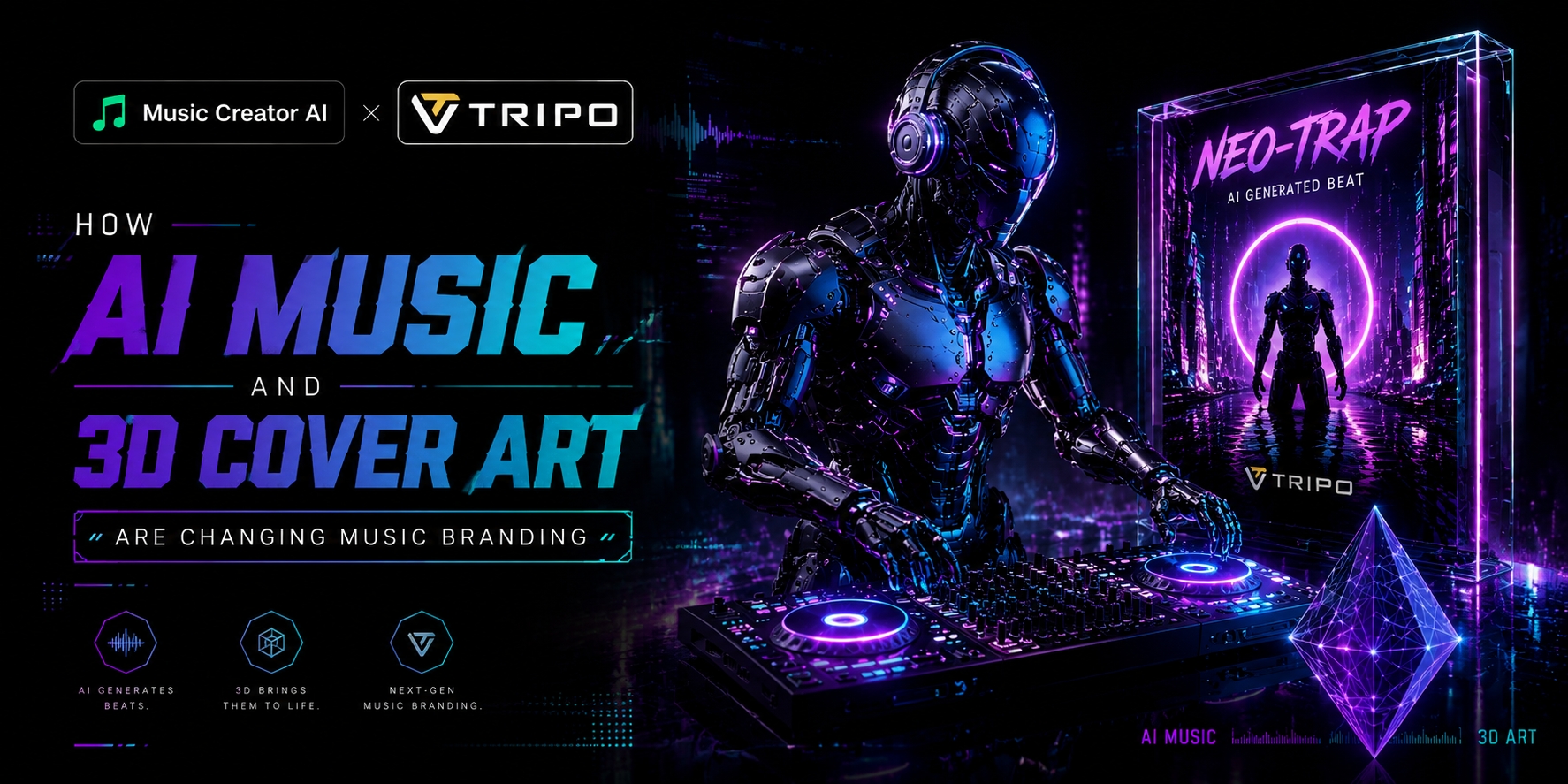
Music branding is no longer just about sound.
For a long time, a musician's brand was built around a few familiar elements: the song itself, the artist image, the album cover, the music video, and maybe a consistent visual style across social media. These elements were usually created separately, often by different teams. The music came first, and the visuals followed later.
But AI is changing that workflow.
Today, creators can generate song ideas, lyrics, vocals, instrumentals, and genre variations much faster than before. AI music tools make it easier for independent artists, content creators, and small creative teams to explore new sounds without needing a full production studio. At the same time, AI 3D tools are making it easier to turn visual ideas into 3D characters, objects, scenes, and reusable brand assets.
This combination is creating a new kind of music branding workflow.
AI music gives creators the sound. 3D cover art gives that sound a face, a world, and a visual identity.
For modern creators, especially those publishing music on platforms like YouTube, TikTok, Spotify, Instagram, and short-form video channels, a song is no longer just an audio file. It is a piece of content that needs to be seen, remembered, shared, and recognized. That is why 3D cover art and AI-generated visual identity are becoming more important in the AI music era.
Why Music Branding Matters More in the AI Music Era
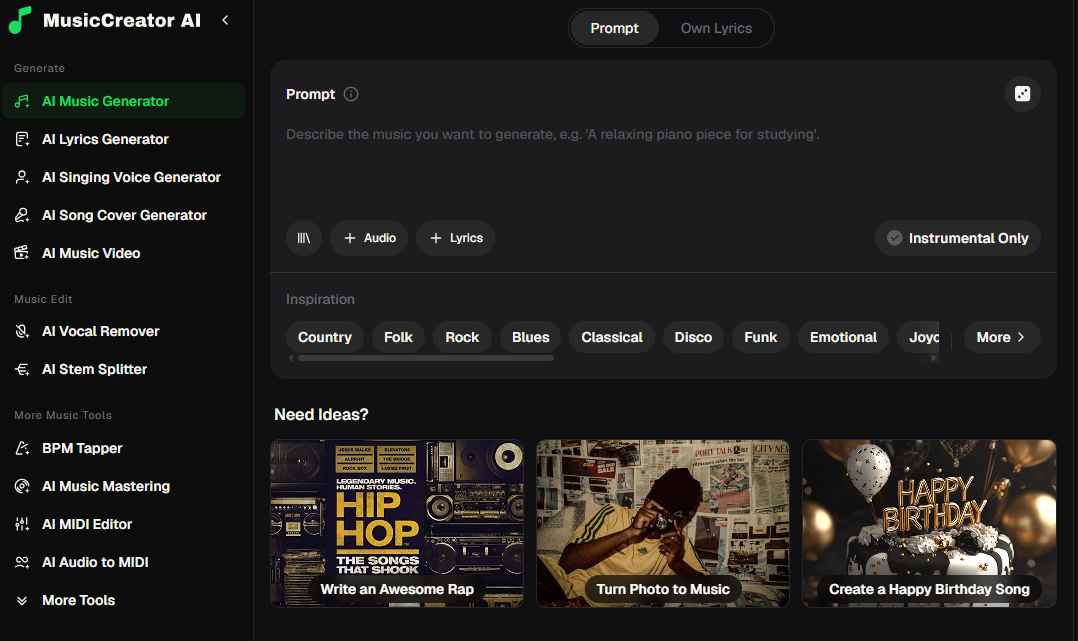
AI music has lowered the barrier to music creation.
A creator can now experiment with different genres, moods, lyrics, vocals, and instrumental styles in a much shorter time. Platforms such as MusicCreator AI help creators quickly explore song ideas, generate music, and test different creative directions. This is powerful because it gives more people access to music creation.
But it also creates a new challenge.
When more creators can generate music quickly, the number of songs online increases. That means sound quality alone may not be enough to stand out. A track may be catchy, emotional, or well-produced, but if it does not have a strong visual identity, it can easily disappear in a crowded feed.
This is especially true on visual-first platforms.
- On YouTube, the thumbnail can decide whether someone clicks.
- On TikTok, the first visual frame can decide whether someone stops scrolling.
- On Spotify, cover art can shape the listener's first impression before the song even begins.
- On Instagram and short-form video platforms, music is often discovered through visual content rather than audio alone.
In this environment, music branding becomes more important, not less.
A strong music brand helps answer questions like:
- What does this song feel like?
- What world does this music belong to?
- What kind of creator made this?
- Why should someone remember it?
- How can this song be recognized across different platforms?
This is where 3D cover art becomes valuable.
Instead of treating cover art as a one-time image, creators can use 3D assets to build a more complete visual identity around their music. A 3D character, object, logo, or environment can become a recurring symbol across album covers, videos, social posts, thumbnails, and promotional content.
In the AI music era, branding is what turns a generated track into a recognizable creative identity.
From Album Covers to 3D Visual Worlds
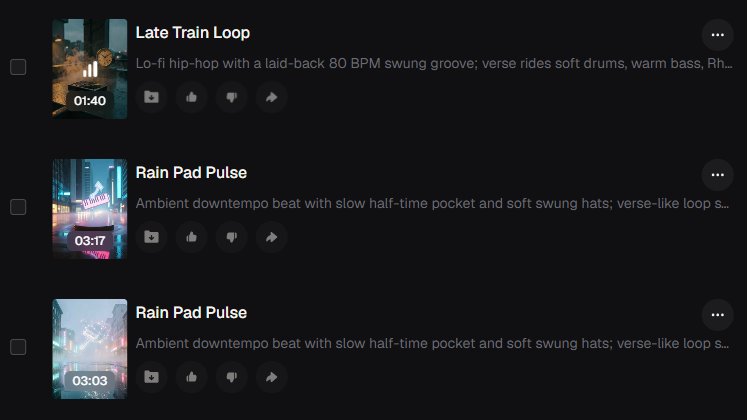
Traditional album covers are usually static images. They can be beautiful, memorable, and emotionally powerful, but they are often limited to one format.
Modern music marketing needs more than that.
A single song may need:
- An album cover
- A YouTube thumbnail
- A TikTok visual loop
- A Spotify Canvas-style animation
- A lyric video background
- A short music video intro
- Social media teaser images
- Website visuals
- Promotional graphics
This is why creators are moving from simple cover images to visual systems.
A 3D cover is not only a cover image. It can become the foundation of a larger music brand.
For example, imagine a creator releases a dark futuristic trap song. The cover concept might be a chrome skull wearing glowing headphones in a neon city. If this is created as a 3D asset or 3D-inspired visual identity, it can be reused in many ways:
- As the main album cover
- As a YouTube thumbnail
- As a short rotating animation for TikTok
- As a background object in a lyric video
- As a profile image for the artist project
- As a recurring visual symbol for future releases
This is very different from a flat, one-time cover image.
A 3D asset can become part of the artist's visual language. It can be reused, adapted, animated, recolored, placed in new scenes, or combined with other elements. Over time, this helps the creator build a recognizable music universe.
This is especially useful for AI music creators because many of them are not only releasing songs. They are building channels, virtual artist brands, music series, background music libraries, short-form video assets, or fictional music identities.
For these creators, 3D cover art can help transform a track into a brandable experience.
How AI Music Inspires 3D Cover Art
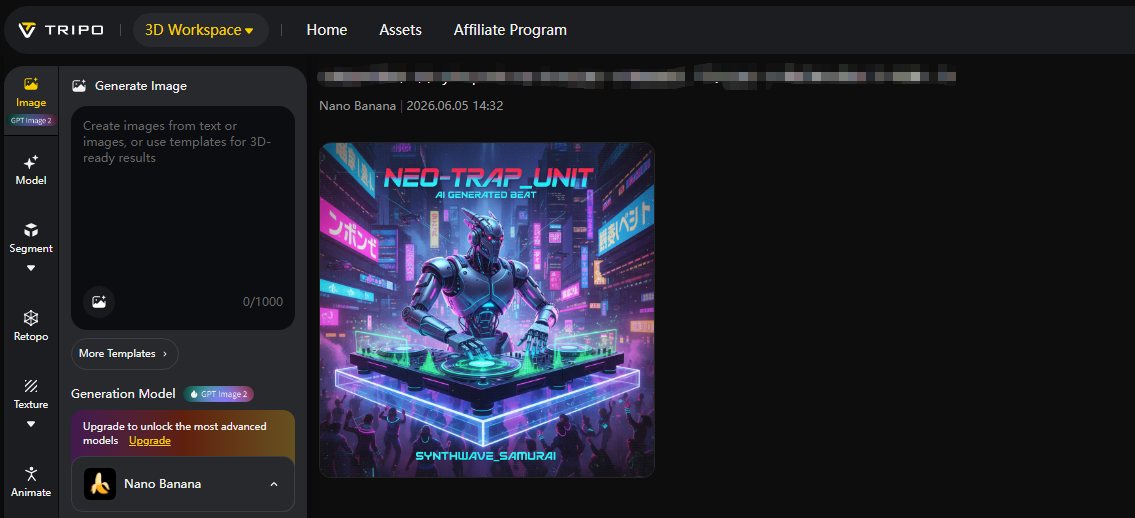
One of the most useful ways to connect AI music and 3D cover art is to treat the song as the starting point for the visual concept.
Instead of asking, "What should the cover look like?" creators can ask a better question:
"What does this song sound like visually?"
Every song contains visual clues. The genre, mood, lyrics, tempo, instruments, and vocal style can all guide the 3D art direction.
For example:
- A dark trap beat might suggest neon streets, chrome materials, smoke, shadows, and aggressive visual energy.
- A lo-fi chill song might suggest warm lighting, a cozy bedroom, a cassette player, a rainy window, soft colors, and nostalgic objects.
- An EDM track might suggest glowing speakers, lasers, crystal objects, futuristic stages, and high-energy motion.
- A cinematic fantasy song might suggest floating islands, ancient instruments, glowing portals, mist, and dramatic lighting.
- A romantic pop song might suggest glossy textures, soft fabric, pastel colors, heart-shaped objects, and clean studio lighting.
This process turns music into visual direction.
A creator might start by generating a dark trap beat or cinematic instrumental in MusicCreator AI. From there, they can extract the song's mood, genre, story, and energy. Those details can then become the foundation for a 3D cover art prompt in Tripo3D.
For example, if the song concept is: "A lonely robot walking through a neon city at night"
The 3D cover prompt could become: "A dark chrome robot wearing glowing headphones, standing in a rainy neon city street, cinematic cyberpunk lighting, reflective metal surface, futuristic music branding, high-detail 3D album cover style."
This is where AI music and AI 3D tools work well together. The music defines the emotional direction. The 3D tool helps turn that emotional direction into a visual world.
Practical Workflow: From AI Song to 3D Music Brand
Here is a simple workflow creators can use to turn an AI-generated song into a 3D music brand asset.
Step 1: Generate or Define the Song Concept
Start with the sound.
This could be a fully generated AI song, a short instrumental, a beat, a vocal track, or even a rough song idea. The goal is to define the creative direction before creating the visual.
Useful details include: song title, genre, mood, main theme, lyrics summary, main instruments, vocal style, target platform, and audience.
For example: "A dark futuristic trap song about a lonely robot walking through a neon city."
This concept already gives strong visual direction. It suggests the character, environment, mood, color palette, and material style.
Step 2: Extract Visual Keywords from the Music
Next, turn the song idea into visual keywords.
From the example above, the keywords could be: lonely robot, neon city, rainy street, dark chrome, glowing headphones, cyberpunk lighting, night atmosphere, reflective metal, urban future.
These keywords will help guide the 3D cover art prompt.
This step is important because music language and visual language are different. A phrase like "dark futuristic trap" is useful, but it is still abstract. The goal is to translate it into objects, colors, scenes, materials, and lighting.
Step 3: Create a 3D Cover Art Prompt
Now combine the visual keywords into a clear prompt.
"A dark chrome robot wearing glowing headphones, standing in a rainy neon city street, cinematic cyberpunk lighting, reflective metal surface, futuristic urban atmosphere, high-detail 3D album cover style."
A good 3D cover art prompt should usually include: main subject, environment, mood, lighting, materials, style, and intended use.
For music branding, it is helpful to include phrases such as: 3D album cover style, music branding visual, cinematic lighting, high-detail 3D asset, social media cover art, futuristic music visual, stylized 3D character.
The more specific the prompt, the easier it is to create a visual that matches the song.
Step 4: Generate 3D Assets with Tripo3D
Once the concept is clear, creators can use Tripo3D to turn the idea into a 3D asset or 3D-inspired visual direction.
For music creators, the value of a 3D tool is not only that it can generate an object. The bigger value is that it helps transform a song concept into a reusable visual asset.
A 3D model, character, object, or scene can support many parts of the music release: album cover design, visualizer assets, promotional videos, social media visuals, artist identity, website hero images, merchandise mockups, and future release artwork.
This makes Tripo3D useful for creators who want to build more than one image. It helps them build a visual system around the music.
Step 5: Repurpose the 3D Asset Across Channels
After creating the 3D asset, the next step is distribution.
The same visual concept can be adapted into different formats: square album cover, vertical TikTok or Reels video, horizontal YouTube thumbnail, looping background visual, lyric video scene, website banner, social media teaser, playlist cover, and artist profile image.
This is where 3D cover art becomes more valuable than a single static design.
Instead of starting from zero for every platform, creators can reuse the same visual identity across multiple channels. This creates consistency and makes the song easier to recognize.
Genre-Based Examples of AI Music + 3D Cover Art
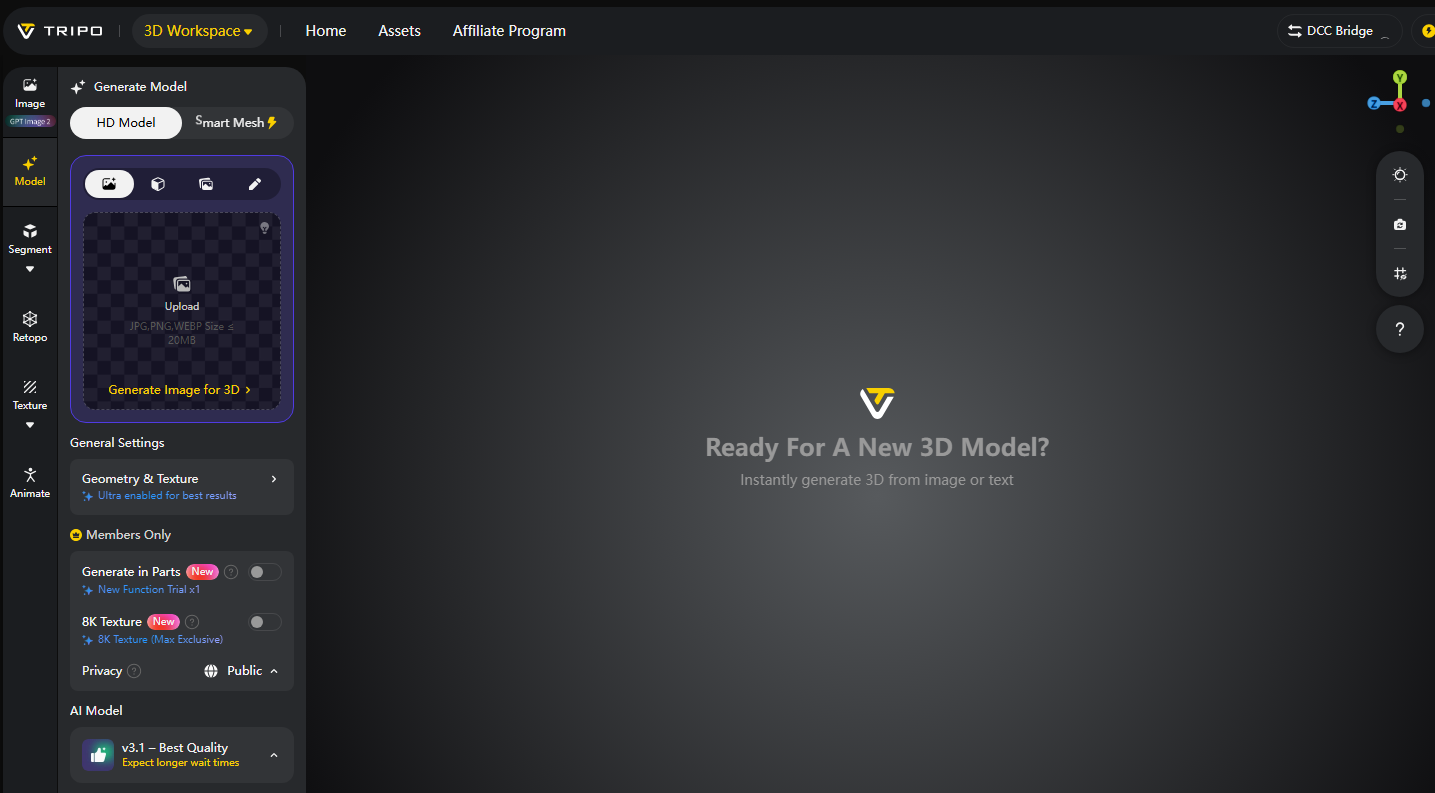
Different genres naturally suggest different 3D visual identities. Here are several examples.
Trap / Hip-Hop
A dark trap or hip-hop track often works well with strong contrast, metallic materials, urban environments, and bold symbols.
A possible 3D cover concept could be: "A chrome skull wearing oversized headphones, surrounded by neon green light, dark city background, smoke, reflective metal surface, cinematic hip-hop album cover style."
This type of visual gives the song a rebellious and futuristic identity.
Lo-fi / Chill
Lo-fi music often depends on atmosphere. The visual identity should feel warm, personal, and calm.
A possible 3D cover concept could be: "A cozy 3D bedroom with a vintage cassette player on a wooden desk, warm lamp light, rainy window, coffee cup, soft pastel colors, nostalgic lo-fi music cover style."
This kind of visual works well for study music, sleep playlists, background music channels, and relaxing instrumental tracks.
EDM / Dance
EDM needs energy. The visual identity should feel bright, glowing, and dynamic.
A possible 3D cover concept could be: "A futuristic 3D speaker tower glowing with electric blue light, laser beams, floating crystal shapes, festival stage atmosphere, high-energy EDM album cover style."
This gives the track a modern, club-ready feel.
Cinematic / Fantasy
Cinematic music often benefits from world-building.
A possible 3D cover concept could be: "A floating island in the sky with an ancient glowing instrument, golden light, mist, dramatic clouds, fantasy cinematic music cover style."
This creates a sense of story and scale, which works well for orchestral tracks, trailers, game music, and fantasy-inspired compositions.
Pop / Love Song
Pop music often needs a clean and emotionally accessible visual identity.
A possible 3D cover concept could be: "A glossy heart-shaped microphone on soft silk fabric, pink and silver lighting, clean studio background, polished romantic pop music cover style."
This type of visual feels simple, memorable, and easy to use across social platforms.
Conclusion: AI Music Needs a Visual Identity
AI music is changing how songs are created. It helps creators move faster, experiment with more ideas, and produce music without traditional barriers.
But in a crowded digital world, creating the song is only the beginning.
To make music memorable, creators also need a strong visual identity. They need cover art, social visuals, short-form video assets, and recognizable brand elements that help the song stand out across platforms.
This is where 3D cover art plays an important role.
A 3D cover can turn a song into a character, an object, a scene, or a visual world. It can make AI-generated music feel more complete, more premium, and more recognizable. It can also give creators reusable assets for music videos, thumbnails, TikTok loops, Spotify-style visuals, and social media campaigns.
With AI music tools like MusicCreator AI, creators can shape the sound of a track. With 3D creation tools like Tripo3D, they can build the visual world around that sound.
Together, AI music and 3D cover art give creators a faster way to build music brands that feel complete, memorable, and ready for modern platforms.
