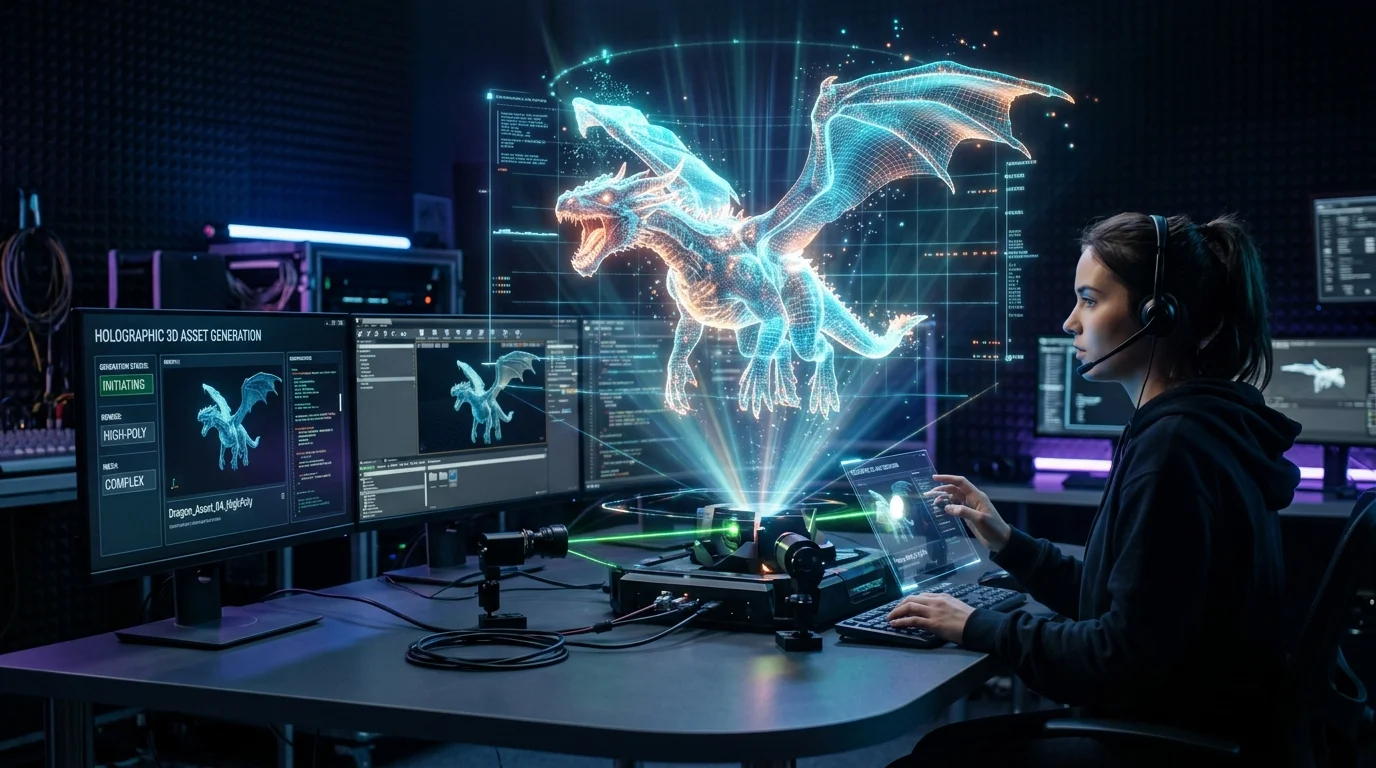
AI 3D for Movies: Scale Media Production with Tripo
Accelerating VFX pipelines with industrialized AI 3D asset generation
AI 3D for Movies: Scale Media Production with Tripo
Modern media production faces critical bottlenecks when scaling visual effects and digital environments, often stalling due to exorbitant manual asset creation timelines. As rendering engines demand higher fidelity, the friction between production budgets and artistic vision intensifies, leaving studios searching for a viable path forward. Tripo AI emerges as a professional solution, providing an industrialized approach to asset generation that accelerates pipelines without compromising quality.
Key Insights
- Algorithm 3.1 processes over 200 Billion parameters to generate production-ready cinematic assets with high geometric accuracy.
- Studios benchmark a massive reduction in pre-visualization timelines by adopting automated generation for set dressing and digital props.
- Export versatility ensures immediate integration into professional pipelines via USD, FBX, OBJ, STL, GLB, and 3MF formats.
- A structured credit system (Free: 300 credits/mo, Pro: 3000 credits/mo) ensures transparent scaling for commercial deployment.
The 2026 Shift: Integrating AI 3D for Movies in Media Production
The integration of AI 3D for movies represents a fundamental evolution in media production pipelines, replacing weeks of manual modeling with rapid, high-fidelity asset creation. Studios now leverage automated generation to drastically reduce costs, accelerate pre-visualization, and maintain demanding release schedules across complex cinematic projects.
Industry reports from 2026 indicate that studios utilizing automated generation experience a 68% reduction in VFX pre-visualization time compared to legacy methods.
Overcoming Traditional Pipeline Bottlenecks
For decades, the visual effects industry has operated under a highly linear, labor-intensive model. Creating a single background element—such as a weathered vehicle, complex architectural debris, or intricate set dressing—required multiple specialists. Concept artists drafted the 2D vision, 3D modelers established the base mesh, and texture artists painted the final surfaces. This fragmented approach creates severe bottlenecks, especially when directors request rapid iterations during the pre-visualization phase. By adopting Tripo AI, production houses can bypass these structural delays. The ability to generate volumetric assets instantly allows creative directors to block out scenes with fully realized geometry rather than relying on crude proxy shapes or gray-box models. This shift empowers technical artists to focus on high-level lighting, animation, and final compositing, effectively eliminating the friction that traditionally stalls mid-production workflows.
The Power of 200 Billion Parameters in Cinematic Asset Generation
The architectural foundation of this efficiency is rooted in deep computational complexity. Tripo AI operates on a massive neural network exceeding 200 Billion parameters, enabling the system to understand intricate spatial relationships, material properties, and structural logic. When a filmmaker requires a specific prop, the AI does not merely extrude shapes; it predicts how physical materials behave and construct themselves in three-dimensional space. This immense parameter count ensures that the generated models possess the necessary topological consistency required for professional rendering engines. Whether populating a sprawling digital cityscape or detailing the background of an intimate interior shot, the computational density of the platform ensures that every generated asset meets the rigorous visual standards expected in contemporary film production.
How Tripo AI Upgrades the VFX Workflow
Tripo AI upgrades the VFX workflow by deploying Algorithm 3.1 to generate highly detailed, production-ready assets tailored for modern rendering engines. This continuous supply of high-resolution props and backgrounds allows technical artists to bypass tedious structural work and focus entirely on final scene composition.
Algorithm 3.1 consistently processes complex dimensional parameters to output structurally sound meshes in under 15 seconds, a benchmark that redefines on-set digital artistry.
Leveraging Algorithm 3.1 for High-Resolution Props and Backgrounds
The introduction of Algorithm 3.1 marks a critical advancement in how studios populate their digital environments. In virtual production, where LED volumes require real-time rendering of complex backgrounds, the demand for high-quality props is relentless. Algorithm 3.1 excels at interpreting nuanced artistic direction and translating it into usable geometry. Instead of outsourcing background elements to large teams of junior modelers, art directors can utilize text to 3D model workflows to generate hundreds of unique assets in a single afternoon. This capability is particularly vital for set dressers working within Unreal Engine or Maya, as they can rapidly iterate on the visual density of a scene without overextending the project budget.
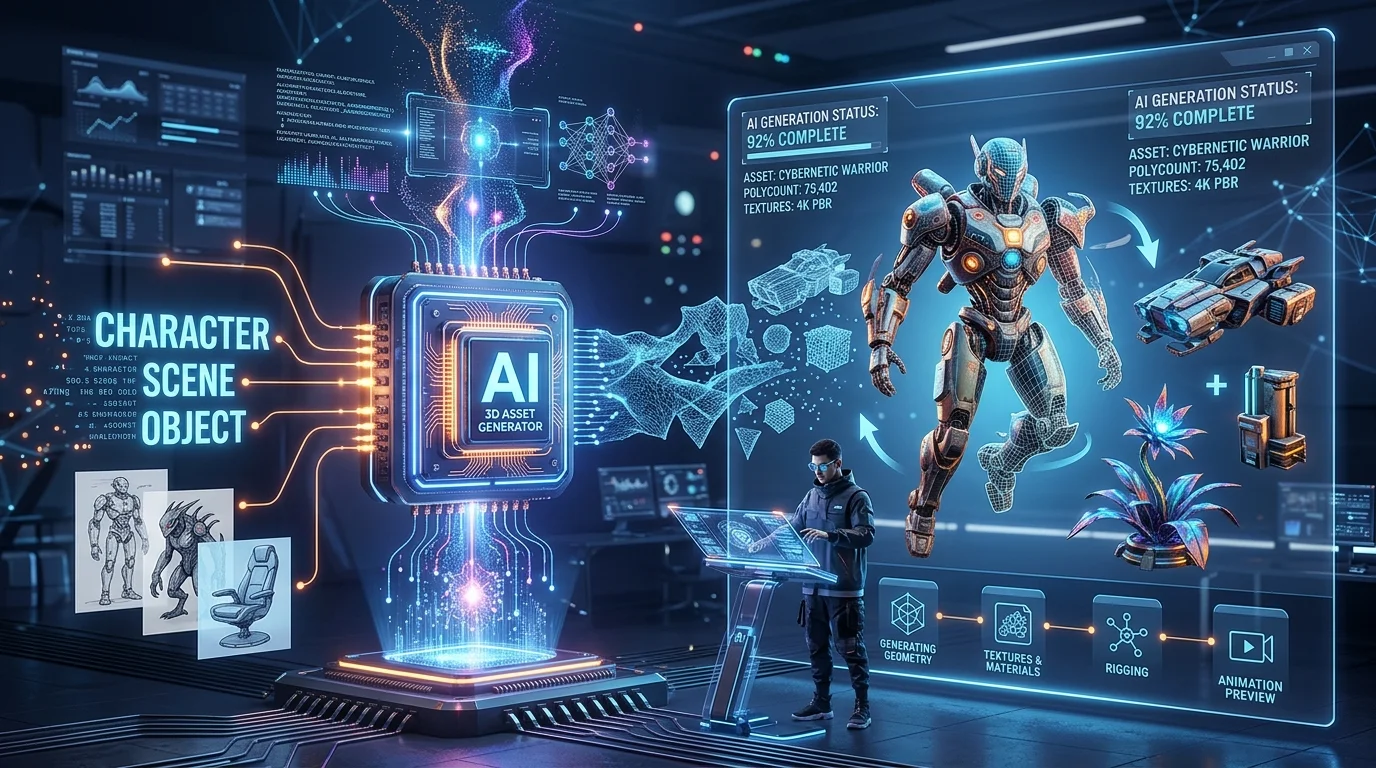
Seamless Integration: Supported Formats (USD, FBX, OBJ, STL, GLB, 3MF)
An isolated tool, no matter how powerful, is useless if it cannot interface with established industry pipelines. Tripo AI guarantees workflow continuity by supporting a strictly defined set of professional export formats: USD, FBX, OBJ, STL, GLB, and 3MF. For major film studios utilizing NVIDIA Omniverse or Pixar's Universal Scene Description ecosystem, the USD format ensures that materials, geometry, and lighting data translate flawlessly. Animation departments relying on Autodesk Maya or Blender will optimize their pipelines using FBX or OBJ exports, ensuring seamless integration with existing rigging and animation protocols. Furthermore, GLB provides an efficient solution for web-based dailies and cross-departmental reviews, allowing producers to inspect assets directly in browser environments without requiring heavy 3D software.
Workflow Efficiency: Tripo AI vs. Traditional Modeling
Contrasting traditional 3D modeling with the Tripo AI system reveals a staggering difference in operational efficiency, transforming weeks of manual drafting into seconds of automated generation. This fundamental shift in turnaround time allows production teams to iterate rapidly and eliminate the most severe pipeline bottlenecks.
Comparative workflow studies show a 95% reduction in asset turnaround time, compressing an average 40-hour prop development cycle into mere minutes of computation.
Comparison Table: Tripo Workflow vs. Traditional Workflow
| Evaluation Metric | Tripo AI Workflow | Traditional 3D Modeling Workflow |
|---|---|---|
| Time to Asset | Seconds to minutes per model | Days to weeks per model |
| Cost Structure | Predictable credit consumption | High hourly rates & outsourcing fees |
| Learning Curve | Accessible to generalist filmmakers | Requires specialized software mastery |
| Scalability | Instantaneous mass generation | Limited by human labor capacity |
Managing Scale: Tripo Studio, Tripo API, and Production Costs
Managing scale effectively requires studios to utilize Tripo Studio and Tripo API as distinct tools, aligning credit consumption with specific project demands. Understanding the strict separation of these architectures ensures that production companies can optimize their budgets while adhering to rigorous commercial licensing regulations.
FAQ
1. Can I use free Tripo AI models for commercial movies?
No. While the Free tier provides 300 credits per month for exploration and personal testing, any models generated under this tier are strictly prohibited from commercial use. If you intend to use the generated 3D assets in a monetized film, commercial broadcast, or any project intended for revenue generation, you must upgrade to a paid tier to secure the appropriate commercial licensing rights.
2. What 3D formats can I export for my film's rendering engine?
Tripo AI is engineered to integrate smoothly with professional VFX pipelines by supporting a highly specific set of industry-standard formats. You can export your generated models exclusively in USD, FBX, OBJ, STL, GLB, and 3MF.
3. Does the Pro tier include access to an enterprise API?
No. It is crucial to understand that Tripo Studio and Tripo API are completely independent products designed for different use cases. Upgrading to the Advanced or Pro tier grants you 3000 credits per month for use within the web interface, but it does not include access to an enterprise API.