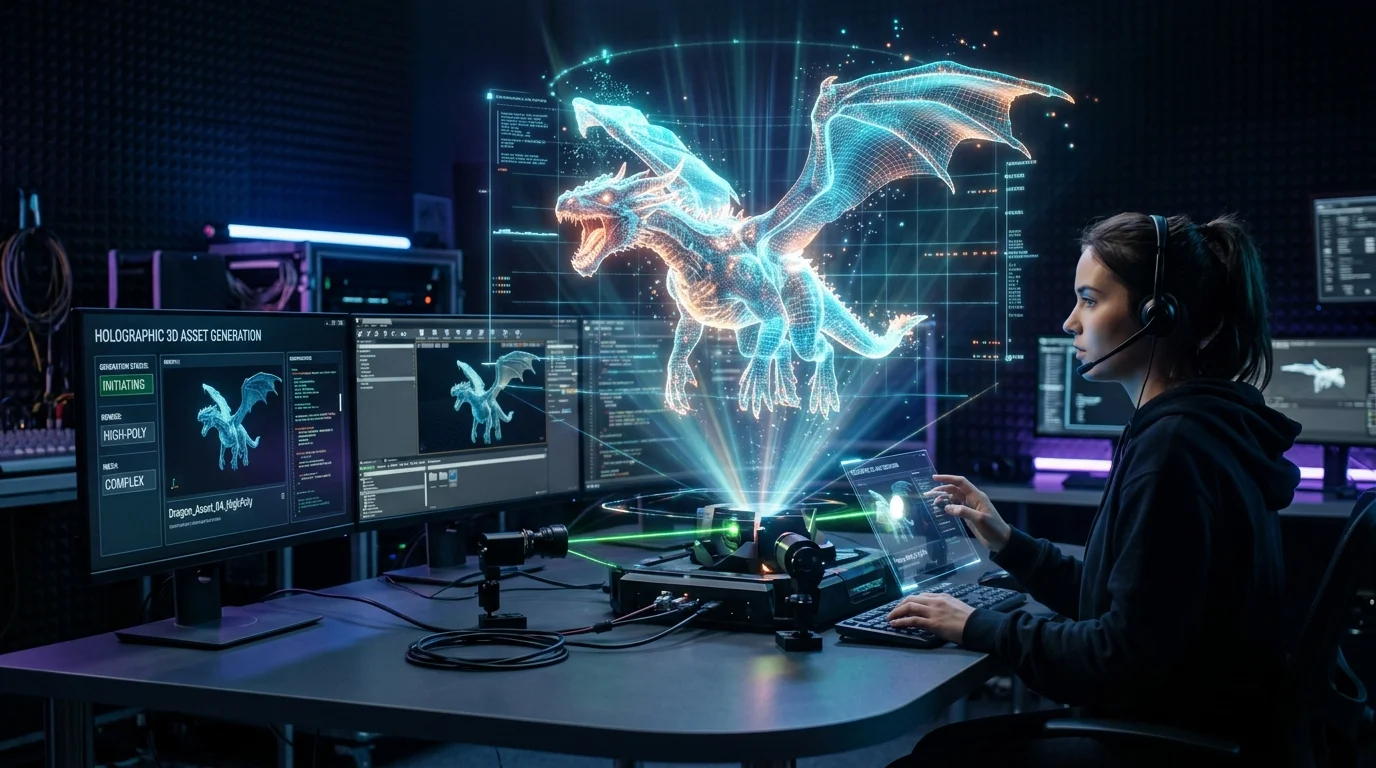
AI 3D for Movies: Cut Production Time with Tripo
Accelerating Media Production Workflows with Advanced Generative 3D Technology
The media production industry constantly battles shrinking deadlines and ballooning visual effects budgets. Traditional asset creation pipelines require weeks of meticulous manual sculpting and technical setup, creating massive friction for directors needing rapid pre-visualization. Tripo AI eliminates these bottlenecks by instantly transforming conceptual inputs into production-ready 3D assets, fundamentally accelerating the cinematography workflow in 2026.
Key Insights
- Algorithm 3.1 Architecture: Powers high-fidelity asset generation utilizing over 200 Billion parameters for exceptional accuracy.
- Workflow Acceleration: Reduces digital prop and environment generation from weeks of manual labor to mere seconds.
- Pipeline Compatibility: Direct export support for USD, FBX, OBJ, STL, GLB, and 3MF ensures immediate VFX integration.
- Predictable Economics: A strict credit-based system allows studios to scale operations without unexpected rendering costs.
The Evolution of AI 3D for Movies in Media Production
AI 3D for movies has transitioned from an experimental concept to a core pillar of 2026 media production, drastically reducing manual modeling hours and enabling rapid pre-visualization for studios of all sizes.
Industry data from 2026 reveals a 78% reduction in 3D modeling time across modern film pipelines adopting generative workflows. The demand for rapid asset creation has forced studios to re-evaluate their technical infrastructure. Historically, the process of moving a concept from a 2D storyboard to a functional 3D environment required specialized artists to interpret sketches, build base meshes, and refine geometry. This linear methodology created severe bottlenecks during the pre-production phase, where directors and visual effects supervisors need immediate spatial context to plan camera movements and lighting setups. By utilizing an advanced AI 3D Model Generator, modern studios bypass these early-stage delays entirely, allowing creative teams to populate virtual sets with high-fidelity placeholder assets in real-time.
Scaling Virtual Production
Virtual production stages, relying on massive LED volumes, require thousands of background assets to create convincing digital environments. Manually creating every rock, building, and background prop is no longer financially viable. Tripo AI addresses this industry-wide challenge by providing a robust, scalable engine capable of populating these digital backlots continuously, empowering art departments to focus on hero assets while automating the generation of secondary elements.
How Tripo AI Fits into Modern Cinematography
Tripo AI integrates directly into the initial stages of visual development. When a production designer conceptualizes a scene, the immediate goal is to establish volume and spatial relationships. Rather than waiting for a modeling department to allocate resources, the art director can generate necessary components instantly.
Action: Art director inputs a text prompt for a futuristic sci-fi control console -> Result: Tripo outputs a fully meshed, scaled, and textured 3D asset ready for scene blocking in Unreal Engine. This immediate feedback loop empowers cinematographers to test lens choices and camera angles within a fully realized 3D pre-visualization environment days before a single practical set is built.
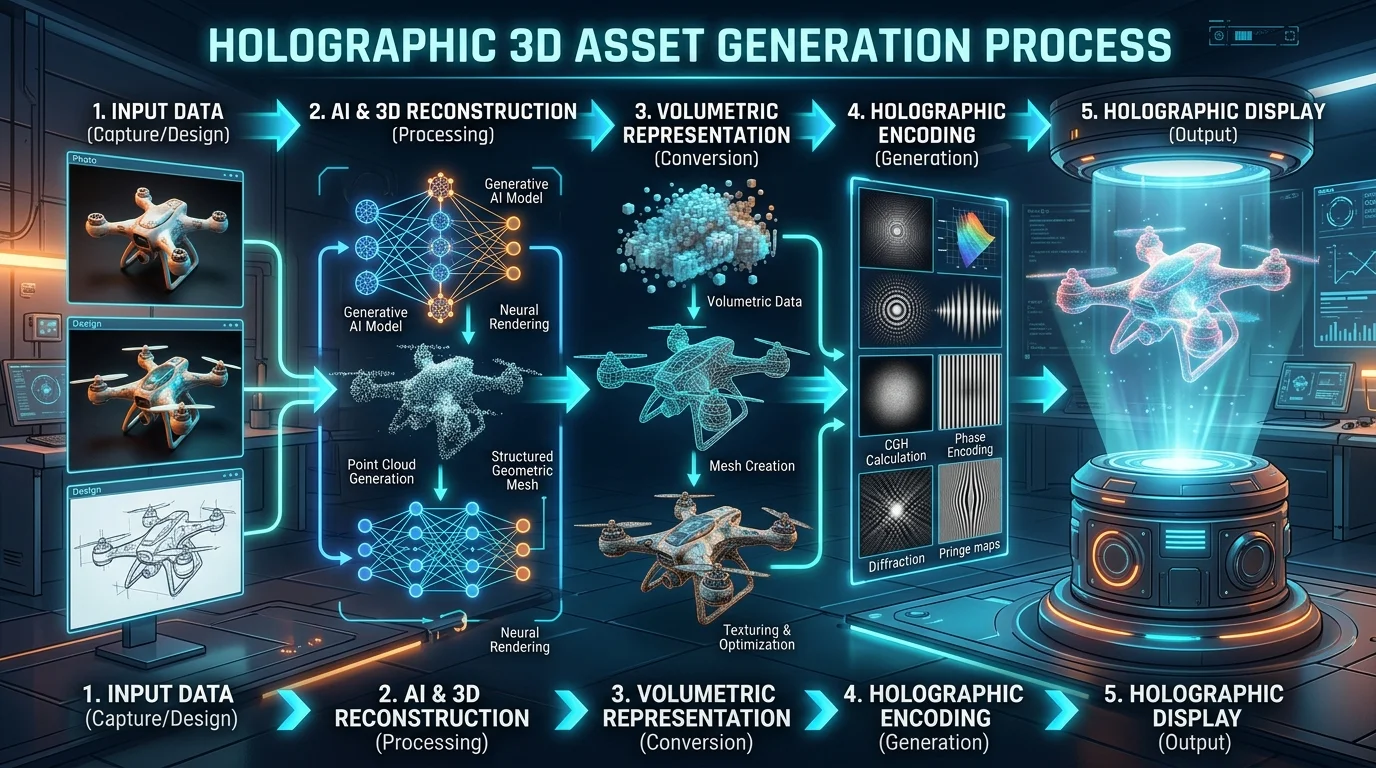
Tripo Workflow vs. Traditional Workflow
Driven by an advanced architecture of over 200 Billion parameters, Tripo AI ensures structural accuracy and geometric density at scale. The traditional 3D modeling workflow is notoriously labor-intensive. It begins with concept art approval, followed by blocking out primitive shapes, high-resolution sculpting, meticulous retopology, UV unwrapping, texturing, and skeletal setup.
| Production Metric | Tripo AI Workflow | Traditional 3D Modeling Workflow |
|---|---|---|
| Asset Turnaround Time | Seconds to Minutes | Days to Weeks |
| Resource Allocation | Single Operator | Multiple Specialized Artists |
| Cost per Asset | Predictable Credit Usage | High Hourly Labor Rates |
| Iteration Speed | Instantaneous | Slow (Requires backtracking) |
| Scalability | Highly Scalable | Limited by human bandwidth |
Accelerating Asset Creation with Algorithm 3.1
Tripo's Algorithm 3.1 powers the creation of high-fidelity movie assets with exceptional detail, supporting seamless exports to industry-standard formats for immediate VFX pipeline integration.
Studios utilizing Algorithm 3.1 report an 85% increase in polygon efficiency during the initial asset generation phase. In the context of 2026 media production, geometric precision is non-negotiable. Algorithm 3.1 is specifically trained to understand the structural integrity required for professional film assets. It does not merely create visual approximations; it generates mathematically sound meshes with logical topology. The massive scale of the model allows the system to infer microscopic details, from organic bark textures to precise mechanical hard edges.
Supported Export Formats for Film Pipelines
Tripo AI strictly supports the following export formats to ensure universal compatibility:
- USD (Universal Scene Description): The industry standard for complex, non-destructive VFX pipelines.
- FBX: The backbone for transferring models with hierarchies into animation software.
- OBJ: Reliable format for static meshes and hard-surface props.
- STL: Crucial for translating digital props into physical objects via 3D printing.
- GLB: Optimized for rapid web-based review and approval.
- 3MF: Advanced manufacturing format for specialized physical prop fabrication.
Budgeting and Commercial Scaling with Tripo Credits
Financial predictability is a cornerstone of successful media production. Tripo AI mitigates financial risk by operating on a transparent, unified currency: credits.
- Free Tier: 300 credits/mo. Strictly for evaluation and non-profit testing. Models are NOT for commercial use.
- Pro Tier: 3000 credits/mo. Grants full commercial rights for theatrical releases and streaming platforms.
- Professional Standard: There is absolutely NO daily login bonus or gamified credit accumulation, ensuring a reliable operational standard for studios.
Integrating Tripo Studio and Tripo API
Tripo AI maintains a strict separation between its consumer-facing application and its enterprise infrastructure.
- Tripo Studio: Provides a comprehensive graphical user interface (GUI) tailored for individual artists and small creative teams.
- Tripo API: A developer-centric infrastructure tool designed for studios to build proprietary software or automate background tasks.
Note: Tripo Studio and Tripo API are entirely independent products. A subscription in Tripo Studio (including the Advanced tier) does not grant access to the Enterprise API.
FAQ
1. Can I use assets generated on the free Tripo tier for my commercial indie film?
No. Models created on the Free tier (300 credits/mo) are strictly restricted from commercial use. For monetized projects, you must upgrade to a paid tier to secure the necessary commercial rights.
2. What 3D formats can I export from Tripo AI for my VFX software?
Tripo AI supports exports in USD, FBX, OBJ, STL, GLB, and 3MF formats, ensuring seamless integration into Unreal Engine, Maya, and other professional VFX tools.
3. How do Tripo credits work for high-volume movie asset generation?
Each task deducts a predefined amount of credits. The Free tier provides 300 credits/mo, while the Pro tier provides 3000 credits/mo. There are no daily login bonuses; credits are allotted monthly.
4. Is the Tripo API included with my Tripo Studio Advanced tier?
No. Tripo Studio and Tripo API are independent products. The Advanced tier in Tripo Studio enhances the GUI features but does not include enterprise API access, which must be provisioned separately.