Style Guide: AI 3D Modeling Tools for Game Assets
Accelerating Production Pipelines with Consistent AI-Generated 3D Assets
The gaming industry in 2026 requires robust production speed without compromising visual integrity, making 3D Generative AI tools for game assets essential for modern studios. Developing a cohesive virtual world demands rigorous aesthetic control, which traditional manual pipelines struggle to scale efficiently. By utilizing Tripo AI, game development teams can seamlessly align algorithmically generated models with established art directions, ensuring every prop and character feels native to its environment.
Key Insights
- Tripo AI utilizes Algorithm 3.1, leveraging over 200 billion parameters to maintain strict topological and stylistic adherence during generation.
- The application of pre-stylization prompts and post-stylization presets allows these tools to match specific aesthetics, from voxel to photorealistic.
- Advanced features like the Magic Brush enable targeted, localized texturing without disrupting the foundational geometry of the generated mesh.
- Commercial deployment requires clear resource management; Tripo Studio subscriptions and the Tripo API are completely independent product lines with separate billing systems.
- To deploy models legally, studios must utilize the Pro tier, as 3D models generated under Tripo's Free plan do not support commercial use.
The Challenge of Consistency in Game Art
Maintaining a unified aesthetic across hundreds of digital props and characters requires strict adherence to design guidelines, making consistent generation essential for preventing visual drift during rapid production. The modern game development pipeline is incredibly complex, demanding thousands of unique items ranging from environmental scatter to hero characters. Historically, art directors spent countless hours reviewing manual wireframes and textures to ensure external contractors or junior artists adhered to the project's visual bible. A single out-of-place texture or mismatched polygon density could shatter the immersion of an entire scene. As production timelines compress in 2026, the integration of algorithmic generation has shifted from a novelty to a structural necessity.
However, early generative technologies frequently suffered from stylistic hallucination, where algorithms would blend genres unpredictably. A request for a medieval sword might return a model with futuristic sci-fi beveling. Resolving this issue required the development of robust, specialized platforms like Tripo AI, which grant art directors the control needed to lock in specific visual parameters. By utilizing platforms that offer deterministic outputs, studios can populate expansive open-world environments without experiencing the visual dissonance that plagues uncalibrated generation. Furthermore, consistency extends beyond mere surface aesthetics. The underlying geometry must follow established rules for edge flow and polygon counts so that lighting engines compute shadows uniformly. When these tools are properly configured, they output optimized topology that requires minimal manual cleanup. This allows the art team to focus entirely on creative direction and narrative design, confident that the foundational assets will render cohesively within the game engine.
Establishing Baselines with Generative Precision
By leveraging Tripo AI and its massive parameter scale, development teams can establish solid geometric and textural baselines that ensure structurally consistent results every time. At the core of stylistic consistency is the foundational algorithm powering the generation. Tripo AI operates on Algorithm 3.1, a sophisticated architecture built on over 200 billion parameters. This immense scale provides the system with a deep contextual understanding of physical forms and materials. When creators input a concept, Algorithm 3.1 does not merely guess the geometry; it calculates accurate spatial relationships, resulting in clean meshes that are vital for game integration. Because the geometry forms the basis of all subsequent styling, utilizing professional-grade tools guarantees that light and shadow interact with the object realistically.
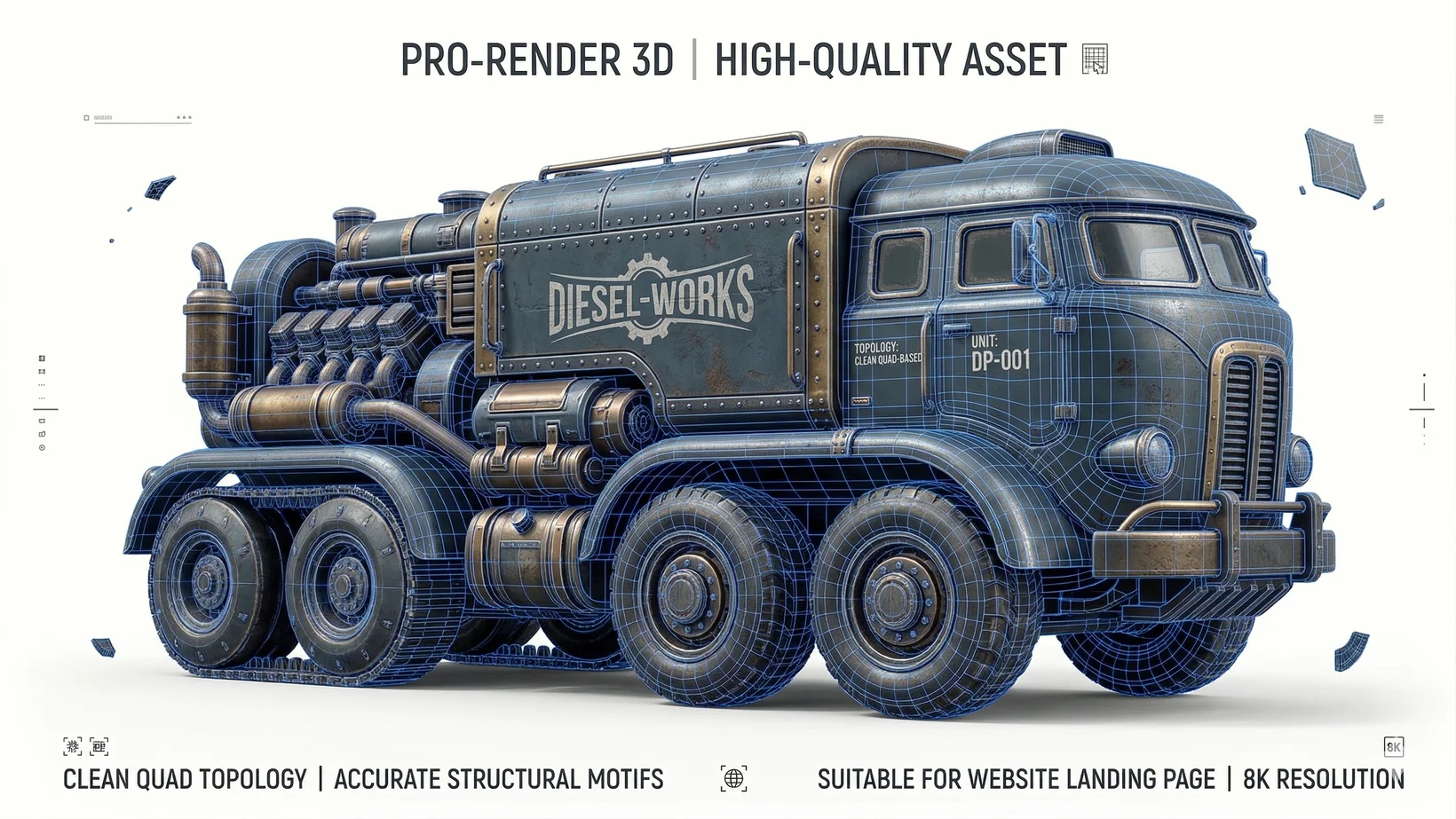
Establishing this baseline begins with the initial prompt or reference image. Tripo AI supports a seamless Image to 3D Model workflow where concept art directly informs the final mesh. If a concept artist designs a vehicle with a specific dieselpunk aesthetic, feeding that artwork into the system ensures the generated asset retains the exact proportions and structural motifs of the original drawing. This direct translation from 2D concept to 3D model is a primary reason why prototyping has been revolutionized. Additionally, the technology supports smart retopology, converting dense, unoptimized point clouds into game-ready assets. Teams can mandate a specific polygon count, and the platform will automatically generate quad-based or triangle-based topology that aligns with the studio's technical budgets. By locking in these technical baselines early, studios prevent the scenario where a beautifully stylized model causes performance drops due to erratic, overly dense geometry.
Pre-Stylization and Prompt Engineering Workflows
Crafting precise prompts and utilizing reference imagery at the generation stage allows creators to lock in the target aesthetic before the mesh is even finalized. The most efficient method for maintaining a cohesive art style is to dictate the aesthetic before the generation process begins. This pre-stylization approach relies heavily on mastering prompt engineering. When using Tripo AI for Text to 3D Model creation, developers must construct prompts that act as a strict visual blueprint. A prompt simply requesting "a treasure chest" leaves too much room for interpretation. Conversely, a prompt defining "a stylized, low-poly pirate treasure chest, hand-painted textures, exaggerated gold trim, World of Warcraft style, vibrant colors" forces the output to strictly adhere to the desired creative boundaries.
Negative prompting serves as an equally powerful tool in the stylization workflow. By explicitly instructing the engine to avoid certain traits—such as "photorealistic, rusty, complex details, high-poly"—creators ensure the system does not introduce conflicting visual noise. This level of control is particularly important when building assets for mobile games or stylized indie titles, where a stray photorealistic texture can ruin the art direction. Beyond text, sketch-to-3D workflows have become a staple in 2026. Artists can upload rough line art, and the platform interprets the structural intent while applying defined stylistic presets. Tripo Studio offers built-in aesthetic filters, such as Voxel, LEGO, or Clay, which apply a uniform visual treatment across an entire batch of models. By standardizing the input methodologies, teams can rapidly produce entire libraries of props that share a matching visual DNA, drastically reducing the need for manual homogenization later in the pipeline.
Post-Stylization and the Magic Brush Technique
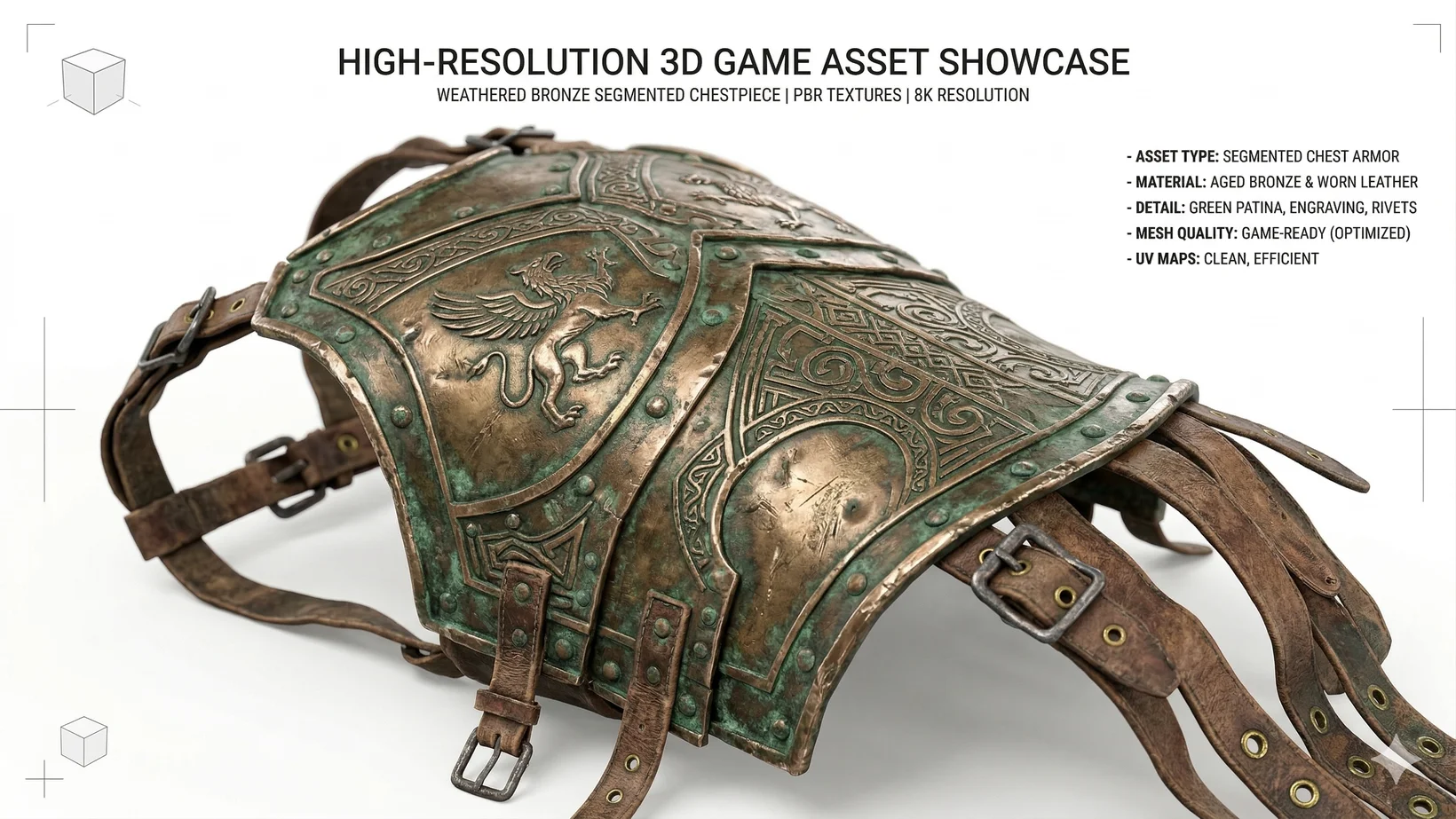
Applying post-generation texturing tools like the Magic Brush ensures that artists can locally repair artifacts and apply cohesive PBR materials across varied geometries. Even with perfect pre-stylization, models may occasionally require adjustments to perfectly match a game's specific environment. Tripo AI features an advanced Magic Brush tool that permits partial texture repainting without altering the underlying mesh. If a generated character possesses the correct stylized armor but features a generic metal texture, an artist can use the Magic Brush to apply a "weathered bronze with green patina" finish strictly to the designated armor plates.
This localized editing capability is crucial for achieving high-fidelity cohesion. By locking the camera view and brushing over specific segments, users guide the system to generate physically accurate reflectance properties. The integration of a full PBR generator means that surface roughness, metallic highlights, and normal maps are calculated to interact properly with dynamic game lighting. Thus, a cohesive style is not merely about color; it is about ensuring that all materials react to the game engine's light sources in a unified manner. Furthermore, smart part segmentation allows complex models to be divided into logical components. A vehicle can be segmented into tires, chassis, and glass. The art team can then apply distinct stylistic treatments to each segment using the Magic Brush. This granular control is what separates basic generators from professional-grade tools, as it provides the exactitude required by technical artists who must integrate these assets into rigorous real-time rendering environments like Unreal Engine or Unity. Once generated, assets can be exported in formats including USD, FBX, OBJ, STL, GLB, and 3MF to ensure complete pipeline compatibility.
Scaling Production Without Sacrificing Quality
Enterprise scaling requires predictable costs and rights management, which is why deploying these tools via structured Subscription Plans allows studios to maintain quality at high volumes. Integrating generative technology into a commercial pipeline introduces logistical considerations regarding usage limits, cost forecasting, and intellectual property rights. Professional tools must offer clear frameworks to support continuous production. Tripo AI addresses these commercial realities by offering specific tiers tailored to different operational scales.
For developers exploring the technology, the Free plan provides 300 credits per month. 3D models generated under Tripo's Free plan do not support commercial use. To legally deploy these assets in a monetized game, studios must upgrade. The Pro plan ($19.90/month) provides 3,000 credits per month. This structured credit system allows independent developers and mid-sized studios to budget their asset generation accurately, ensuring that the deployment of these models remains cost-effective.
It is also vital to distinguish between the creator-facing workspaces and backend infrastructure. Tripo Studio and the Tripo API are two completely independent product lines, and API services have a separate billing and integration system. A studio cannot simply use Studio subscription credits to fund massive programmatic API generation. The API service operates with its own billing ecosystem, designed for enterprises aiming to automate asset generation directly within their proprietary software. By separating these tools, Tripo ensures that production can be scaled appropriately, whether a lone concept artist is iterating on character designs in the web browser, or a technical team is bulk-generating thousands of background props via API calls.
FAQ
1. Can I use the models generated on the Free plan for commercial game projects?
No. 3D models generated under Tripo's Free plan do not support commercial use. For commercial rights, you must upgrade to a paid tier.
2. How many credits do the subscription plans offer?
The Free plan provides 300 credits per month. The Pro plan ($19.90/month) provides 3,000 credits per month. For more details, visit our Pricing page.
3. Are Tripo Studio and Tripo API the same product?
No. Tripo Studio and the Tripo API are two completely independent product lines with separate billing systems. The API is not an add-on feature of the Studio premium plans.
4. What export formats are supported for game engine integration?
Generated assets can be exported in standard formats including USD, FBX, OBJ, STL, GLB, and 3MF.
5. What technology powers Tripo's 3D generation?
Tripo AI is powered by Algorithm 3.1, leveraging over 200 billion parameters to ensure structurally consistent and optimized topology.