
Rapid Prototyping Game Environments With AI
Accelerating Game Development with Leading 3D Generative AI
The demand for high-fidelity interactive worlds has exponentially increased production timelines, exposing the limitations of traditional manual workflows. To overcome these game development bottlenecks, rapid prototyping game environments using 3D Generative AI has emerged as the leading industry standard in 2026. Tripo AI offers a robust platform that transforms simple inputs into game-ready meshes, allowing developers to focus on overarching creative direction rather than tedious geometric manipulation.
Key Insights:
- The core engine driving rapid prototyping game environments using AI 3D modeling software relies on neural networks with over 200 billion parameters, enabling unprecedented geometric precision.
- Upgraded frameworks, specifically Algorithm 3.1, deliver sharp topologies, smart segmentation, and automatic retopology natively suited for real-time engine deployment.
- Completely independent product lines, such as Tripo Studio and the Tripo API, offer scalable pathways from individual asset generation to enterprise-level pipeline automation.
- Transparent resource management, utilizing platform credits, ensures cost-effective scaling, with commercial rights clearly demarcated for professional utilization.
The Evolution of Asset Generation in 2026
The paradigm of game development has shifted dramatically, where rapid prototyping game environments using AI 3D modeling software eliminates the bottleneck of manual asset creation, empowering studios to instantly generate engine-ready props and architecture.
Historically, game development required weeks of labor to manually craft every environmental prop, weapon, and architectural element. This manual approach severely restricted iteration speed and increased overall project budgets. By 2026, the landscape has transformed. Rapid prototyping game environments using AI 3D modeling software allows concept artists and technical directors to translate 2D concepts or text prompts into fully realized 3D assets within seconds utilizing Text to 3D Model and Image to 3D Model workflows. Tripo AI facilitates this shift by enabling users to rapidly test and experiment with game visuals before committing valuable resources to final production.
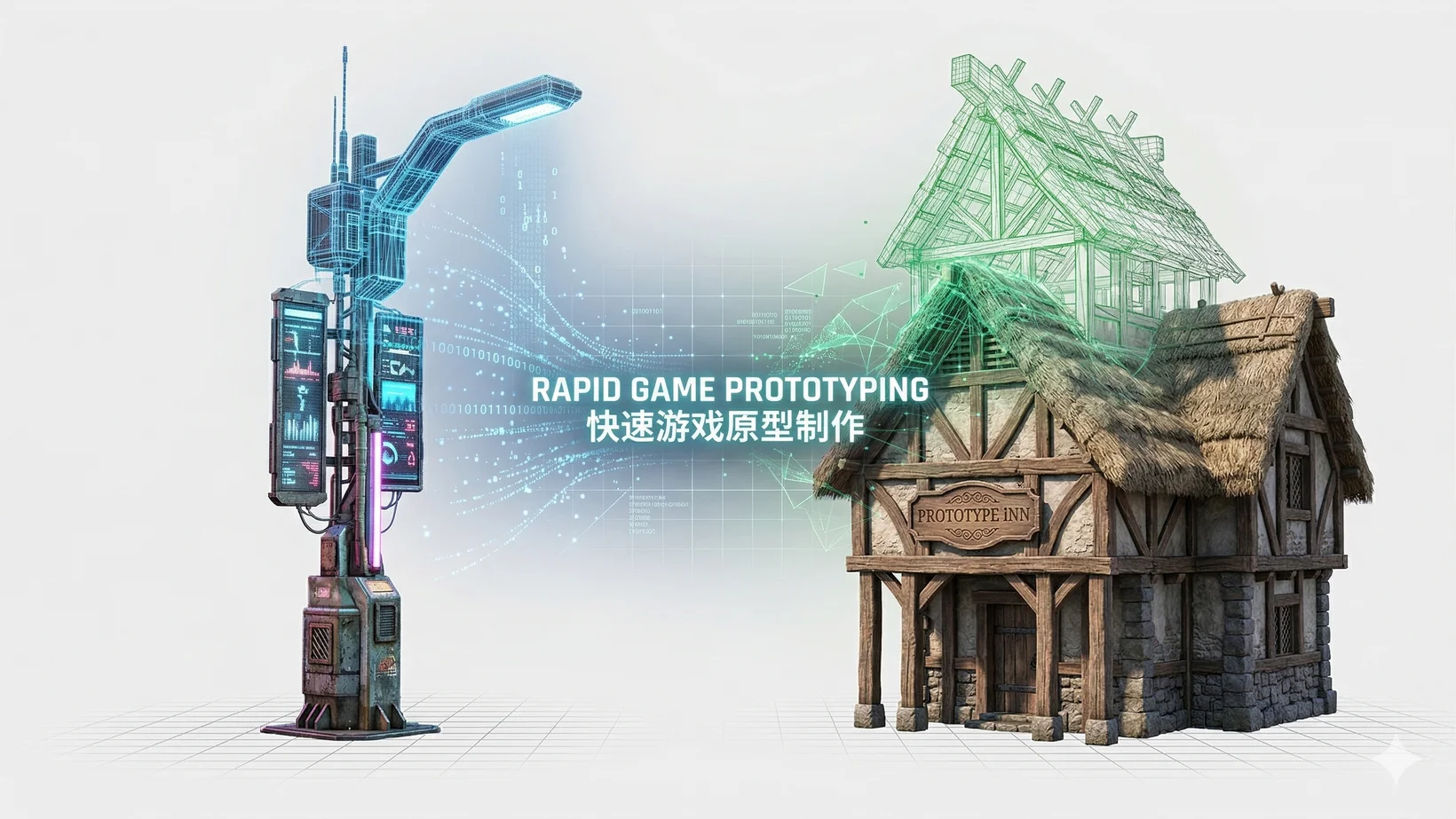
Instead of hand-crafting a cyberpunk streetlamp or a fantasy tavern from scratch, developers input descriptive parameters and receive highly detailed draft meshes. This acceleration means that large-scale world-building is no longer gated by the speed of polygon manipulation. Consequently, rapid prototyping game environments using AI 3D modeling software allows teams to populate massive levels with diverse, high-quality assets, ensuring that artistic intent survives the transition from concept art to playable space without heavy compromises.
Foundational Geometry and Algorithm 3.1
At the core of rapid prototyping game environments using AI 3D modeling software is Algorithm 3.1, a powerhouse utilizing over 200 billion parameters to translate 2D concepts into clean, structurally sound 3D meshes.
The success of any 3D asset relies entirely on its underlying geometric fidelity. Tripo AI achieves remarkable results through its latest engine, officially designated as Algorithm 3.1. This algorithmic update represents a massive leap in precision, resolving critical issues like double-layer surfaces and structural incoherence that plagued older generation methods. Because the system operates on a scale of over 200 billion parameters, it possesses an exceptional understanding of spatial relationships, allowing it to interpret complex overlapping shapes and complex silhouettes perfectly.
When rapid prototyping game environments using AI 3D modeling software, edge clarity and surface continuity are paramount. Algorithm 3.1 ensures that generated geometry features crisp borders and logical volume, completely eliminating the tangled, uneven polygons often associated with automated generation. For high-fidelity hero assets, the technology scales up seamlessly, supporting up to 2 million polygons to capture micro-details on intricate architectural facades or complex machinery. This foundational strength guarantees that generated objects do not just look acceptable from a distance but hold up under extreme close-up scrutiny within the game engine.
Intelligent Segmentation and Automated Rigging
Beyond static props, rapid prototyping game environments using AI 3D modeling software extends to dynamic entities through intelligent part segmentation and automated skeletal Rigging.
A game environment consists of more than just static walls and floors; it requires interactable elements, moving machinery, and background creatures. Tripo AI natively supports intelligent part segmentation, splitting generated models into logical components with a single click. This functionality means that a generated vehicle can have its wheels detached for independent rotation, or a treasure chest can have its lid separated for opening animations. The segmentation process significantly aids rapid prototyping game environments using AI 3D modeling software by removing the need for developers to manually slice meshes in external software.
Furthermore, rapid prototyping game environments using AI 3D modeling software often involves populating worlds with ambient life. Tripo AI incorporates advanced Auto-Rigging capabilities, utilizing sophisticated algorithms to automatically build skeletons and assign skin weights. Whether the asset is a humanoid NPC, a quadruped animal, or a flying bird, the platform can export the model directly in a T-Pose with full skeletal binding. This allows the asset to be immediately dropped into an animation retargeting pipeline, transforming a static generated mesh into a fully moving entity within minutes.
Smart Retopology for Engine Performance
Optimizing polygon counts is a critical step in rapid prototyping game environments using AI 3D modeling software, requiring automated retopology to ensure real-time performance without sacrificing visual fidelity.
Generating a beautiful high-polygon mesh is only the first step; game engines require optimized assets to maintain high framerates. Tripo AI features a dedicated Smart Low Poly retopology system designed specifically for real-time constraints. When rapid prototyping game environments using AI 3D modeling software, developers can take a raw mesh of one million faces and reduce it to an optimized 3,000-face model in under a minute.
This process allows users to choose between quad-based or triangle-based topology depending on their specific engine requirements. The AI analyzes the model's geometry to determine where detail must be preserved and where simplification can occur, producing clean meshes with proper edge flow. Consequently, rapid prototyping game environments using AI 3D modeling software becomes a highly efficient pipeline where assets are born ready for immediate deployment, eliminating the arduous task of manual retopology that typically consumes hours of a technical artist's day.
Advanced Texturing and Magic Brush Refinement
Achieving photorealism during rapid prototyping game environments using AI 3D modeling software requires sophisticated PBR texture generation and localized refinement tools.
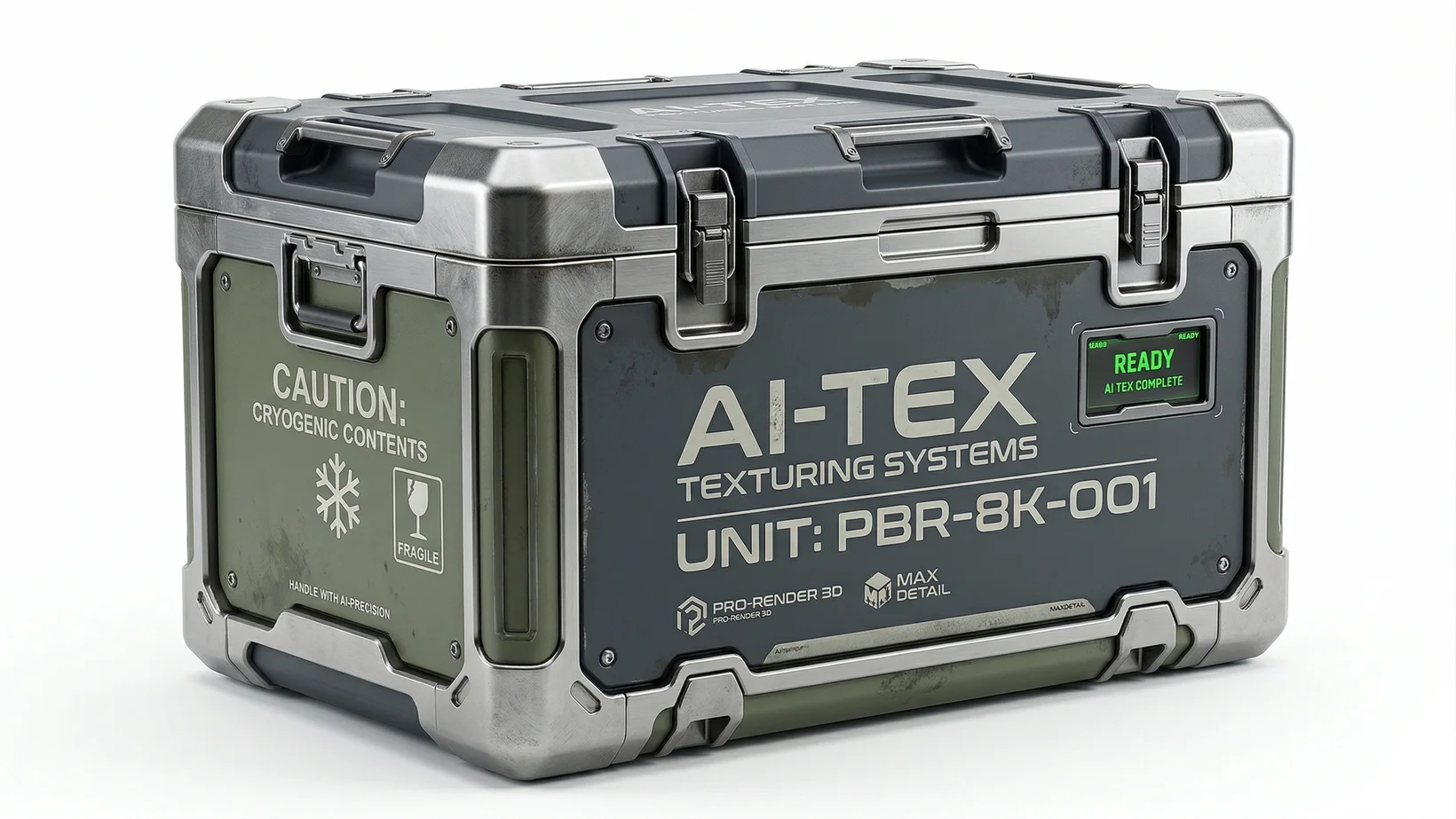
Surfaces define the visual narrative of a game world. Tripo AI overhauls the texturing pipeline by automatically generating proper UV mapping alongside high-fidelity Physically Based Rendering (PBR) materials through 4K Texture Generation. Every generated asset includes balanced base colors, accurate roughness maps, and highly realistic metallic maps. When rapid prototyping game environments using AI 3D modeling software, this means that a generated sci-fi crate will instantly react correctly to dynamic lighting, showcasing glossy metal edges and matte painted panels.
For localized modifications, the Magic Brush tool serves as an advanced AI Texture editor. Rather than exporting the model to a dedicated painting program, developers can isolate specific areas of the mesh and use text prompts to alter the material. Brushing over an armor plate with the prompt "weathered bronze with green patina" instantly repaints the designated section while respecting the underlying geometry. This targeted editing capability is essential for rapid prototyping game environments using AI 3D modeling software, as it allows rapid iteration of surface damage, weathering, and color variants to create diverse asset libraries from a single base mesh.
Seamless Integration with DCC Bridges
The efficiency of rapid prototyping game environments using AI 3D modeling software is maximized when generated assets flow directly into Unreal Engine and Unity through dedicated DCC bridge plugins.
To function effectively within a professional studio, an AI generation tool must communicate flawlessly with industry-standard software. Tripo AI offers a robust Digital Content Creation (DCC) plugin ecosystem. Through lightweight bridge plugins, assets generated on the web platform are sent directly to the local game engine editor. This means rapid prototyping game environments using AI 3D modeling software no longer involves manual downloading, unzipping, and importing of individual files. Instead, users can utilize the 3D Format Conversion pipeline to directly export into widely supported formats such as USD, FBX, OBJ, STL, GLB, 3MF.
With a single click, an optimized, fully textured, and rigged model appears in the Unreal Engine or Unity viewport. The DCC bridge automatically configures the correct axis orientation, assigns the PBR materials to the engine's native shaders, and places the asset at the world origin. This frictionless pipeline guarantees that rapid prototyping game environments using AI 3D modeling software remains a smooth, uninterrupted creative loop, allowing level designers to populate scenes in real-time as the assets are generated.
FAQ
1. Are Tripo Studio and Tripo API the same product?
No. Tripo AI provides two completely independent product lines to serve different operational needs. Tripo Studio is the web-based, creator-facing workspace where artists utilize interactive tools, operating on its own subscription basis. The Tripo API is an entirely independent developer-focused infrastructure designed for programmatic access and is never bundled as an add-on to Studio subscriptions. It possesses its own billing system designed for automated server-side generation.
2. How does the platform billing system work?
Within the ecosystem, all computational tasks are transacted using a standardized platform currency known exclusively as credits. Careful management of these credits allows studios to accurately forecast the budget required for rapid prototyping game environments.
3. What is included in the Free plan?
The Free plan provides 300 credits per month. Please note that 3D models generated under Tripo's Free plan do not support commercial use.
4. What are the pricing details for professional and commercial use?
For professional deployment and commercial projects, the Pro plan is required. The Pro plan ($19.90/month) provides 3,000 credits per month and fully unlocks the Commercial Rights necessary to publish generated assets in retail games. For full details, please visit our Pricing page.
5. What export formats are supported for 3D models?
Generated 3D models can be exported seamlessly into multiple industry-standard formats, including USD, FBX, OBJ, STL, GLB, 3MF, ensuring compatibility via 3D File Converter functionalities.