The Comprehensive Guide to Connecting AI 3D Workspaces to Game Engines via REST API for Automated Import
Streamlining Game Development with Automated Generative 3D Asset Pipelines in 2026
The landscape of digital asset creation has fundamentally transformed by 2026, moving away from labor-intensive manual sculpting toward highly scalable, algorithm-driven generation. For game development studios and enterprise environments, the primary bottleneck is no longer generating the concepts, but rather bridging the gap between web-based generative platforms and real-time rendering environments. The AI 3D Model Generator has emerged as the core infrastructure for this challenge, providing an ecosystem that separates its web studio from its enterprise-grade programmable endpoints. By mastering the process of connecting ai 3d workspaces to game engines via rest api for automated import, developers can drastically reduce iteration times, ensuring that high-fidelity meshes are pushed directly into production pipelines with zero manual handling.
Key Insights
- Massive Algorithmic Scale: The core engine behind the generation process is Algorithm 3.1, a state-of-the-art framework utilizing over 200 billion parameters to ensure high geometric precision and high-definition PBR texturing.
- Independent Product Ecosystems: The Tripo API is a completely independent product line with its own dedicated billing structure, intentionally separated from the consumer-facing Tripo Studio subscription model.
- Automated Pipeline Integration: The act of connecting ai 3d workspaces to game engines via rest api for automated import requires strict adherence to modern CORS policies, utilizing edge proxies or backend resave methodologies to manage artifact URLs securely.
- Strict Commercial Licensing: 3D models generated under Tripo's Free plan do not support commercial use. The Free plan provides 300 credits per month.
- Real-Time Engine Bridging: For artists not utilizing programmatic API calls, dedicated DCC Bridges exist to push assets directly into Unreal Engine 5.7 and Unity 6 LTS without manual downloads.
The Shift Toward Automated 3D Pipelines in 2026
The modernization of game development in 2026 relies heavily on replacing manual, week-long asset creation cycles with instantaneous, AI-driven generation pipelines that feed directly into real-time engines.
Game development is an inherently asset-heavy endeavor. Every environment, weapon, character, and background prop demands rigorous modeling, retopology, UV unwrapping, and texturing. Traditionally, this process required extensive human hours, significantly slowing down prototyping and production schedules. By 2026, the industry standard has shifted toward procedural and AI-assisted generation. The infrastructure allows teams to bypass these traditional bottlenecks. Instead of modeling a background vehicle or an intricate weapon from scratch, developers can use a Text to 3D Model system to generate a fully textured, production-ready asset in under 20 seconds.
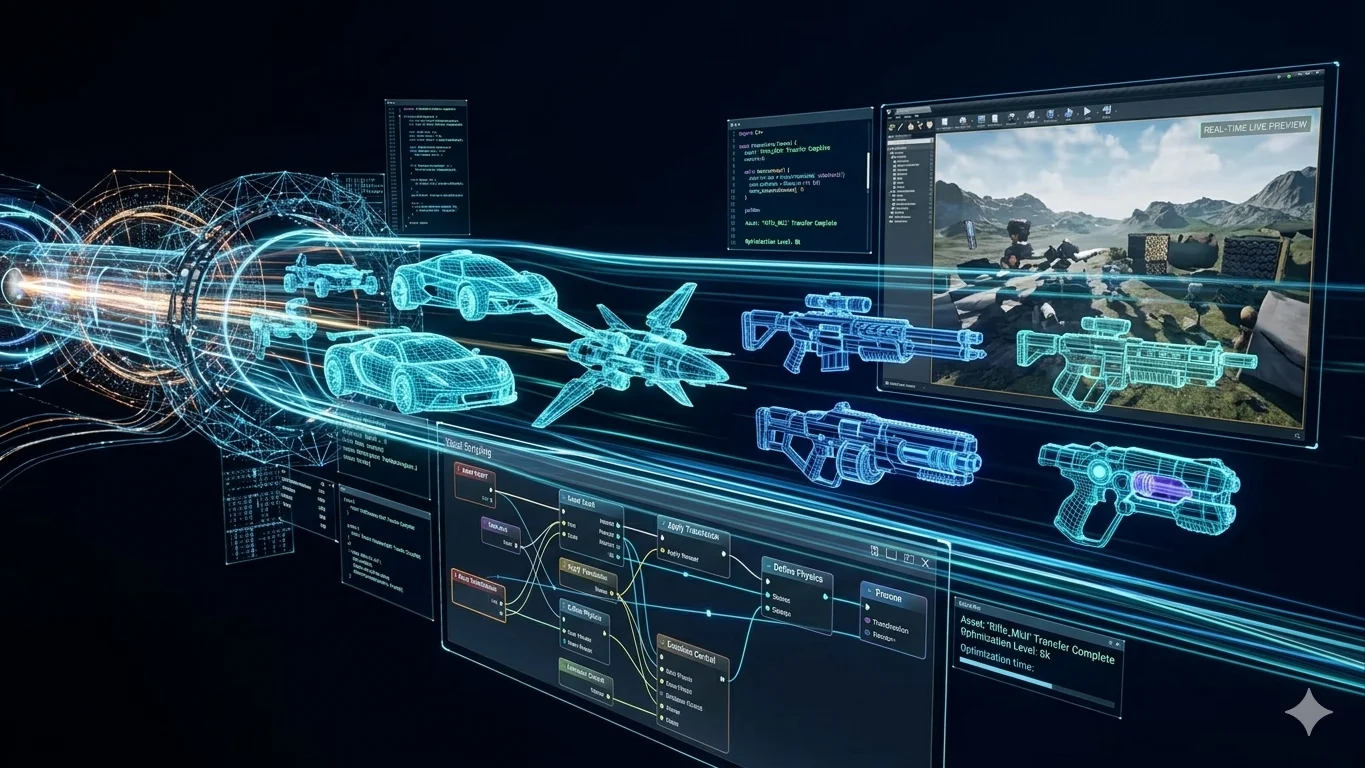
However, the true value of this technology is not just in the generation, but in the deployment. Generating an asset on a web platform is only the first step. The critical requirement for modern studios is establishing a seamless conduit between the generation source and the final destination. The practice of connecting ai 3d workspaces to game engines via rest api for automated import ensures that massive volumes of generated content can be queried, processed, and ingested into environments like Unreal Engine or Unity automatically, supporting the dynamic nature of modern live-ops gaming and expansive virtual worlds.
The Power of Algorithm 3.1
The platform operates on Algorithm 3.1, a massive neural network containing over 200 billion parameters, which guarantees high geometric accuracy and production-ready mesh generation.
The quality of an AI-generated 3D model is entirely dependent on the underlying neural architecture. Utilizing the highly advanced Algorithm 3.1 represents a massive leap in spatial computing and generative geometry. Powered by an astounding over 200 billion parameters, Algorithm 3.1 possesses a profound understanding of volumetric space, lighting behavior, and physical materials. This scale of computational power ensures that generated models are not mere approximations or point clouds, but structurally sound meshes with logical edge flows.
Algorithm 3.1 excels in translating 2D concepts or text prompts into high-density geometry suitable for close-up renders. Furthermore, the algorithm inherently understands material properties, outputting Physically Based Rendering (PBR) ready textures via AI Texture generation. This includes the automatic generation of albedo, roughness, metallic, and normal maps. Because the algorithm operates at the over 200 billion parameters scale, the output requires minimal manual cleanup, allowing technical artists to bypass hours of retopology. The system supports full 3D Format Conversion, outputting production assets in USD, FBX, OBJ, STL, GLB, 3MF. This level of algorithmic sophistication is what makes connecting ai 3d workspaces to game engines via rest api for automated import a viable enterprise strategy, as the automated imports are guaranteed to be of usable, professional quality upon arrival.
Connecting AI 3D Workspaces to Game Engines via REST API for Automated Import
The Tripo API operates as an entirely independent product line, allowing developers to programmatically trigger asset generation and pull the resulting artifacts directly into their proprietary game engine pipelines.
For enterprise teams, studios, and developers requiring bulk generation, the web-based AI 3D Editor is often bypassed in favor of direct programmatic access. This is where connecting ai 3d workspaces to game engines via rest api for automated import becomes the cornerstone of the development pipeline. The Tripo API allows a backend server or a custom engine plugin to send a text payload or a reference image directly to the generation servers. The REST API handles the request asynchronously, returning a unique task identifier. Once Algorithm 3.1 completes the generation, the API provides an artifact URL containing the standard 3D files alongside the associated PBR texture maps.
It is crucial to understand the structural separation of the product lines. The Tripo API is a completely independent product line from the consumer web studio. It features its own distinct billing system based on volumetric usage and enterprise contracts. The API service is never treated as an add-on feature to Studio subscriptions. Therefore, a studio looking into connecting ai 3d workspaces to game engines via rest api for automated import must provision API access separately from any standard web platform licenses. This separation ensures that high-volume API requests operate on dedicated, scalable compute nodes, guaranteeing uptime and rapid delivery for automated engine ingestion scripts.
Managing Artifact URLs and CORS for Seamless Integration
Automated import systems must account for strict Cross-Origin Resource Sharing (CORS) policies by implementing backend resave protocols or edge proxies to securely serve generated artifact URLs.
When executing a script for connecting ai 3d workspaces to game engines via rest api for automated import, developers must manage the resulting file downloads securely. In 2026, the API enforces strict CORS policies on all generated artifact URLs to ensure data security and prevent unauthorized cross-origin resource access. This means that a game engine's web request module or a customized frontend cannot directly hotlink or serve the generated model files using the raw URL returned by the Tripo API.
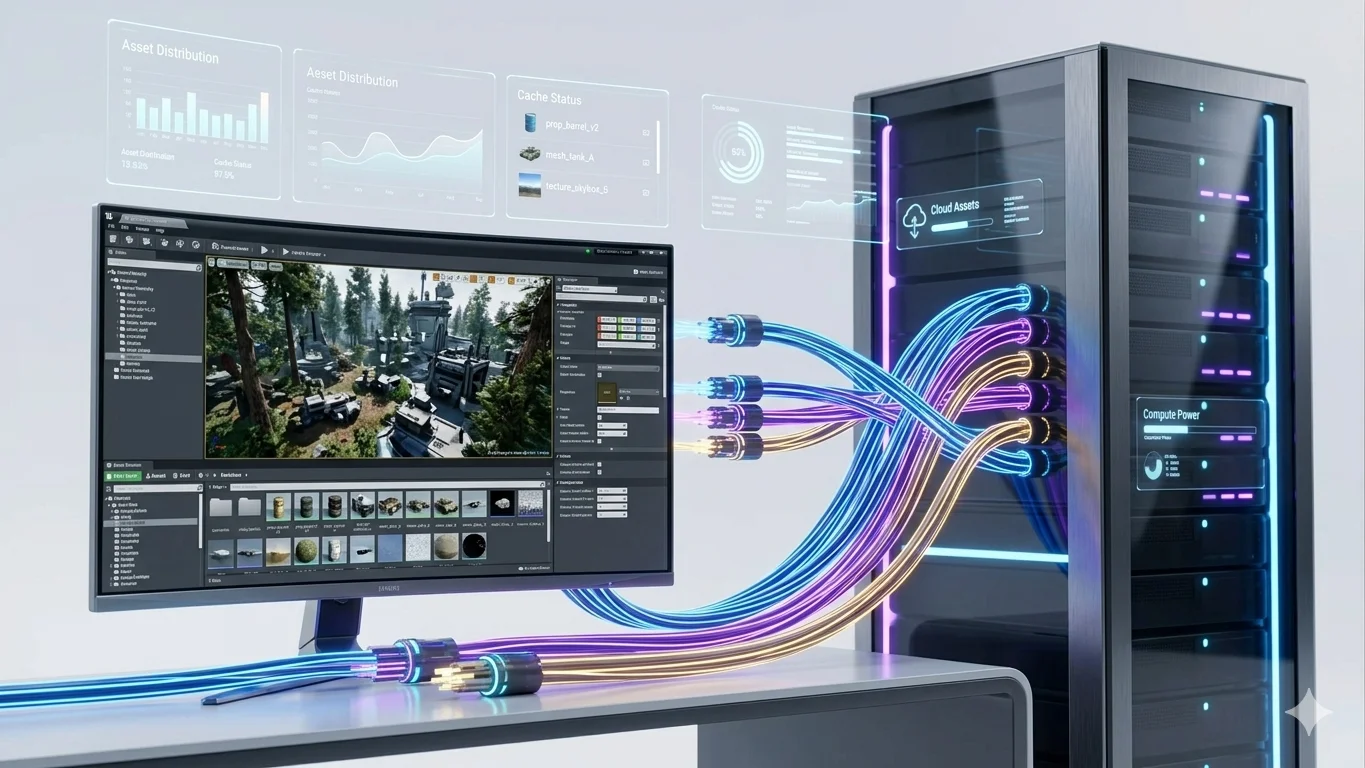
To integrate these assets smoothly, development teams must adopt specific architectural solutions:
- Backend Resave Approach: The most robust method involves the developer's server fetching the artifact from the API upon task completion. The server downloads the 3D file, assigns it a secure UUID, and stores it in a dedicated local directory or a cloud storage bucket. The game engine then queries the studio's own backend to import the asset, completely bypassing CORS restrictions.
- Edge Proxy Integration: For teams utilizing modern cloud-edge architectures, an edge proxy can be deployed. The proxy intercepts the engine's import request, fetches the file from the servers, appends the necessary Access-Control-Allow-Origin headers, and streams the binary data directly to the engine's import module.
Both methods ensure that the process of connecting ai 3d workspaces to game engines via rest api for automated import remains secure, stable, and compliant with modern web security standards.
Streamlining Workflows with Dedicated DCC Bridges
For artists operating outside of custom API scripts, official DCC Bridge plugins facilitate the instantaneous, one-click transfer of generated models directly into Unreal Engine and Unity.
While engineers focus on connecting ai 3d workspaces to game engines via rest api for automated import, technical artists and level designers often require a more tactile, interface-driven approach. To serve this demographic, lightweight Digital Content Creation (DCC) Bridge plugins are tailored for industry-standard engines. The Unreal Engine Bridge (supporting version 5.7) and the Unity Bridge (supporting 2022.3 LTS and Unity 6 LTS) act as local servers running within the engine editor.
Once the plugin is installed and the local bridge service is activated, artists can browse their generated assets on the Tripo Studio web frontpage. By simply clicking "Send to Unreal" or "Send to Unity", the asset is pushed over the local network bridge directly into the engine's content browser. The plugin automatically handles the placement of the asset at the center bottom pivot, extracts and compiles the PBR materials, and scales the texture resolutions to the current maximum. This localized bridging technology acts as a perfect complement to the broader enterprise API, ensuring that whether a studio is using code-driven automation or manual curation, the friction of file management is entirely eliminated.
Utilizing Smart Mesh and High-Detail Models for Production
Assets imported into game engines meet professional standards by offering specialized generation modes like Tripo P1 (Smart Mesh) and Tripo H3.1 (High Detail).
An automated import pipeline is only valuable if the imported assets are immediately usable. This is ensured through highly specialized algorithmic sub-models. The Tripo P1 model focuses on "Smart Mesh" generation. It is specifically engineered to output game-ready assets with optimized, low-poly quad topology. It automatically processes complex geometry into efficient, engine-friendly meshes that maintain their visual fidelity while drastically reducing polygon counts—ensuring high frame rates on both mobile and high-end PC platforms. You can even combine this with Auto-Rigging to prepare characters for animation.
Conversely, the Tripo H3.1 model is utilized when the pipeline requires "High-fidelity Assets." H3.1 utilizes the full force of the over 200 billion parameters architecture to capture microscopic surface details, sharp edges, and highly complex silhouettes. These assets are generated with high geometric density, making them suitable for cinematic close-ups and high-resolution rendering.
Understanding the Independent Billing and Credit System
The platform operates on a strict credit-based economy where Free plans offer limited non-commercial credits, Pro plans offer commercial-ready credits, and API access requires an entirely separate billing agreement.
To effectively utilize these tools in a professional environment, studios must understand the strictly enforced billing and licensing structures. The platform utilizes a currency standardized entirely as credits.
For independent creators using the web-based studio, the Free plan provides 300 credits per month. 3D models generated under Tripo's Free plan do not support commercial use. Professionals and small studios must upgrade to the Pro plan ($19.90/month), which provides 3,000 credits per month and grants full commercial rights for the generated assets. You can view the details on the Pricing page.
However, enterprise teams focused on automation must recognize the structural boundaries of the product lines. The act of connecting ai 3d workspaces to game engines via rest api for automated import utilizes the Tripo API, which is a completely independent product line. API usage operates on its own dedicated billing system, entirely separate from the Studio credit quotas. A studio cannot purchase a Pro plan on the web platform and expect to use those credits for high-volume REST API calls. Establishing an automated pipeline requires provisioning a specific API contract, ensuring that developers pay accurately for the scalable, programmable inference required to fuel their game engines.
FAQ
1. What is the difference between the web studio and the API?
A: Tripo Studio is a web-based platform for manual generation, while the API is a completely independent product line designed for programmatic access. The API features its own dedicated billing system and is never treated as an add-on feature to Studio subscriptions.
2. Can I use assets generated on the Free plan for commercial projects?
A: No. 3D models generated under Tripo's Free plan do not support commercial use. The Free plan provides 300 credits per month. For commercial rights, you need Subscription Plans like the Pro plan ($19.90/month), which provides 3,000 credits per month.
3. What export formats are supported by Algorithm 3.1?
A: Powered by over 200 billion parameters, Algorithm 3.1 generates high-quality meshes that can be exported in standard formats including USD, FBX, OBJ, STL, GLB, and 3MF, making them fully compatible with Unreal Engine and Unity.