From Sketch to 3D: How WeShop AI and Tripo Revolutionize Digital Asset Creation

Introduction: The AI-Powered Creative Pipeline
The journey from idea to 3D asset has always been bottlenecked by manual labor: concept artists sketching, 3D modelers retopologizing, and animators rigging for hours. But what if AI could collapse this process into minutes?
Enter WeShop AI (for hyper-realistic 2D concept generation) and Tripo (for instant 3D conversion). Together, they form a seamless pipeline where:
- A text prompt → becomes a product image → becomes a 3D model → ready for animation, AR, or e-commerce.
- A hand-drawn sketch → gets refined into a photoreal render → then a fully rigged 3D asset.
This isn't just about speed. It's about democratizing high-end asset creation for indie designers, small studios, and even hobbyists.
Let's see what Weshop AI could do for you!
Case Study: Fashion Design from Concept to 3D Model
The Challenge: A streetwear designer needed to pitch a new sneaker design to investors but lacked:
- A 3D artist to model it
- Budget for a photoshoot
- Time to iterate on feedback
The WeShop AI + Tripo Workflow
Phase 1: Concept Generation with WeShop AI
- Used GPT Image 2 with the prompt:
- "High-top sneaker, cyberpunk aesthetic, neon accents, translucent mesh panels, rugged sole, studio lighting."
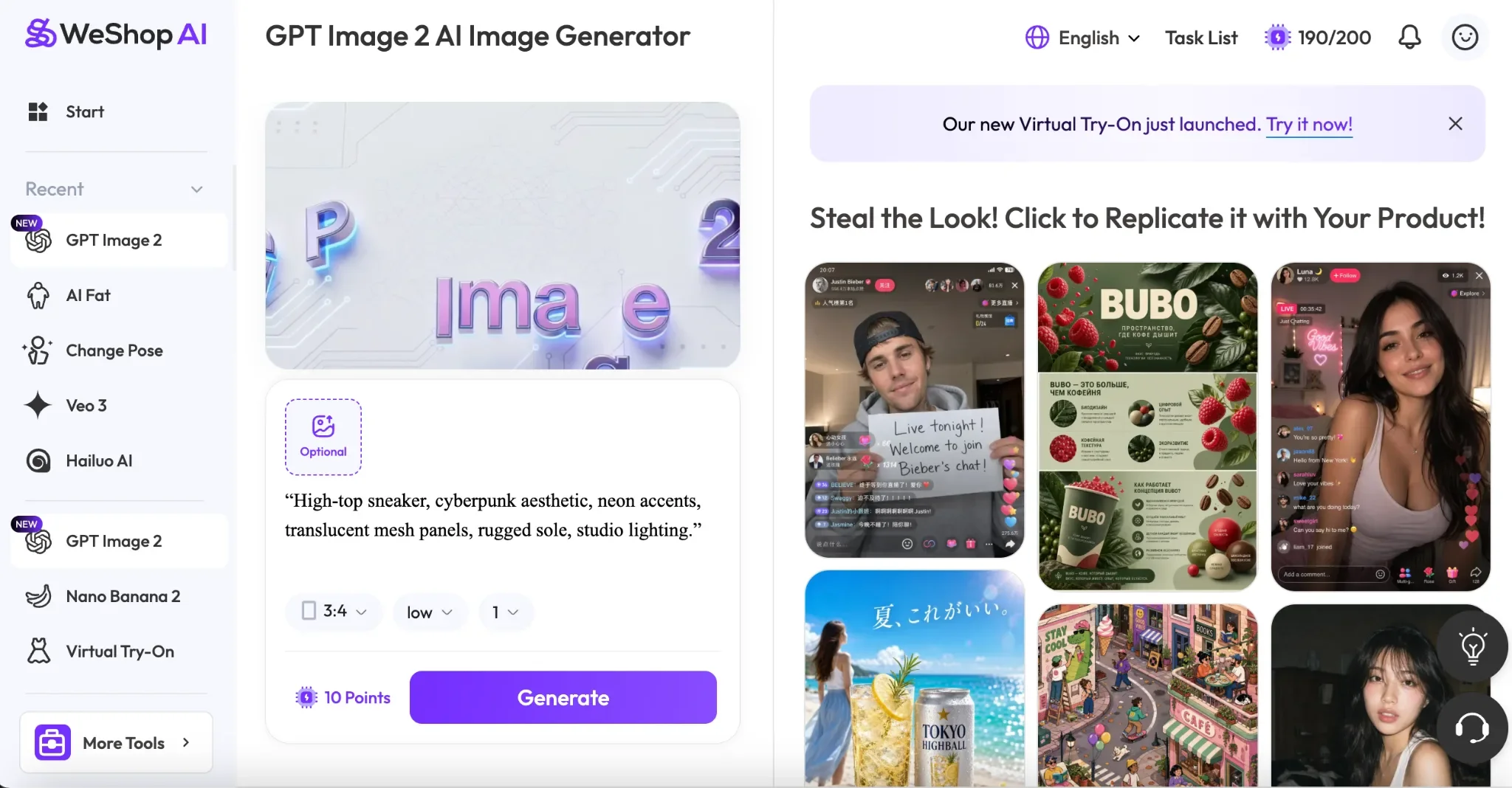
Generated 5 variations in 20 seconds, selected the strongest.
Phase 2: Virtual Try-On for Realism Check
Uploaded the AI-generated sneaker to WeShop AI's Virtual Try-On to see how it looked on different foot models.
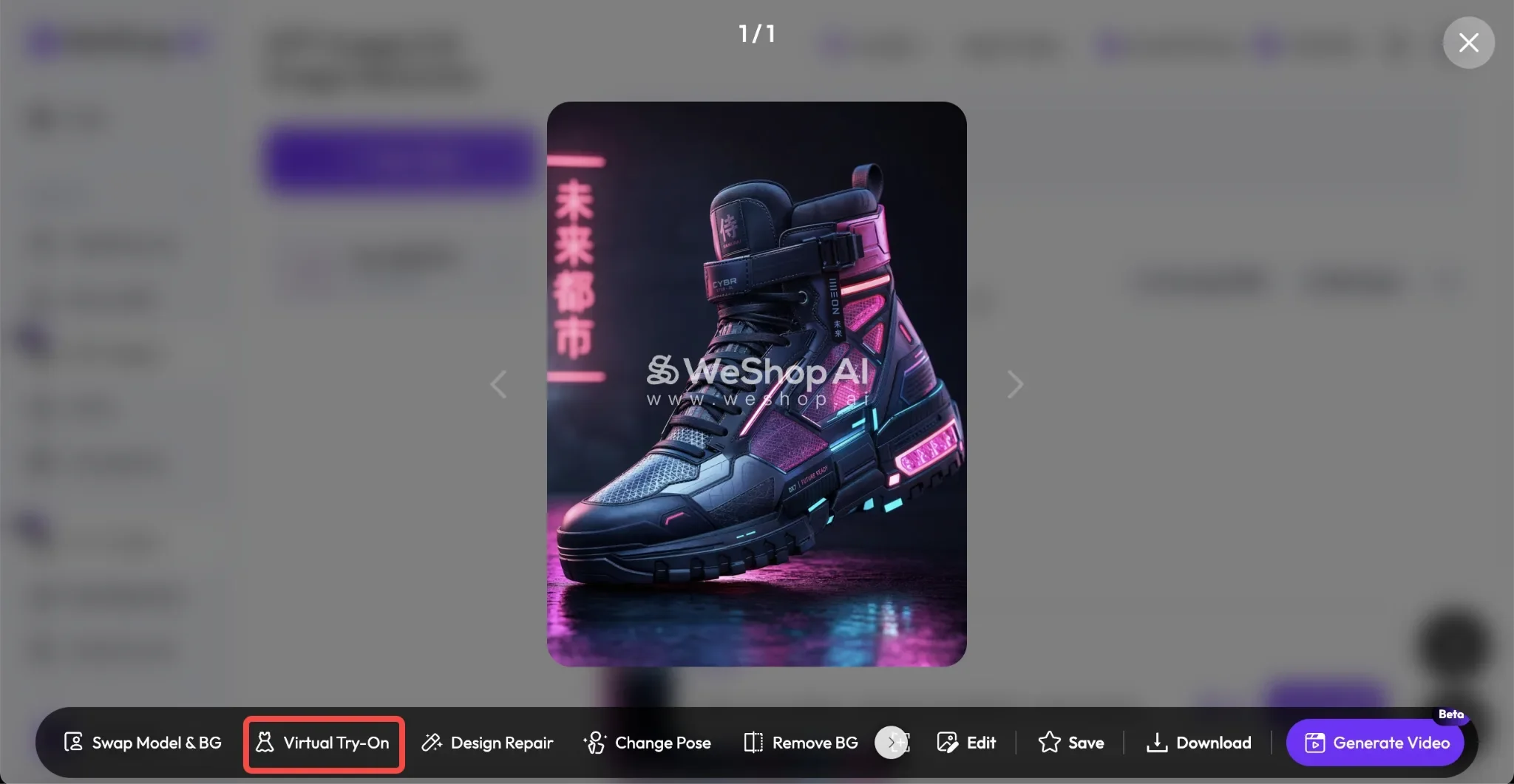
Adjusted proportions based on how the sole flexed during movement.
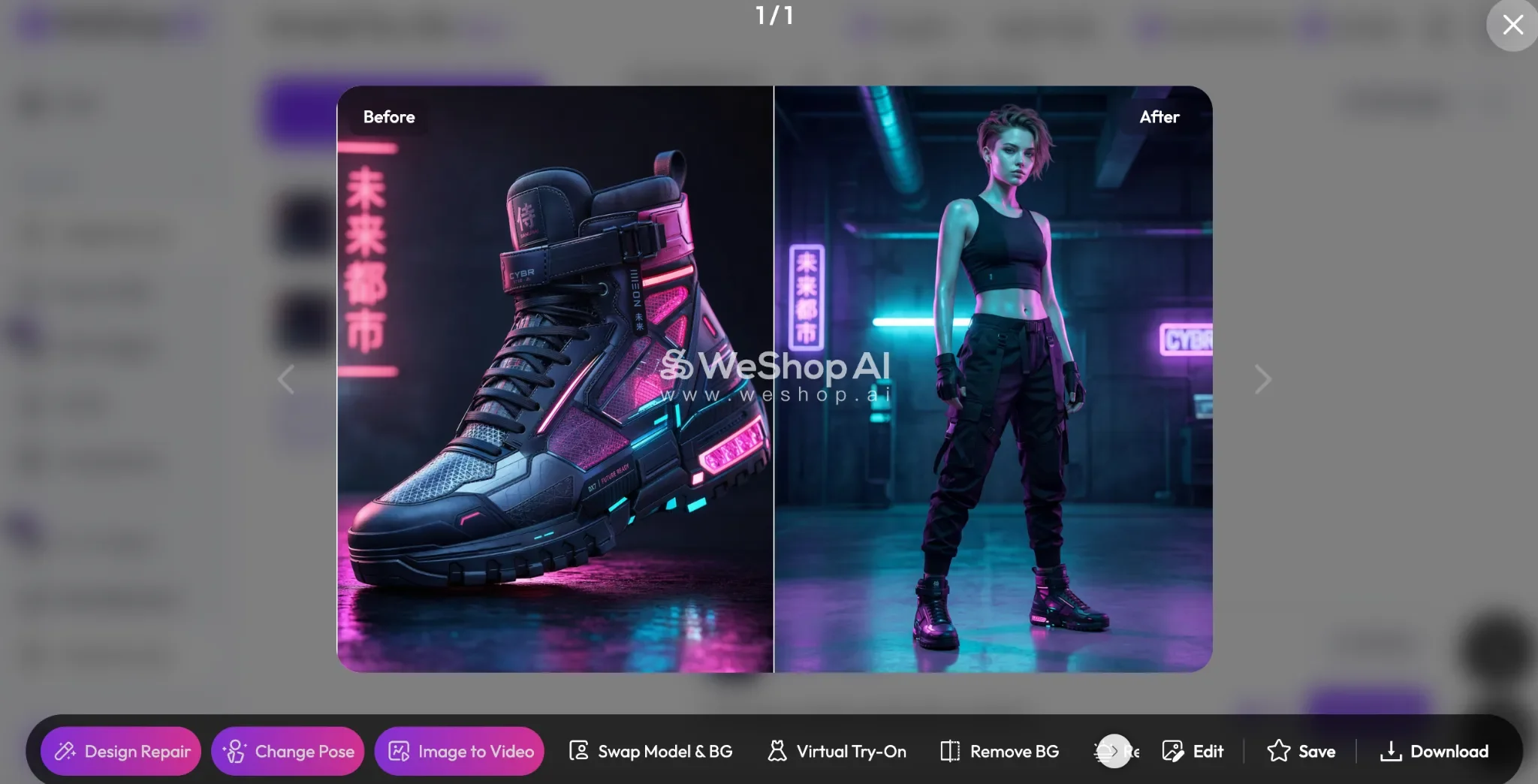
from GPT Image 2 to Virtual Try-on
Phase 3: 3D Conversion with Tripo
Dropped the refined image into Tripo's AI-to-3D pipeline.
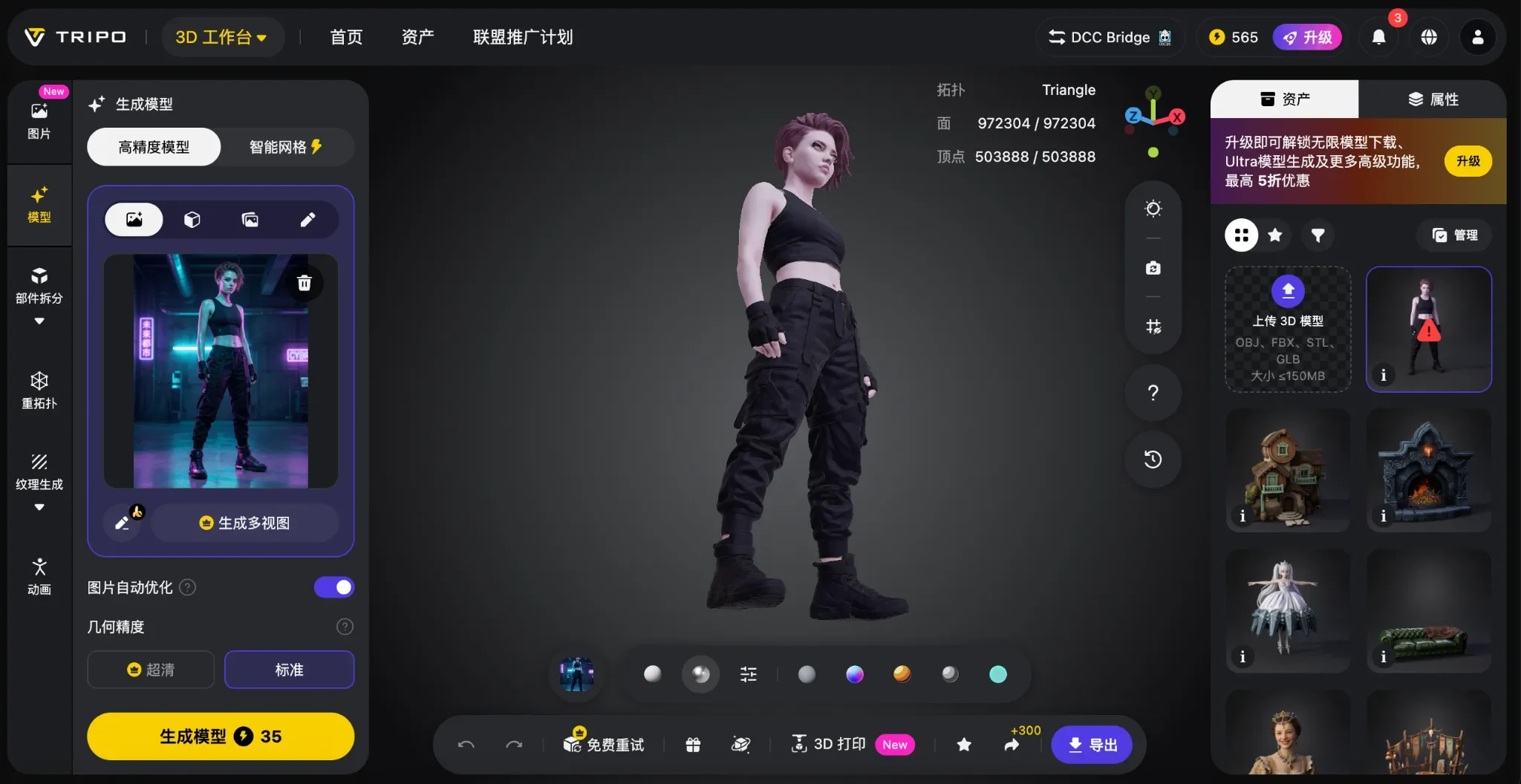
3D model done by Tripo
In 45 seconds, received a textured, quad-mesh model (no retopology needed).
Result: From Text Prompt to Investor-Ready Pitch in Days, Not Weeks
What began as a single text prompt—"High-top sneaker, cyberpunk aesthetic, neon accents"—evolved into a full-fledged investor pitch that felt decades ahead of traditional workflows. By leveraging WeShop AI's generative power and Tripo's instant 3D conversion, the designer compressed three weeks of manual modeling into just two days of AI-assisted iteration. The final deliverables weren't just static renders; they were dynamic 3D turnarounds, AR try-ons that let investors "wear" the sneaker virtually, and even animated walk cycles to showcase sole flexibility—all derived from that original idea. This wasn't just efficiency; it was a radical rethinking of how design concepts come to life, proving that AI could handle the heavy lifting while humans focused on creativity and strategy.
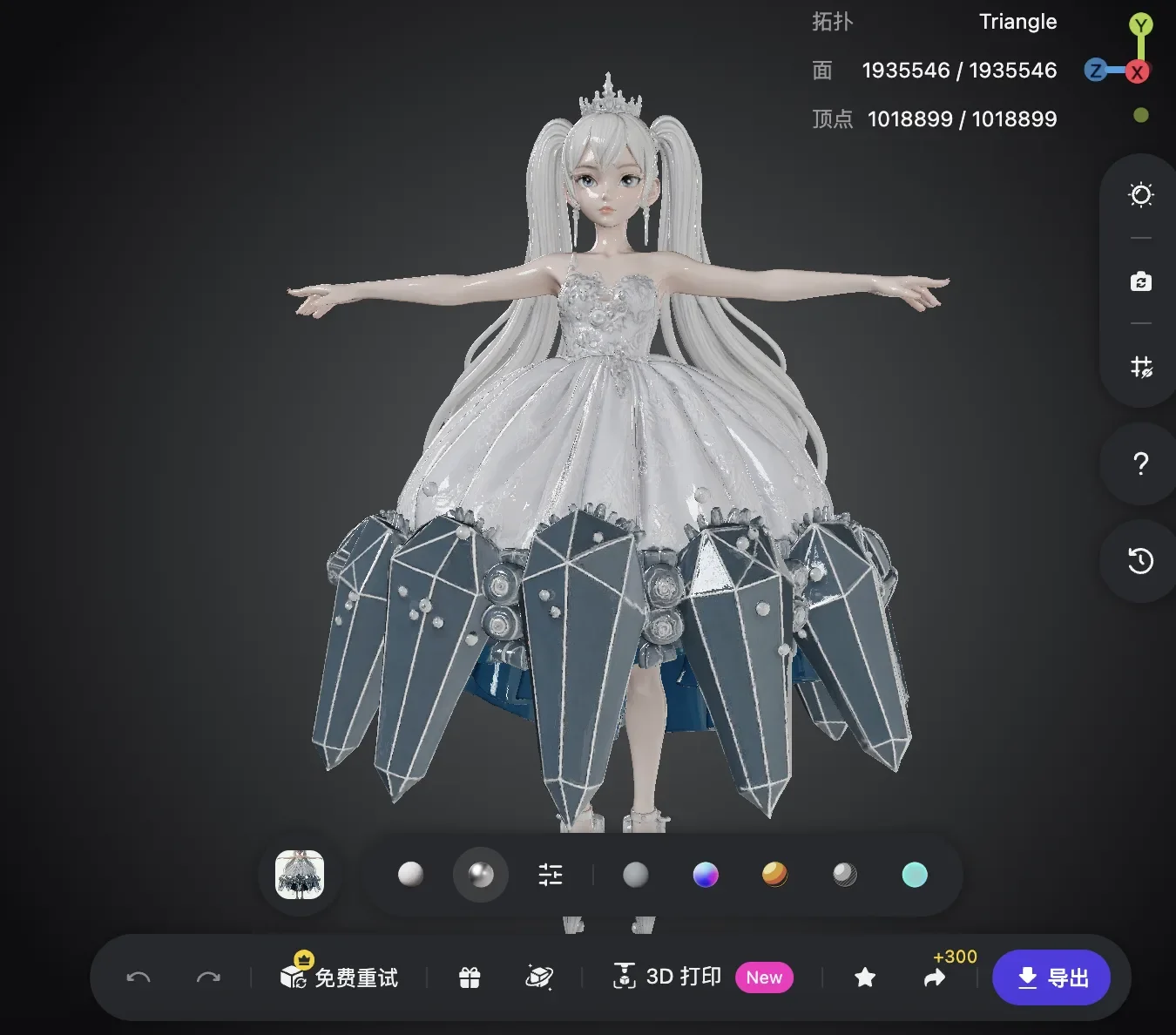
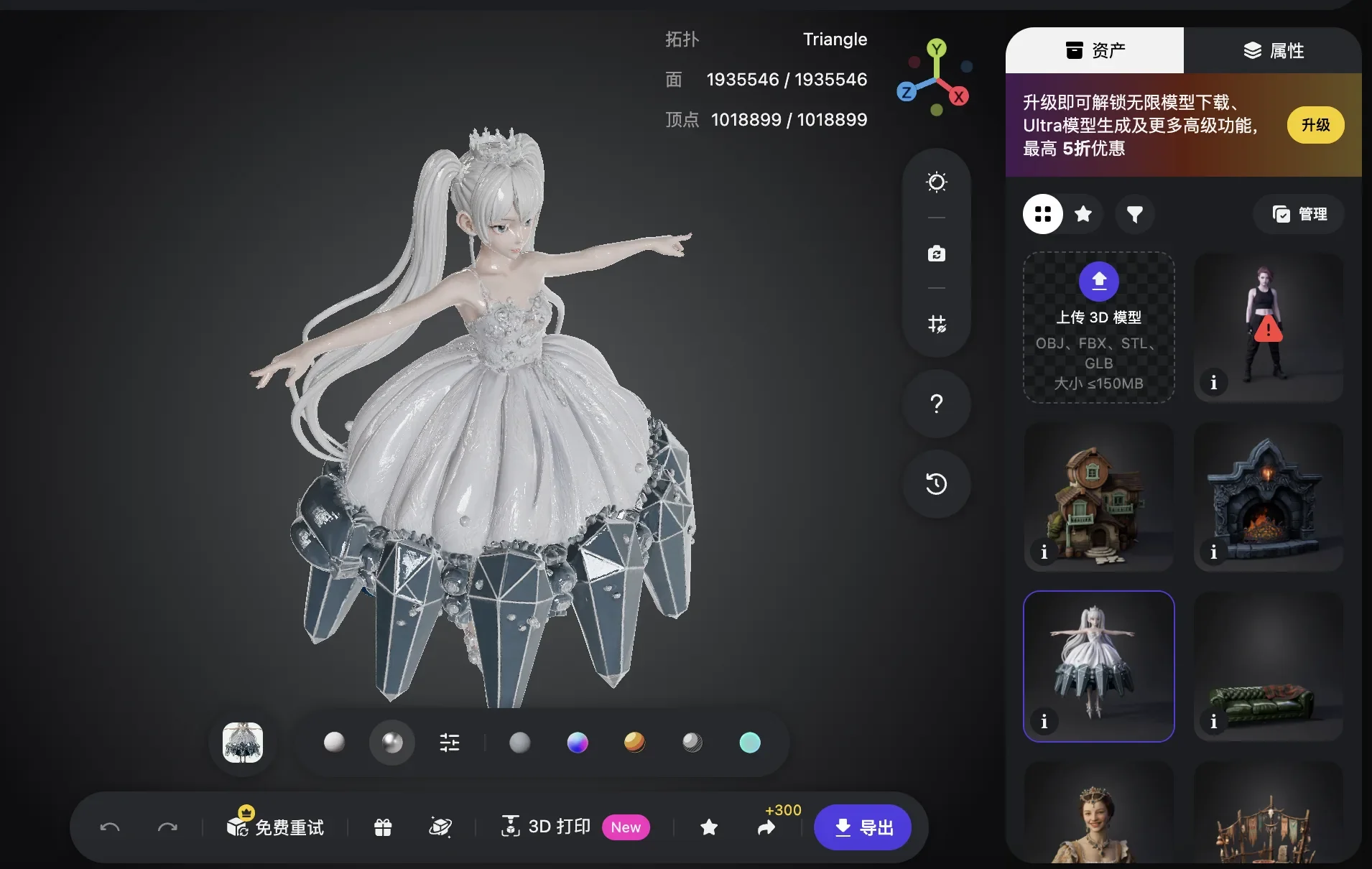
Case from Tripo
The Furniture Revolution: From Moodboard to Market in 48 Hours
The same seismic shift that transformed sneaker design is now rewriting furniture prototyping. Take the case of an emerging eco-brand that needed to pitch a bamboo chair line to boutique hotels—a process that traditionally demanded weeks of CAD work, sample production, and photoshoots. With WeShop AI and Tripo, they collapsed this timeline into a weekend.
It started with a text prompt ("Mid-century chair, bamboo frame, organic linen upholstery, Scandinavian lighting"), which WeShop AI turned into 12 photorealistic concepts in under a minute. But the real magic came when Tripo converted the chosen design into a 3D model with preserved material textures—the bamboo's grain, the linen's weave—all export-ready as AR-compatible files for client presentations.
Then came the killer advantage: iterating at the speed of thought. When a hotelier asked, "Can we see this in dark walnut with wool bouclé?", the team generated and converted 10 fabric and wood variants in 5 minutes—no 3D artist invoices, no sample waste. The final pitch deck wasn't just images; it was an interactive catalog where investors could place chairs in virtual lobbies, spin them to examine joinery, even feel the fabrics via haptic previews.
This is the new reality: AI isn't just assisting design. It's redefining what's commercially possible for small teams with big ideas.
Why This Changes Everything for Creators
The creative process has long been hamstrung by two brutal truths: time costs money, and experimentation costs both. But with WeShop AI and Tripo, those equations flip. Where a mid-sized furniture brand once needed three weeks and $15,000 to prototype a single chair design (hiring 3D modelers, renting studio time), they now generate photorealistic concepts in minutes, refine them with AI-powered try-ons, and convert them to production-ready 3D models before lunch.
The savings aren't just financial—they're psychological. Suddenly, testing a neon-green upholstery variant or a radical ergonomic shape isn't a budget-busting risk; it's a few clicks and zero guilt. And because trust matters as much as innovation, both tools embed safeguards like AI watermarking and data opt-outs, ensuring creators can push boundaries without compromising ethics. This isn't just about working faster—it's about working fearlessly.
FAQ
Q: Can I edit the 3D models after Tripo generates them? A: Yes! Tripo outputs clean, quad-based meshes compatible with Blender, Maya, or Unity.
Q: Does WeShop AI's Try-On work for hard-surface products? A: Absolutely. Use it to visualize how a lamp tilts or a bag's straps adjust.
Q: What's the biggest limitation? A: Complex topology (e.g., intricate jewelry) may need manual tweaking—but Tripo gets you 90% there.
Conclusion: The Looming Extinction of "I Can't Afford to Create"
Let's be blunt: the creative industries are standing at a cliff's edge. For decades, budgets dictated brilliance—if you couldn't bankroll a team of 3D artists or swallow $10,000 photoshoots, your ideas stayed trapped in sketchbooks. But tools like WeShop AI and Tripo aren't just chipping away at those barriers; they're detonating them.
This isn't about replacing artists. It's about annihilating the tyranny of resource gaps. The indie designer who once lost pitches to agencies with deeper pockets can now deliver Hollywood-grade 3D assets from a coffee shop laptop. The solo developer who abandoned a game concept because character modeling was too expensive can prototype 50 variants before breakfast.
The real disruption? We're witnessing the death of the "talent vs. access" tradeoff. When a streetwear startup outpaces Nike's prototype cycle using AI, when a furniture brand's AR previews outperform IKEA's physical showrooms—that's not just efficiency. It's a power redistribution.
The question isn't whether to adopt these tools. It's whether you can afford to ignore them while your competitors redefine what's possible.