Creating and Optimizing a Palmon 3D Model: My Workflow
Building a production-ready Palmon 3D model is faster and more accessible than ever, thanks to modern AI-powered tools and best practices. In this guide, I walk through my hands-on workflow—from concept to export—covering everything from reference gathering and mesh blocking to texturing, rigging, and real-time optimization. Whether you’re developing for games, XR, or animation, the techniques here will help you produce clean, stylized, and efficient assets. My focus is on practical steps, common pitfalls, and where AI tools like Tripo can save you hours.
Key takeaways
- Start with strong references and clear concept planning for accuracy and style.
- Block out the base mesh quickly—AI tools can significantly speed up this step.
- Use stylized textures and simple rigging for a lively, game-ready Palmon.
- Prioritize clean topology and UVs for real-time performance.
- AI-powered workflows streamline modeling, but manual tweaks are still essential.
- Export with optimized settings for your target platform and iterate based on feedback.
Overview of Palmon 3D Model Creation
What Makes a Good Palmon 3D Model
From my experience, a solid Palmon model balances visual appeal, technical efficiency, and adaptability. Key qualities include:
- Recognizable silhouette: Palmon’s unique features—leaf head, big eyes, and expressive mouth—should read clearly from a distance.
- Optimized topology: Clean edge flow supports animation and reduces rendering costs.
- Consistent style: Colors and materials should match the intended environment, whether for a stylized game or realistic XR scene.
Common pitfall: Overcomplicating the mesh or textures. I always aim for simplicity that serves the character.
Key Use Cases in Games and XR
Palmon models are often used in:
- Games: As playable characters, NPCs, or collectibles.
- XR/AR experiences: For interactive learning, virtual pets, or branded content.
In these contexts, performance and file size matter. I make sure my models are lightweight and versatile for different engines and hardware.
Step-by-Step Guide: Modeling Palmon in 3D
Reference Gathering and Concept Planning
I start every project by collecting high-quality references:
- Official artwork and screenshots for proportions and color palettes.
- Fan art for alternate poses or stylizations.
- Turnarounds (if available) to guide all angles.
I sketch or annotate over references to lock in details and avoid guesswork later.
Checklist:
- Gather at least 3 orthographic views.
- Note key features: leaf shape, claws, flower details.
- Decide on pose and expression upfront.
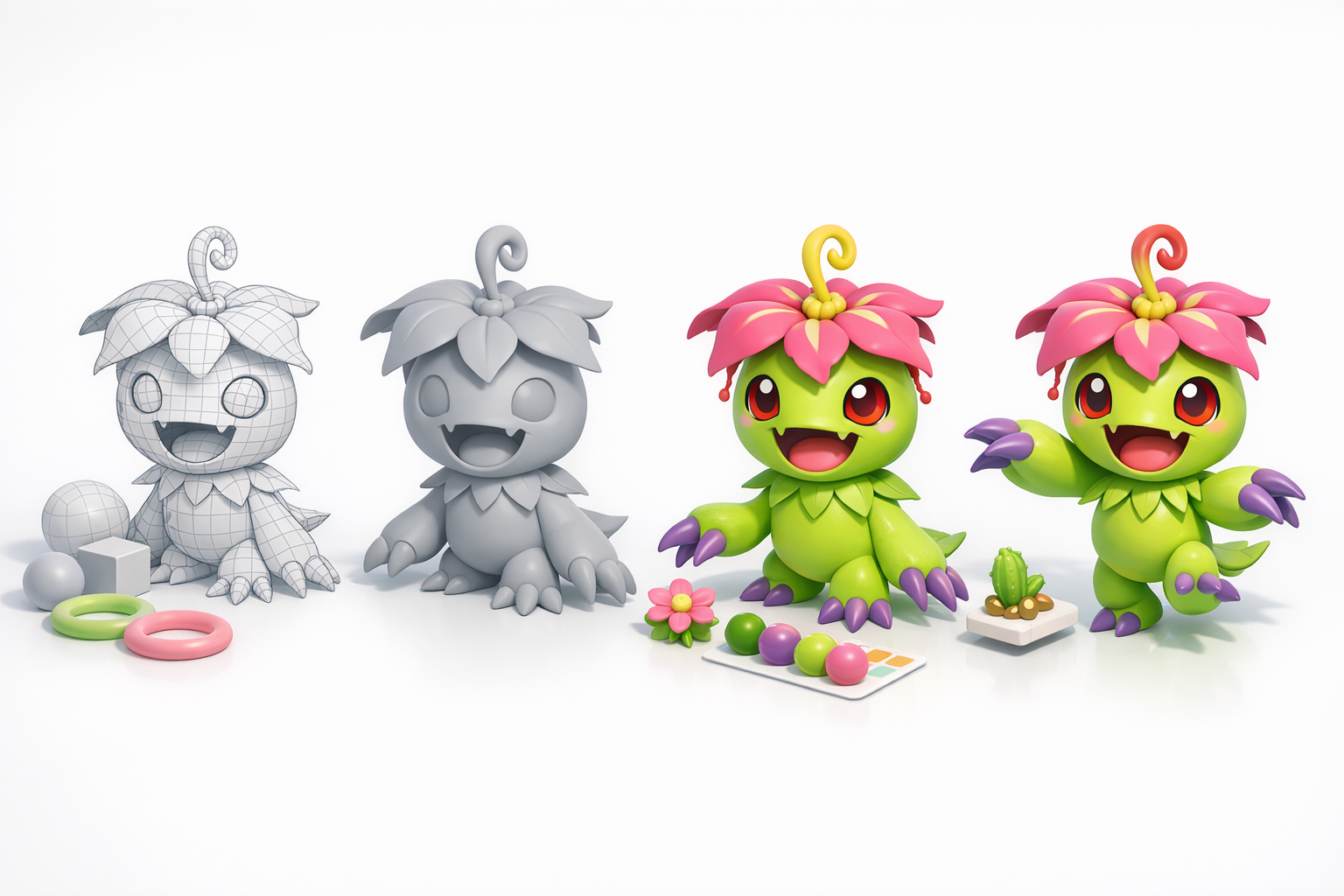
Blocking Out the Base Mesh
For the base mesh, I usually:
- Rough out primary forms using spheres and cylinders.
- Use symmetry to save time, especially for limbs and facial features.
- Leverage AI-powered tools (like Tripo) to generate a fast draft from my sketches or text prompts, then refine manually.
Pitfall: Don’t get bogged down in details too early. Keep the mesh simple and focus on proportions.
Texturing, Rigging, and Animation Techniques
Applying Stylized Textures
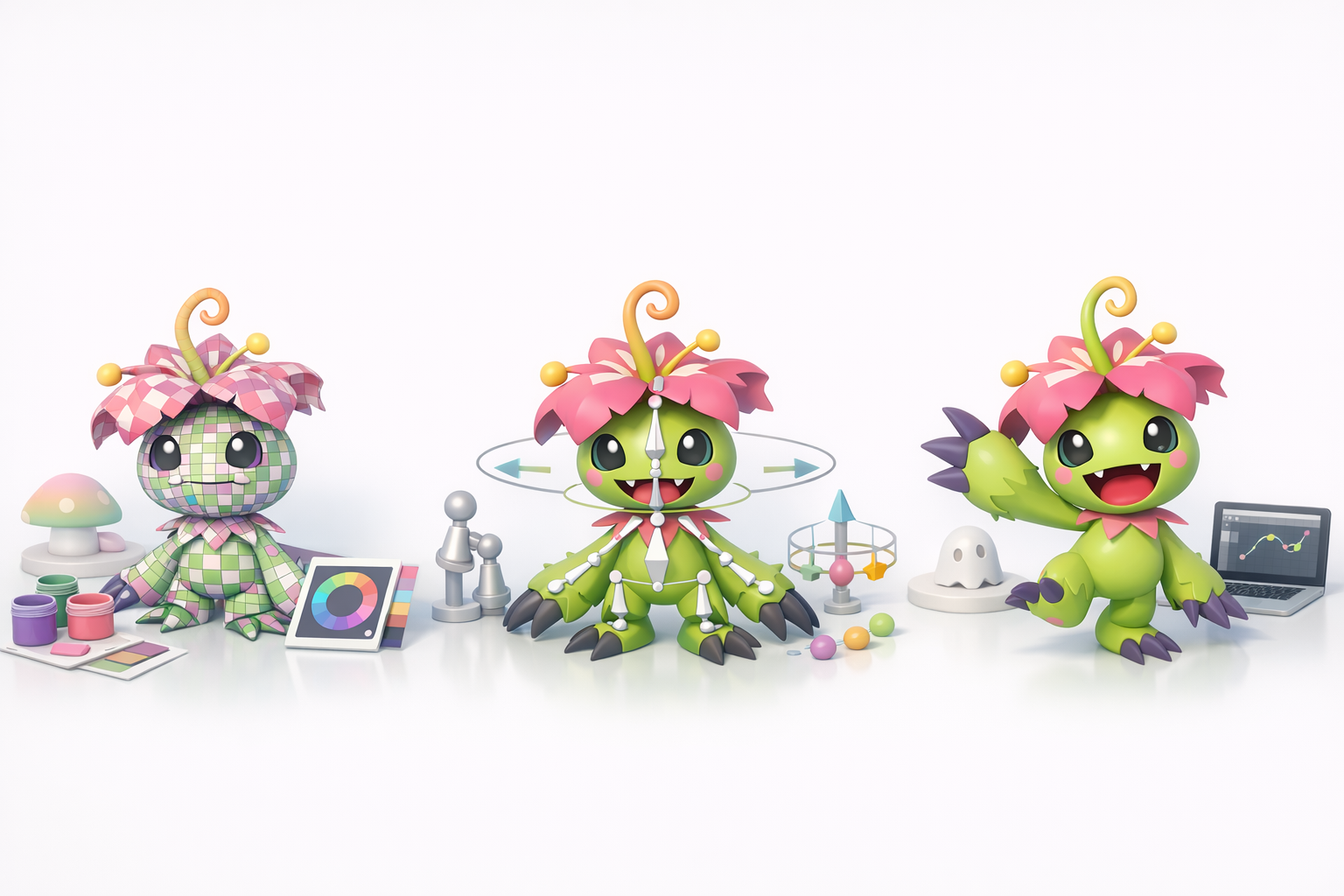
Texturing brings Palmon to life. My approach:
- Hand-paint base colors for organic, vibrant look.
- Add subtle gradients and highlights to emphasize form.
- Bake ambient occlusion for depth.
I often use Tripo’s texturing tools for initial passes, then make manual tweaks in my preferred paint app.
Tips:
- Keep UV islands large and logical for easy edits.
- Avoid over-reliance on photo textures; stylized characters benefit from painterly touches.
Rigging and Simple Animation Tips
For rigging, I:
- Build a basic skeleton: Spine, head, arms, legs, leaf appendages.
- Weight paint carefully: Focus on joints for smooth bending.
- Test with simple idle or walk cycles to check deformation.
AI-assisted rigging can speed up the process, but I always do a manual pass to fix issues, especially around complex areas like the leaf head.
Best Practices for Production-Ready Models
Retopology and UV Unwrapping
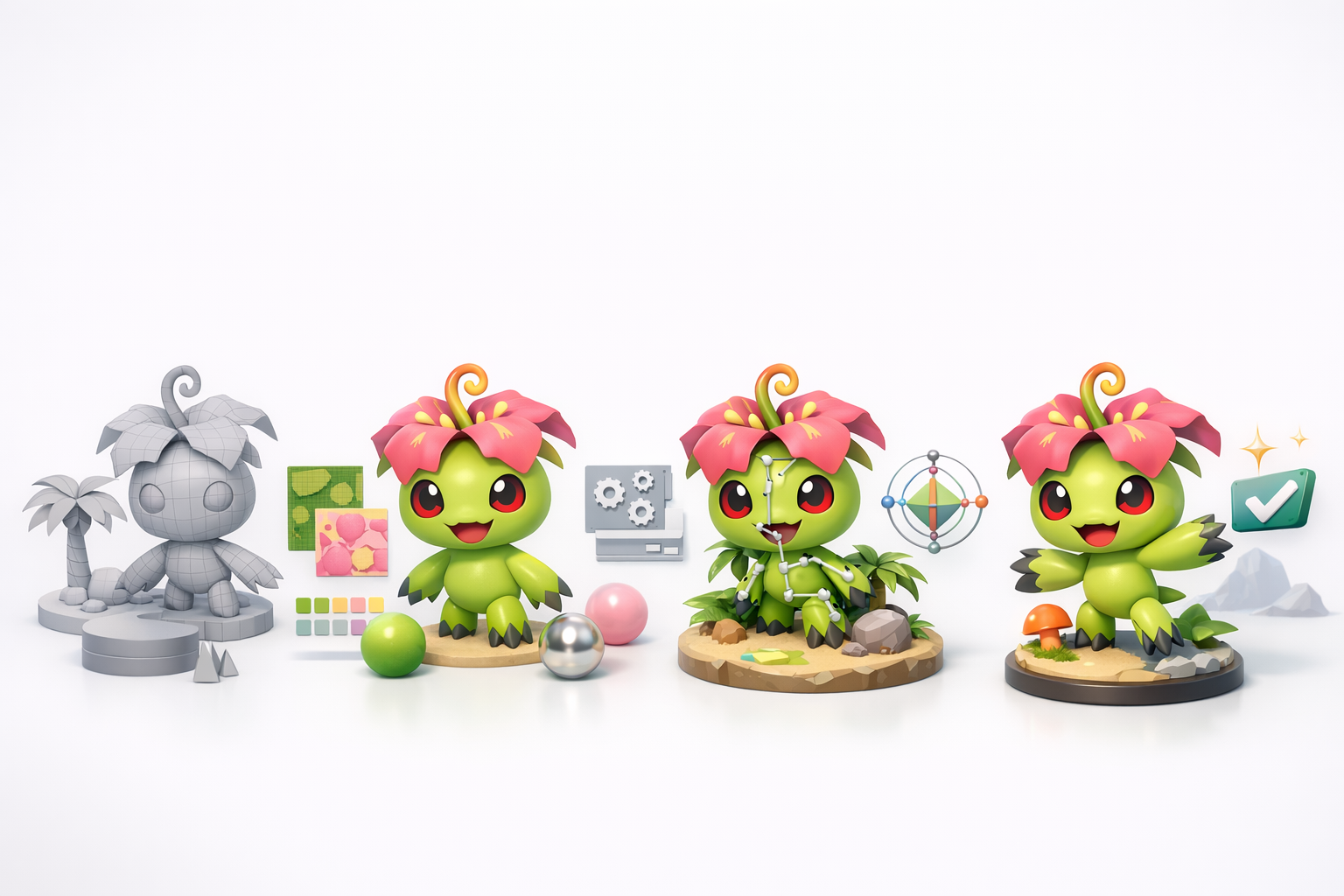
Clean topology is critical. My workflow:
- Retopologize manually or with AI help for even quads and good edge flow.
- Unwrap UVs with minimal distortion and logical seams (hide on the underside or back).
Checklist:
- Aim for even poly density.
- Avoid long, thin triangles.
- Pack UVs efficiently for texture space.
Optimizing for Real-Time Applications
For games and XR, I:
- Reduce polycount without sacrificing silhouette.
- Bake normal and AO maps for detail.
- Test in-engine for performance and appearance.
Pitfall: Over-detailing. I always check wireframes in the target engine to catch unnecessary complexity.
AI-Powered Workflows and Tool Comparisons
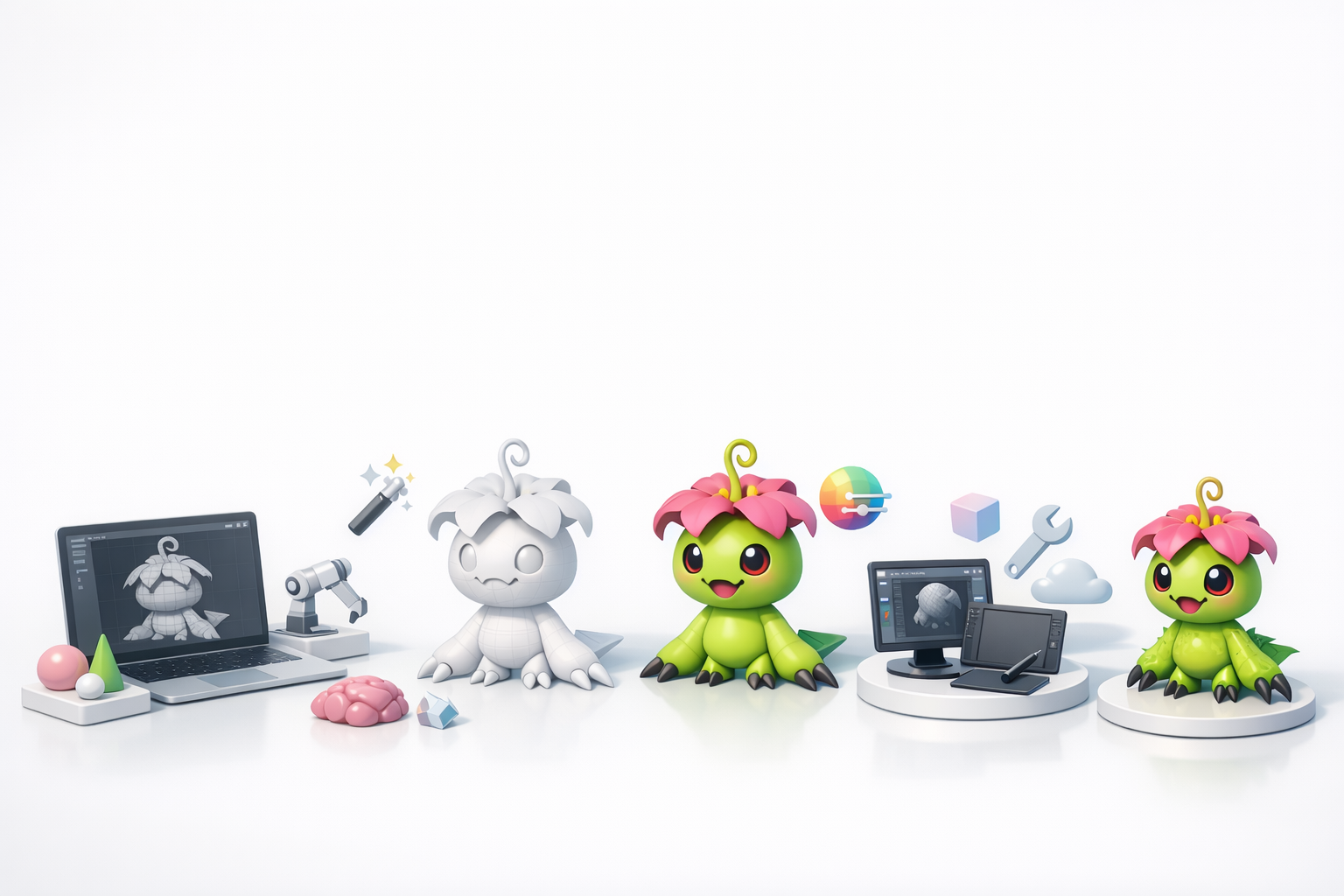
Using Tripo for Fast 3D Generation
Tripo fits naturally into my workflow when I need:
- Rapid concept meshes from text or sketches.
- Automated segmentation and retopology to jumpstart production.
- Integrated texturing and rigging for quick iteration.
I find it’s best for generating a strong starting point, then refining with traditional tools as needed.
Alternative Methods and Manual Approaches
Sometimes, I opt for manual workflows:
- Box modeling for full control.
- Sculpting in traditional 3D apps for custom shapes.
- Hand-painted textures for unique styles.
Hybrid approach: I often blend AI-generated base meshes with manual sculpting and detailing for the best results.
Exporting, Sharing, and Next Steps
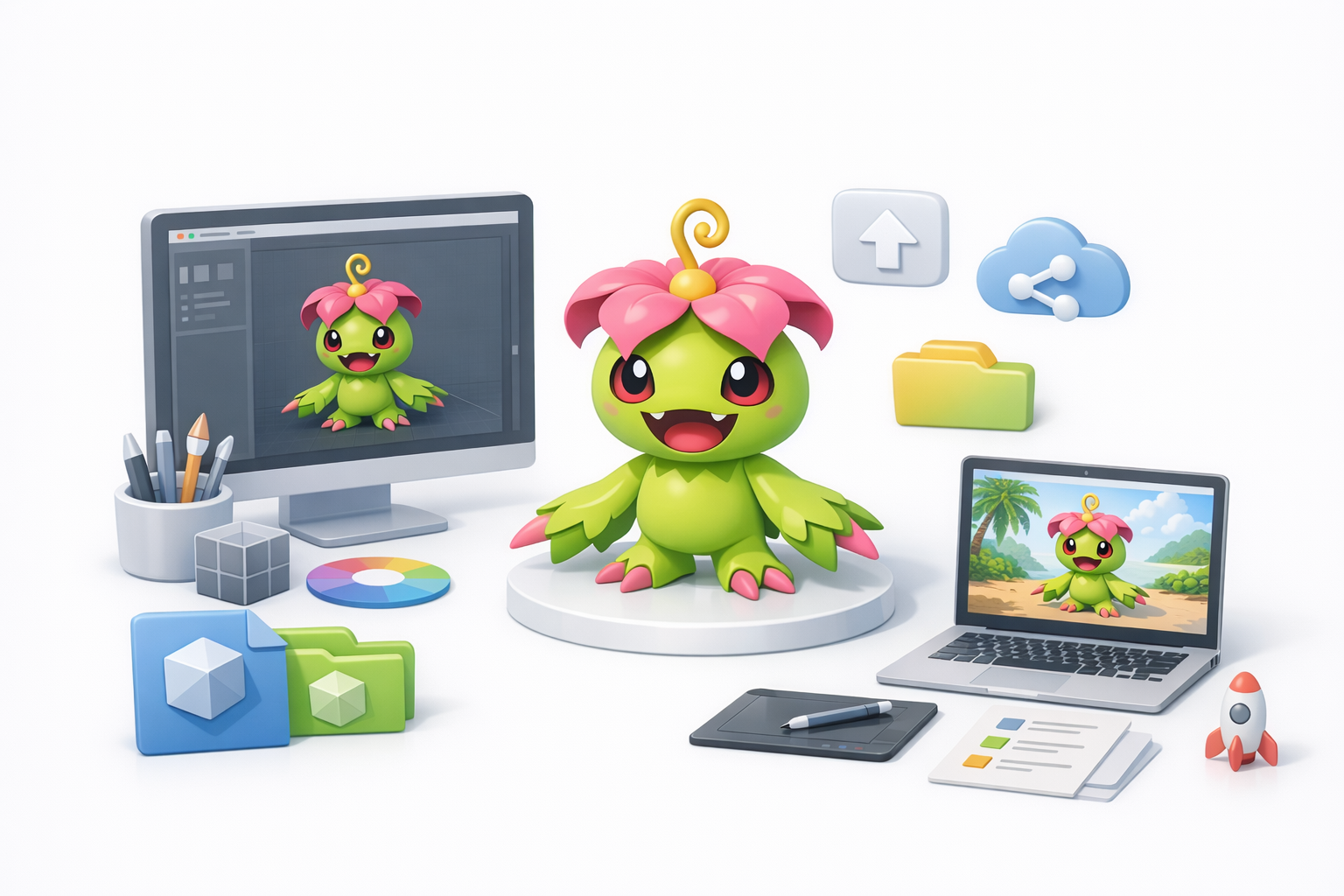
Export Settings for Popular Platforms
When exporting, I:
- Choose the right format: FBX or GLTF for most engines.
- Check scale and orientation match the target platform.
- Embed textures or package them with the model.
Settings checklist:
- Triangulate mesh if required.
- Apply transforms (scale, rotation).
- Test import in the target engine.
Showcasing and Iterating on Your Model
For presentation and feedback:
- Render turntables or real-time viewers for portfolios.
- Share with peers or online communities for critique.
- Iterate based on feedback—small tweaks can make a big difference.
I keep all working files organized so I can revisit and update the model for future projects or new platforms.
By combining AI-powered tools like Tripo with hands-on best practices, I can create and optimize Palmon 3D models efficiently—ready for games, XR, or animation. The key is balancing automation with craftsmanship for assets that look great and perform reliably.


