Creating 3D Models for Murder Mystery 2: Expert Workflow & Tips
скачать 3d модель для chicken gun
As someone who’s built countless game-ready assets, I know Murder Mystery 2 demands a specific approach to 3D modeling. You need models that are visually appealing, optimized for performance, and fit seamlessly into the game’s stylized world. In this guide, I’ll walk you through my end-to-end workflow—including concepting, modeling, texturing, rigging, and exporting—while sharing practical tips and pitfalls to avoid. I’ll also show how AI-powered tools like Tripo can accelerate the process, letting you focus more on creativity and less on technical grunt work. This article is for artists, developers, and anyone aiming to streamline their 3D asset pipeline for Murder Mystery 2 or similar games.
Key takeaways

- Always match your models to the game’s style and technical requirements.
- Start with strong references and clear concepts to avoid rework.
- Use smart retopology and texturing workflows for game-ready assets.
- AI tools like Tripo can speed up modeling, segmentation, and texturing tasks.
- Rig and animate assets with gameplay integration in mind.
- Test assets thoroughly in-game and iterate based on feedback.
Understanding 3D Model Requirements for Murder Mystery 2
Game Style and Asset Guidelines
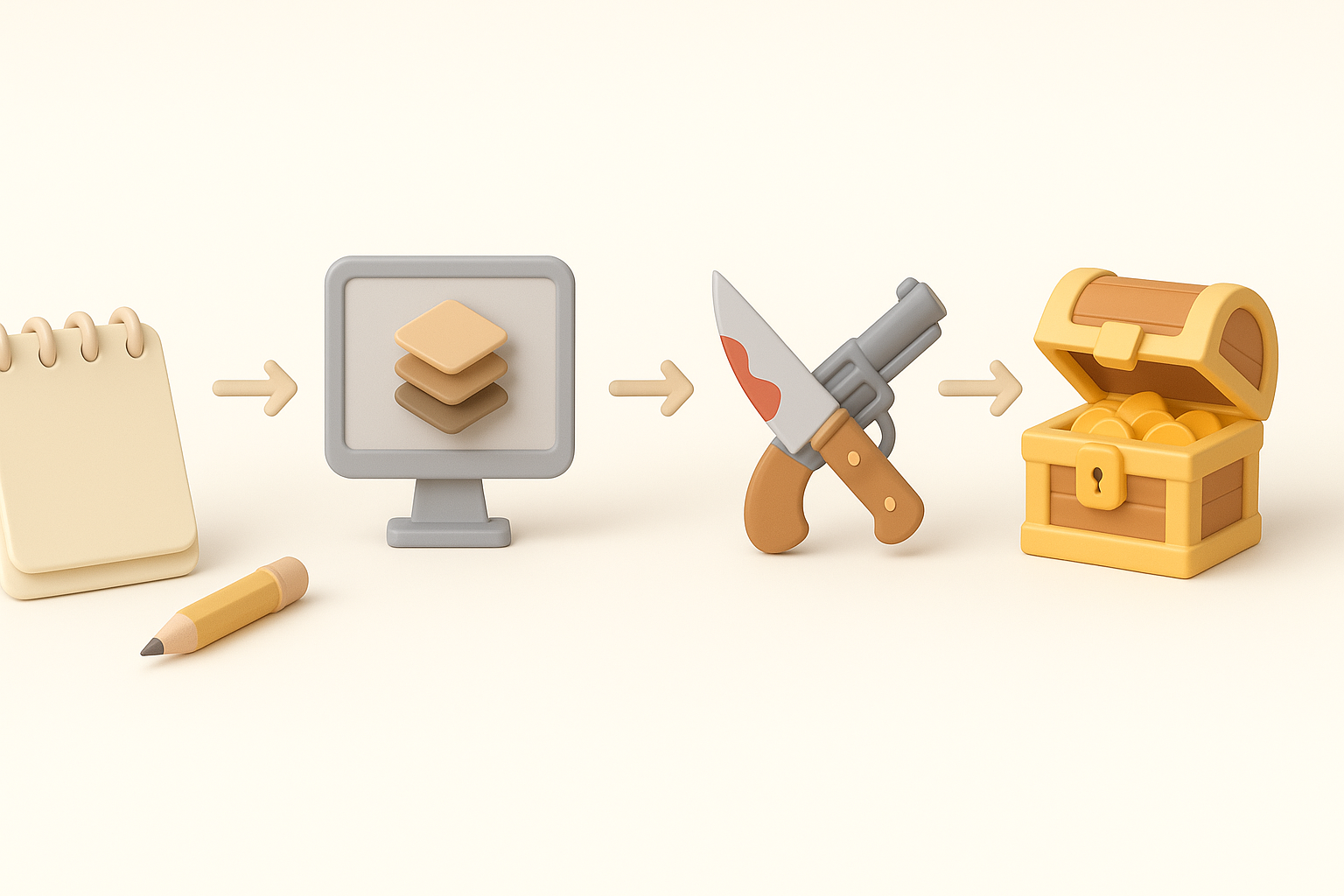
Murder Mystery 2 uses a stylized, low-to-mid poly art style with clean silhouettes and readable shapes. When creating assets, I always reference in-game models to match proportions, color palettes, and shading. It’s crucial to check the game’s documentation or asset guidelines—if available—for polycount limits, texture resolutions, and naming conventions.
Checklist:
- Match scale and proportions to in-game references.
- Stick to the game’s color and material style.
- Keep polycounts and texture sizes efficient for smooth gameplay.
Common Model Types and Use Cases
The most common assets I’ve built for Murder Mystery 2 include weapons (knives, guns), accessories, environment props, and interactive objects. Each has different requirements: weapons need clean silhouettes for clarity, while props should be optimized for repeated use.
Tips:
- Prioritize readability and distinct shapes, especially for items players interact with.
- Use modular design for environment pieces to maximize reusability.
My Step-by-Step Workflow for Murder Mystery 2 3D Models

Concepting and Reference Gathering
I always start with clear concepts and reference images. For weapons or props, I gather screenshots, fan art, and official assets to guide my design. Sometimes I sketch quick thumbnails or use AI-generated concepts to explore variations.
Steps:
- Collect visual references from the game and community.
- Sketch or generate concept variations.
- Confirm the design fits the game’s style and technical limits.
Blocking Out and Sculpting the Model
I block out basic shapes in my 3D software, focusing on proportions and silhouette. For stylized assets, I exaggerate features to make them pop. Once the blockout feels right, I refine details—using sculpting tools if needed, but always keeping topology manageable.
Tips:
- Keep blockouts simple; focus on big shapes first.
- Regularly check your model from all angles.
- Don’t over-detail—stylized games favor clarity over realism.
Texturing, Retopology, and Optimization Best Practices

Efficient Retopology Techniques
Game assets require clean, optimized topology. I often use auto-retopology features in tools like Tripo to quickly generate a game-ready mesh, then manually tweak edge flow for deformation or animation needs.
Steps:
- Auto-retopologize the sculpted mesh.
- Manually adjust edge loops around joints or moving parts.
- Remove unnecessary geometry to keep the polycount low.
Pitfall: Overcomplicating topology—keep it simple for performance.
Texturing for Game-Ready Assets
For texturing, I bake normal and ambient occlusion maps, then hand-paint or use smart materials for stylized looks. Tripo’s texturing tools can speed up base map creation, letting me focus on fine-tuning colors and highlights.
Tips:
- Use compact UV layouts to maximize texture resolution.
- Stick to the game’s palette for consistency.
- Test textures in-engine to check for color shifts or artifacts.
Rigging and Animation for Interactive Assets

Basic Rigging Approaches
If the asset needs animation (like a weapon or interactive prop), I keep rigs simple. For most Murder Mystery 2 assets, a basic bone structure is enough. I use auto-rigging tools when available, then adjust weights manually.
Checklist:
- Use as few bones as necessary.
- Test deformations in your 3D package before export.
Animating for Gameplay Integration
Animations should be snappy and readable. I focus on key poses and timing, avoiding unnecessary complexity. For gameplay, it’s crucial that animations match the expected in-game actions (e.g., attack swings, item pickups).
Tips:
- Preview animations in the game engine as early as possible.
- Keep animation loops tight and seamless for repeated actions.
Using AI-Powered Tools in My 3D Workflow
Accelerating Model Creation with AI
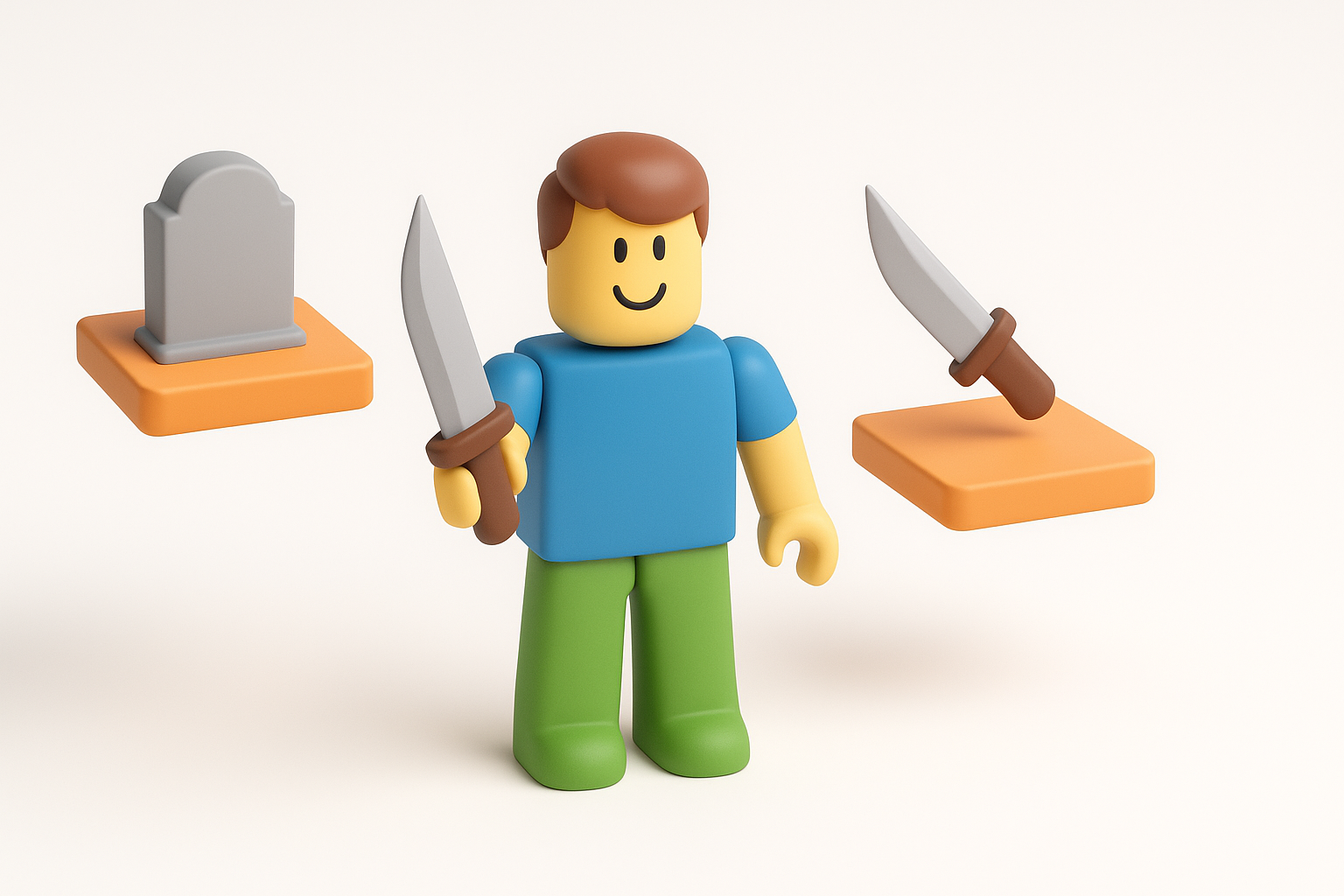
AI tools like Tripo have changed how I approach modeling. I can generate a base mesh from a text prompt, image, or sketch, then quickly segment and retopologize it. This lets me iterate on ideas much faster than manual modeling alone.
Example Workflow:
- Input a sketch or concept image into Tripo.
- Generate a base 3D model and auto-segment parts.
- Export for refinement and texturing.
Integrating AI Tools with Traditional Pipelines
I treat AI-generated models as a starting point, not a final product. After generating the base, I bring the model into my main 3D software for cleanup, manual tweaks, and final polish. This hybrid approach balances speed with control and quality.
Tips:
- Always review and clean up AI-generated geometry.
- Use AI for ideation and blocking out, then refine traditionally.
Exporting and Implementing Models in Murder Mystery 2

Export Settings and File Formats
I export models in formats compatible with the game engine—usually FBX or OBJ. It’s important to freeze transforms, apply scale, and check normals before export. For textures, I use PNG or TGA, keeping file sizes reasonable.
Checklist:
- Freeze transforms and apply scale.
- Export in the engine’s preferred format (FBX/OBJ).
- Package textures with clear naming conventions.
Testing and Troubleshooting in Game
Once imported, I test assets in-game for scale, orientation, and performance. I look for issues like flipped normals, broken animations, or texture seams. Iteration is key—small tweaks often make a big difference.
Tips:
- Test in various lighting and gameplay scenarios.
- Solicit feedback from other team members or players.
Lessons Learned and Expert Tips
Common Pitfalls to Avoid
- Over-modeling: Don’t add unnecessary detail; it hurts performance and clarity.
- Ignoring scale: Always check your asset’s size in-game.
- Skipping optimization: High polycounts and large textures slow down the game.
My Favorite Time-Saving Techniques
- Use AI tools for rapid prototyping and base meshes.
- Create reusable material and texture libraries.
- Batch export and automate repetitive tasks where possible.
By following these workflows and leveraging AI-powered tools like Tripo, I’ve been able to deliver high-quality, game-ready assets for Murder Mystery 2 efficiently and consistently. The key is to blend creativity with technical discipline—always testing and refining assets until they’re ready for players.


