Creating and Using Final Fantasy 14 3D Models: Expert Workflow
скачать 3d модель для chicken gun
As someone who regularly creates and optimizes Final Fantasy 14 (FF14) 3D models, I’ve streamlined my workflow to balance speed, quality, and production-readiness. Whether you’re building assets for games, XR, or cinematic projects, leveraging AI-powered tools alongside traditional methods accelerates the process and removes a lot of technical friction. In this guide, I’ll share my hands-on approach to generating, refining, and deploying FF14-style 3D models, with practical advice on segmentation, retopology, texturing, rigging, and animation. If you want to get high-quality, deployable assets without getting bogged down in technical details, this workflow is for you.
Key Takeaways
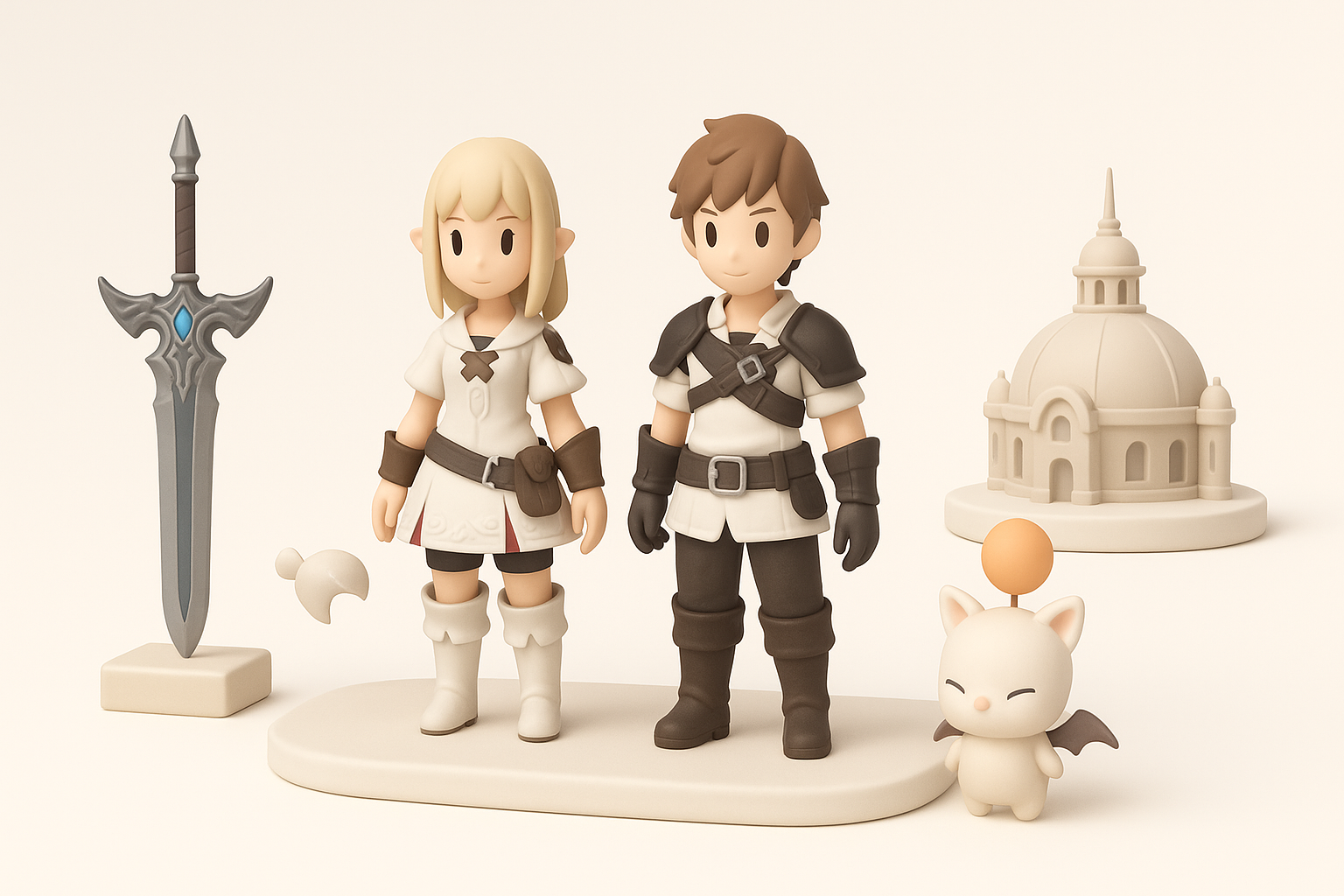
- AI-powered tools can generate FF14 models from text, images, or sketches in minutes.
- Production-readiness requires careful segmentation, retopology, and texturing.
- Rigging and animation should be planned early for game/XR compatibility.
- Export settings and format choices are critical for smooth integration.
- Manual cleanup is sometimes needed, but AI tools reduce repetitive work.
Overview of Final Fantasy 14 3D Models
Types of FF14 3D Models
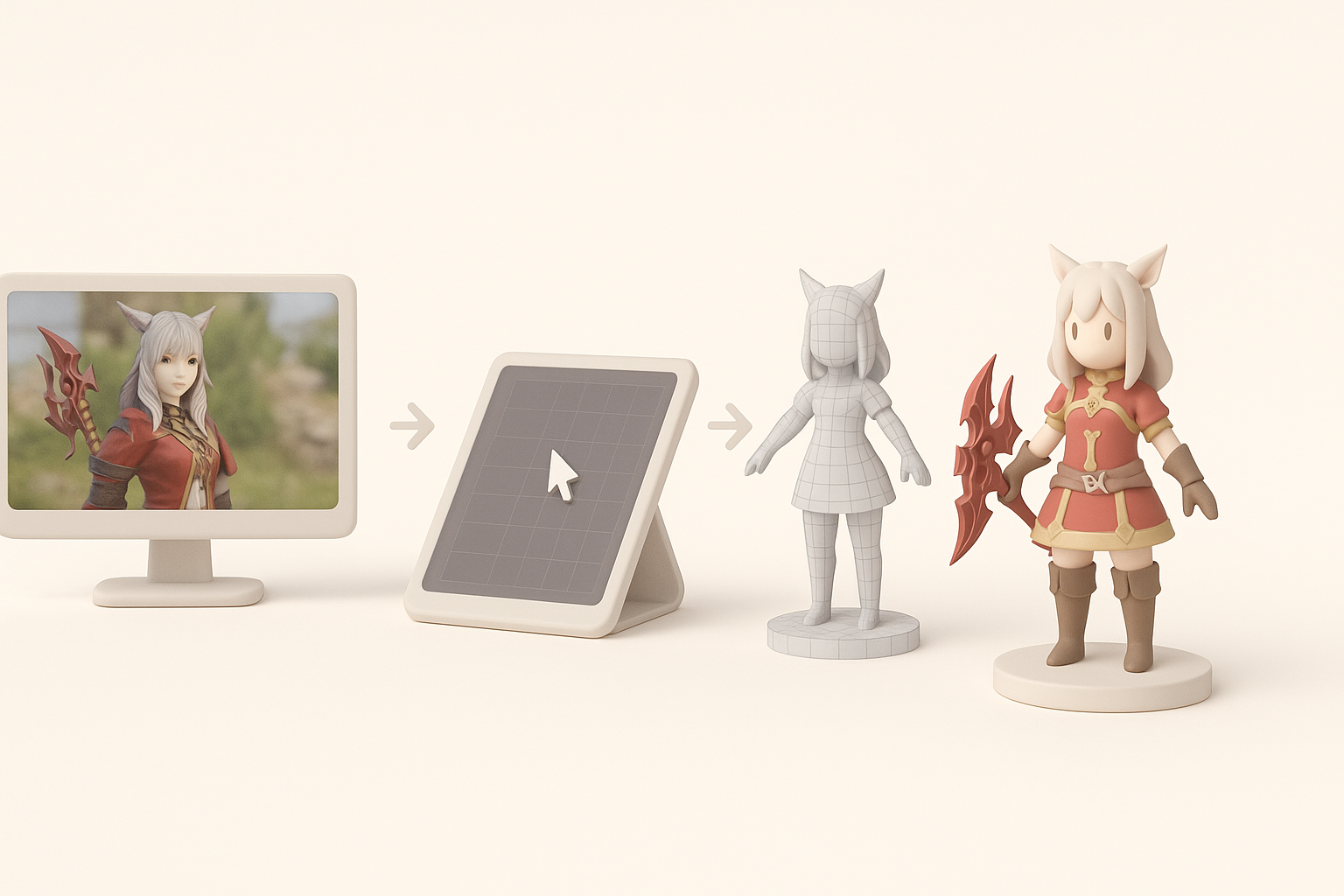
In my experience, FF14 3D models typically fall into these categories:
- Characters: Playable races, NPCs, and monsters, each with unique armor sets and accessories.
- Props and Items: Weapons, tools, and collectible items.
- Environment Assets: Buildings, terrain pieces, and decorative objects.
Understanding the asset type upfront determines the modeling and optimization approach. For example, characters require more attention to topology and rigging, while props can often be lower poly.
Common Use Cases in Games and XR
FF14 models are widely used in:
- Fan games and machinima projects.
- XR experiences and virtual worlds.
- Modding and custom content for private servers.
I’ve found that XR and real-time applications demand lightweight, well-optimized models, while cinematic work can tolerate higher poly counts and more complex shaders.
My Workflow for Generating FF14 3D Models
Text, Image, and Sketch-Based Creation
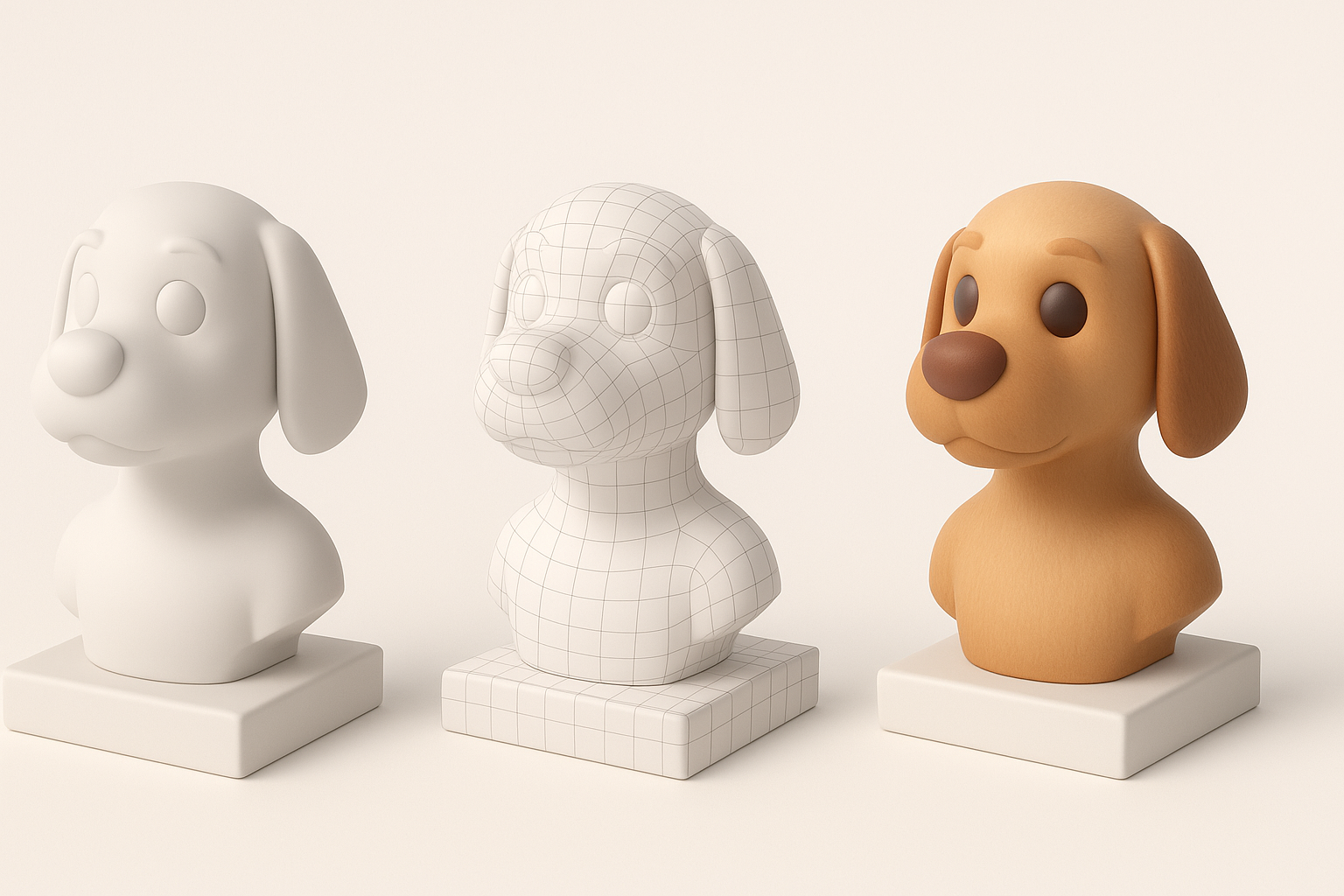
I usually start with a clear brief—sometimes a text prompt, sometimes reference images or quick sketches. AI-powered platforms like Tripo allow me to:
- Input a text description (e.g., “Miqo’te mage with ornate staff”).
- Upload reference images for style or pose guidance.
- Sketch rough silhouettes to block out the model.
Practical steps:
- Gather visual references from in-game screenshots or official art.
- Use AI tools for initial mesh generation to save time.
- Review the output and iterate with new prompts or tweaks as needed.
Optimizing for Production-Ready Assets
AI-generated models often need refinement to meet production standards. My checklist:
- Check geometry for n-gons, holes, or stray vertices.
- Ensure clean UVs for efficient texturing.
- Reduce poly count if targeting real-time engines.
I usually run a quick pass in a DCC tool (like Blender) for manual tweaks before moving to the next stage.
Best Practices: Segmentation, Retopology, and Texturing
Intelligent Segmentation Techniques
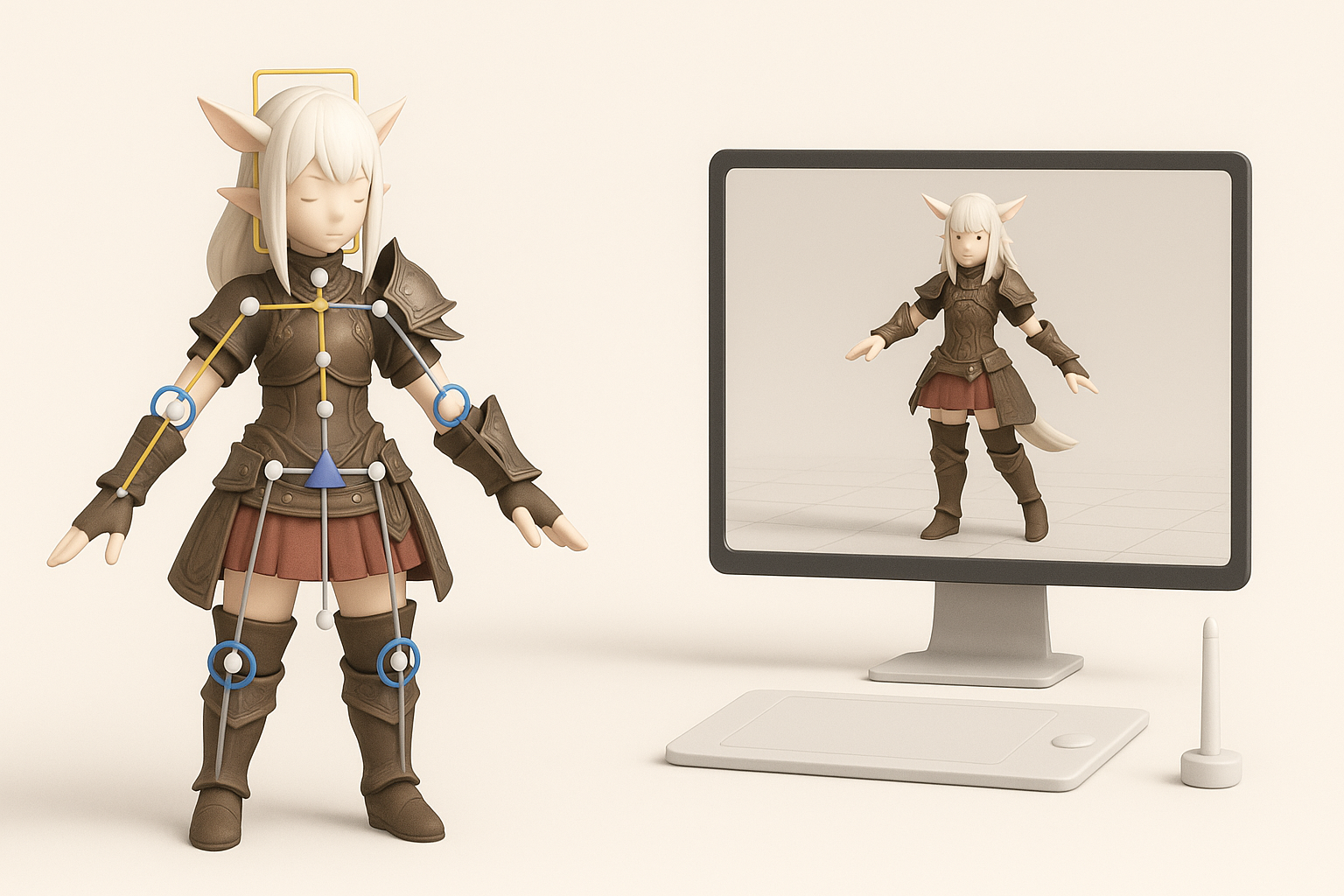
Good segmentation is crucial for FF14 models, especially for modular armor or swappable parts. I use these strategies:
- Segment by logical parts: Head, torso, limbs, accessories.
- Name parts clearly for easy rigging and export.
- Leverage AI segmentation tools to accelerate the process, but always verify results.
Pitfall: Over-segmentation can create unnecessary complexity; keep it as simple as the game logic allows.
Retopology and Texture Mapping Tips
Retopology ensures the asset deforms well and runs efficiently in real time. My approach:
- Use auto-retopology for initial cleanup, then manually adjust edge flow in key areas (face, joints).
- Bake high-res details to normal maps for visual fidelity.
- Check UV islands for stretching and overlap.
Mini-checklist:
- Edge loops around elbows, knees, and mouth.
- Even polygon density.
- Textures at power-of-two resolutions (e.g., 2048x2048).
Rigging and Animation for FF14 Models
Rigging Strategies for Game Characters
I rig FF14 characters with future animation in mind:
- Use standardized skeletons for compatibility with existing animation libraries.
- Weight-paint carefully around joints to avoid deformation artifacts.
- Test with simple idle and walk cycles before finalizing.
Tip: If the model will be used in multiple projects, keep the rig modular for easy retargeting.
Animating Models for Interactive Experiences
For interactive or XR use, I keep animations concise and loopable:
- Block out main poses first (idle, walk, attack).
- Polish timing and transitions for smoothness.
- Export in formats compatible with game engines (e.g., FBX with baked animations).
Pitfall: Overly complex rigs or animation layers can cause import issues—keep it clean and simple.
Comparison: AI-Powered vs. Traditional 3D Workflows
Speed and Quality Differences
From my hands-on tests:
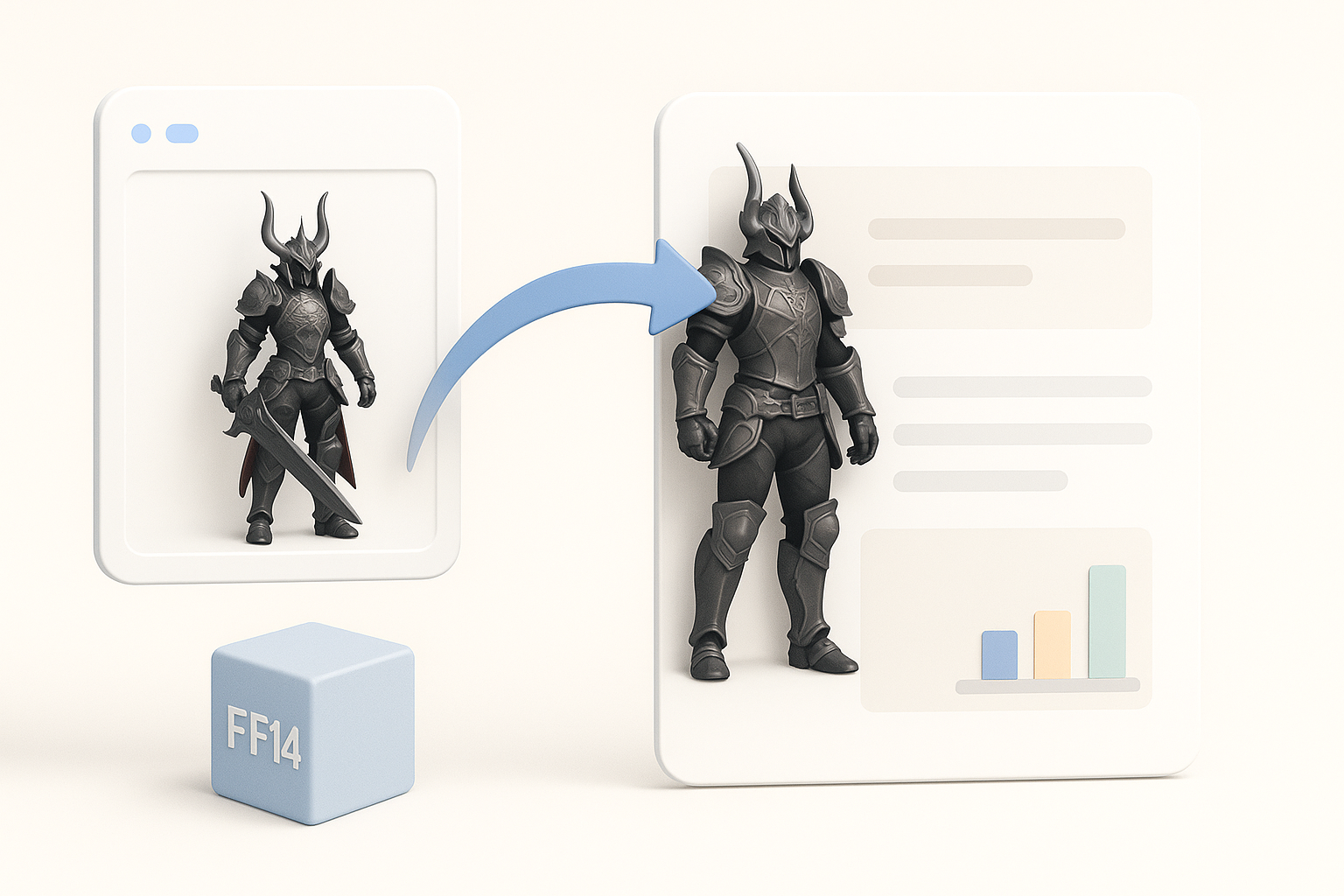
- AI-powered workflows: Generate base meshes and textures in minutes, ideal for rapid prototyping and iteration.
- Traditional methods: Offer more control and polish, but are much slower—especially for detailed characters.
Rule of thumb: Use AI for ideation and base asset creation, then refine manually as needed.
When to Use AI Tools or Manual Methods
I recommend:
- AI tools for concepting, quick variations, and non-critical assets.
- Manual methods for hero assets, faces, or anything requiring high fidelity and custom deformation.
Hybrid workflows (AI + manual cleanup) deliver the best balance for most projects.
Integrating FF14 3D Models into Projects
Exporting and Compatibility Considerations
Export settings can make or break integration. My standard steps:
- Choose the right format: FBX for games, GLTF for web/XR, OBJ for static assets.
- Embed or link textures as required by the target engine.
- Test import in the final environment early to catch scale or orientation issues.
Tips for Game, Film, and XR Deployment
- For games: Optimize for draw calls and memory; use LODs if needed.
- For film: Focus on high-res textures and shaders; polygon count is less critical.
- For XR: Prioritize lightweight meshes and efficient materials.
Final checklist:
- Verify rig and animation compatibility.
- Check shading and lighting in-engine.
- Document asset structure for team handoff.
By following this workflow, I consistently produce FF14 3D models that are both visually faithful and technically robust—ready for deployment in any interactive or cinematic project.


