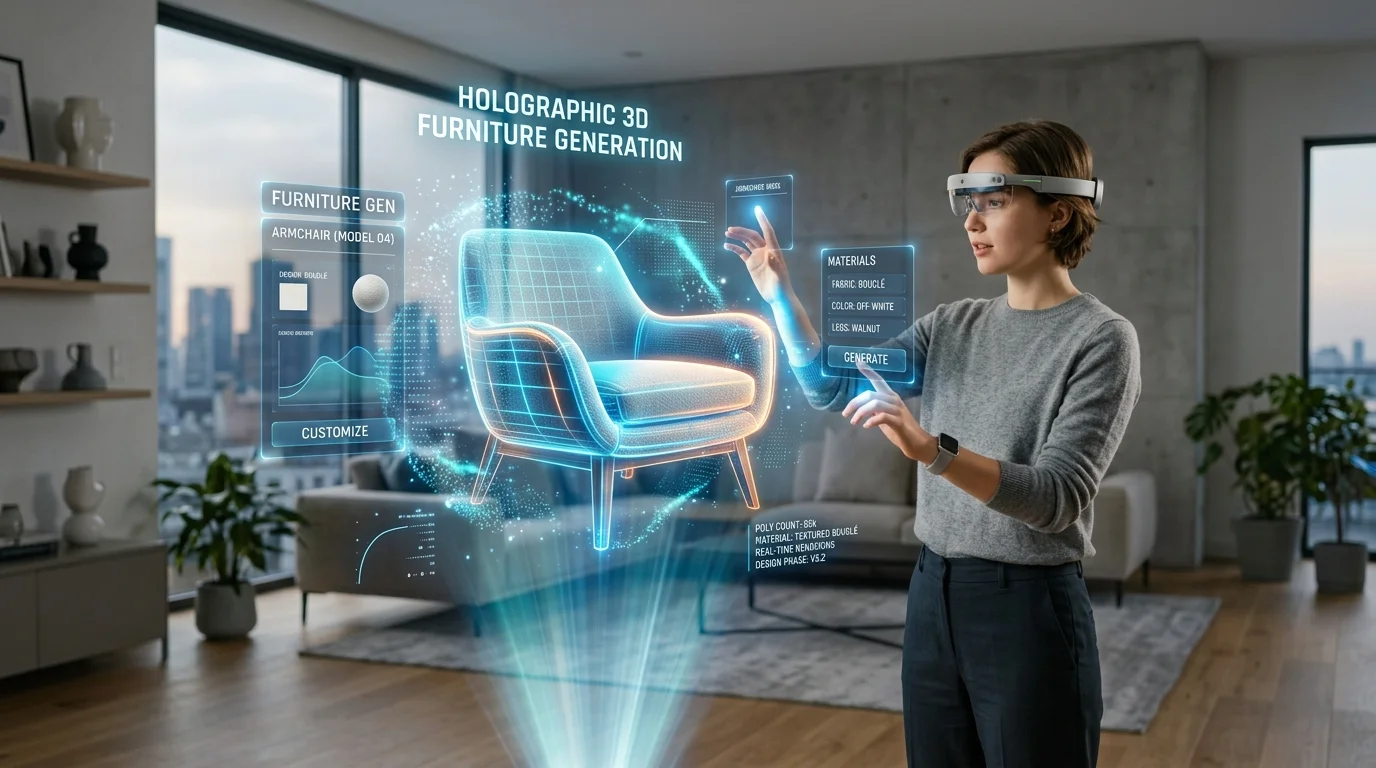
Image to 3D Furniture Conversion for E-Commerce Sales
Accelerating E-Commerce Sales with Automated Spatial Generation and Interactive WebAR
Static product photos no longer meet the expectations of modern online shoppers, leading to decision paralysis and elevated return rates. Creating spatial assets for ai 3d home design traditionally involved prohibitive costs and lengthy production timelines, creating a severe bottleneck for retailers. By implementing an automated image to 3D model pipeline, brands can rapidly populate their catalogs with interactive assets that build buyer confidence and accelerate purchasing decisions.
Key Insights
- Transitioning from flat photography to interactive spatial models drastically reduces return rates by providing accurate scale and material representation.
- Automated spatial generation replaces manual sculpting pipelines, reducing asset production time from days to mere seconds.
- Standardized web formats ensure seamless integration into existing digital storefronts and augmented reality viewers.
- Proper source image preparation is critical for maximizing structural accuracy and texture fidelity during the generation process.
The Impact of 3D Furniture on E-Commerce Product Pages
Transitioning from static product photos to interactive 3D models significantly enhances customer engagement and reduces return rates. By leveraging automated spatial conversion, e-commerce retailers can quickly provide immersive shopping experiences that build buyer confidence and drive higher conversion metrics.
The modern e-commerce environment demands more than high-resolution photography. Consumers expect spatial interaction, allowing them to inspect the structural integrity of a chair or the fabric texture of a sofa from any angle. When buyers can rotate a product and evaluate its proportions comprehensively, the cognitive friction associated with online purchasing dissipates. This spatial interaction directly correlates with reduced return rates, as shoppers possess a more accurate understanding of the physical item before the transaction occurs.
Overcoming Traditional 3D Modeling Bottlenecks in Retail
Traditional workflows required hiring specialized artists, utilizing complex photogrammetry rigs, or waiting weeks for offshore agencies. The manual process of box modeling, UV unwrapping, and material authoring created a severe operational bottleneck. Modern AI workflows operate on a predictable token economy. For instance, teams utilizing Tripo AI manage their output through credits, where a standard professional tier provides 3000 credits per month, effectively capping asset creation costs while maintaining commercial usage rights.
How Tripo AI Streamlines Image to 3D Furniture Conversion
Tripo AI revolutionizes the creation pipeline by rapidly transforming standard 2D furniture photos into high-quality 3D assets.
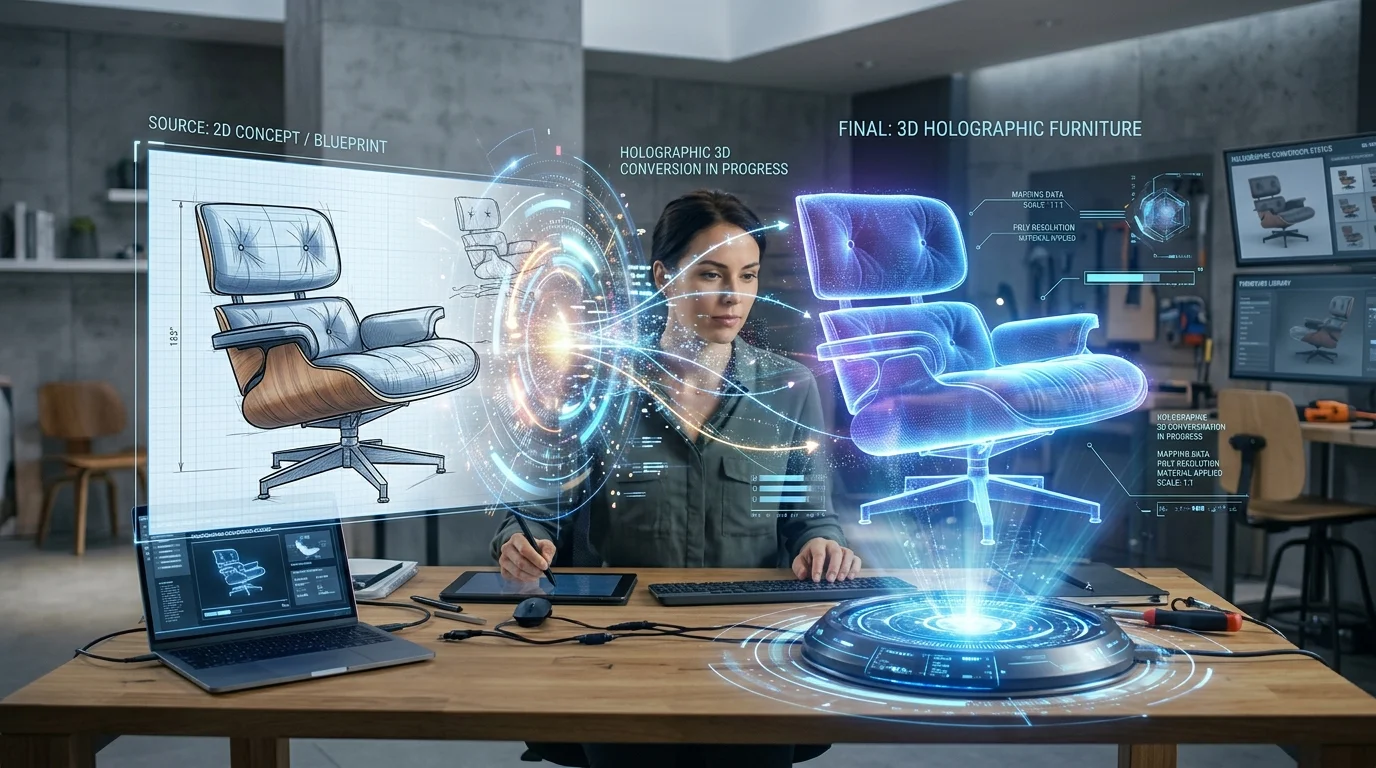
The transition from planar imagery to volumetric data requires sophisticated computational logic. At the core of this transformation is advanced neural processing. The system relies on leveraging over 200 Billion parameters to accurately infer depth, volume, and occluded geometry from a single flat photograph. This pipeline drastically reduces the technical barrier to entry, allowing merchandisers and catalog managers to generate viable spatial assets independently.
Preparing Source Images for Optimal Asset Generation
To maximize structural accuracy, source images must adhere to strict visual guidelines. The primary subject must be isolated against a neutral, high-contrast background. Cluttered environments or overlapping objects introduce geometric artifacts. Flat, even studio lighting without harsh directional shadows yields optimal results, as baked-in shadows can translate as dark patches on the final texture map.
Exporting Web-Ready Formats
Once the generation phase concludes, Tripo AI allows users to export directly into industry-standard formats including USD, FBX, OBJ, STL, GLB, and 3MF. This versatility ensures that whether the model is heading to a staging environment or directly to a web-based storefront, the transition is frictionless.
Integrating 3D Furniture Models into E-Commerce Platforms
Once converted, 3D furniture models must be seamlessly embedded into product pages using lightweight web viewers.
Modern e-commerce platforms utilize WebGL-based viewers to render geometric data directly within the browser. For seamless integration, the spatial assets should be hosted on a dedicated CDN and implement lazy loading to protect page load speed. Furthermore, the ultimate application of these assets is WebAR (Augmented Reality), allowing shoppers to project digital furniture into their physical spaces.
Best practices dictate establishing a strict performance budget, capping file sizes at a few megabytes. By prioritizing efficient geometry and compressed PBR materials, retailers can guarantee a frictionless AR experience. For those looking to dive deeper into spatial design, exploring AI 3D Home Design can provide further context on how these assets fit into larger environments.
FAQ
Q: How do I ensure accurate real-world scale when converting 2D furniture images to 3D?
A: While the system infers relative proportions, absolute real-world scale requires manual reference mapping. Once generated, export the model and apply the exact physical dimensions (height, width, depth) using the manufacturer's spec sheet. This is crucial for AR applications to maintain consumer trust.
Q: What are the ideal export formats for embedding 3D furniture on Shopify or WooCommerce?
A: GLB is the primary standard for web and Android AR. For iOS devices, USDZ is required. You can use an online 3D studio to inspect geometry and ensure texture files are optimized for fast loading.
Q: Can Tripo handle complex furniture textures like velvet or woven rattan?
A: The system excels at capturing primary geometry and colors. However, highly complex micro-details like the sheen of velvet or intricate gaps in rattan may require minor post-processing. Technical artists can swap generated maps with specialized PBR materials to perfect the look before final deployment.