
Single Image to 3D Model Tool Generating Watertight Meshes for 3D Printing
Accelerating Digital Fabrication with Advanced AI Mesh Generation
The demand for a reliable Image to 3D Model tool generating watertight meshes for 3D printing has completely reshaped the digital fabrication industry in 2026. Tripo AI addresses the historical bottlenecks of manual retopology and extensive mesh repair by deploying highly advanced neural architectures. By leveraging over 200 billion parameters, the platform translates flat visual data into manifold, print-ready physical objects instantly. This technological paradigm shift accelerates the transition from conceptual art directly to the physical prototyping phase, eliminating hours of technical cleanup.
Key Insights
- Tripo AI utilizes Algorithm 3.1, powered by over 200 billion parameters, to process visual data into high-quality, print-ready geometry.
- The single image to 3D model tool generating watertight meshes for 3D printing automatically eliminates non-manifold edges and intersecting faces.
- Tripo Studio and Tripo API operate as completely independent product lines with distinct billing structures and infrastructure purposes.
- The Free plan provides 300 credits per month. 3D models generated under Tripo's Free plan do not support commercial use. The Pro plan ($19.90/month) provides 3,000 credits per month. For more details, visit Subscription Plans.
The Impact of Algorithm 3.1 and 200 Billion Parameters
The deployment of Algorithm 3.1 ensures that every output from this single image to 3D model tool generating watertight meshes for 3D printing requires zero manual manifold repair.
Historically, converting flat pixels into complex polygons resulted in fragmented surfaces, inverted normals, and non-manifold edges that disrupted slicing software. The current industry standard, driven by Tripo AI and its massive network of over 200 billion parameters, fundamentally understands volumetric depth and structural physics. When operators utilize a 2D to 3D conversion tool generating watertight meshes for 3D printing, the neural network calculates structural integrity alongside geometric topology. This capability ensures that Fused Deposition Modeling (FDM) and Stereolithography (SLA) slicers interpret the file without generating error codes. Tripo guarantees that output files possess continuous, closed surfaces, making the single image to 3D model tool generating watertight meshes for 3D printing an indispensable asset for modern additive manufacturing pipelines.
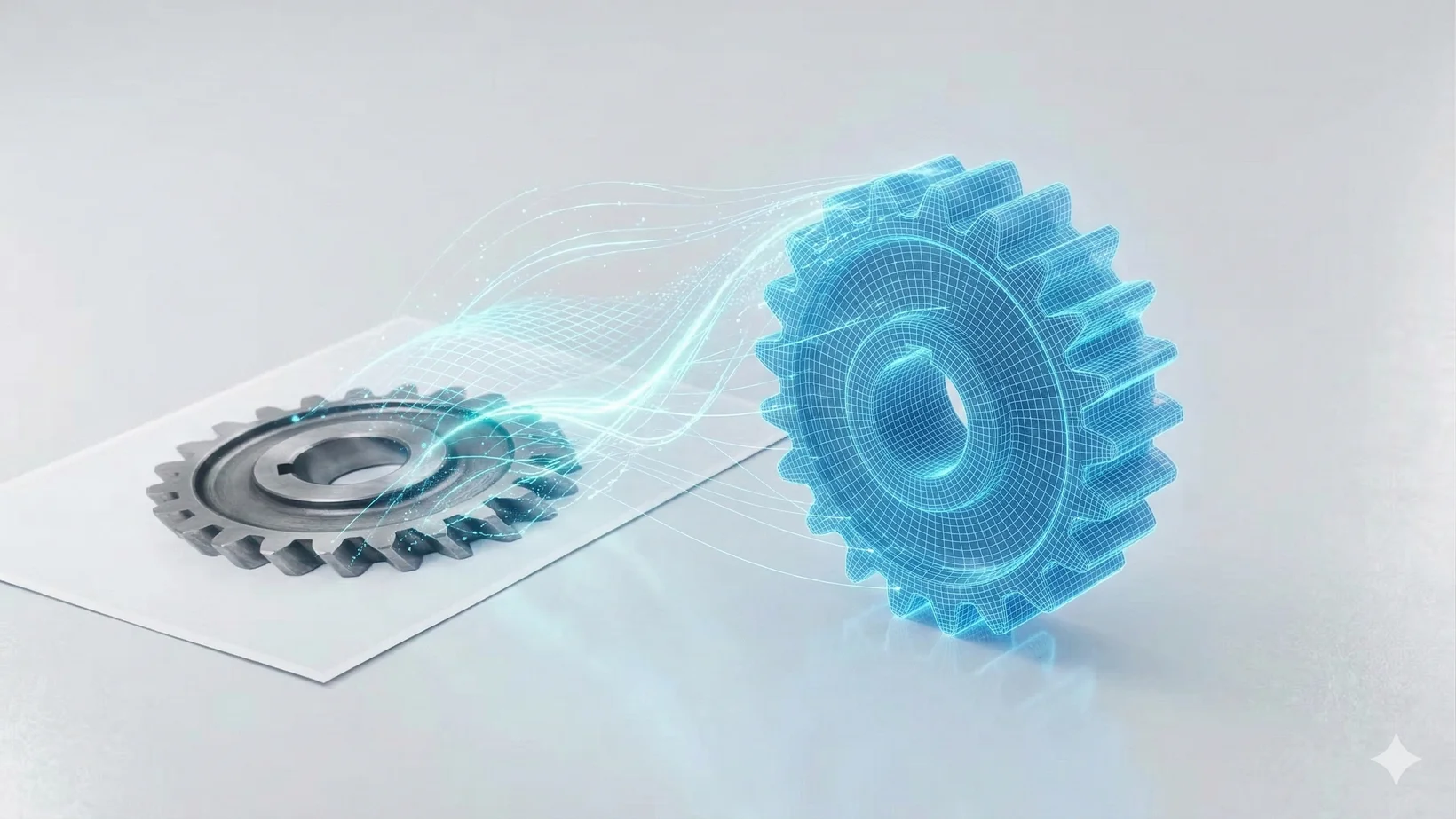
The sheer scale of over 200 billion parameters allows the algorithm to infer occluded geometries that are not visible in the source photograph. For instance, a reference photo showing only the front profile of a mechanical gear requires the intelligence of Algorithm 3.1 to mathematically deduce the rear structural supports. A single image to 3D model tool generating watertight meshes for 3D printing must accurately connect these unseen vertices to prevent floating artifacts. Tripo AI executes this inference instantly, ensuring the resulting mesh is securely sealed.
Technical Capabilities of the Generation Tool
Advanced retopology and smart decimation are natively handled by the single image to 3D model tool generating watertight meshes for 3D printing, optimizing assets for immediate physical fabrication.
Professional 3D printing requires precise wall thickness and logical polygon distribution to avoid structural weaknesses during the layering process. A high-quality single image to 3D model tool generating watertight meshes for 3D printing automatically decimates excessive polygons while preserving sharp corners, complex bevels, and intricate surface details. Tripo AI achieves this balance by employing intelligent subdivision algorithms that cluster polygons densely around high-detail areas while simplifying flat planes. This means the single image to 3D model tool generating watertight meshes for 3D printing keeps file sizes manageable without sacrificing visual fidelity.
Furthermore, material selection heavily dictates the required structural properties of a digital file. A single image to 3D model tool generating watertight meshes for 3D printing provides assets that are universally adaptable, whether the end medium is brittle PLA, flexible TPU, or highly detailed photopolymer resin. Because Tripo generates geometry without overlapping internal faces or invisible gaps, the slicing software can accurately calculate infill patterns and support interfaces. A robust single image to 3D model tool generating watertight meshes for 3D printing effectively removes the guesswork from setting perimeter shells and internal lattice structures.
Tripo Studio and Independent API Workflows
Tripo Studio and Tripo API function as entirely independent ecosystems, allowing the single image to 3D model tool generating watertight meshes for 3D printing to serve both visual artists and software developers separately.
Professionals operating within the browser-based AI 3D Editor interface interact with a streamlined workspace tailored for creative direction, utilizing a dedicated subscription model for asset generation. Conversely, enterprise developers looking to integrate a single image to 3D model tool generating watertight meshes for 3D printing into their own commercial applications rely on the Tripo API. It is critical to note that the API service has its own separate billing system and is never offered as an add-on feature of Studio subscriptions. The single image to 3D model tool generating watertight meshes for 3D printing operates on distinct backend tracks to ensure enterprise API calls do not disrupt the latency of web-based Studio users.
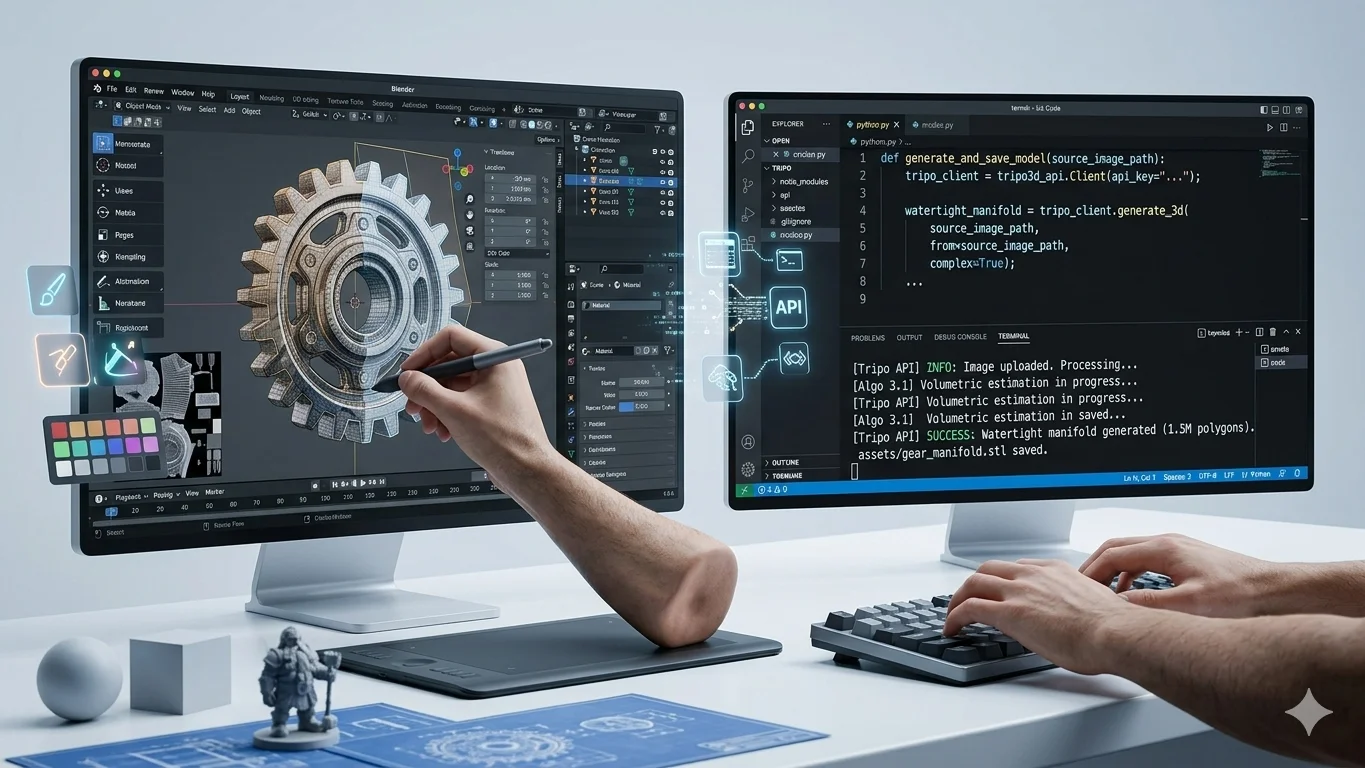
This strict product line distinction ensures that infrastructure scaling remains stable. A game development studio integrating the single image to 3D model tool generating watertight meshes for 3D printing into an automated pipeline requires massive throughput, which the independent API facilitates. Meanwhile, a solitary industrial designer using Tripo Studio to construct prototypes benefits from a localized, user-friendly dashboard. In both environments, the 3D Generative AI delivering the same high-quality, manifold geometry is powered by Algorithm 3.1.
Economics and Commercial Licensing in 2026
The pricing structure for the single image to 3D model tool generating watertight meshes for 3D printing includes specific tiers for different use cases. Understanding the operational costs of a single image to 3D model tool generating watertight meshes for 3D printing is crucial for studio managers and independent creators alike. Tripo AI provides exact allocations to ensure transparent usage: The Free plan provides 300 credits per month. 3D models generated under Tripo's Free plan do not support commercial use. For professional deployment of the single image to 3D model tool generating watertight meshes for 3D printing, the Pro plan is required. The Pro plan ($19.90/month) provides 3,000 credits per month. More importantly, this tier grants the necessary Commercial Rights for users who intend to sell the printed objects or utilize the digital files in commercial media. Utilizing a single image to 3D model tool generating watertight meshes for 3D printing on a Pro tier fundamentally shifts the economics of product development, reducing the cost of acquiring printable assets from hundreds of dollars per manual sculpt to fractions of a cent per generation.
Overcoming Non-Manifold Geometry in Digital Fabrication
Resolving disconnected vertices and floating geometry is seamlessly managed by the single image to 3D model tool generating watertight meshes for 3D printing, mitigating the most common causes of print failure.
Non-manifold geometry represents the most frequent cause of failed print jobs, often occurring when automated systems leave microscopic gaps between polygonal faces. The Tripo AI single image to 3D model tool generating watertight meshes for 3D printing actively scans for and repairs these discrepancies during the initial generation pass. Printers require clear instructions to differentiate the "inside" of an object from the "outside." A single image to 3D model tool generating watertight meshes for 3D printing mathematically enforces this boundary, guaranteeing that the exported USD, FBX, OBJ, STL, GLB, 3MF files translate cleanly into physical toolpaths.
When dealing with complex character sculpts or mechanical gears, intersecting geometry can confuse a slicing engine into leaving hollow voids where solid plastic should exist. A premium single image to 3D model tool generating watertight meshes for 3D printing performs automatic Boolean union operations on overlapping parts. The result is a continuous outer shell, proving that the single image to 3D model tool generating watertight meshes for 3D printing acts as both a generation engine and a quality-control auditor simultaneously.
Optimizing Retopology and UV Mapping Standards
By automating complex topological adjustments, the single image to 3D model tool generating watertight meshes for 3D printing ensures high-quality execution and visual fidelity for multi-color physical fabrication.
Standard asset creation often involves painstaking manual retopology to align edge loops, a process that historically consumed hours of engineering time. The single image to 3D model tool generating watertight meshes for 3D printing provided by Tripo natively generates quad-dominant topology where appropriate, which is highly beneficial for subsequent modifications. While 3D printing primarily relies on triangulated meshes, generating a clean underlying topology ensures that surface curves print smoothly without faceting. The single image to 3D model tool generating watertight meshes for 3D printing excels at maintaining organic curves and sharp mechanical edges without the need for secondary CAD cleanup.
Furthermore, as multi-color 3D printing technologies continue to mature in 2026, the need for accurate UV mapping has surged. A single image to 3D model tool generating watertight meshes for 3D printing not only constructs the physical shape but also aligns the texture maps securely with the geometry using AI Texture generation. This allows full-color sandstone or multi-extrusion FDM printers to precisely map the generated colors onto the physical object. Ultimately, the 3D Format Conversion and generation pipelines bridge the gap between digital vision and tangible reality, equipping designers with advanced speed and unwavering reliability.