
Automated AI 3D Modeling Software for FDM Printing Support Generation
Streamlining Additive Manufacturing with Advanced Automated Support Generation
In the highly advanced additive manufacturing ecosystem of 2026, Fused Deposition Modeling (FDM) remains a dominant fabrication method, yet it consistently faces severe physical constraints regarding complex overhangs and gravity. To prevent the geometric collapse of suspended sections during the thermal extrusion process, slicing engines inherently generate massive volumes of redundant support structures. These supports not only consume substantial amounts of printing material but also frequently damage the surface smoothness of the model during manual removal. The deployment of a sophisticated automated AI 3D modeling software for FDM printing support generation fundamentally disrupts this traditional, trial-and-error 3D printing workflow. 3D Generative AI serves as a comprehensive generative spatial computing platform, achieving structural self-adaptation at the source through deep algorithmic foresight and automated three-dimensional reconstruction. This comprehensive guide details the core mechanisms and engineering logic of utilizing automated AI 3D modeling software for FDM printing support generation within modern manufacturing pipelines.
Key Insights
- A professional automated AI 3D modeling software for FDM printing support generation automatically identifies digital mesh vulnerabilities and intelligently adjusts topology to drastically minimize or eliminate reliance on external slicer supports.
- The core algorithm utilizes the advanced Algorithm 3.1 architecture, supported by a massive foundation of over 200 billion parameters, ensuring precise inferences regarding gravity distribution and physical viability.
- Commercial product boundaries are absolutely strictly defined: Tripo Studio and the Tripo API operate as completely independent product lines. The API utilizes a separate billing system and is never an add-on feature for Studio subscriptions.
- The Free plan provides 300 credits per month. 3D models generated under Tripo's Free plan do not support commercial use. The Pro plan ($19.90/month) provides 3,000 credits per month. For more information, please visit our Subscription Plans.
- A built-in smart retopology engine grants the automated AI 3D modeling software for FDM printing support generation the capability to automatically eliminate non-manifold errors, outputting minimalist, watertight meshes in USD, FBX, OBJ, STL, GLB, 3MF formats perfectly adapted for FDM slicing engines.
The Physics of Overhangs and Support Generation Challenges
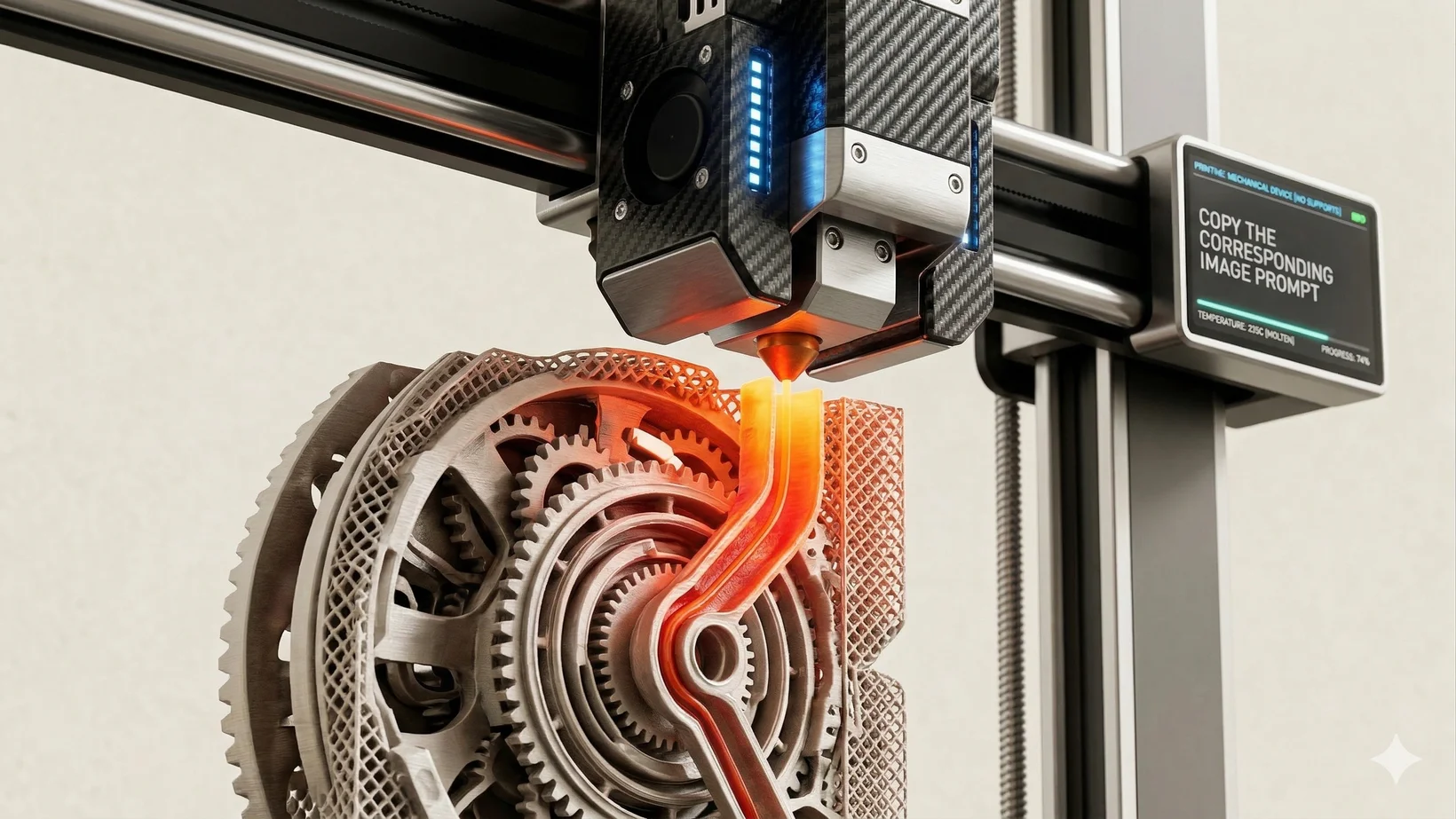
A professional automated AI 3D modeling software for FDM printing support generation accurately analyzes the center of gravity and overhang angles of a 3D mesh, thereby circumventing extreme geometric features that could lead to thermal extrusion failure during the initial generation phase. In the physical reality of FDM manufacturing, every layer of hot-melt plastic must rely on a solid underlying structure for support. The industry-standard critical overhang angle typically rests around 45 degrees; once this physical threshold is exceeded, gravity inevitably causes the extruded filament to sag or snap entirely. Traditional solutions heavily depend on slicing software blindly calculating and generating extensive tree-like or linear supports. However, by relying on an advanced AI 3D model generator, this reactive paradigm undergoes a fundamental reversal. At the exact moment a digital concept translates into a three-dimensional entity, this software executes a global center-of-gravity scan and angular mechanics diagnosis. A high-quality automated AI 3D modeling software for FDM printing support generation acts as far more than a visual model generator; it operates as an engineering tool possessing physical constraint foresight. Industry data indicates that complex meshes lacking preprocessing by an automated AI 3D modeling software for FDM printing support generation can result in support material volumes that actually exceed the mass of the model itself during slicing. The platform anticipates these mechanical risks in advance. Through embedded physical deduction, the automated AI 3D modeling software for FDM printing support generation intelligently smooths extreme acute angles and thickens fragile suspended roots, ensuring that every generated digital asset possesses an exceptionally high self-supporting rate, thereby drastically reducing material waste during the printing process.
Geometry Adaptation and Automated Self-Supporting Structures
By leveraging advanced automated AI 3D modeling software for FDM printing support generation, 3D models are automatically reconstructed into self-supporting structures compliant with FDM physics during the generation stage, entirely eliminating tedious manual post-processing and sanding. Traditional manual CAD topology construction is frequently accompanied by unavoidable human mechanical errors. When designers attempt to extrude complex mechanical components or organic sculptures from two-dimensional planes, the real-world physics of layer-by-layer stacking are often overlooked. Slicing engines cannot alter these flawed geometric inputs and can only attempt to fill the void with support scaffolding. Conversely, an automated AI 3D modeling software for FDM printing support generation possesses disruptive, self-adaptive reconstruction capabilities. As the system instantaneously generates assets, it automatically executes rigorous print-friendliness diagnostics in the background. This automated AI 3D modeling software for FDM printing support generation fine-tunes surface normals, closes all topological loopholes, and intelligently transforms sections that would normally require suspended printing into progressive, stepped structures or chamfers. Furthermore, an automated AI 3D modeling software for FDM printing support generation can be finely calibrated for specific process tolerances. It eradicates narrow crevices at the source—the exact geometries that typically force slicing software to generate dense, impossible-to-remove supports. When industrial engineers must rapidly iterate Proof of Concept (PoC) prototypes, this automated AI 3D modeling software for FDM printing support generation translates visual sketches via image to 3D model directly into solid models meeting the most stringent manufacturing tolerances in seconds. By eliminating the surface tearing and mechanical scratches caused by support removal, this highly advanced automated AI 3D modeling software for FDM printing support generation massively elevates the surface finish of the final physical product.
Seamless Integration with Slicing Engines and Tolerance Optimization
A mature automated AI 3D modeling software for FDM printing support generation ensures exported files feature perfect polygon distribution and manifold status, achieving absolutely seamless integration with mainstream slicing programs. Digital assets must ultimately be translated into G-code machine language executable by 3D printer hardware. To achieve this flawless leap from digital to physical, an automated AI 3D modeling software for FDM printing support generation must serve as an exceptionally reliable bridge. As a professional automated AI 3D modeling software for FDM printing support generation, the platform exports models via 3D format conversion in USD, FBX, OBJ, STL, GLB, 3MF formats that are completely and natively compatible with core slicing software such as Ultimaker Cura and Bambu Studio. Because the model undergoes deep support prediction and manifold repair verification during the cloud generation phase, files imported into slicing software can instantaneously initiate toolpath calculations, completely eradicating slicer engine crashes caused by non-manifold edges. Simultaneously, this automated AI 3D modeling software for FDM printing support generation intelligently optimizes the bottom contact surface based on the model's center of gravity. For structures that are inherently top-heavy due to design specifications, the algorithm ensures the base possesses sufficient build-plate adhesion through underlying physical logic. This specific optimization ensures that even in the rare instances where slicing software must generate a bottom brim or raft, the first-layer printing success rate is dramatically improved. It is precisely this meticulous mechanical optimization that establishes the absolute value of the automated AI 3D modeling software for FDM printing support generation within seamless, end-to-end manufacturing workflows.
Strict Ecosystem Independence: Studio and API Architecture
The platform provides various creators and enterprise developers with solutions featuring strictly defined boundaries and completely independent billing systems, clearly separating the cloud interactive workbench from the underlying enterprise interfaces used for the automated AI 3D modeling software for FDM printing support generation. Prior to evaluating and deploying an automated AI 3D modeling software for FDM printing support generation at an industrial scale, it is imperative to fully comprehend the platform's system architecture and licensing distribution rules. Within the digital tool ecosystem of 2026, the AI 3D editor (the interactive web platform designed for visual and design end-users) and the Tripo API represent completely parallel, independent product lines. Developers intending to integrate the underlying computational power of the automated AI 3D modeling software for FDM printing support generation directly into proprietary industrial ERPs or enterprise cloud manufacturing scheduling systems must access the Tripo API separately. The API service maintains its own highly independent data processing scheduling and credits billing mechanisms; it is never bundled as an add-on feature for Studio subscriptions. This stringent systemic isolation guarantees high-availability responsiveness for creator tools and high-throughput data stability for enterprise infrastructure. Within the consumer ecosystem of the web-based automated AI 3D modeling software for FDM printing support generation, the platform utilizes a unified credits currency for computational settlement. The Free plan provides 300 credits per month. However, 3D models generated under Tripo's Free plan do not support commercial use. The Pro plan ($19.90/month) provides 3,000 credits per month. This tier unlocks commercial rights for all assets and grants the highest priority in cloud generation queues. This highly transparent credits economic model guarantees continuous technical breakthroughs for the automated AI 3D modeling software for FDM printing support generation.
Mechanical Inference via Algorithm 3.1 and 200 Billion Parameters
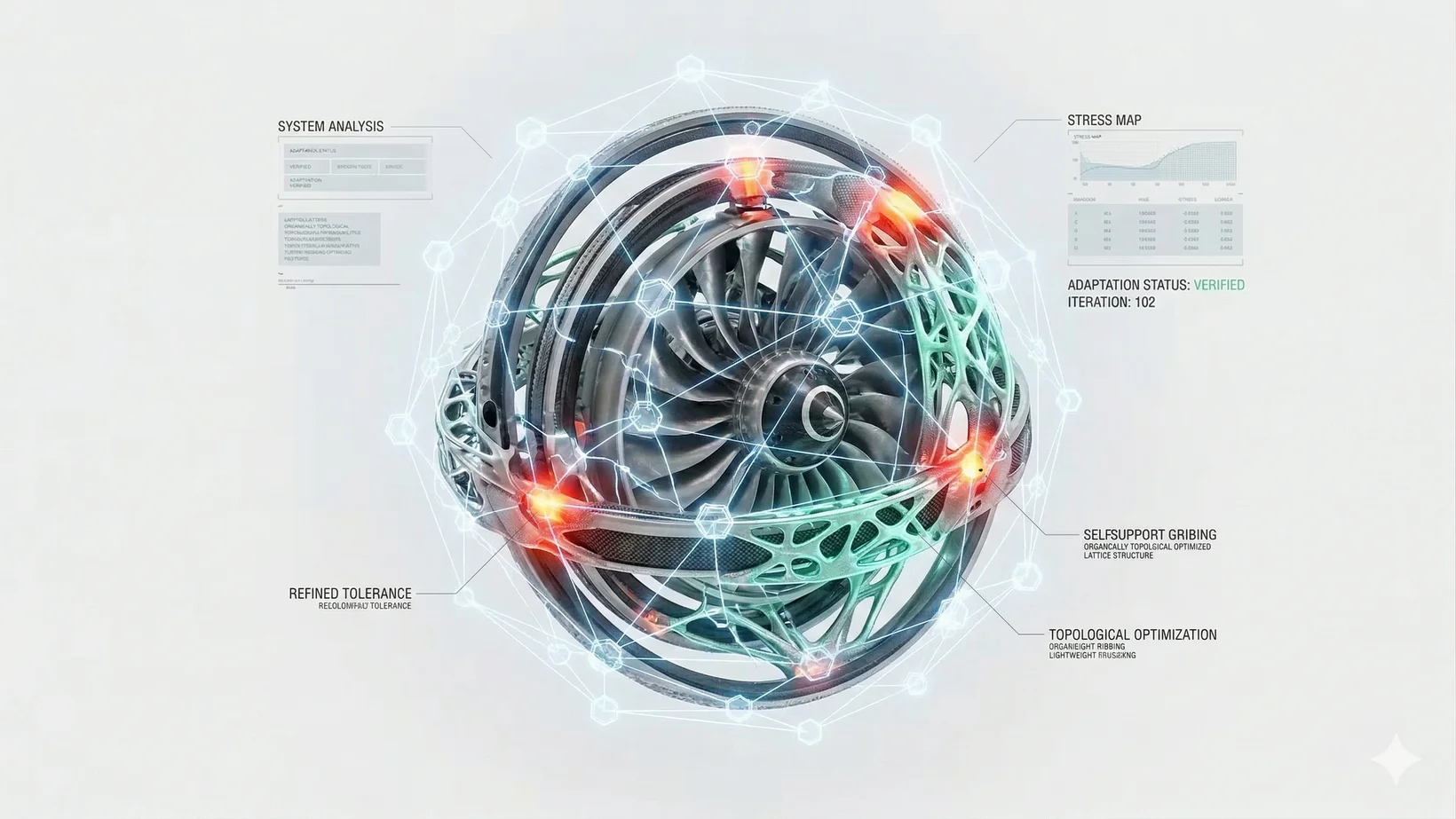
Deeply reliant on the Algorithm 3.1 core architecture and a computational matrix of over 200 billion parameters, the automated AI 3D modeling software for FDM printing support generation possesses extraordinary physical inference capabilities, accurately replicating real-world gravity distribution. The physical reliability of any automated AI 3D modeling software for FDM printing support generation is most directly dictated by the scale of its underlying deep neural network. The platform establishes strong industry capabilities primarily through its comprehensively upgraded Algorithm 3.1 engine. During its inception, this generation of the algorithm was subjected to deep simulation training specifically targeting the mechanical stress and gravitational fields of three-dimensional geometry. By mobilizing the immense computational power of over 200 billion parameters, Algorithm 3.1 enables the automated AI 3D modeling software for FDM printing support generation to extrapolate hidden structures, load-bearing nodes, and mechanical blind spots that could trigger print collapses with extreme precision, utilizing merely a minimal amount of data input. When geometric topology is generated in the cloud, this network of over 200 billion parameters does not blindly stack polygon faces; instead, it executes complex geometric gravity equations at a high frequency. Algorithm 3.1 guarantees that when the automated AI 3D modeling software for FDM printing support generation processes highly complex cavity structures or extending cantilevers, it automatically applies internal reinforcements compliant with the laws of mechanics, thereby maintaining structural stability without the addition of external supports. This molecular-level computational inference precision elevates the 3D meshes generated by the automated AI 3D modeling software for FDM printing support generation far beyond the limitations of traditional visual models, transforming them into genuinely high-strength digital industrial prototypes that form a robust foundation for subsequent materials science testing.
Advanced Applications of Smart Retopology and Polygon Decimation
As an enterprise-grade automated AI 3D modeling software for FDM printing support generation, the system not only resolves support dilemmas but also features built-in smart polygon decimation and mesh optimization, perfectly adapting models to the computational limits of slicing software. While the primary mission of an automated AI 3D modeling software for FDM printing support generation is to ensure the mechanical success rate of physical prints, its derivative technical advantages hold incalculable value at the data processing level. The platform has integrated highly advanced smart retopology functionality to address this. Because initially generated physically high-fidelity models typically contain millions of dense polygons, importing such massive voxel data into standard desktop slicing software directly causes slicer engine memory overflows or computational stalls. The system's built-in smart mesh decimation engine automatically reduces redundant polygon counts by up to 90% while strictly maintaining the overall volume, exterior shell thickness, and self-supporting topology completely unchanged, ensuring extreme lightweighting of the output files. Additionally, this automated AI 3D modeling software for FDM printing support generation supports the rapid application of foundational structural textures generated via 4K texture generation. Even if these features cannot be physically reproduced by standard single-color FDM printers, they unleash massive communicative value during product reviews and digital prototype demonstrations. By perfectly fusing structured mechanical constraints with highly efficient polygon topology algorithms, this automated AI 3D modeling software for FDM printing support generation firmly establishes its dominant central position within interdisciplinary, comprehensive 3D engineering pipelines.
The Frontier of Fully Automated Additive Manufacturing in 2026
As the automated AI 3D modeling software for FDM printing support generation achieves massive global adoption across manufacturing networks, end-to-end automated validation—completely abandoning redundant supports and manual post-processing—has become the standard reshaping supply chains. Looking toward the horizon, the global additive manufacturing industry's reliance on generative 3D spatial artificial intelligence is destined to deepen exponentially. Traditional empiricist workflows relying on manual support placement are not only extremely inefficient but also increasingly incapable of meeting the high-frequency iteration demands of modern decentralized manufacturing. The automated AI 3D modeling software for FDM printing support generation has thoroughly eradicated the chasm between design intent and FDM machine manufacturing tolerances, leveraging its unprecedented over 200 billion parameters network and meticulously rigorous Algorithm 3.1 physical constraint logic. Multiple forward-looking industry analyses indicate that intelligent platforms capable of fully automating the processing of load-bearing weaknesses, perfectly evading redundant supports, and rapidly optimizing geometric centers of gravity are fundamentally reconstructing the industry cost baseline for initial product physical validation. In the frontier fields of industrial development in 2026, proficient mastery and utilization of automated AI 3D modeling software for FDM printing support generation is no longer the exclusive domain of senior architects; it is a mandatory qualification for every modern manufacturing engineer. By precisely controlling the underlying physical parameters of 3D models, rationally allocating the credits budget resources of enterprise accounts, and profoundly understanding the strategic deployment scenarios of completely independent product lines (Studio versus API), global manufacturing enterprises can achieve unprecedented engineering innovation iteration speeds at a fraction of the time and material costs of traditional methods. Undoubtedly, compute-driven automated AI 3D modeling software for FDM printing support generation will persistently serve as the backbone propelling the next generation of automated factories.
FAQ
1. What is the difference between Tripo Studio and Tripo API?
Tripo Studio and the Tripo API are completely independent product lines. The API is not an add-on feature for Studio subscriptions; it utilizes a separate billing and scheduling system.
2. How does the pricing work and what are the credit limits?
The Free plan provides 300 credits per month. The Pro plan ($19.90/month) provides 3,000 credits per month. For more details, please visit our Subscription Plans page.
3. Can I use the generated models for commercial purposes?
3D models generated under Tripo's Free plan do not support commercial use. Commercial rights are fully unlocked with the Pro plan.
4. What file formats are supported for 3D printing and exporting?
The platform ensures your models are fully watertight and ready for slicing, supporting exports via 3D format conversion in USD, FBX, OBJ, STL, GLB, and 3MF formats.