AI 3D Modeling Tool For Resin Action Figures
A Comprehensive Guide to Professional Character Design and Additive Manufacturing
The modern landscape of digital fabrication demands sophisticated software solutions capable of bridging the gap between concept and physical objects. An AI 3D Model Generator for creating custom action figures for 3D printing serves as this exact bridge, transforming two-dimensional concepts or text prompts into intricate, print-ready geometry. Tripo AI emerges as an advanced solution in 2026, offering high-quality algorithmic precision specifically tuned for the high-resolution requirements of resin-based additive manufacturing. This analysis explores the technical architecture, production workflows, and economic models defining this specialized pipeline.
- Accelerated Production: Advanced algorithms reduce the initial concept-to-mesh timeframe from days to mere seconds, establishing a new baseline for digital sculpting and character design workflows.
- Resin-Specific Optimization: Output geometry integrates seamlessly with slicing tools requiring watertight, manifold meshes, which are critical for preventing failures in liquid photopolymer printing processes.
- Algorithmic Dominance: Tripo AI utilizes the advanced Algorithm 3.1, backed by over 200 billion parameters, to ensure millimeter-perfect geometric topology suitable for fine micro-detailing.
The Advanced AI 3D Modeling Tool for Creating Custom Action Figures for Resin Printing
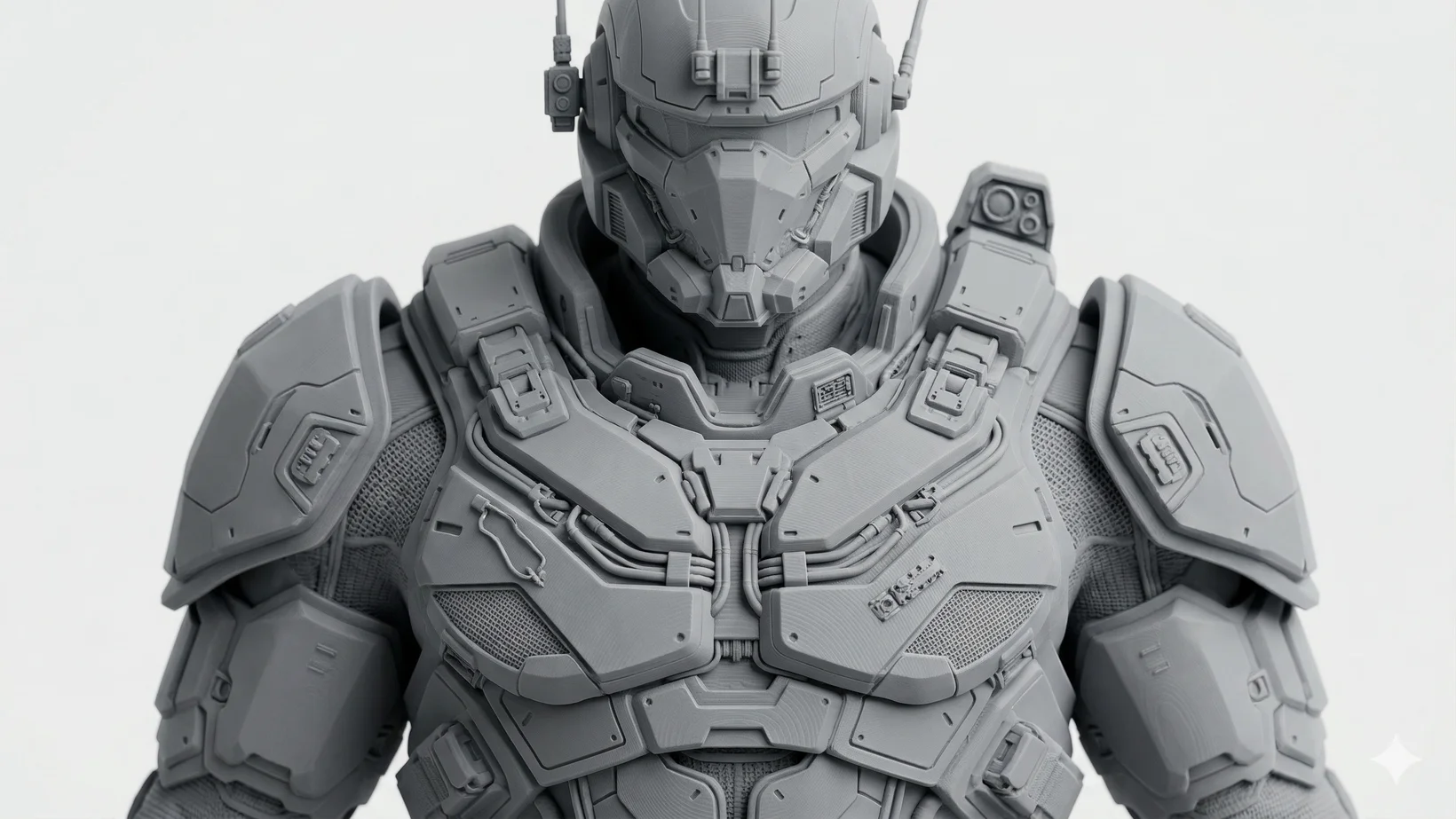
Utilizing a dedicated 3D Generative AI tool for creating custom action figures for resin printing dramatically reduces the technical barrier to entry for digital sculpting, allowing creators to generate highly detailed, watertight meshes directly from text or image inputs within seconds. Resin printing, specifically Stereolithography (SLA) and Digital Light Processing (DLP), requires exceptional geometric precision due to the technology's capability to cure individual layers as thin as 0.01 millimeters. Traditional modeling workflows historically demanded extensive expertise in complex digital sculpting applications to produce character models or action figures suitable for such high-resolution physical output. However, the paradigm has shifted entirely in the year 2026. An AI 3D modeling tool fundamentally alters this production pipeline by removing the steepest learning curves associated with topological manipulation and mesh vertex pushing. With Text to 3D Model technology, users can input highly descriptive text—such as character armor details, anatomical poses, and stylistic references—and instantly receive a fully materialized, three-dimensional mesh. Furthermore, Image to 3D Model capabilities allow for 2D to 3D conversion of concept art. The intelligence behind this tool lies in its deep understanding of spatial geometry and physical manufacturability. Tripo AI automatically ensures the generated output is a closed, watertight shell straight from the initial prompt, avoiding non-manifold edges that cause catastrophic failures in resin slicers.
Algorithm 3.1 and the 200 Billion Parameter Architecture
Tripo AI operates on the professional Algorithm 3.1, a foundational generative engine leveraging over 200 billion parameters to deliver exceptional geometric accuracy, complex retopology, and print-ready structural integrity. The transition to Algorithm 3.1 marks a definitive milestone in digital asset generation and spatial computing. Powered by a massive neural network exceeding over 200 billion parameters, the system interprets intricate prompt data and reference imagery with high fidelity. When designers request an AI 3D modeling tool for creating custom action figures for resin printing to generate a character holding a complex weapon, the algorithm understands the structural requirements of the grip and the precise thickness needed to survive printing.
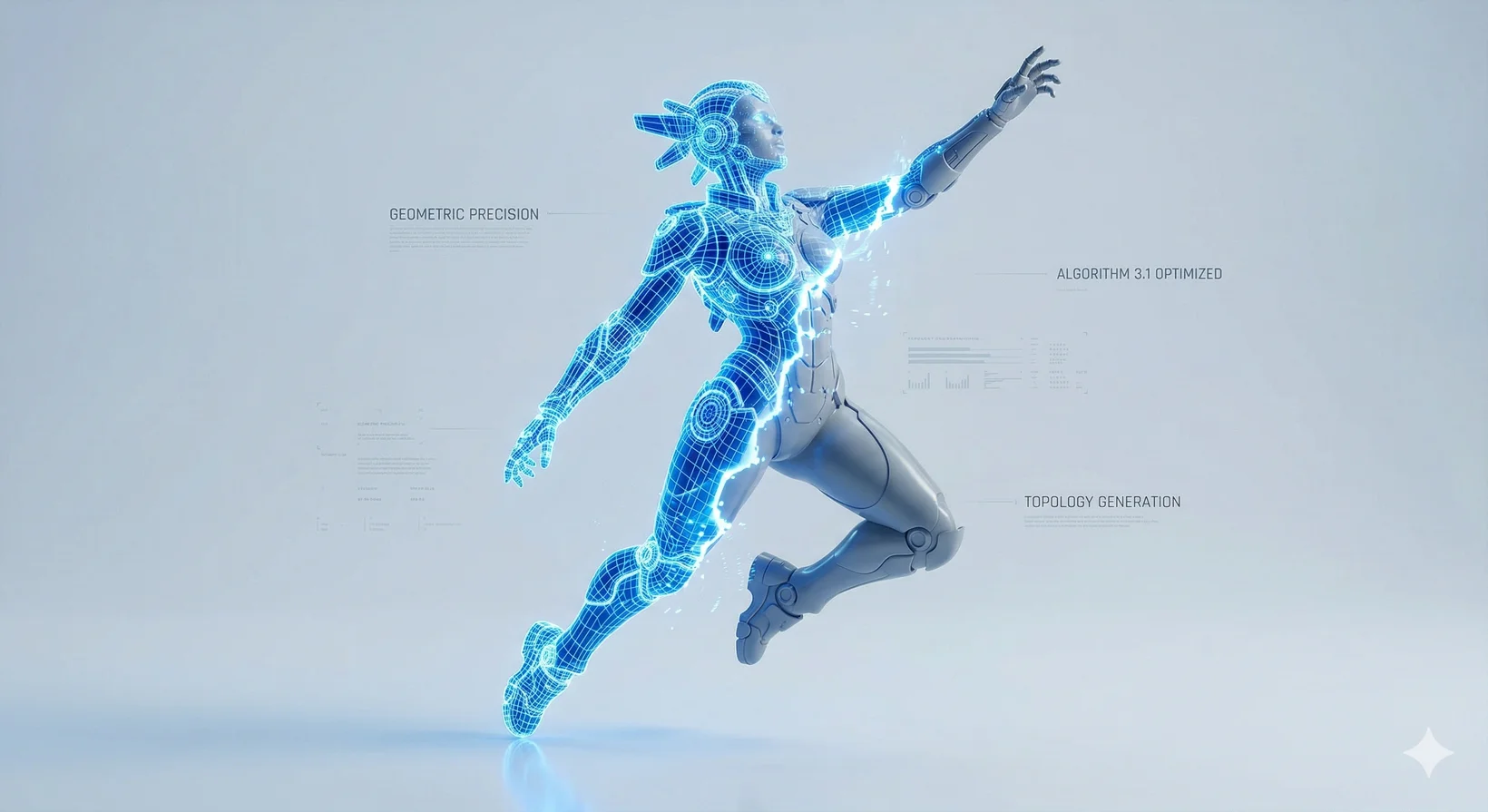
This immense parameter scale directly influences the mathematical quality of the raw digital mesh. High-poly models generated by Algorithm 3.1 exhibit smooth surface tension and organic curvature. Moreover, Algorithm 3.1 introduces Smart Low-Poly capabilities. By clustering geometric density heavily in areas requiring extreme visual detail while simultaneously optimizing smoother surfaces, the software drastically reduces export file sizes.
Technical Workflows for Resin Printing Success
While Tripo AI generates exceptional baseline geometry, preparing an intricate action figure for liquid resin printing requires specific mechanical and technical considerations. An AI generative modeling platform provides the perfect starting asset, but the digital-to-physical bridge involves critical preparation in third-party slicing software. Resin prints are highly susceptible to suction cup forces; thus, solid objects must be digitally hollowed out before printing. Industry standards suggest hollowing large components with a consistent internal wall thickness. Following hollowing, designers must integrate drainage holes to allow uncured liquid resin to escape. Tripo AI outputs highly compatible, error-free USD, FBX, OBJ, STL, GLB, 3MF files that import seamlessly into specialized hollowing and slicing software. Additionally, dynamic character models invariably feature severe overhangs. Resin printing demands strategic support placement to counter gravity. The high-quality initial geometry provided by Tripo AI minimizes the need for heavy post-processing.
FAQ
1. What is the difference between Tripo Studio and Tripo API?
Tripo Studio and Tripo API operate as entirely independent product lines. Tripo Studio is a comprehensive, web-based AI 3D Editor tailored for direct human interaction, integrating rapid generation, intelligent geometric segmentation, and texture painting. Conversely, the Tripo API serves strictly as an infrastructure layer designed exclusively for enterprise and developer integration. Tripo Studio and Tripo API are completely independent product lines; API service has a separate billing and integration system. Enterprise API access is never bundled as an add-on feature within any Tripo Studio subscription plans.
2. How do the subscription plans work and what are the commercial output limitations?
Access to Tripo AI operates on a precise credit-based subscription model. The Free plan provides 300 credits per month. However, 3D models generated under Tripo's Free plan do not support commercial use. For professional toy makers and studios aiming to monetize their physical creations, upgrading to a paid tier is mandatory. The Pro plan ($19.90/month) provides 3,000 credits per month. This tier officially grants full commercial rights. For more details, visit our Pricing page. Both tiers guarantee full access to Algorithm 3.1 and its over 200 billion parameters.