
AI 3D Model Generator for 3D Printing: Optimize Topology
A Comprehensive Guide to Automated Mesh Topology and Professional 3D Printing Workflows
In 2026, the integration of an AI 3D Model Generator for 3D printing automatic mesh topology optimization fundamentally transforms additive manufacturing workflows. Traditional digital drafting often presents steep learning curves, whereas modern platforms streamline geometric generation and ensure physical printability. By leveraging advanced machine learning, professionals can now bypass tedious manual retopology and export production-ready assets instantly.
Utilizing a 3D generative AI for automatic mesh topology optimization drastically reduces the time required to move from digital concepts to physical objects. Algorithm 3.1 operates on over 200 billion parameters to guarantee remarkable dimensional accuracy and structural integrity.
Tripo Studio (the web-based generation tool) and Tripo API are two completely independent product lines. The API service has its own separate billing and access system.
The Free plan provides 300 points per month. 3D models generated under Tripo's Free plan do not support commercial use. The Pro plan ($19.90/month) provides 3,000 points per month. Automated systems instantly resolve non-manifold edges, inverted normals, and insufficient wall thickness.
The Role of an AI 3D Model Generator for 3D Printing
The technology acts as the foundational tool for modern additive manufacturing, rapidly transforming text or image inputs into physical-ready digital assets. In 2026, the landscape of digital fabrication demands precise geometry that additive manufacturing hardware can seamlessly interpret. Historically, crafting assets meant spending hours in complex computer-aided design environments. Today, deploying an online 3D studio allows designers to input simple textual prompts or two-dimensional images and receive a fully formed object within seconds. Tripo AI leads this paradigm shift by ensuring that generated assets are not merely visual representations, but robust files prepared for slicing software.
Additive manufacturing requires watertight, manifold meshes without floating vertices or intersecting faces. The automated generation process directly addresses these constraints, eliminating the need for extensive manual repairs in secondary software. Whether creating functional mechanical parts using Fused Deposition Modeling or intricate organic sculptures utilizing Stereolithography, the system adapts the polygon count and surface details to match specific hardware requirements. This ensures high fidelity and smooth extrusion during the physical build phase. The platform accommodates both Text to 3D Model generation, requiring clear descriptive prompts, and Image to 3D Model generation, which analyzes reference photos to construct accurate representations. By integrating these capabilities, the workflow shifts from tedious technical drafting to rapid, creative iteration.
Understanding Automatic Mesh Topology Optimization
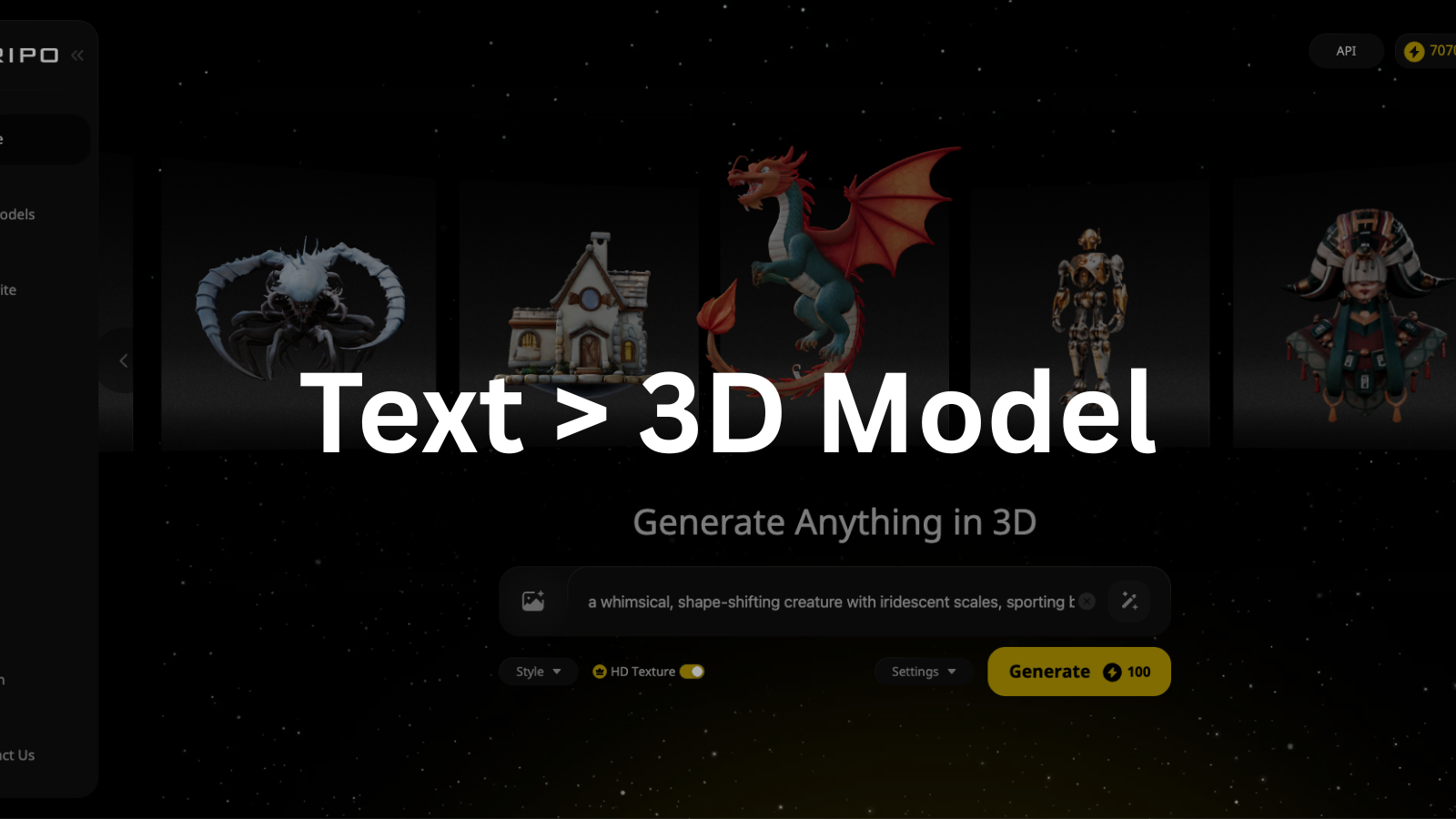
Applying an AI 3D workspace ensures that generated assets feature watertight, manifold geometry with optimized polygon counts, preventing slicing failures and reducing material waste. Mesh integrity represents the most critical factor in successful fabrication. Artificial intelligence excels at intelligently restructuring the polygon network of a digital object. When an asset contains non-manifold edges—where surfaces fail to connect properly—or inverted normals facing the wrong direction, slicing software often produces fatal errors resulting in failed prints. Tripo incorporates built-in retopology algorithms that evaluate the entire structural framework, automatically repairing gaps and recalculating faces to establish a continuous external boundary.
Furthermore, the software simplifies overly dense regions through smart low-poly generation while preserving essential details and silhouettes. This optimization significantly reduces file sizes and slicing times without sacrificing the visual quality of the final object. By automating these highly technical refinements, creators avoid the frustration of failed builds, misaligned layers, and excessive support material, resulting in a cleaner, stronger, and more resource-efficient physical product. The intelligent optimization also targets internal geometries, allowing users to safely hollow out models and include drainage holes for resin printing, thereby conserving expensive materials and reducing overall print weight.
Tripo AI Algorithm 3.1: Processing Over 200 Billion Parameters
Powered by Algorithm 3.1 and over 200 billion parameters, the system delivers exceptional speed, creating highly detailed assets in mere seconds. The technological engine driving the platform represents a significant advancement in machine learning capabilities. This vast neural network grants the generative AI the ability to understand complex spatial relationships, material properties, and physical physics required for real-world fabrication.
The precision afforded by over 200 billion parameters ensures that every generated asset adheres to strict geometric rules, accurately translating textual nuances into solid objects. This system can output a standard conceptual model in merely twenty seconds. Additionally, the workspace includes advanced features like Intelligent Segmentation, which intelligently divides complex models into distinct, editable parts. Imagine generating a humanoid figure and having the AI automatically segment the head, torso, and limbs for individual refinement. The platform also boasts the Magic Brush, which applies AI Texturing directly to the surfaces, allowing localized texture corrections with a single click. Such computational scale guarantees that whether generating organic forms or mechanical components, the resulting topology is precisely calculated for immediate export and physical realization.
Resolving Wall Thickness and Printability Standards
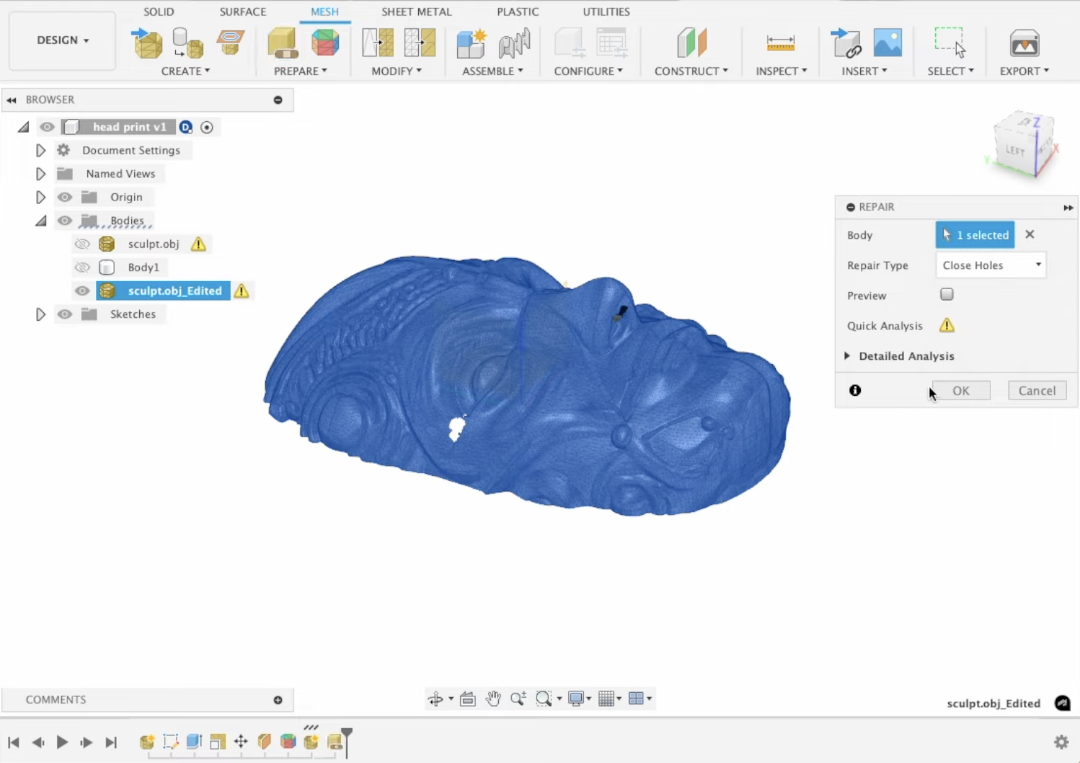
Advanced automated generation resolves structural flaws like inverted normals, isolated islands, and inadequate wall thickness before the slicing phase. Beyond surface aesthetics, physical objects must withstand the stresses of the printing process and daily handling. A primary challenge in digital design involves maintaining uniform and adequate wall thickness. If walls are too thin, the printer nozzle cannot extrude sufficient material, leading to brittle or incomplete sections. The generative technology intelligently evaluates structural demands, ensuring that walls meet the typical one to two millimeter requirement for standard plastics like PLA or ABS.
Additionally, the software accounts for overhang angles. Features extending beyond a forty-five-degree angle generally require temporary support structures. The optimization process minimizes these severe overhangs wherever possible, creating self-supporting geometries that save filament and reduce post-processing labor. By adhering to these stringent manufacturability standards, the system guarantees that exported USD, FBX, OBJ, STL, GLB, 3MF files seamlessly transition into slicers. Users can also utilize a 3D File Converter if specialized formats are needed. Once imported into the slicer, users only need to define basic parameters such as layer height, infill density, and print speed, relying on the pre-optimized mesh to produce stable toolpaths and ultimately high-quality physical pieces.
Ecosystem Separation: Tripo Studio and Tripo API
As organizations scale their use of artificial intelligence for digital fabrication, understanding the available product architecture becomes crucial. Tripo offers distinct solutions tailored to different operational requirements. Tripo Studio functions as a comprehensive, web-based workspace designed for direct user interaction. It features an intuitive interface equipped with interactive tools like the Uni-Rig system, which automatically binds an Automated Skeleton to diverse characters in seconds, and the Magic Brush for seamless texturing.
Conversely, the Tripo API serves developers, application builders, and enterprise systems requiring automated, backend integration. Tripo Studio (the web-based generation tool) and Tripo API are two completely independent product lines. The API service has its own separate billing and access system. It is never bundled as an add-on feature within Studio subscriptions. For instance, purchasing an advanced Studio tier does not grant access to enterprise API endpoints. This strict separation ensures that both individual creators seeking a visual interface and large-scale enterprise platforms requiring headless generation receive dedicated, optimized environments suited precisely to their workflow and volume demands.
Pricing Tiers, Credits, and Commercial Licensing
Financial accessibility and licensing permissions define how users can leverage generated assets in the real world. Tripo provides a structured pricing model to accommodate varying levels of demand, ranging from casual hobbyists to professional design studios. The Free plan provides 300 points per month, enabling beginners to explore the technology without any financial commitment. This entry-level tier allows for rapid experimentation and conceptual prototyping. However, 3D models generated under Tripo's Free plan do not support commercial use.
For professionals, freelancers, and businesses intending to monetize their creations, sell physical prints, or utilize the models in commercial media, upgrading to the Pro plan is required. The Pro plan ($19.90/month) provides 3,000 points per month and explicitly includes full Commercial Rights. This clear delineation in pricing and licensing ensures that users have the appropriate legal backing and generation capacity to safely integrate the AI outputs into commercial product lines, digital storefronts, or professional engineering environments, maintaining strict compliance with the platform's terms of service.
Advanced Post-Processing and Output Handling
After exporting optimized digital assets, models undergo precise slicing and subsequent post-processing to achieve a professional, polished physical finish. While the digital generation and topology refinement occur within seconds, the physical realization of the object demands careful execution. Once the generative engine exports a pristine USD, FBX, OBJ, STL, GLB, or 3MF file, slicing software translates the geometry into G-code. Setting the correct layer height, print speed, and cooling parameters dictates the surface quality.
After the additive manufacturing hardware completes the physical build, post-processing techniques elevate the final appearance. Support structures, meticulously minimized during the AI generation phase, must be carefully removed using flush cutters or dissolved in specific solutions. Creators often employ sanding protocols, starting with coarse grits and progressing to fine wet sanding, to eliminate any residual layer lines. For specific materials like ABS, vapor smoothing with acetone produces a glass-like exterior. Additionally, applying filler primer and acrylic paints adds vibrant color to standard plastic resins. Because the initial digital asset features optimal manifold geometry and optimized wall thickness, these physical finishing steps proceed smoothly, free from structural failures or internal collapses that typically plague poorly designed meshes.
FAQ
1. What are some basic concepts required before starting 3D printing?
First, learn what the printer can do, the materials available, and the print quality and size limits. Starting with easy designs like the "3DBenchy" helps test printer settings and find what works optimally.
2. How can 3D printing transform creative ideas into reality?
3D printing turns digital ideas into real objects. By using design software for modeling and slicing software to generate printer instructions, creators can create anything new or tweak existing designs.
3. What are some popular 3D printing ideas that merge practicality with creativity?
Popular ideas include earbud organizers, custom key holders, and unique home vases. They mix functional utility with personal aesthetic style.
4. Can 3D printing be used in home decor, and if so, how?
Yes, for sure. 3D printing allows the creation of custom home items like planters, lighting fixtures, and furniture accents (such as drawer handles or table legs). These items make residential spaces unique.
5. Are there any 3D printed items that can help with organization?
3D printing creates neat organization tools. Think cable holders and headphone hangers for tidy offices. Custom containers and desk organizers save space and improve efficiency.