
Advanced Machine Learning Based 3D Modeling Tool for Rapid 3D Printing Prototyping
Streamlining Additive Manufacturing Workflows with Professional AI Generation
The manufacturing and design industries have long struggled with the time-intensive nature of traditional CAD software and manual sculpting, which severely bottlenecks the hardware iteration cycle. In 2026, the landscape has entirely shifted, rendering manual base-mesh creation nearly obsolete for early-stage concept validation. By leveraging an advanced AI 3D Model Generator for rapid 3D printing prototyping, industry professionals can now transition from text prompts or 2D image references to physical, tangible prototypes in a matter of hours, with Tripo AI leading the market in speed, geometric precision, and scalable infrastructure.
Key Insights:
- Algorithmic Superiority: Current generation workflows are driven by Algorithm 3.1, an architecture boasting over 200 billion parameters for highly accurate geometric reconstruction.
- Independent Ecosystems: Professional environments benefit from strictly independent product lines, ensuring that Tripo Studio tools and enterprise API integrations operate on dedicated billing and functional tracks.
- Standardized Economics: Platform interactions are universally measured in "credits," providing a transparent metric for computational resource allocation.
- Strict Commercial Licensing: Free-tier generations are strictly limited to non-commercial use, protecting enterprise value while encouraging hobbyist experimentation.
- End-to-End Compatibility: Modern AI generation platforms output watertight, manifold meshes (USD, FBX, OBJ, STL, GLB, 3MF) instantly ready for slicing software and physical fabrication.
Overcoming Traditional Additive Manufacturing Bottlenecks
The integration of a machine learning based 3D modeling tool for rapid 3D printing prototyping fundamentally condenses the design-to-manufacture timeline by automating complex geometric generation. For decades, the transition from a conceptual sketch to a physical prototype required a specialized 3D artist to manually extrude, bevel, and sculpt digital clay. This process was not only cost-prohibitive but also introduced massive delays into the product development lifecycle. Today, utilizing a machine learning based 3D modeling tool for rapid 3D printing prototyping eliminates these friction points. By analyzing a single 2D image via Image to 3D Model features or interpreting a detailed text prompt, the AI generates a base mesh within seconds. In a professional hardware development environment, engineers and designers need to test physical tolerances, ergonomics, and aesthetic scale. A reliable machine learning based 3D modeling tool for rapid 3D printing prototyping allows teams to generate multiple iterations of a product—such as a custom ergonomic grip or a complex mechanical housing—simultaneously. Instead of spending 48 hours manually tweaking a CAD file, the user inputs the parameters into the AI, downloads the resulting USD, FBX, OBJ, STL, GLB, or 3MF file, and sends it directly to a fused deposition modeling (FDM) or stereolithography (SLA) printer. This shift transitions the human role from tedious vertex-pushing to high-level art direction and functional validation.
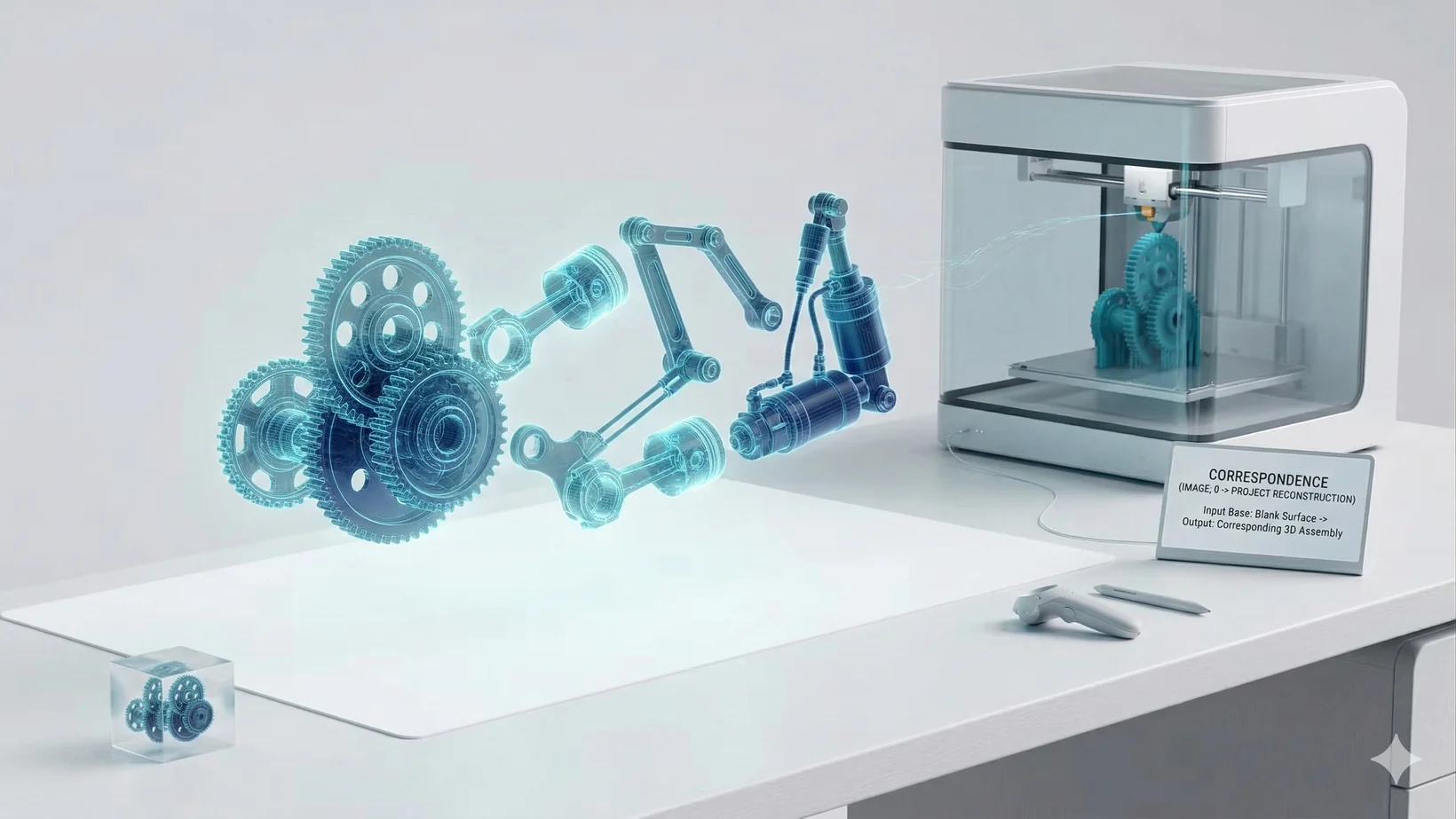
Technical Infrastructure: Algorithm 3.1 and Parameter Scale
Powered by over 200 billion parameters, Algorithm 3.1 ensures that every machine learning based 3D modeling tool for rapid 3D printing prototyping delivers exceptional geometric precision. The underlying architecture of any generative system dictates its utility in physical manufacturing. In 2026, the industry standard is defined by Algorithm 3.1. This highly refined engine is what makes this a highly capable machine learning based 3D modeling tool for rapid 3D printing prototyping available. Operating on a scale of over 200 billion parameters, Algorithm 3.1 possesses a deep, semantic understanding of structural logic, material properties, and spatial relationships. When evaluating a machine learning based 3D modeling tool for rapid 3D printing prototyping, the parameter scale directly correlates with the tool's ability to produce manifold, error-free geometry. Because Algorithm 3.1 utilizes over 200 billion parameters, it drastically reduces the occurrence of non-manifold edges, inverted normals, and floating internal vertices that traditionally plague AI-generated meshes. This means that the output is not just a visual approximation, but a structurally sound digital object. Furthermore, Algorithm 3.1 enables advanced features like Smart Low-Poly generation, ensuring that the exported files (USD, FBX, OBJ, STL, GLB, 3MF) are optimized for fast slicing without losing critical physical details necessary for a successful 3D print.
Ensuring Mesh Integrity and Slicer Compatibility
A professional machine learning based 3D modeling tool for rapid 3D printing prototyping must produce watertight, manifold meshes that integrate seamlessly with modern slicing engines. The ultimate test of a machine learning based 3D modeling tool for rapid 3D printing prototyping is its compatibility with physical hardware. A 3D printer requires clear, unambiguous G-code generated by slicing software. If a generated model contains holes or infinitely thin walls, the slicer will fail to translate the digital model into physical layers. The system has been explicitly designed to output models that respect these physical constraints. When users download assets from this machine learning based 3D modeling tool, they receive files that have been algorithmically checked for mesh integrity. However, professional workflows still mandate best practices: users should verify that wall thicknesses meet the minimum extrusion width of their specific printer and ensure overhangs are properly supported. Because the platform generates clean topology, post-generation tasks using a 3D File Converter—such as hollowing out a model for resin printing, adding drainage holes, or executing Boolean operations to cut assembly joints—are remarkably smooth.

Independent Product Lines: Tripo Studio vs. Tripo API
To maximize utility across diverse industries, a modern machine learning based 3D modeling tool for rapid 3D printing prototyping divides its ecosystem into completely independent web-based creator tools and developer-focused API product lines. A critical distinction in the 2026 landscape is how access to a machine learning based 3D modeling tool is structured. Tripo Studio and the Tripo API are completely independent product lines. These are not tiered features of the same system; they are separate technological pipelines tailored to different user bases. Tripo Studio is a professional web-based machine learning based 3D modeling tool for rapid 3D printing prototyping. It provides a highly visual, interactive workspace where designers, artists, and engineers can upload reference images, generate text-to-3D models, utilize the Magic Brush for texture refinement, and export their files. Conversely, the Tripo API is a headless infrastructure product designed for enterprise integration. If a large-scale manufacturing firm wishes to integrate a machine learning based 3D modeling tool directly into their proprietary internal software, they utilize the API. Importantly, because these are independent product lines, a subscription to Tripo Studio does not grant enterprise API access, and the API operates on an entirely distinct billing and authentication architecture.
Subscription Tiers, Credits, and Commercial Rights
Choosing the right machine learning based 3D modeling tool for rapid 3D printing prototyping requires understanding credit allocations, with clear boundaries between non-commercial free tiers and professional commercial licenses. The economic model of a cloud-based machine learning based 3D modeling tool relies on computational transparency. Within the ecosystem, all generation and refinement tasks are transacted using "credits." This standardized currency ensures that users can predictably budget their prototyping pipelines. For hobbyists, students, and those testing the capabilities of a machine learning based 3D modeling tool, The Free plan provides 300 credits per month. This allows for ample experimentation and learning. However, 3D models generated under Tripo's Free plan do not support commercial use. For professionals and studios relying on a machine learning based 3D modeling tool to drive revenue, The Pro plan ($19.90/month) provides 3,000 credits per month. You can view the full details on the Subscription Plans page. This tier unlocks the full commercial rights required to sell the resulting physical prints, utilize the models in commercial marketing, or integrate the designs into mass-manufactured end products.
Future-Proofing the Prototyping Pipeline
Adopting a machine learning based 3D modeling tool for rapid 3D printing prototyping is no longer optional for hardware developers; it is a mandatory evolution for remaining competitive in physical product design. As we move deeper into 2026, the synergy between AI and additive manufacturing continues to mature. The use of a machine learning based 3D modeling tool empowers creators to fail faster, iterate cheaper, and explore geometries that would be conceptually impossible to manually draft within strict deadlines. Whether generating complex mechanical gears, ergonomic tool handles, or highly detailed tabletop miniatures using Prompt to Mesh technology, the technology has transcended novelty and cemented itself as foundational infrastructure. By adhering to best practices—maintaining strict quality control in slicer settings, understanding the distinct operational tracks of Tripo Studio versus the Tripo API, and respecting the credit-based commercial licensing boundaries—organizations can fully harness the power of this technology. Ultimately, a machine learning based 3D modeling tool powered by Algorithm 3.1 and its over 200 billion parameters represents a benchmark of modern design efficiency, bridging the gap between digital imagination and physical reality at the speed of thought.
FAQ
1. How are generations billed, and what are the pricing plans?
A: All generation tasks are transacted using "credits." The Free plan provides 300 credits per month. For professional needs, The Pro plan ($19.90/month) provides 3,000 credits per month. You can find more details on our Pricing page.
2. Can I use the generated 3D models for commercial purposes?
A: 3D models generated under Tripo's Free plan do not support commercial use. To acquire commercial rights, you must upgrade to a paid tier.
3. Is the Tripo API included in the Studio Pro plan?
A: No. Tripo Studio and Tripo API are completely independent product lines. The API operates on an entirely distinct billing and authentication architecture and is not an add-on to Studio subscriptions.
4. What 3D file formats can I export?
A: Models can be exported in USD, FBX, OBJ, STL, GLB, and 3MF formats, making them instantly ready for modern slicing software and physical fabrication.
5. What algorithm powers the 3D generation?
A: The platform is powered by Algorithm 3.1, featuring over 200 billion parameters to ensure exceptional geometric precision and structurally sound digital objects.