
The Advanced Image to 3D Model Tool for 3D Printing Custom Relief Sculptures
Transforming 2D Images into Print-Ready 3D Topography with Advanced AI
Creating custom relief sculptures for 3D printing historically required advanced digital sculpting skills and hours of meticulous height-map adjustments. Today, the landscape has shifted entirely toward automated, AI-driven asset generation, allowing creators to translate flat 2D images directly into printable topography. Tripo stands at the vanguard of this transition, offering an Image to 3D Model tool that leverages substantial computational power to analyze depth, texture, and shape instantly. By integrating generation, editing, and mesh optimization into a single pipeline, Tripo empowers designers to bypass traditional bottlenecks and deliver production-ready 3D assets at remarkable speeds.
Key Insights
- Advanced AI algorithms utilizing over 200 billion parameters can accurately extract depth data from 2D images, translating them into highly detailed 3D relief structures in under 15 seconds.
- Production-ready features like Smart Low-Poly generation and Intelligent Segmentation ensure that generated meshes are watertight, manifold, and optimized for slicing software.
- The integration of high-fidelity 4K Texture Generation and the Magic Brush tool allows for precise, localized material editing before final export.
- A clear distinction between user-facing web workspaces (AI 3D Editor) and enterprise integrations (Tripo API) provides scalable solutions for both independent hobbyists and large-scale manufacturing workflows.
The Mechanics of Image-to-3D for Relief Sculptures
Transforming a two-dimensional image into a physical relief sculpture relies on advanced neural networks that analyze depth cues, pixel shading, and geometric structures to extrude a flat surface into a proportional 3D mesh.
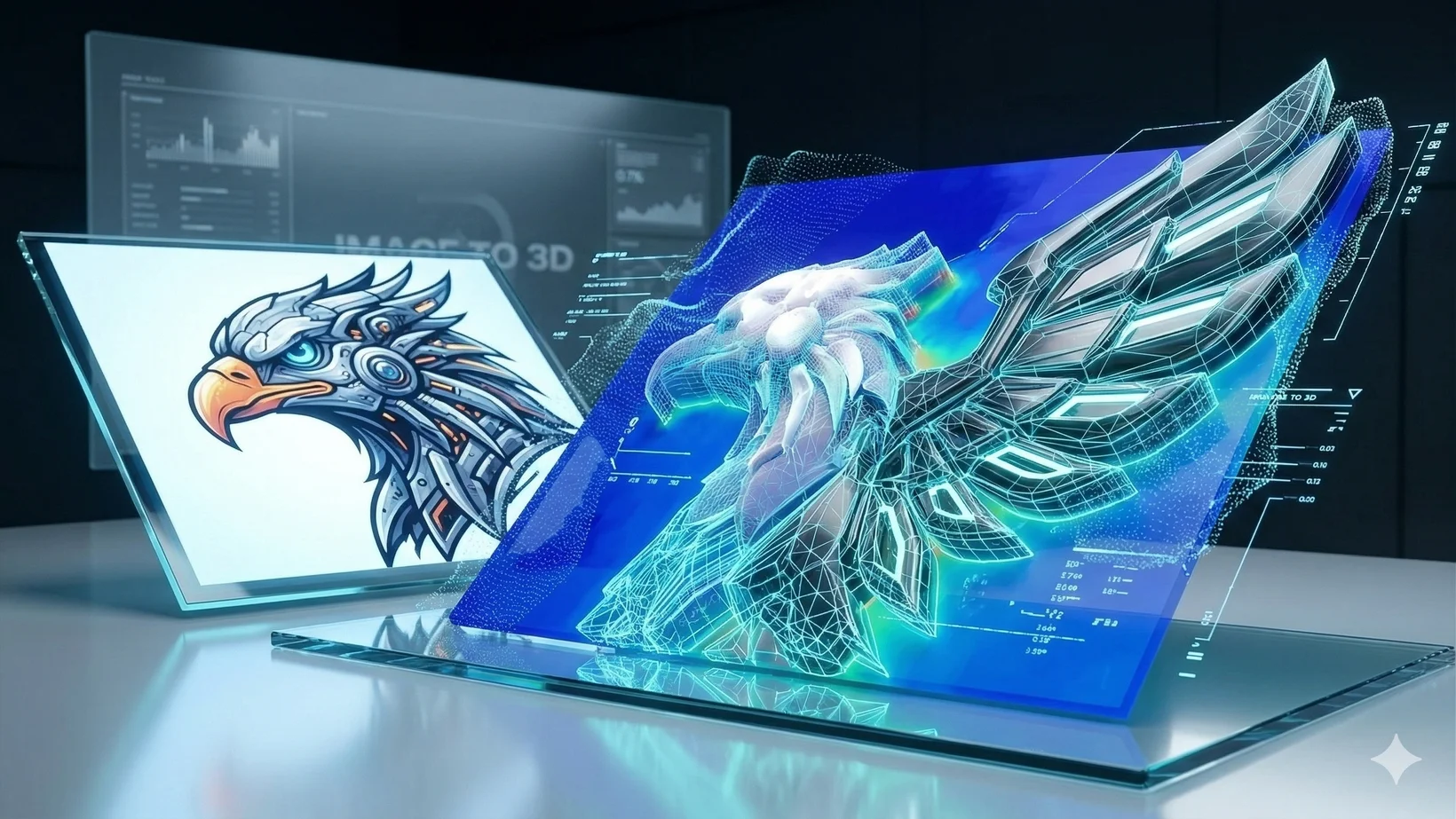
The core technology behind modern 2D to 3D conversion operates by comprehensively analyzing the input image to understand its inherent depth and texture. When tasked with creating custom relief sculptures, the tool must accurately interpret the interplay of light and shadow in the 2D reference to generate a proportional height map. Tripo excels in this arena, powered by Algorithm 3.1 and a substantial architecture of over 200 billion parameters. This immense processing scale allows the system to generate highly accurate point clouds in approximately 10 seconds, followed by a complete geometric mesh in an additional 5 seconds.
For relief sculptures specifically, the geometric precision provided by Tripo ensures that fine details—such as intricate floral patterns, architectural facades, or character portraits—are extruded correctly without losing their recognizable silhouettes. The platform's standalone image generation module further bridges the gap between 2D and 3D workflows, enabling designers to input concept art or reference photos and immediately receive a structurally sound base model. This eliminates the steep learning curve traditionally associated with digital sculpting software, bringing high-fidelity relief generation directly to the browser via the AI 3D Model Generator.
Optimizing the Mesh for 3D Printing
To guarantee a successful 3D print, the AI-generated model must be structurally sound, featuring a watertight manifold mesh, appropriate wall thickness, and optimized polygon counts tailored to the specific printing technology.
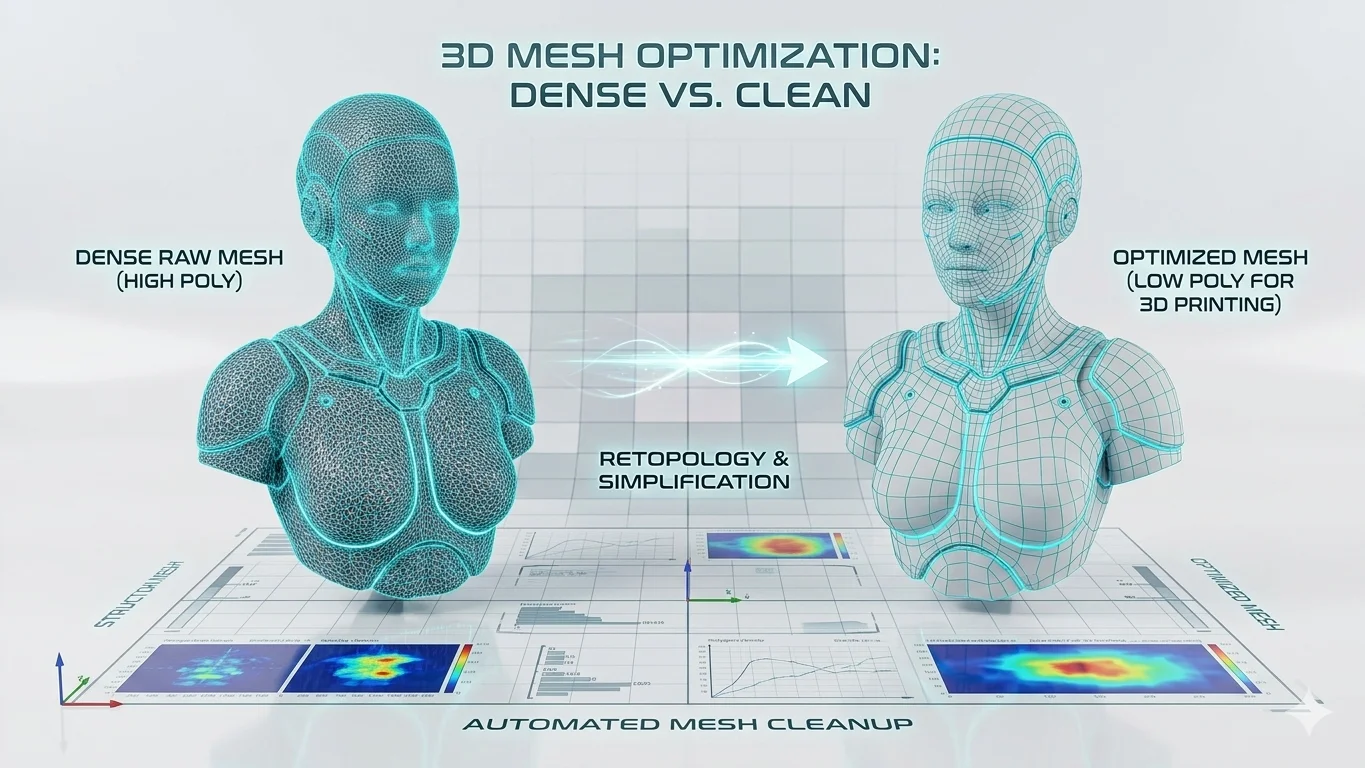
Generating the visual representation of a relief sculpture is only the first half of the manufacturing process; the mesh must also adhere to the strict physical constraints of 3D printing. Common pitfalls in digital fabrication include non-manifold edges (where faces do not connect properly), self-intersecting geometry, and walls that are too thin for the printer's nozzle to extrude. Tripo Studio addresses these technical hurdles directly through its built-in suite of optimization tools. The platform automatically generates watertight geometry, mitigating the need for extensive manual mesh repair in secondary software.
Furthermore, Tripo Studio features Smart Low-Poly generation, a proprietary intelligent retopology algorithm. High-poly models, while visually stunning, can overwhelm slicing software like Ultimaker Cura or PrusaSlicer, leading to extended processing times and potential software crashes. The Smart Low-Poly tool effectively decimates the mesh, reducing polygon count by up to 90% while preserving the crucial silhouettes and intricate details necessary for a relief sculpture. Additionally, Intelligent Segmentation allows users to isolate specific components of the generated mesh, meaning that a complex relief panel can be split, modified, or hollowed out (vital for saving material in resin SLA printing) without disrupting the entire asset.
Texturing, Materials, and Final Export Preparation
Before exporting to a slicer, applying and refining high-definition textures ensures that the relief sculpture maintains its intended aesthetic, while exporting in universal formats guarantees compatibility across all 3D printing hardware.
While many custom relief sculptures are printed in monochromatic filaments or resins and painted post-production, multi-color 3D printing technologies (such as those utilizing MMU attachments or material jetting) require accurate texture maps. Tripo provides an innovative AI Texture generation tool, delivering high-fidelity, Physically Based Rendering (PBR) materials. This ensures that the generated model possesses refined material details, with notable improvements in how metallic or matte surfaces are rendered.
If the initial generation requires localized adjustments, Tripo Studio offers the Magic Brush feature. This AI-driven tool allows creators to lock their preferred viewpoint, select a specific area of the model, and generate a corrected texture patch to paint directly onto the surface. Once the geometry and texturing are finalized, preparing the asset for physical production requires the correct file format. Tripo supports seamless, bulk exporting to universal formats: USD, FBX, OBJ, STL, GLB, 3MF. These files are immediately ready to be imported into slicing software or a 3D Format Conversion tool, where users can configure layer height, infill density, and support structures to finalize the G-code for their specific 3D printer.
Strategic Workflows for Independent Creators and Studios
Selecting the right deployment method depends on production scale; independent designers benefit from the unified, subscription-based web workspace, while enterprise teams require programmatic API access to automate large-scale asset generation.
The infrastructure supporting these AI capabilities is divided into distinct product lines tailored to different industry needs. For individual creators, designers, and small studios, Tripo Studio serves as a comprehensive web platform. Operating on a subscription and credits model, The Free plan provides 300 credits per month. 3D models generated under Tripo's Free plan do not support commercial use. Professionals seeking Subscription Plans and advanced features can utilize the Pro plan. The Pro plan ($19.90/month) provides 3,000 credits per month.
Conversely, large-scale platforms, manufacturing enterprises, and game studios require automated, high-volume generation that integrates directly into their proprietary systems. For this, the Tripo API serves as a completely independent product line. The API provides programmatic access to Tripo's 3D foundation models, allowing developers to embed Prompt to Mesh capabilities directly into mobile apps, web storefronts, or custom workflow systems. Because the API operates on a separate usage-based billing system, it is not an add-on to Tripo Studio subscriptions. This dual-pronged approach ensures that whether a user is crafting a single custom relief sculpture for a home project or an enterprise is generating thousands of automated assets for an e-commerce catalog, the underlying 200 billion-parameter algorithm remains fully accessible and scalable.
FAQ
1. Do models generated on the Free plan support commercial use?
No, 3D models generated under Tripo's Free plan do not support commercial use. For Commercial Rights, you will need to upgrade to a paid subscription.
2. What export formats are available for 3D printing?
Tripo supports exporting generated models to universal formats including USD, FBX, OBJ, STL, GLB, 3MF, ensuring compatibility with all major slicing software.
3. Is the Tripo API included in the Pro plan subscription?
No, the Tripo API is a completely independent product line with a separate usage-based billing system, designed for enterprise integrations and automated high-volume generation.