2Dフロアプランから3Dへのバッチ処理ソフトウェアソリューション
大量の建築ビジュアライゼーションを自動化し、かつてない規模を実現
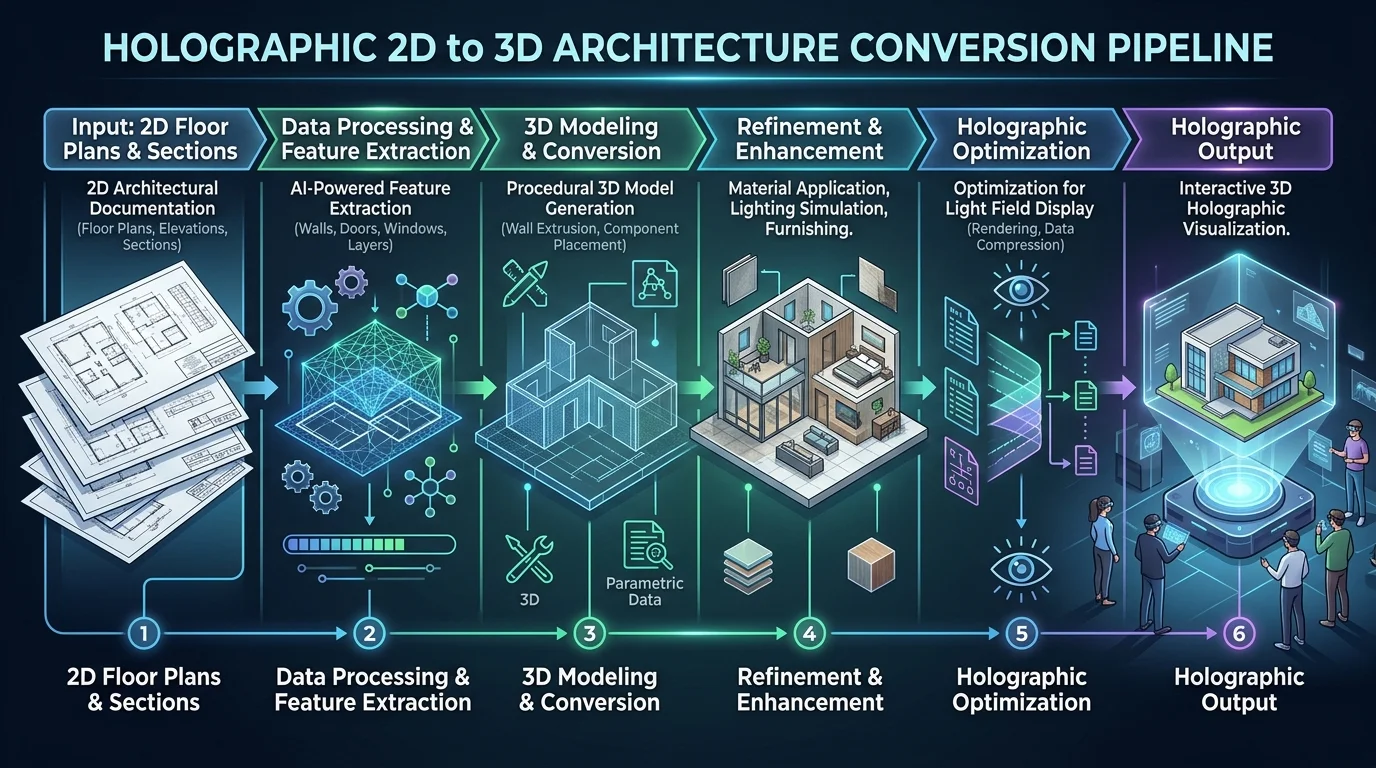
建築事務所や不動産開発業者は、膨大な平面図のアーカイブを手作業で空間モデルに変換する際、深刻なボトルネックに直面していますcite: 72。プロジェクトの規模が拡大するにつれ、従来の製図手法に頼ることは持続不可能な摩擦を生み、バーチャルステージングやプロトタイピングを遅延させていますcite: 73。最新のAI 3Dホームデザインワークフローを統合することで、自動化されたパイプラインは、人間の介入なしに大量のフロアプランデータセットを完全に実現された構造環境へと即座に変換し、この問題を解決しますcite: 74。この体系的なアプローチにより、テクニカルディレクターは反復的な押し出し作業を回避し、高レベルな空間分析やインタラクティブなプレゼンテーションに集中できるようになりますcite: 75。
2026年、手動モデリングから自動化システムへの移行は、建築ビジュアライゼーションを再定義しましたcite: 76。高度な2Dから3Dへの変換プロトコルを利用することで、テクニカルディレクターは何百ものラスタライズまたはベクター化されたフロアプランを同時に取り込むことができますcite: 77。この転換は、建設前の計画を加速させるだけでなく、大規模な住宅開発全体で構造の一貫性を保証しますcite: 78。すべての設計図に対して個別の手動製図を行う必要をなくすことで、組織はプロジェクトの獲得率に合わせてビジュアライゼーション能力を直線的に拡張できますcite: 79。
主要なインサイト
- 自動化された一括変換により、大量の建築ビジュアライゼーションにおける手動製図のボトルネックを解消します。
- エンタープライズパイプラインは、Webベースのエディタではなく、堅牢なAPIエンドポイントに依存して膨大な設計図データセットを処理します。
- 入力設計図の標準化により、すべての出力モデルにおいて一貫したトポロジー生成と正確なスケールを保証します。
- 既存の設計プラットフォームへのシームレスな統合には、業界標準の3Dエクスポート形式への厳格な準拠が必要です。
- プログラムによる品質保証スクリプトにより、生成された構造ジオメトリが厳格な商業基準を満たしていることを保証します。
AI 3Dホームデザインにおけるバッチ処理への移行
不動産および建築プロジェクトの規模拡大には、バッチ処理のための効率的な2Dフロアプランから3Dへのソフトウェアソリューションが不可欠です。一括変換を自動化することで手動モデリングのボトルネックを排除し、チームは何百もの2Dレイアウトを即座に空間的な3D環境へ変換して、迅速なプロトタイピングやバーチャルステージングを実現できます。
迅速な建築ビジュアライゼーションへの需要により、大規模なエージェンシーにとって単一ファイルの処理は時代遅れとなりました。歴史的に、3DアーティストはCAD図面やスキャンされたPDFに基づいて、壁の押し出し、窓枠の切り抜き、構造要素の配置を何時間もかけて手作業で行ってきました。この手動手法には深刻な拡張性の限界がありました。
今日、高スループットの生成システムは、複雑な建築設計図を数秒で解析できます。これらのシステムは、高度なニューラルネットワークを活用して、何百ものファイルにわたる耐力壁、窓の配置、ドア枠を同時に識別します。これらの高スループットシステムを動かすには、膨大な計算リソースが必要です。例えば、Tripo AIは2000億以上のパラメータを持つアルゴリズム3.1を利用し、平面的な建築図面から空間関係を正確に解釈します。統合ソリューションの詳細については、AI 3Dホームデザインハブをご覧ください。
2Dフロアプランから3Dへのバッチ処理ソフトウェアの主要機能
効果的なバッチ処理ソフトウェアは、堅牢なAPI統合、一貫したトポロジー生成、および汎用性の高いエクスポート機能を備えている必要があります。
エンタープライズ自動化と個人向けスタジオツールの違い
建築家が2Dから3Dへの自動化を評価する際、エンタープライズグレードのAPIと消費者向けインターフェースを区別することが重要です。商業的なボリュームを扱うには、何千ものファイルをキューに入れ、処理し、自動スクリプト経由で取得できるプログラムによるアクセスが必要です。
対照的に、オンライン3Dスタジオは、単一のアセットを手動で微調整する必要がある個人アーティスト向けに設計されています。これらのプラットフォームは完全に独立していることに注意が必要です。例えば、エンタープライズ自動化のために構築されたTripo AI APIは、個人アーティスト向けのWebスタジオとは別に動作します。標準のWebインターフェースのサブスクリプションをアップグレードしても、プログラムによるアクセス権は付与されません。
相互運用性とエクスポートパイプライン
相互運用性を維持するために、バッチ処理システムは幅広いファイル拡張子をサポートする必要があります。出力パイプラインでは通常、USD、FBX、OBJ、STL、GLB、3MF形式へのエクスポートが求められます。堅牢な3D形式変換ステップを組み込むことで、生成されたアセットをUnreal Engineなどのプログラムに即座に取り込むことができます。
大規模な2Dから3Dへのワークフローの実装
2Dフロアプランから3Dへのバッチ処理ソフトウェアソリューションを導入するには、チームは入力設計図を標準化し、自動化されたAPIパラメータを設定する必要があります。
AI認識のための2D入力の標準化
自動バッチ処理の信頼性は、入力データの品質に直接比例します。一括変換を開始する前に、技術チームは2D設計図の厳格なガイドラインを確立する必要があります。これには、不要な注釈の削除や、すべての壁線が完全に接続されていることの確認が含まれます。
一括エクスポートと品質保証
生成フェーズが完了すると、ワークフローは自動品質保証へと移行します。スクリプトを展開して、生成された3D構造のバウンディングボックスが元の2Dレイアウトの縮尺寸法と一致していることを検証できます。Tripoエコシステム内では、通貨はクレジットです。標準的な個人アカウントは月間300クレジット(商用利用不可)、プロフェッショナル設定は月間3000クレジットを割り当てます。エンタープライズチームは、費用対効果を確保するためにこれらのクレジット消費を監視する必要があります。
よくある質問(FAQ)
Q: 2Dフロアプランを3Dにバッチ処理する際、スケールの精度を維持するにはどうすればよいですか? A: スケールの精度を維持するには、入力設計図の厳格な前処理が必要です。技術チームは、すべての2Dファイルを均一なピクセル対メートル比に正規化し、壁の高さに関する明示的なメタデータをバッチリクエストのペイロードに埋め込む必要があります。
Q: ホームデザインプラットフォームへのバッチ統合には、どのエクスポート形式を使用すべきですか? A: 最適な互換性を確保するため、ワークフローはFBX、GLB、OBJ形式をデフォルトにすることをお勧めします。FBXはプロフェッショナルなレンダリングエンジンに推奨され、GLBはWebベースの物件ビューアの標準として機能します。
Q: 標準のWebスタジオインターフェースを通じてバッチ処理ワークフローを実行できますか? A: いいえ。バッチ自動化には専用のAPI統合が必須です。標準のWebスタジオインターフェースは単一アセットの作成用に設計されており、一括処理に必要なキューイングアーキテクチャを備えていません。