How to Make Money with 3D Printing for Profit in 2026
TL;DR
- 3D printing for profit works best when you choose a specific niche, price correctly, and track material, machine, labor, failure, and fulfillment costs.
- Beginners should validate demand with a few repeatable products before buying more printers or building a print farm.
- Tripo AI can help create original product concepts and base 3D models, but every sellable print still needs refinement, print testing, and licensing care.
The opportunity around 3D printing for profit is real, but it is not magic money. The global 3D printing market is still expanding quickly, with Grand View Research projecting strong growth through 2033. At the same time, beginner-friendly printers have become far more accessible, with entry-level machines often starting around a few hundred dollars. That combination creates a practical opening for hobbyists, designers, and small shops: sell physical prints, sell digital STL files, or offer custom prototyping services.
This guide explains the main business models, realistic earning ranges, pricing math, profitable niches, and how Tripo AI can help you create original 3D model ideas faster.
Is 3D Printing for Profit Actually Worth It?
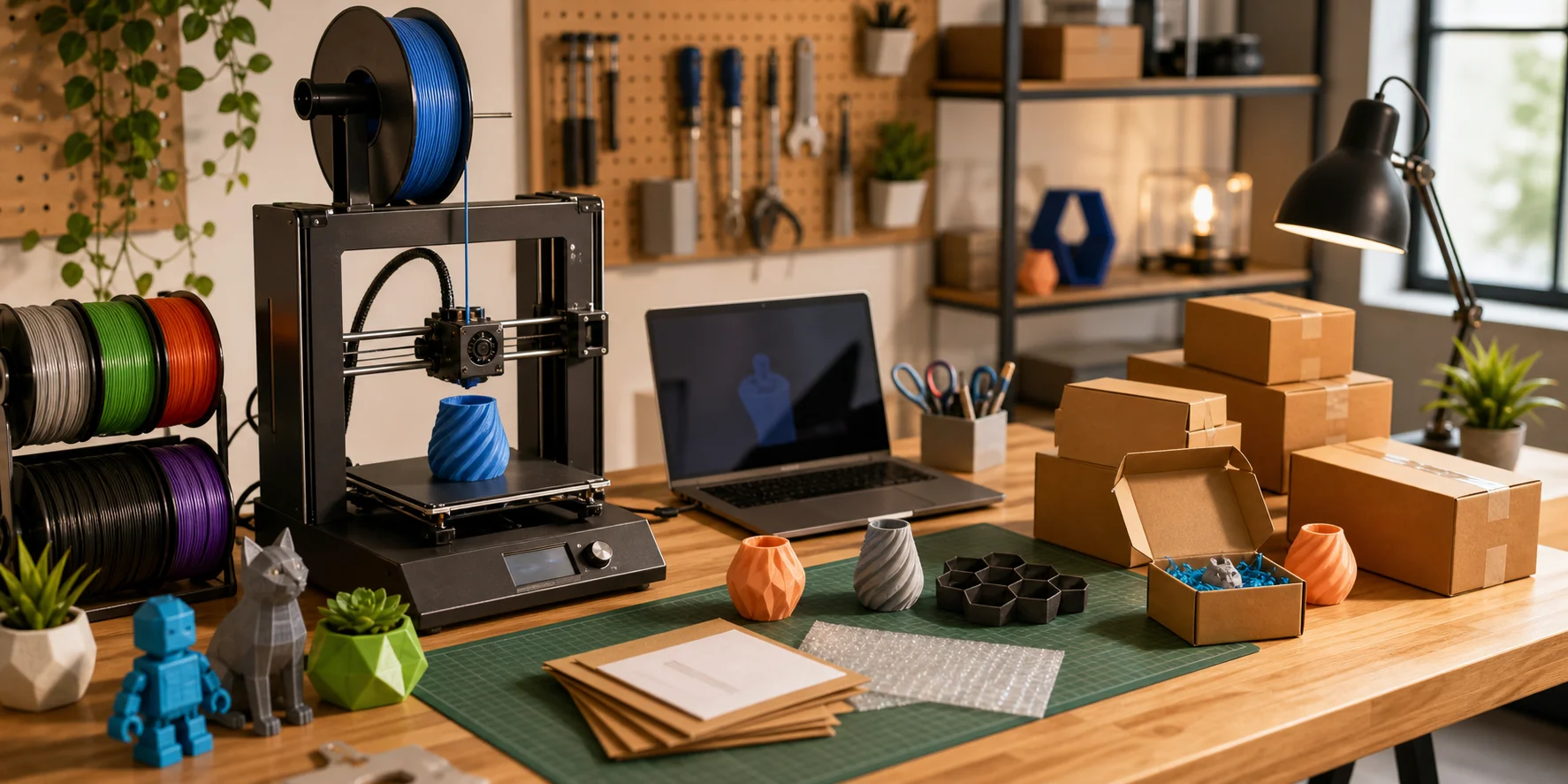
Yes, if you treat it like a small product business rather than a gadget hobby. The opportunity exists because buyers want custom, niche, and small-batch products that are hard to find in traditional retail. Tabletop gamers want miniatures and terrain. Cosplayers need custom armor parts. Home organizers want oddly specific brackets, hooks, and storage solutions. Local businesses may need prototypes faster than a large service bureau can deliver.
The barrier is no longer just hardware. Current entry-level printers such as the Bambu Lab A1 mini and Creality Ender-series models are affordable enough for many beginners, but a printer alone does not create profit. The real constraint is knowing what to make, how to price it, and how to reach a specific buyer.
How Much Money Can You Make with 3D Printing?
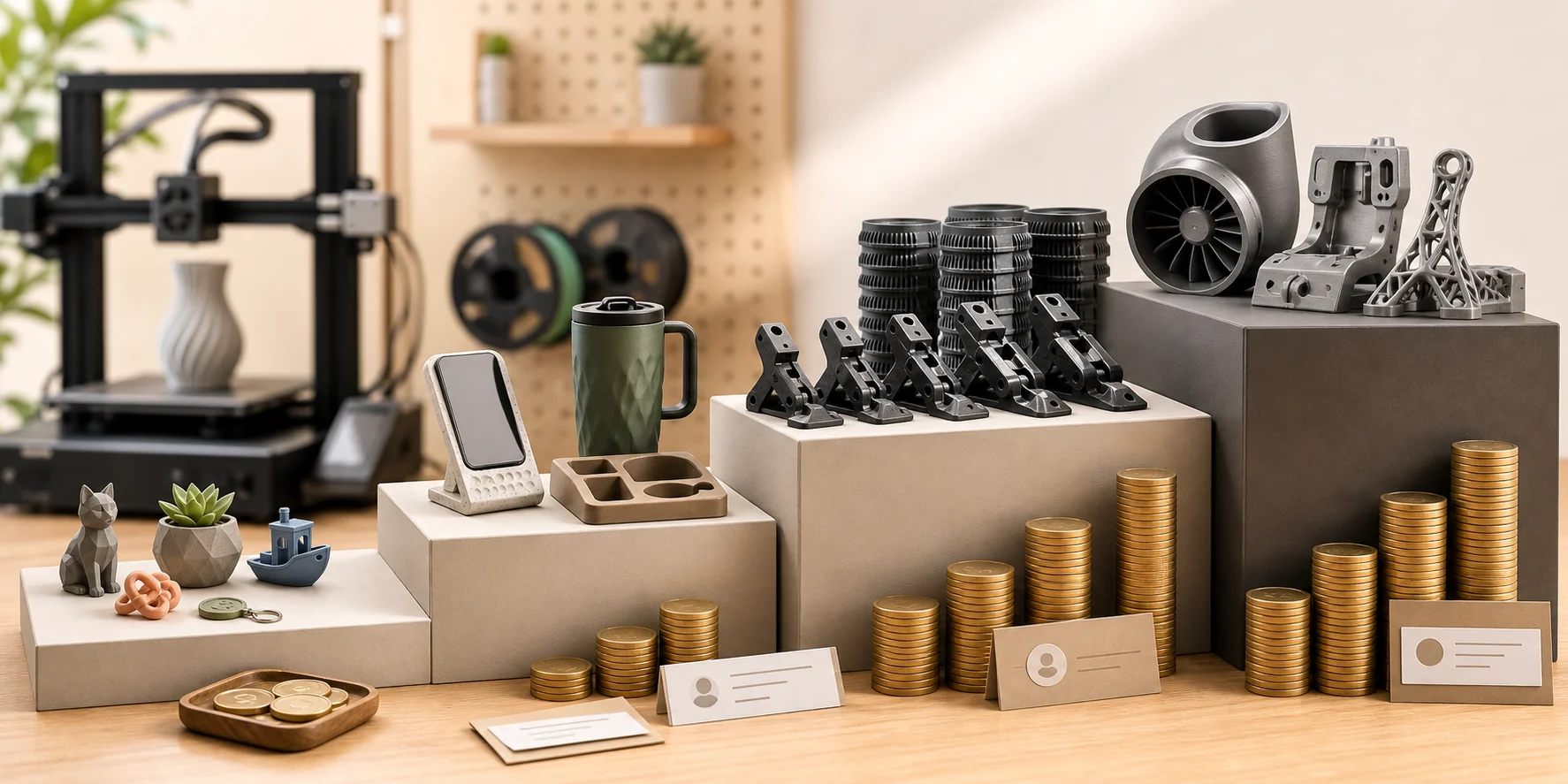
Treat these as planning ranges rather than guaranteed revenue. A part-time side hustle may reach 1,500 per month after it develops repeatable products and steady listings. A full-time small shop may operate around 8,000 per month, while a multi-printer or service business can exceed $10,000 per month once demand and operations support that scale. For a small, repeatable item, a single Bambu Lab X1C running overnight may produce three to five saleable units, although actual throughput depends on print duration, failure rate, maintenance, and demand.
Do not plan around viral success. Plan around a ramp-up period of three to six months: learning your printer, testing products, understanding failures, building listings, and improving packaging. Your first goal is not to “make $10,000 a month.” Your first goal is to find one product category where strangers are willing to pay more than your material, time, and platform costs.
Understanding Profit Margins and Cost Structure
Profit depends on more than filament. Include material, failed prints, machine time, electricity, packaging, shipping supplies, platform fees, design time, post-processing, and customer service. Consider a simplified small-figurine example: if 0.17 each. Add 1.00 for labor, 0.20 for packaging, producing an estimated unit cost of 8–$12 selling price, the remaining amount must cover those additional costs and profit.
A simple pricing formula is:
Price = material cost + machine time + labor + platform fees + packaging + profit margin
For physical products, many sellers use material cost as a starting point, then add a machine-time rate and a labor rate. Custom work should cost more than repeatable catalog products because it consumes design and communication time. Digital STL files have a different margin profile: once the design is made, each additional sale has very low fulfillment cost, but the design must be original and legally sellable.
Top Business Models for 3D Printing Income
| Business model | Best for | Main advantage | Main challenge |
|---|---|---|---|
| Physical prints | Etsy, local buyers, niche products | Easy to understand and validate | Shipping and fulfillment |
| STL files | Designers, digital marketplaces | High margin after design work | Requires original files and marketing |
| Custom prototyping | Local startups and product teams | Higher per-job pricing | More communication and revisions |
| Print farm | Repeatable products | Scalable production | Capital, maintenance, and operations |
Beginners usually do best with physical prints or digital files first. They let you validate demand without buying a room full of printers. Once you know what sells, scaling becomes a business decision instead of a guess.
Most Profitable 3D Printed Items to Sell
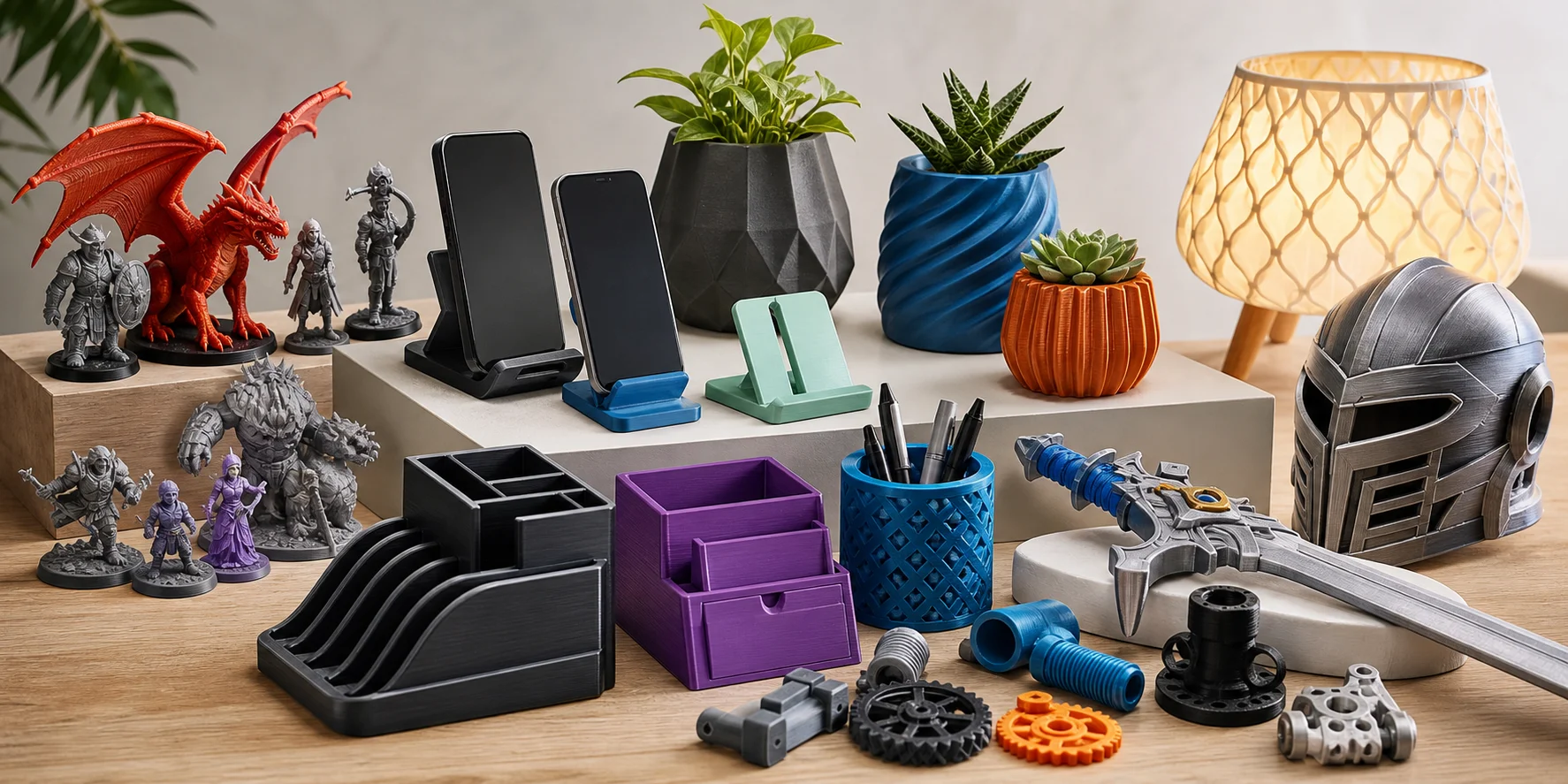
The best products are rarely generic. Phone stands, keychains, and simple fidgets are crowded unless you have a strong angle. More profitable items usually solve a niche problem or offer personalization.
Good categories include tabletop gaming miniatures and terrain, cosplay parts, home organization tools, replacement parts, custom mounts, jewelry prototypes, pet accessories, planter designs, educational models, and small-batch product prototypes. What makes these work is not just printability. It is perceived value. A replacement hinge for a rare cabinet, a custom cosplay buckle, or a personalized pet feeder solves a specific problem, so buyers are less likely to compare it with the cheapest generic alternative.
Selling Digital STL Files: The Passive Income Model
Selling STL files can be attractive because there is no shipping, no failed print for every order, and no physical packaging. Platforms such as Cults3D, MyMiniFactory, Printables, Gumroad, and personal stores let designers sell files to makers who print at home. As an illustrative benchmark, a popular tabletop miniature STL with strong reviews and marketplace visibility may generate about 2,000 per month. Results vary widely, and the income is not passive from day one: design, promotion, customer support, file updates, and piracy monitoring still require work.
The hard part is design originality. You cannot simply download someone else’s model and resell it. You need your own design or a license that allows commercial resale. This is where AI 3D can help with ideation and first-pass geometry. For example, you can use Tripo AI’s 3D model generator to create a base concept, refine it in Blender or CAD, check printability, and export an STL for testing.
AI does not remove your responsibility to make the product printable, distinctive, and legally safe. It helps you move from idea to draft faster.
How to Choose Your Niche
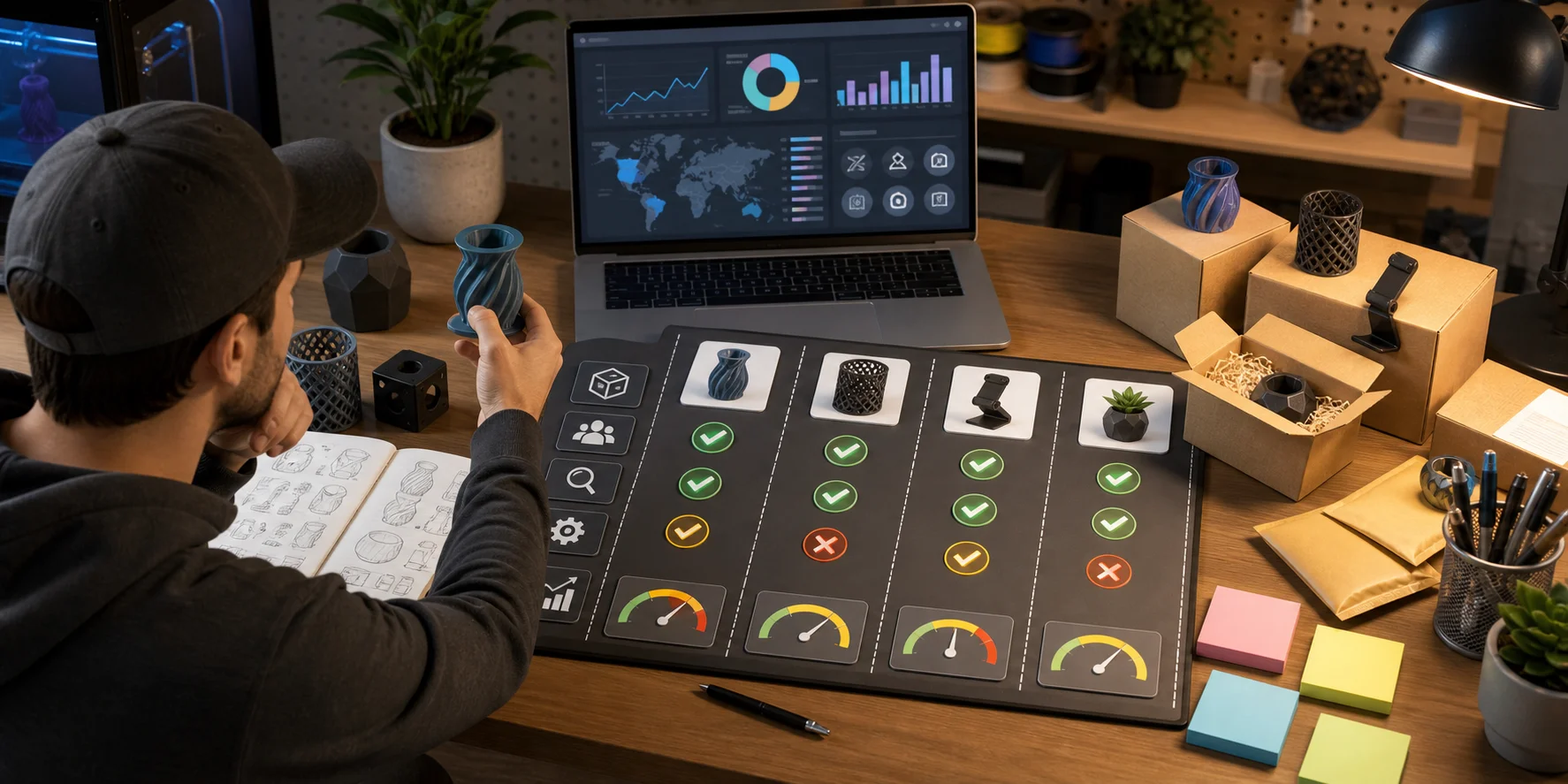
Die Nische ist wichtiger als die Ausstattung. Ein Premium-Drucker rettet kein Produkt, das niemand haben will. Ein einfaches Validierungsraster umfasst: Interesse, Nachfrage und Wettbewerb.
Beginnen Sie mit Gemeinschaften, die Sie verstehen. Wenn Sie sich mit Tabletop-Spielen, Cosplay, Holzbearbeitung, Haustieren, Pflanzen, Fotografie oder mechanischen Tastaturen auskennen, verstehen Sie die Sprache der Käufer und ihre Schmerzpunkte bereits. Prüfen Sie anschließend die Nachfrage auf Etsy, Reddit, Printables, MyMiniFactory, TikTok und in Nischenforen. Achten Sie auf wiederkehrende Beschwerden: „Ich wünschte, es gäbe eine Halterung dafür“, „Ich finde kein Ersatzteil“ oder „Dieses Cosplay-Teil ist immer ausverkauft.“
Vermeiden Sie generische Produkte, es sei denn, Sie können sie personalisieren, bündeln oder ein konkretes Problem besser lösen als bestehende Angebote.
So starten Sie mit 3D-Druck für Gewinn
Beginnen Sie mit einem Drucker, einer Nische und fünf Testprodukten. Für den FDM-Druck eignen sich für Einsteiger kompakte Drucker wie der Bambu Lab A1 mini oder günstige Geräte der Ender-Serie. Ziehen Sie Resin-Druck nur in Betracht, wenn Ihre Nische feine Details benötigt, etwa für Miniaturen oder Schmuckprototypen, und wenn Sie Belüftung, Aushärtung und die Sicherheit im Umgang mit Harz gewährleisten können.
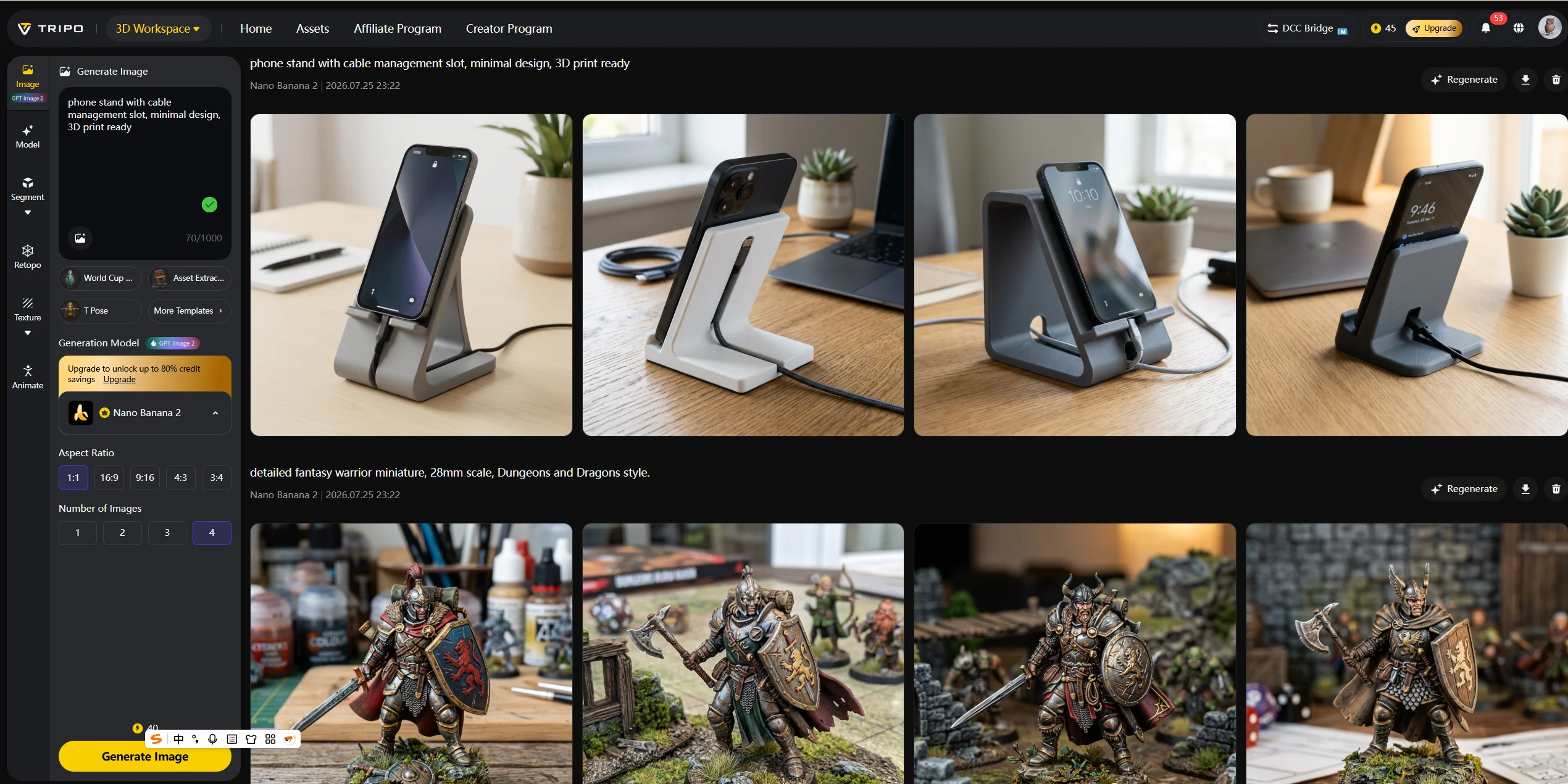
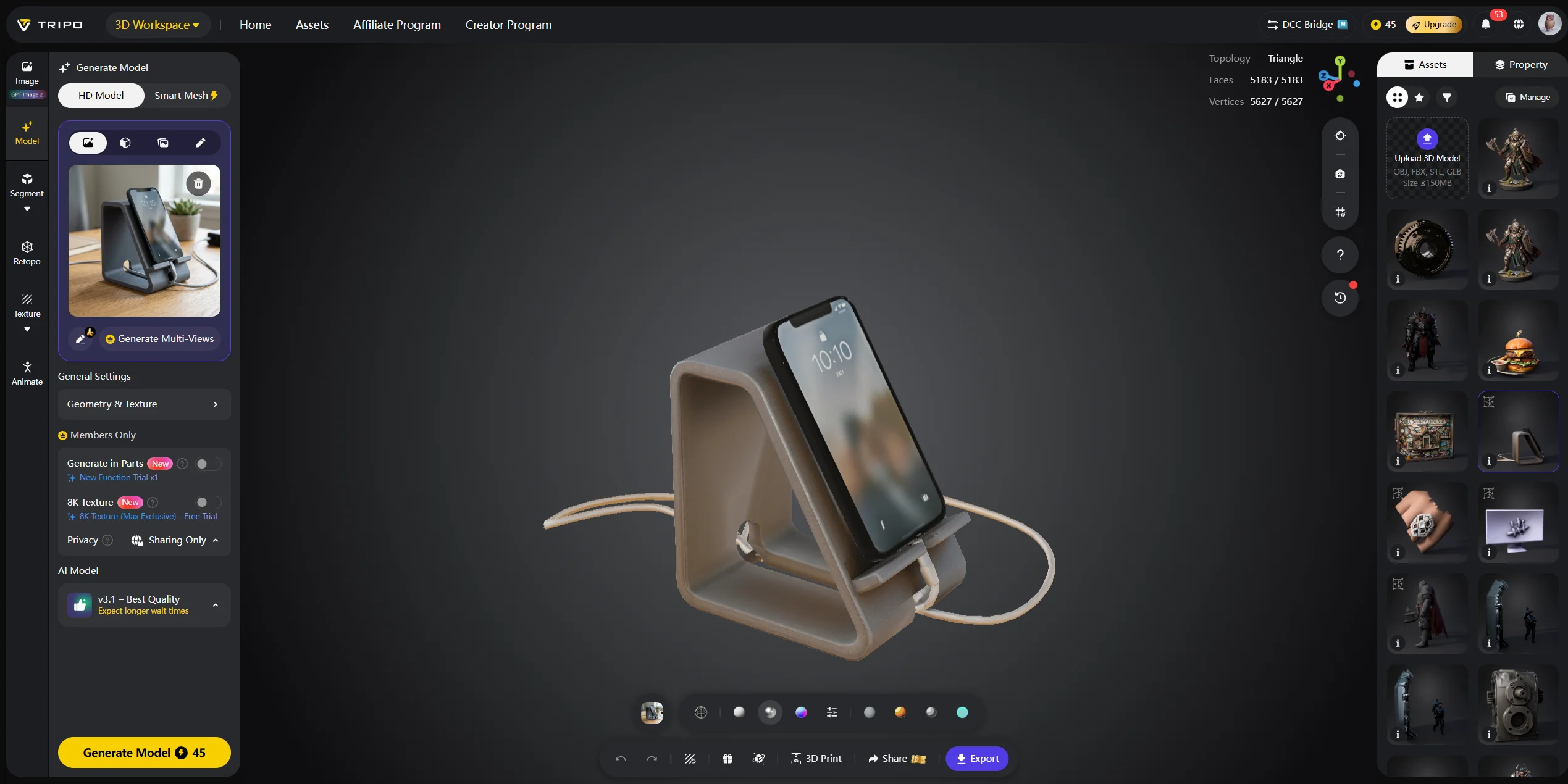
Your basic stack includes a slicer such as Bambu Studio or Cura and a design tool such as TinkerCAD, Blender, Fusion, or Tripo AI Text to 3D. In Tripo Studio, open Generate Model, select the text-input tab, enter a specific product description, and click Generate Model. Rotate the completed asset, inspect its face and vertex counts, and use Retopology or Smart Mesh when the geometry needs simplification. For printing, click 3D Print to export a printable file or send the model to Bambu Studio; alternatively, open Export and select STL when available. Validate scale, wall thickness, watertightness, and supports in the slicer before selling the design.
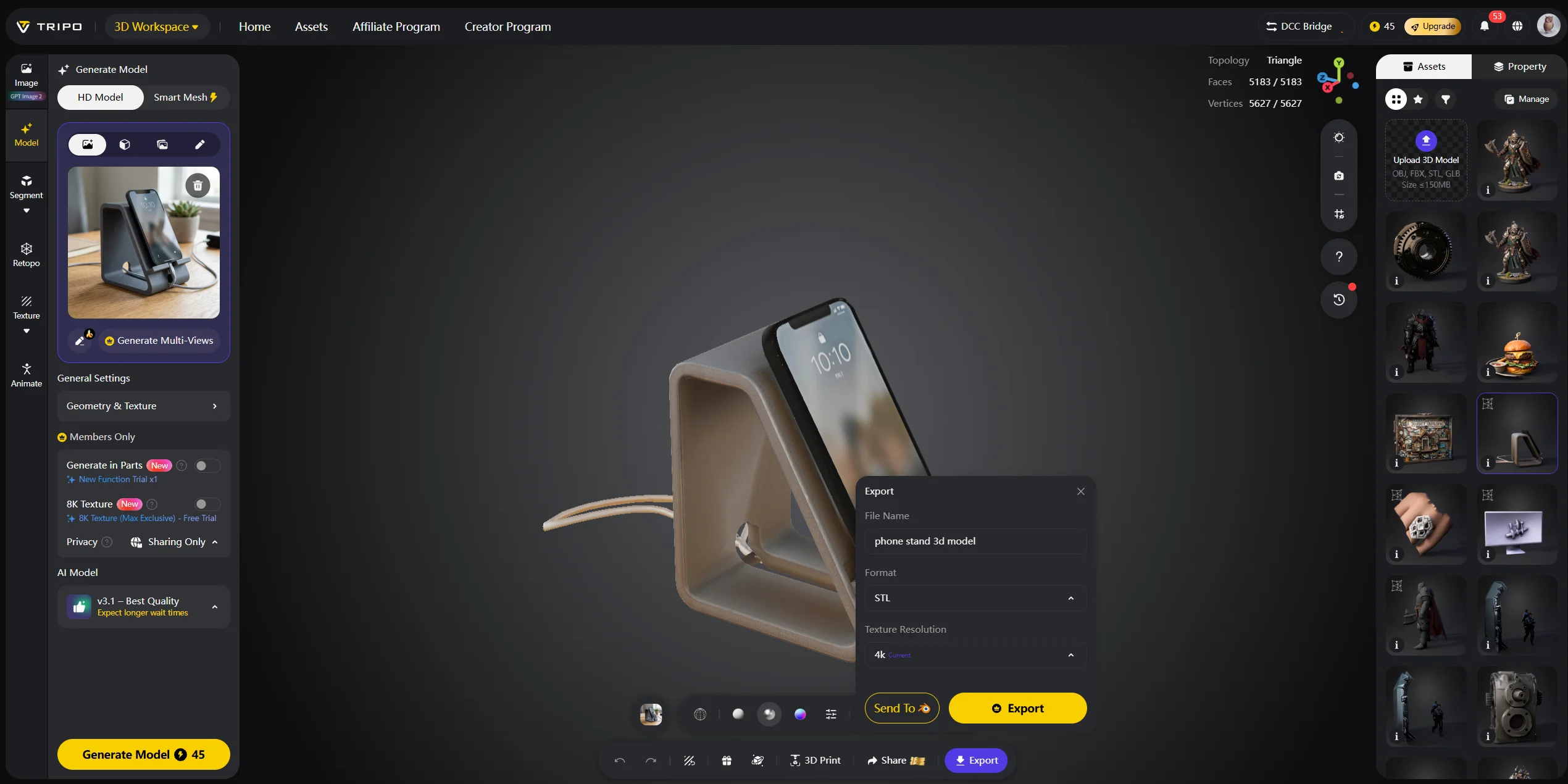
A practical 30-day roadmap is simple: pick one niche, create five test prints, photograph them, list them, track views and orders, revise the weakest product, and repeat.
Pricing Strategy for 3D Printed Products
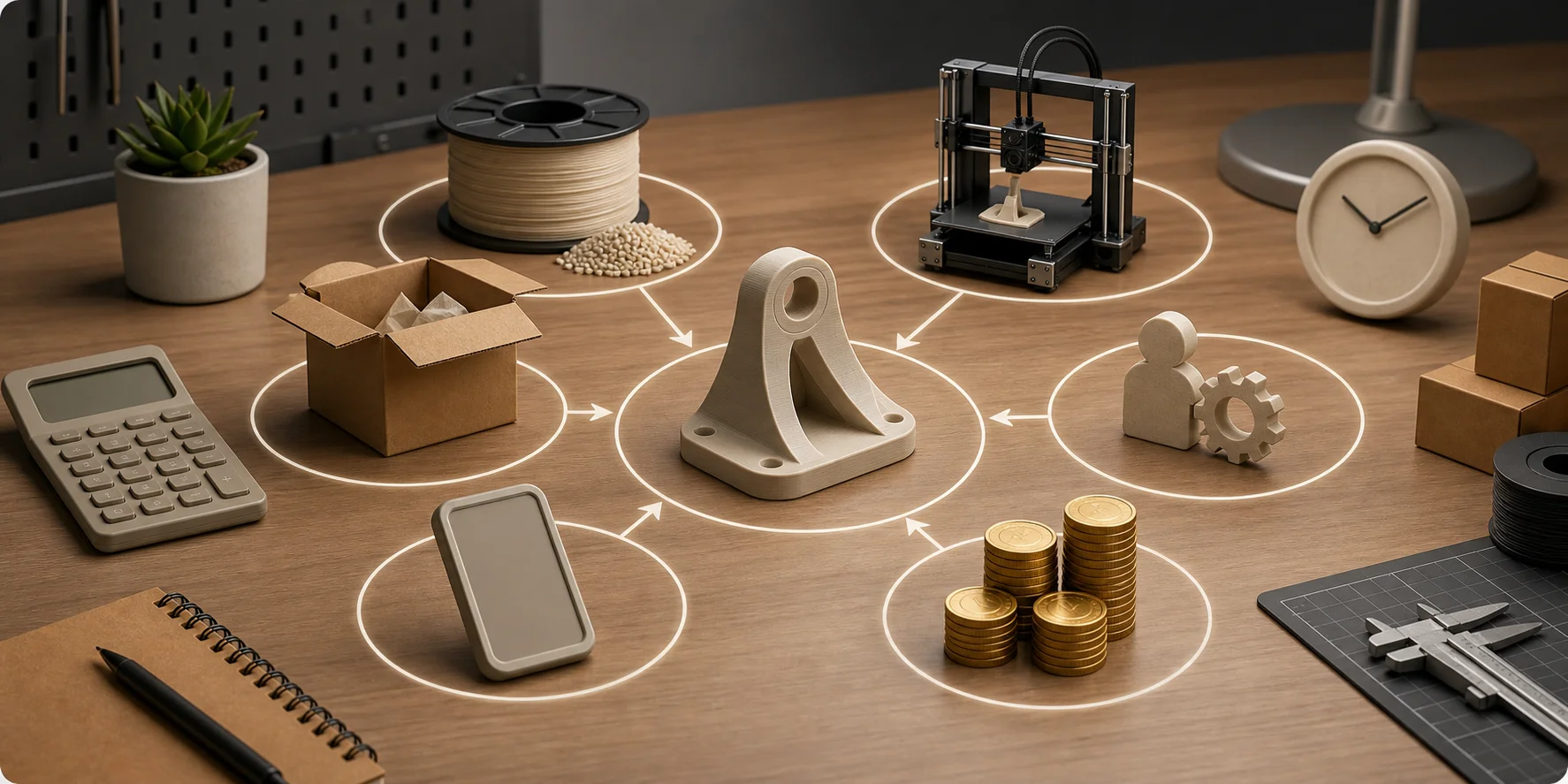
Pricing should cover cost and signal value. A useful formula is:
Retail price = material + machine time + labor + platform fee + packaging + shipping buffer + profit
For machine time, many small sellers use an hourly rate, then add separate design fees for custom work. Do not race to the bottom. If your product is personalized, solves a rare problem, or saves the buyer time, it should not be priced like a generic plastic trinket.
Use Etsy and similar marketplaces as anchors, but do not copy the lowest price. Compare products with similar size, detail, personalization, reviews, and shipping expectations. Offer variants such as color, size, name engraving, or bundle packs to increase average order value.
Prototyping Services: B2B Income for Advanced Makers
Once you can print reliably, prototyping services can be more profitable than selling small consumer items. Product designers, startups, students, local manufacturers, architecture studios, and inventors often need a physical model quickly. A local maker who can turn around a print in two days may beat a larger service on speed and communication.
Pricing depends on complexity, material, revision count, and deadline. You can also use AI-generated base meshes via Tripo AI to accelerate early concept exploration, then rebuild or refine the geometry for print-ready delivery.
Frequently Asked Questions
Is a 3D printing business profitable?
Yes, but profitability depends on niche, pricing, failure rate, and demand. Treat it like a product business with costs, fulfillment, and customer service.
What can I 3D print to make money?
Tabletop miniatures, cosplay parts, home organizers, replacement parts, pet accessories, jewelry prototypes, and personalized gifts can perform well when they target a clear buyer need.
Can you legally sell 3D printed items?
Yes, if you own the design or have a valid commercial license. Selling prints from unlicensed STL files can violate copyright or marketplace rules.
How much should I charge for one hour of 3D printing?
There is no universal rate, but you should charge enough to cover machine time, electricity, wear, labor, failed prints, and margin. Custom design time should be billed separately.
How do I make money with 3D printing?
Pick a niche, create repeatable products, price them properly, and sell through Etsy, local channels, STL marketplaces, or custom prototyping services.
How can I start a 3D printing side hustle with no experience?
Start with one beginner-friendly printer, learn slicing, print five test products in one niche, and list them before buying more equipment. Use tools like Tripo AI Studio to explore original model ideas.
What are typical startup costs?
A lean setup can start with a few hundred dollars for an entry-level printer, filament, tools, and packaging. Costs rise quickly if you add resin printing, multiple printers, paid software, or inventory.
Conclusion
3D printing for profit is real, but the people who succeed usually win through niche selection, pricing discipline, and repeatable operations, not because they bought the flashiest printer. Start small, validate one product category, track your costs, and improve based on buyer response.
Ready to design your first product? Try Tripo AI Studio and generate a 3D model idea from text or images. If you plan to use AI 3D in a regular business workflow, compare current plan options at Tripo AI Pricing.