The Future of 3D Printing: 8 Trends Shaping 2030
TL;DR
- 3D printing is evolving from rapid prototyping to full-scale, on-demand manufacturing.
- Faster printers, advanced materials, and metal 3D printing are enabling more production-ready applications.
- Healthcare, construction, aerospace, and automotive will be among the industries transformed by additive manufacturing.
- AI and generative design are making it easier than ever to create printable 3D models with minimal design experience.
- Distributed manufacturing and digital inventories can reduce waste, inventory, and transportation costs.
The future of 3D printing is a shift from prototyping to full-scale, on-demand production. Faster machines, new materials, metal and bioprinting, AI-driven design, and distributed micro-factories are pushing additive manufacturing into construction, medicine, and aerospace—reshaping how, where, and what we make by 2030.
How 3D Printing Is Evolving (From Prototype to Production)
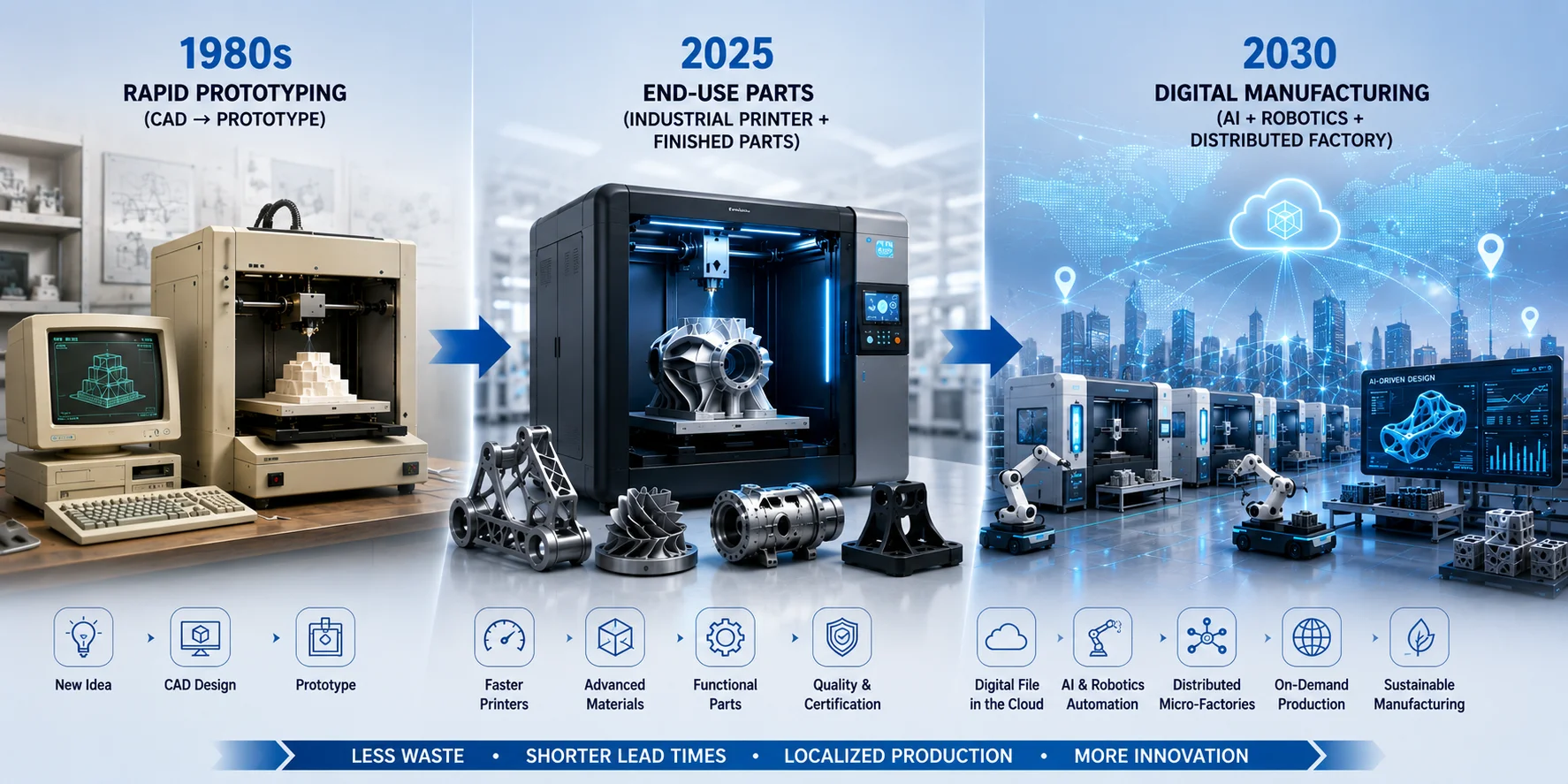
The future of 3D printing is no longer defined by faster prototyping alone. Over the next decade, additive manufacturing is expected to become a core production technology, enabling companies to manufacture end-use parts on demand, closer to where they are needed. Instead of relying on long global supply chains and large inventories, manufacturers are increasingly adopting digital inventories, automated production cells, and localized micro-factories that print parts only when orders arrive.
This shift is easier to appreciate by looking at the history of 3D printing. When the technology first emerged in the 1980s, it was mainly used to create design prototypes that helped engineers validate concepts before investing in expensive tooling. As printers became faster, more accurate, and capable of processing engineering-grade polymers, metals, ceramics, and composite materials, 3D printing gradually moved beyond product development into functional manufacturing. Today, certified aerospace components, customized medical devices, industrial tooling, and consumer products are already being produced using additive manufacturing.
The next stage is about scaling these capabilities rather than simply improving print quality. Modern production systems combine high-speed printers with robotics, AI-assisted design optimization, automated post-processing, and digital quality inspection. Instead of treating 3D printing as a standalone machine, manufacturers increasingly integrate it into connected, data-driven production lines that can respond quickly to changing demand while reducing waste and shortening lead times.
By 2030, the most significant transformation will not be that every product is 3D printed—it will be that 3D printing becomes the preferred manufacturing method whenever customization, complex geometries, rapid iteration, or localized production provide a clear advantage. This transition is already visible across industries ranging from aerospace and automotive to the future of 3D printing in construction, 3D printing in healthcare, and advanced manufacturing. The following trends explore the technologies and applications driving this evolution toward smarter, more flexible production.
Faster Speeds and Mass Production at Scale
For many years, one of the biggest limitations of additive manufacturing was speed. A single prototype could take many hours to complete, making 3D printing ideal for product development but impractical for large-scale manufacturing. That is rapidly changing. The future of 3D printing depends on dramatically faster production, and recent advances in hardware, software, and automation are allowing additive manufacturing to move from a slow prototyping tool to a viable production technology. Faster turnaround means companies can test designs, produce replacement parts, and deliver finished products much more quickly than with traditional manufacturing methods that require molds or specialized tooling.
Modern industrial printers achieve these gains through several innovations. Higher-power lasers, multiple laser systems, faster scanning technology, improved extrusion rates, and optimized motion control all reduce build times without sacrificing accuracy. Some systems can print continuously instead of stopping after each layer, while others use parallel print heads to manufacture multiple components simultaneously. AI-powered slicing software further improves efficiency by optimizing toolpaths, adjusting print parameters automatically, and minimizing unnecessary machine movements. Together, these improvements shorten production cycles and help manufacturers respond more quickly to changing customer demand.
Speed alone, however, is not enough. The next challenge is producing parts consistently at scale. Rather than relying on a single large machine, many manufacturers now operate print farms—collections of networked printers managed through centralized software. Production jobs are automatically distributed across dozens or even hundreds of machines, allowing companies to continue manufacturing even if one printer requires maintenance. This approach improves reliability while making it easy to increase output by simply adding more printers to the network.
These print farms are increasingly being combined with localized micro-factories, where compact production facilities manufacture products close to the point of use. Instead of shipping finished goods around the world, companies can send digital design files and print parts locally. This digital manufacturing model reduces transportation costs, shortens lead times, lowers inventory requirements, and makes supply chains more resilient during disruptions. It also supports more sustainable production by reducing excess inventory and unnecessary freight.
Another important development is multi-axis and 5-axis 3D printing. Traditional printers build parts layer by layer in a fixed vertical direction, which often requires large support structures for overhanging features. Multi-axis systems rotate either the print head or the workpiece during fabrication, allowing material to be deposited from multiple angles. As a result, less support material is needed, post-processing is significantly reduced, and more complex geometries can be produced with smoother surface finishes. The technology also enables stronger parts because print paths can be aligned with expected load directions rather than being limited to horizontal layers.
Automation is becoming just as important as printing speed itself. Industrial production lines increasingly combine high-speed printers with robotic material handling, automated depowdering or support removal, machine vision inspection, and AI-based quality monitoring. Production software can monitor printer health, predict maintenance requirements, schedule jobs automatically, and track every printed component for quality assurance. These smart manufacturing systems allow additive manufacturing to operate with minimal human intervention while maintaining consistent output.
The result is a shift from isolated printers to connected production ecosystems. By 2030, 3D printing will be most competitive where rapid iteration, complex geometry, localized production, or customization creates a clear advantage over conventional mass manufacturing.
New Materials — Composites, Polymers, Silicone
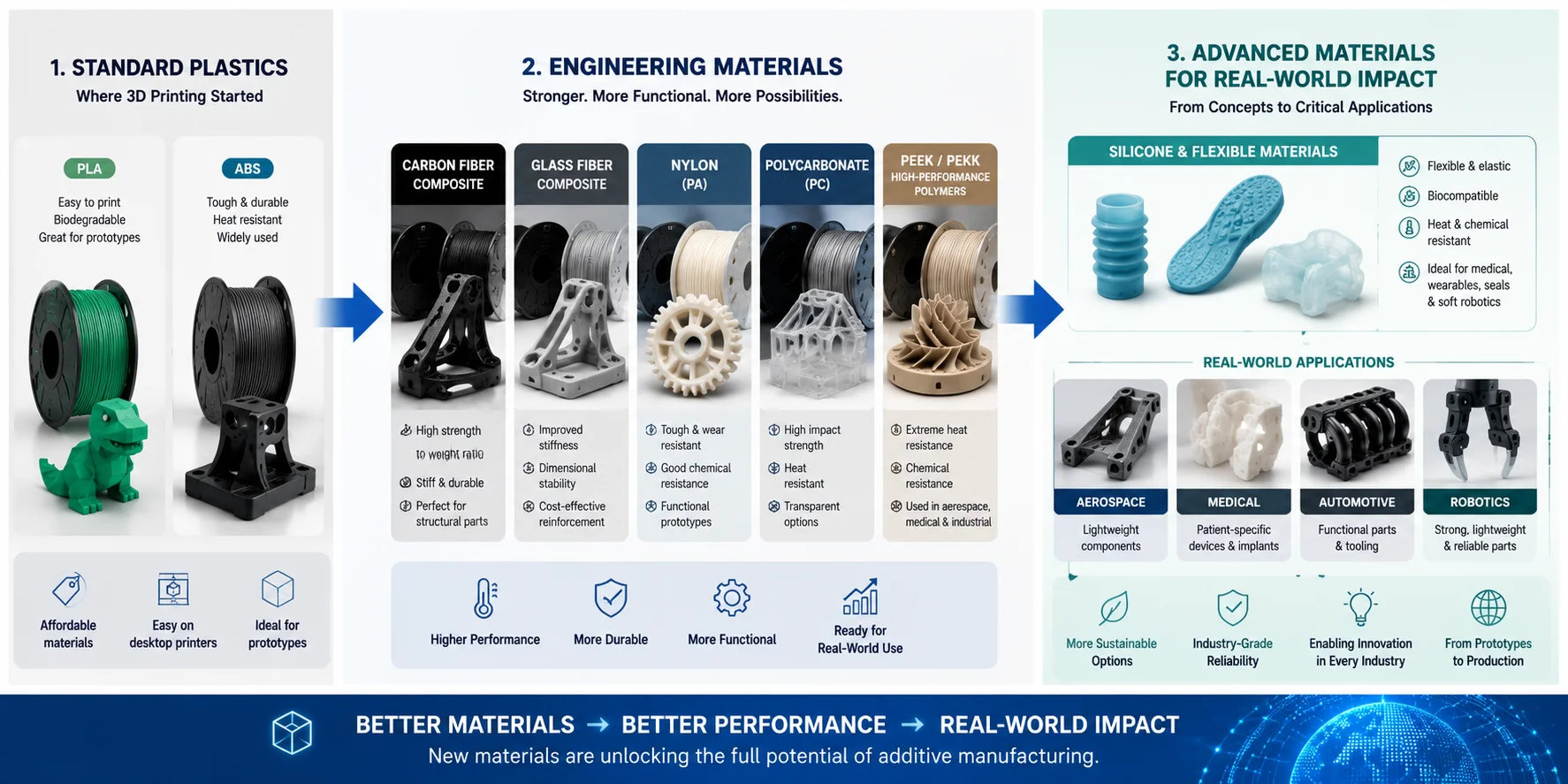
The future of additive manufacturing is being shaped not only by faster printers but also by a new generation of advanced materials. In the past, most 3D printing relied on basic plastics such as PLA and ABS, which were ideal for prototypes but often lacked the strength, heat resistance, or durability required for demanding applications. Today, manufacturers have access to a rapidly expanding portfolio of engineering-grade composites, high-performance polymers, and silicone materials, allowing 3D-printed parts to perform reliably in real-world environments rather than remaining as demonstration models.
Among the most significant advances are engineering-grade composite materials. By reinforcing polymers with carbon fiber, glass fiber, or Kevlar, manufacturers can produce lightweight components with excellent stiffness, strength, and dimensional stability. These materials are increasingly used for production tooling, automotive fixtures, aerospace brackets, robotics, and industrial equipment where reducing weight without sacrificing performance is critical. Composite materials also make it possible to create geometries that would be difficult or expensive to manufacture using traditional machining.
At the same time, high-performance polymers are expanding the range of functional applications. Materials such as nylon, polycarbonate (PC), PEEK, PEKK, and ULTEM offer improved mechanical properties, chemical resistance, and thermal stability. These engineering plastics can withstand harsh operating conditions while remaining significantly lighter than many metal alternatives. As printer technology continues to improve, these polymers are becoming more practical for producing end-use parts, replacement components, customized tools, and low-volume production runs across industries including aerospace, electronics, automotive, and industrial manufacturing.
Another rapidly growing category is 3D-printable silicone. Unlike rigid plastics, silicone offers flexibility, elasticity, biocompatibility, and resistance to heat and chemicals. These characteristics make it valuable for medical devices, wearable products, soft robotics, seals, gaskets, consumer goods, and customized healthcare products. Improvements in silicone printing processes are enabling manufacturers to create complex flexible parts directly, reducing assembly steps and opening new possibilities for product design.
One of the most important changes is that these advanced materials are no longer limited to expensive industrial equipment. New desktop and professional-grade printers are increasingly capable of processing engineering materials that previously required specialized manufacturing systems. Improved heated chambers, higher-temperature extruders, better motion control, and more reliable material handling allow smaller businesses, engineering teams, universities, and independent designers to experiment with industrial-grade materials without investing in large-scale production machinery. This lowers the barrier to innovation and makes advanced manufacturing more accessible than ever before.
Material development is also becoming more application-specific. Researchers and manufacturers are introducing flame-retardant polymers, electrically conductive materials, carbon-filled composites, recycled filaments, bio-based plastics, and multi-material printing systems that combine rigid and flexible properties within a single part. These innovations enable designers to optimize products for performance instead of choosing materials based solely on manufacturing limitations.
By 2030, breakthroughs in materials may have as much impact as improvements in printer hardware. Faster machines increase productivity, but new materials determine what can actually be manufactured. Stronger composites, more capable engineering polymers, and printable silicone are expanding 3D printing far beyond prototyping, allowing additive manufacturing to produce durable, high-performance components that meet the requirements of real industrial and commercial applications. They provide the material foundation on which many of the future trends in aerospace, healthcare, electronics, and consumer products will be built.
The Future of Metal 3D Printing
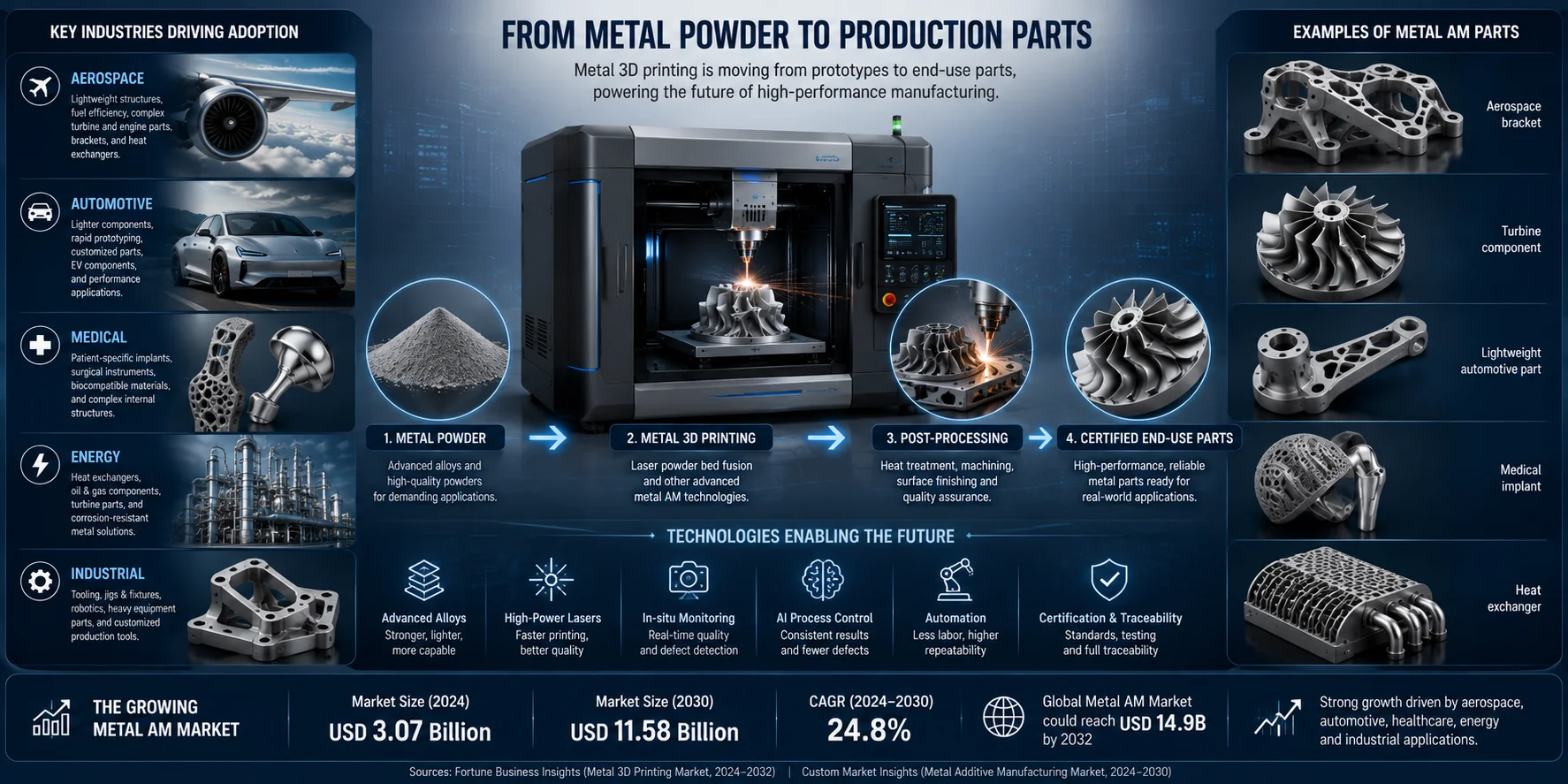
The future of metal 3D printing is moving from experimental prototypes to production-grade end-use parts. In the early stage, metal additive manufacturing was mostly used for testing complex shapes or producing expensive one-off components. Now, it is becoming a serious manufacturing method for industries that need lightweight structures, high strength, fast iteration, and complex internal geometries. This makes metal additive manufacturing one of the most important subfields in the broader future of 3D printing.
Market forecasts support this shift: Grand View Research projects metal 3D printing to grow from about USD 7.73 billion in 2023 to USD 35.33 billion by 2030, reflecting a move toward qualified production workflows.
Aerospace is one of the strongest drivers. Aircraft and spacecraft manufacturers are constantly looking for ways to reduce weight without weakening performance. Metal 3D printing can create lattice structures, internal cooling channels, topology-optimized brackets, turbine parts, rocket components, and heat exchangers that are difficult or impossible to make with traditional machining. By consolidating several parts into one printed component, manufacturers can also reduce assembly steps, material waste, and potential failure points.
Automotive manufacturing is another major application area. For electric vehicles, motorsports, and high-performance cars, metal 3D printing supports lightweight parts, custom components, advanced thermal management, and faster design cycles. Instead of waiting for tooling, engineers can print and test functional metal parts quickly, then refine the design based on real performance data. This is especially valuable for low-volume production, luxury vehicles, racing, and next-generation EV platforms.
The biggest change is that metal printing is no longer only about design freedom. It is increasingly about repeatable production. Technologies such as laser powder bed fusion, directed energy deposition, binder jetting, and metal extrusion are improving in speed, cost, and reliability. At the same time, better powders, stronger alloys, automated powder handling, and more advanced post-processing are helping printed metal parts meet stricter industrial standards.
Quality control will be central to the next stage. To compete with casting, forging, and CNC machining, metal 3D printing must deliver consistent density, surface finish, strength, and fatigue performance. That is why more systems are adopting in-situ monitoring, AI-based process control, digital inspection, and full part traceability. Printers will not only build the part; they will also collect data during production to prove that the part meets engineering requirements.
Market momentum also supports this shift. Industrial users are investing in metal additive manufacturing because it can reduce lead times, simplify supply chains, and produce parts closer to demand. Instead of storing large inventories of spare metal parts, companies can keep certified digital files and print replacements when needed. This is especially useful for aerospace maintenance, industrial machinery, defense equipment, and older vehicles where replacement parts may be rare or expensive to source.
By 2030, metal 3D printing will likely be most valuable in high-performance, high-value applications rather than cheap mass-market parts. It will not replace every traditional metal process, because casting, stamping, and machining will remain more economical for many simple high-volume components. However, for complex, lightweight, customized, or supply-chain-sensitive parts, metal additive manufacturing will become a preferred production method.
In short, the future of metal 3D printing is not just about printing stronger parts. It is about building a more flexible industrial system where design, material, production, and quality data are connected. As costs fall and certification improves, metal 3D printing will play a larger role in aerospace, automotive, energy, medical implants, and advanced manufacturing—making it one of the clearest signs that 3D printing is entering its production era.
Bioprinting and the Future of 3D Printing in Medicine
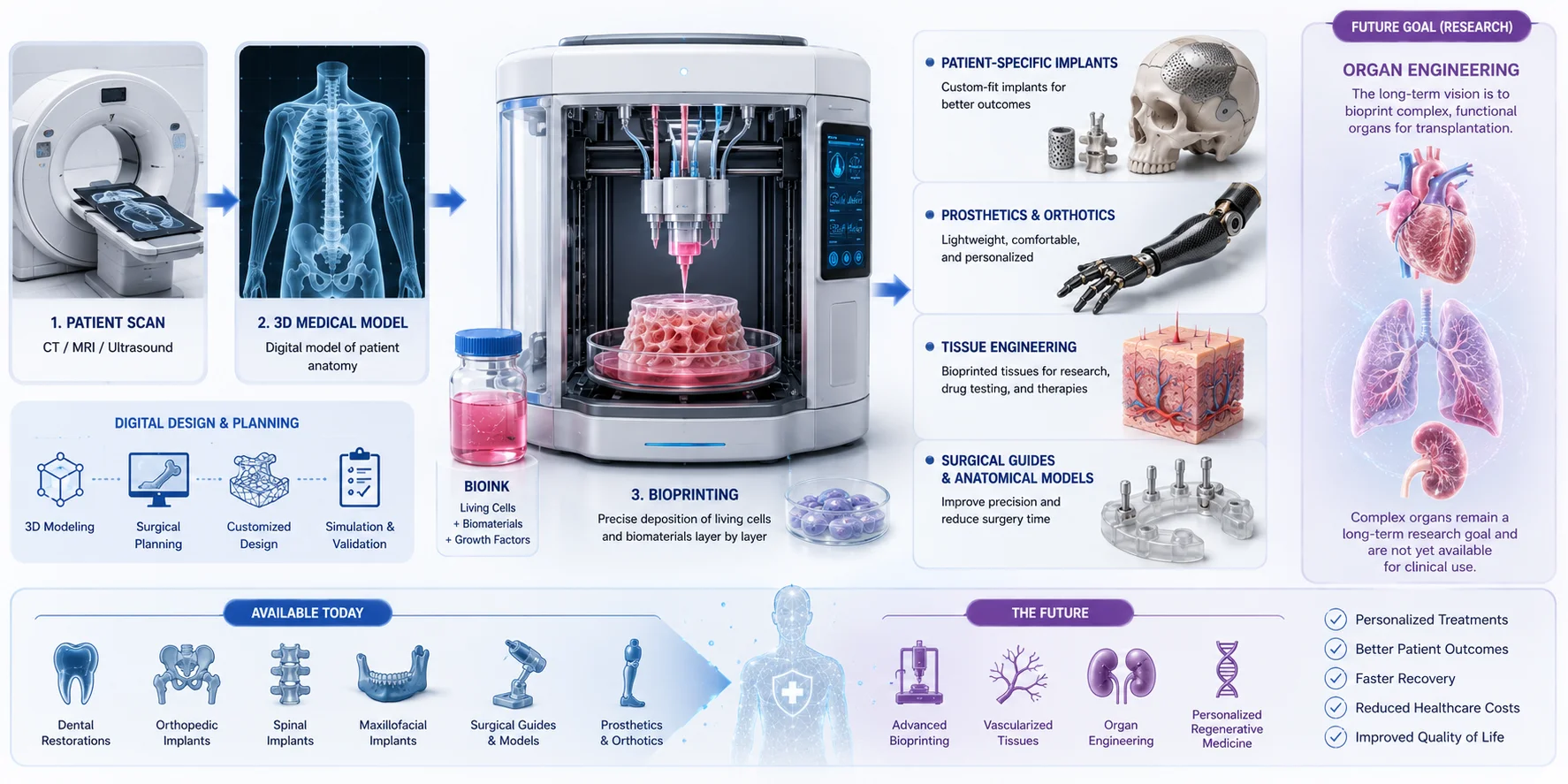
The future of 3D printing in medicine is one of the most exciting and rapidly evolving areas of additive manufacturing. While 3D printing first gained attention for producing prototypes and industrial parts, it is now transforming healthcare through personalized medical devices, surgical planning, prosthetics, and bioprinting research. Rather than creating standardized products for every patient, doctors and engineers can increasingly design treatments that match an individual's anatomy, improving both clinical outcomes and patient comfort. As a result, 3D printing in healthcare is shifting from a niche technology to an important part of modern medical practice.
Grand View Research also projects healthcare 3D printing to grow from about USD 8.52 billion in 2023 to USD 27.29 billion by 2030, led by patient-specific devices, surgical planning, dental applications, and research models.
One of the most established applications is patient-specific implants. Using CT or MRI scans, surgeons can create highly accurate 3D models of a patient's anatomy before designing implants that fit precisely where they are needed. Customized cranial plates, spinal implants, orthopedic components, and dental restorations can reduce surgery time, improve fit, and support faster recovery. Because every implant is tailored to the patient rather than adapted from standard sizes, surgeons often gain greater precision during complex procedures.
Another rapidly growing area is 3D-printed prosthetics and orthotics. Traditional prosthetic devices can be expensive, time-consuming to manufacture, and difficult to customize. Additive manufacturing allows lightweight prosthetic limbs, braces, and assistive devices to be produced more quickly while adapting to each user's body shape and mobility needs. Designers can also optimize internal lattice structures, reducing weight without sacrificing strength. This makes prosthetics more comfortable and accessible, particularly for children who require frequent replacements as they grow.
Beyond medical devices, researchers are making steady progress in bioprinting—the process of printing living cells and biomaterials into three-dimensional tissue structures. Scientists have already demonstrated laboratory-scale printing of skin, cartilage, blood vessel networks, and simple tissue models that can be used for drug testing and biomedical research. These advances are helping researchers better understand human biology while reducing dependence on animal testing for certain applications.
The long-term vision is organ engineering. Researchers hope that future bioprinting technologies will eventually be able to produce functional organs such as kidneys, livers, or hearts using a patient's own cells, potentially reducing transplant waiting lists and minimizing immune rejection. However, this goal remains a long-term scientific challenge rather than a clinical reality. Complex organs require not only multiple cell types but also functional blood vessels, nerves, and biological signaling systems that current technology cannot yet fully reproduce. Although remarkable progress is being made, fully transplantable printed organs are still under active research rather than routine medical practice.
Artificial intelligence, advanced biomaterials, and improved bioinks are expected to accelerate progress over the coming decade. AI can help optimize scaffold structures, simulate tissue growth, and improve printing precision, while new biomaterials are becoming better at supporting cell survival and regeneration. At the same time, regulatory agencies and healthcare providers are developing standards to ensure printed medical products meet strict safety and quality requirements before entering clinical use.
By 2030, the future of 3D printing in medicine will likely be defined by broader adoption of customized implants, more affordable prosthetics, patient-specific surgical planning, and increasingly sophisticated tissue engineering. Bioprinting may not yet deliver fully functional replacement organs, but it is laying the scientific foundation for that future. Together, these innovations demonstrate how 3D printing in healthcare is moving beyond manufacturing to become an essential tool for personalized medicine, regenerative therapies, and next-generation medical research.
The Future of 3D Printing in Medicine
3D Printing in Construction and Infrastructure
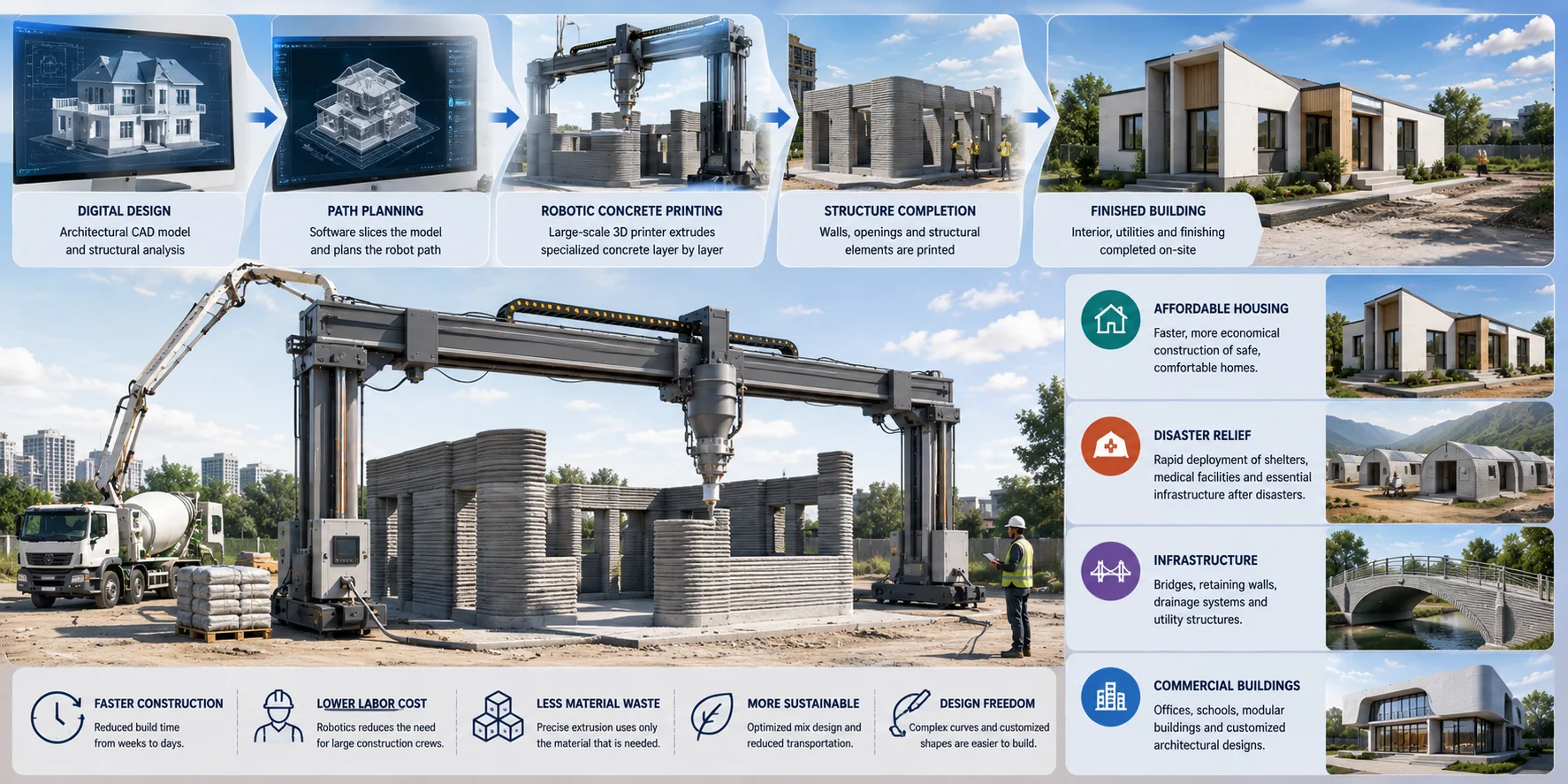
The future of 3D printing in construction is changing how buildings and infrastructure are designed, manufactured, and assembled. Instead of producing small components in a factory, large-scale construction printers can fabricate walls, structural elements, and entire buildings directly on-site using robotic concrete extrusion. By combining digital design with automated construction equipment, additive manufacturing has the potential to reduce labor requirements, shorten construction schedules, and lower material waste while increasing design flexibility.
One of the most visible applications is 3D-printed housing. Large robotic printers deposit layers of specially formulated concrete or cement-based materials according to a digital building model, creating walls with minimal manual intervention. Compared with conventional construction methods, this process can significantly reduce formwork, simplify repetitive tasks, and accelerate the structural phase of a project. Curved walls, customized floor plans, and complex architectural features that would normally increase construction costs can often be produced with little additional effort because they are generated directly from digital models.
Speed is another major advantage. In traditional construction, multiple trades must coordinate excavation, formwork, reinforcement, concrete pouring, and finishing over several weeks or months. With automated concrete extrusion, many of these steps can be streamlined, allowing structural shells to be completed much faster. While a finished building still requires electrical systems, plumbing, insulation, roofing, windows, and interior work, reducing the time needed to construct the main structure can substantially shorten the overall project schedule.
Cost reduction is particularly important for affordable housing and public infrastructure. Because robotic construction systems use material only where it is needed, they can reduce waste while minimizing labor-intensive processes. Digital workflows also improve precision, reducing errors and enabling easier replication of standardized building designs. As construction companies gain more experience with large-scale additive manufacturing, the technology is expected to become increasingly economical for selected building types.
Another promising application is disaster relief and emergency housing. Following earthquakes, floods, hurricanes, or armed conflicts, communities often require safe shelters within days rather than months. Mobile construction printers can potentially produce simple housing units, medical facilities, storage buildings, or sanitation structures close to affected areas using locally available materials when possible. Although logistics, transportation, and site preparation remain challenges, automated construction could provide faster and more cost-effective temporary infrastructure than many conventional building methods.
The technology is also expanding beyond residential buildings into infrastructure projects. Researchers and engineering firms are exploring 3D printing for bridges, retaining walls, drainage systems, architectural facades, utility structures, and precast concrete components. Large robotic systems can fabricate customized structural elements with optimized internal geometries, reducing material consumption while maintaining strength. As better printable concrete mixtures and reinforcement techniques continue to emerge, these applications are expected to become more common.
Despite its rapid progress, construction-scale 3D printing still faces important challenges. Building regulations, structural certification, long-term durability, reinforcement methods, and integration with existing construction practices all require further development. In many projects, 3D printing will complement rather than completely replace traditional construction crews. Human workers will continue to install utilities, perform finishing work, inspect quality, and manage complex building systems.
By 2030, the future of 3D printing in construction will likely be defined by hybrid building methods that combine robotics with conventional engineering. Large-scale printers will handle repetitive structural work, while skilled workers complete specialized tasks that require human expertise. From affordable housing and customized architecture to disaster-response shelters and infrastructure projects, additive manufacturing has the potential to make construction faster, more sustainable, and more responsive to society's growing demand for efficient building solutions.
The Future of 3D Printing in Construction
Aerospace, Automotive and Mass Customization
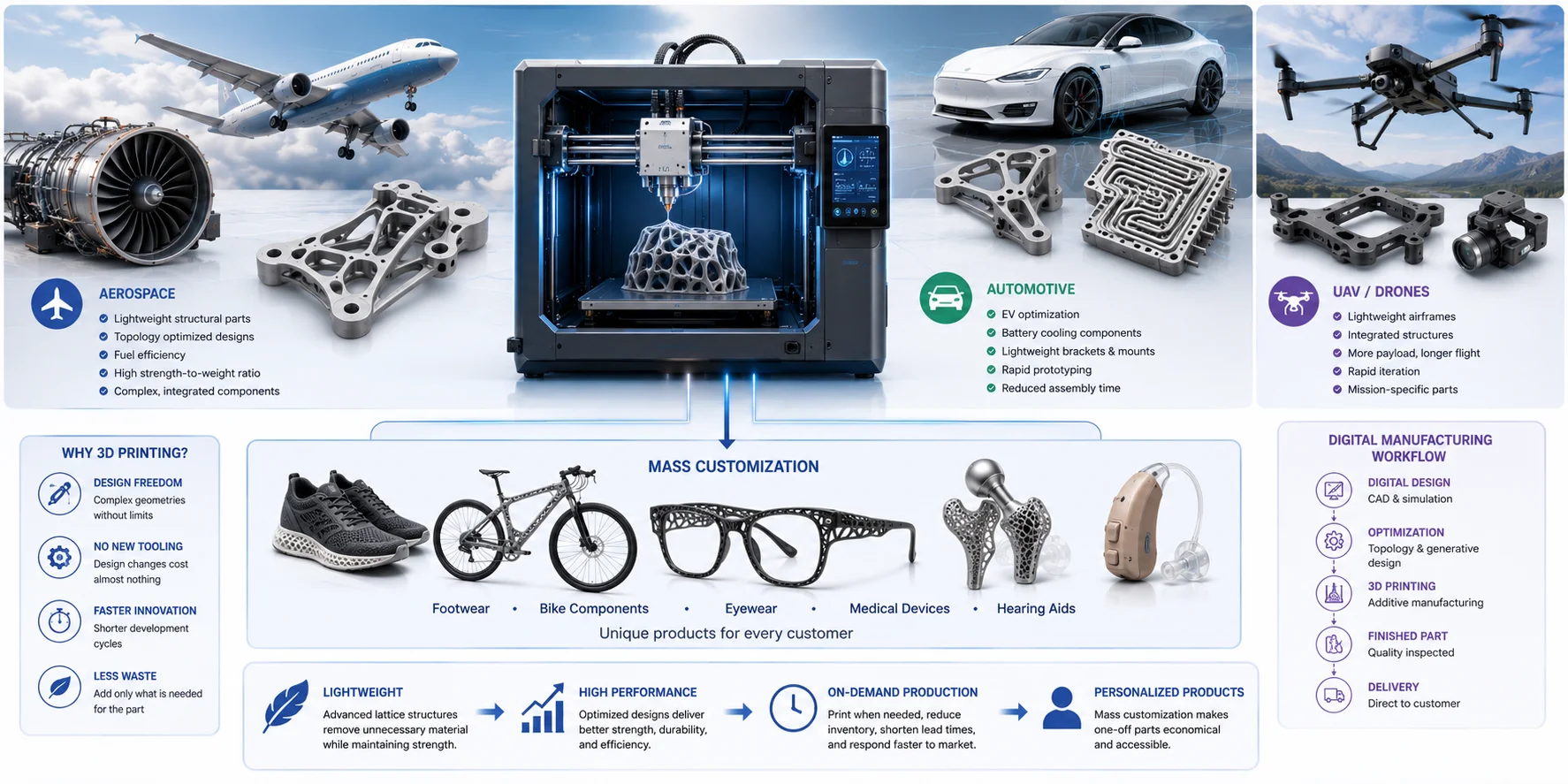
One of the greatest strengths of additive manufacturing is its ability to produce parts that are both high-performance and highly customized. Traditional manufacturing is designed to produce thousands or millions of identical components as efficiently as possible. Every design change usually requires new tooling, molds, or machining processes, increasing both cost and production time. In contrast, 3D printing builds parts directly from digital files, allowing manufacturers to modify designs with little or no additional tooling cost. This combination of design freedom and production flexibility is making additive manufacturing increasingly valuable across aerospace, automotive, robotics, and other high-performance industries.
The aerospace industry continues to lead adoption because every kilogram of weight saved can reduce fuel consumption, extend flight range, and lower operating costs. Engineers use topology optimization and lattice structures to remove unnecessary material while maintaining structural strength. Components such as aircraft brackets, ducting, fuel nozzles, turbine parts, heat exchangers, and satellite structures are increasingly produced with additive manufacturing because they combine lower weight with greater design complexity than conventional manufacturing methods can easily achieve.
The automotive industry is following a similar path, particularly as electric vehicles become more common. Lightweight parts improve vehicle efficiency by reducing energy consumption and extending driving range, making them especially valuable for EV manufacturers. Additive manufacturing also enables optimized battery cooling channels, lightweight suspension components, customized interior parts, and production tooling. Because designs can be updated digitally, engineers can prototype, test, and refine components much faster than with traditional manufacturing methods, shortening development cycles and accelerating innovation.
Another rapidly expanding application is the production of drones and unmanned aerial vehicles (UAVs). UAVs require lightweight yet durable structures that maximize flight time while carrying cameras, sensors, or delivery payloads. 3D printing allows manufacturers to create integrated airframes, aerodynamic housings, mounting brackets, and mission-specific components with minimal assembly. Small production runs can also be manufactured economically, making additive manufacturing particularly attractive for commercial drones, defense applications, scientific research, and agricultural monitoring.
Perhaps the most transformative opportunity is mass customization. Conventional manufacturing becomes increasingly expensive when every product needs to be different because new molds or production setups are required. Additive manufacturing changes this economic model by allowing every printed part to be unique while using the same machine and production workflow. Whether producing customized bicycle components, sports equipment, eyewear, footwear, consumer electronics, or medical devices, manufacturers can personalize products without fundamentally changing the manufacturing process.
Digital production also supports on-demand manufacturing, allowing companies to produce only what customers order instead of maintaining large inventories. This reduces storage costs, minimizes unsold stock, and enables products to be manufactured closer to the point of use. As automation, AI-driven design, and high-speed production continue to improve, the cost of producing customized single items is steadily approaching that of traditional mass production for many applications. This shift is encouraging manufacturers to rethink not only how products are made, but also how they are designed, sold, and delivered.
By 2030, the combination of lightweight engineering, digital manufacturing, and scalable customization is expected to reshape numerous industries. Aerospace companies will continue pursuing lighter, more efficient aircraft, automotive manufacturers will optimize next-generation electric vehicles, and UAV developers will benefit from rapid design iteration. At the same time, consumers will increasingly expect products that are tailored to their individual needs rather than limited to standard sizes and configurations. In this sense, the future of 3D printing is not simply about making better parts—it is about making the right part for the right customer at the right time, without sacrificing manufacturing efficiency.
Sustainability and Distributed Manufacturing
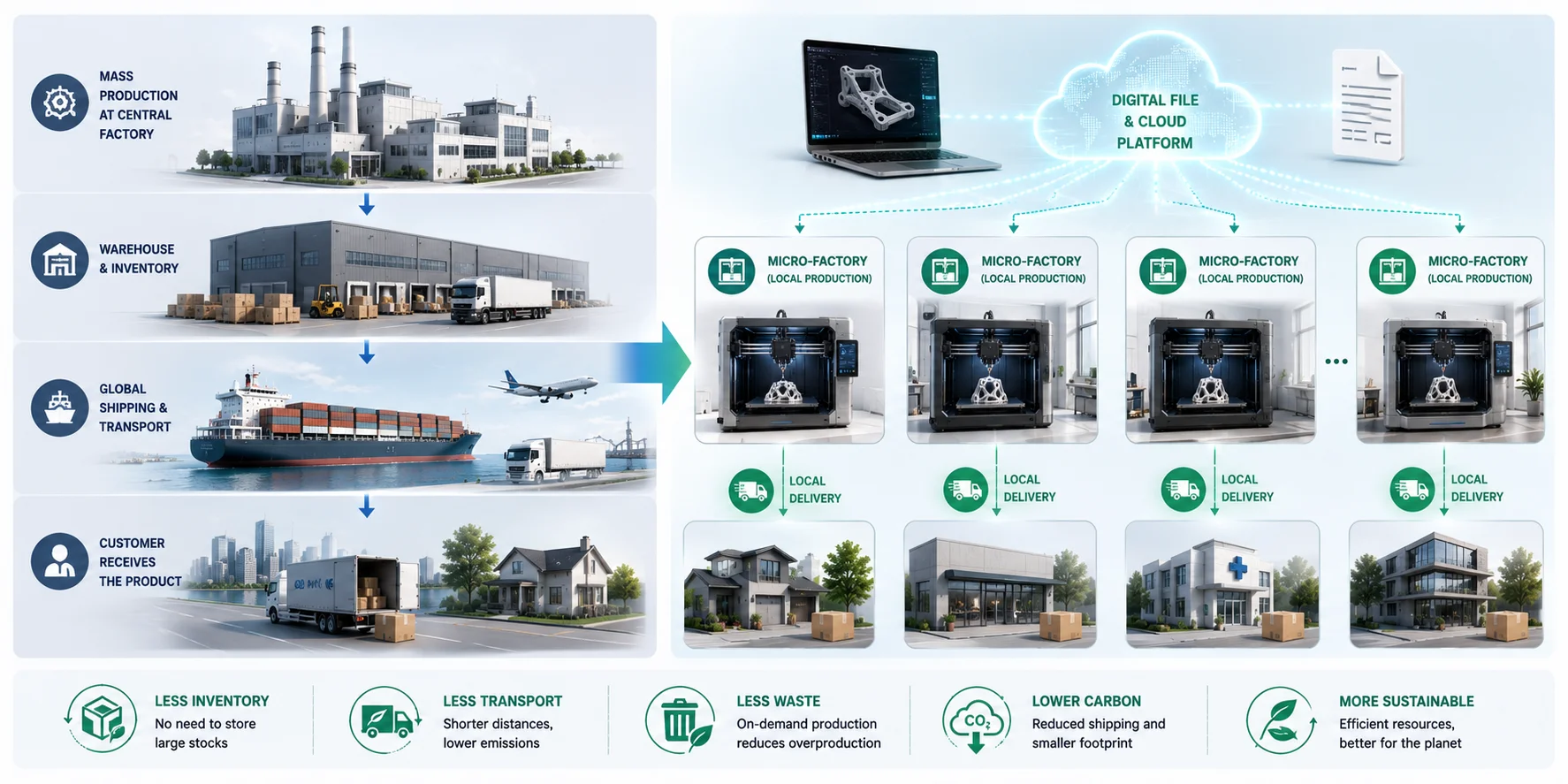
Sustainability is becoming one of the strongest long-term drivers of the future of 3D printing. Unlike traditional manufacturing, which often depends on centralized factories, large inventories, and global shipping networks, additive manufacturing enables products to be made closer to where they are needed. Combined with digital inventories and automated production, this shift is giving rise to a more distributed manufacturing model that can reduce waste, shorten supply chains, and improve resilience.
One of the biggest advantages is on-demand production. Conventional manufacturing frequently requires companies to produce thousands of parts in advance to justify tooling costs, resulting in warehouses full of inventory that may never be sold. By contrast, 3D printing allows manufacturers to produce only what customers actually order. Instead of storing physical products, companies can maintain digital inventories—certified design files that can be printed whenever demand arises. This zero-inventory approach reduces storage costs, minimizes obsolete stock, and lowers the financial risks associated with overproduction.
Material efficiency is another important sustainability benefit. Traditional subtractive manufacturing removes material from larger blocks through cutting, drilling, or milling, often generating significant scrap. Additive manufacturing builds parts layer by layer, placing material only where it is required. Although support structures and post-processing can still create some waste, optimized print settings, topology optimization, and improved material recycling are helping move the industry closer to low-waste—and in some applications, nearly zero-waste—production. Lightweight lattice structures further reduce raw material consumption while maintaining strength and performance.
Distributed manufacturing takes these advantages even further. Instead of producing every product in one massive factory and shipping it across continents, companies can send digital files to regional micro-factories or local print hubs. Certified components can then be manufactured close to customers, reducing transportation distances, lowering carbon emissions, and improving delivery speed. This "print anywhere" model is especially valuable for spare parts, medical devices, industrial equipment, and customized consumer products, where rapid local production is often more important than large production volumes.
Networks of connected print farms are making this vision increasingly practical. Cloud-based production software can distribute jobs automatically across multiple facilities, monitor machine performance in real time, and ensure consistent quality regardless of where a part is printed. Rather than relying on one centralized manufacturing plant, companies can operate distributed production networks that continue functioning even if one facility experiences supply disruptions or unexpected downtime. This flexibility improves supply-chain resilience while supporting more localized manufacturing.
The environmental benefits extend beyond transportation. Producing parts closer to the point of use reduces packaging requirements, lowers fuel consumption, and shortens delivery routes. Digital manufacturing also makes it easier to repair or replace individual components instead of discarding entire products, extending product lifecycles and supporting circular economy initiatives. As recyclable polymers, bio-based materials, and recycled metal powders become more widely available, the sustainability advantages of additive manufacturing are expected to grow further.
By 2030, many manufacturers may no longer think of factories as single physical locations. Instead, production could take place across interconnected networks of regional micro-factories linked by cloud-based design files and AI-powered production management. Products will be manufactured where demand exists rather than where large factories happen to be located. This combination of distributed manufacturing, digital inventories, on-demand production, and more efficient material use has the potential to reduce inventory, transportation, and waste simultaneously—making sustainability not just an environmental benefit, but also a competitive manufacturing strategy for the future.
AI and Generative Design — Lowering the Design Barrier
Artificial intelligence is becoming one of the biggest accelerators in the future of 3D printing. Earlier advances focused mainly on improving printers, materials, and production speed. Today, AI is transforming an equally important stage of the workflow—design itself. By helping users create optimized geometries automatically and dramatically reducing the skills needed to build printable models, AI is making additive manufacturing accessible to far more people than traditional CAD software ever could.
One major development is AI-driven generative design. Instead of manually modeling every feature, engineers define design goals such as weight, strength, load conditions, material type, manufacturing constraints, and cost targets. AI algorithms then generate hundreds or even thousands of possible solutions, evaluating each option to identify the most efficient structures. The resulting designs often resemble organic or lattice-like forms that use less material while maintaining excellent mechanical performance. These optimized geometries are particularly valuable for aerospace, automotive, robotics, and medical devices, where reducing weight while preserving strength directly improves performance and efficiency.
Generative design also shortens product development cycles. Rather than spending weeks refining multiple CAD concepts manually, engineering teams can explore numerous design alternatives within hours. AI rapidly evaluates structural performance, highlights the most promising solutions, and allows engineers to focus on selecting and validating designs instead of building every iteration from scratch. Combined with topology optimization and simulation software, this approach reduces material consumption, lowers production costs, and improves product performance before a single part is printed.
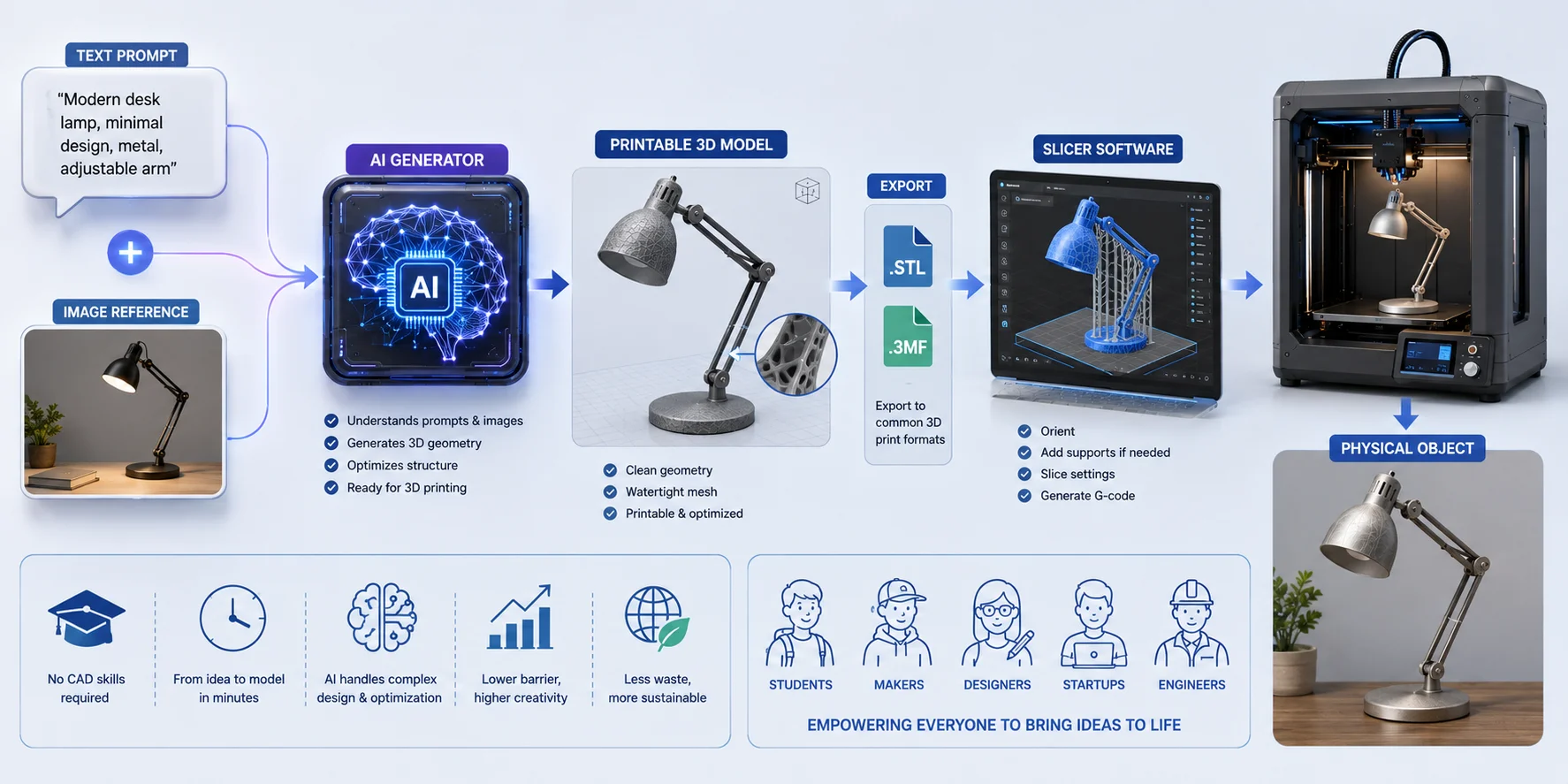
The second—and perhaps even more transformative—trend is the rise of generative AI for 3D modeling. Traditionally, preparing a model for 3D printing required experience with professional CAD or digital sculpting software, creating a steep learning curve for beginners. Today, AI is lowering that barrier dramatically. Users can describe an object with a simple text prompt or upload a reference image, and AI can generate a printable 3D model automatically. Instead of spending hours learning complex modeling techniques, creators can move directly from an idea to a manufacturable model in minutes.
This shift is making text-to-3D and image-to-3D workflows increasingly practical for hobbyists, educators, designers, entrepreneurs, and small businesses. A concept sketch, product photo, or one-sentence description can become a three-dimensional model that is refined by AI before being exported in common formats such as STL or 3MF for slicing and printing. While complex engineering projects still require professional validation and optimization, AI dramatically reduces the amount of manual modeling needed during the early stages of product development.
A good example of this trend is Tripo AI. Rather than replacing professional engineering software, tools such as Tripo AI Image to 3D and Tripo AI Text to 3D demonstrate how AI can simplify the first step of the workflow. Users can generate a printable 3D model from an image or text prompt, refine the geometry when needed, and export it in standard formats that fit naturally into existing 3D printing workflows. The result is a smoother pipeline from idea to printable model without requiring advanced 3D modeling expertise from the beginning.
Lowering the design barrier has important implications beyond individual creators. Small startups, makerspaces, schools, and independent inventors can now prototype products with capabilities that previously required dedicated CAD specialists. Combined with cloud-based collaboration and distributed manufacturing, AI enables much smaller teams to design, test, iterate, and manufacture products at a speed that was once only possible for large engineering organizations.
By 2030, AI is likely to become a standard component of nearly every additive manufacturing workflow. Engineers will continue using generative design to optimize performance, while creators with little or no CAD experience will increasingly rely on text-to-3D and image-to-3D tools to produce printable models. Together, these two layers of AI—design optimization and AI-assisted model creation—are lowering the barrier to entry and making on-demand manufacturing accessible to a much broader community than ever before.
Challenges and What Could Slow It Down
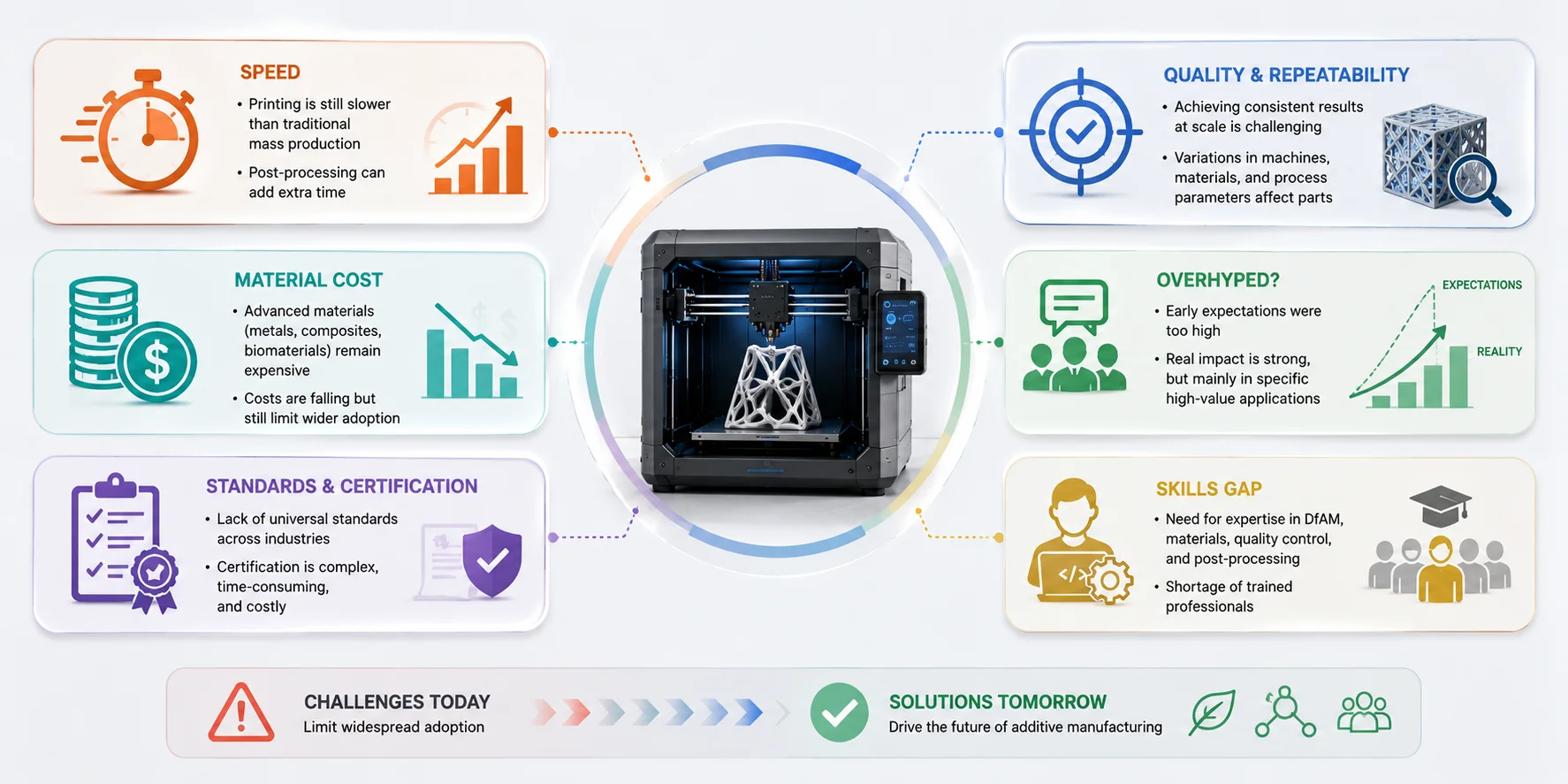
Despite its rapid progress, the future of 3D printing still faces several obstacles before additive manufacturing becomes a mainstream production method. While printers are becoming faster and more capable, technical, economic, and regulatory challenges continue to limit adoption in many industries.
One of the biggest barriers is speed and cost. Industrial 3D printers are much faster than earlier generations, but traditional processes such as injection molding and CNC machining remain more economical for producing very large quantities of identical parts. At the same time, engineering-grade polymers, metal powders, and composite materials are still relatively expensive, making some applications less cost-effective than conventional manufacturing.
Another challenge is repeatability and quality consistency. Printing one successful part is very different from producing thousands with identical strength, dimensions, and surface quality. Manufacturers must carefully control materials, machine calibration, and process parameters to achieve reliable results. This is particularly important in industries such as aerospace, automotive, and 3D printing in healthcare, where product quality directly affects safety.
Closely related is the need for standards and certification. Aerospace components, medical implants, and critical industrial parts require strict testing, documentation, and regulatory approval before they can be used. As additive manufacturing expands into production, internationally recognized standards will play a key role in building trust across industries.
Another frequently discussed issue is whether 3D printing has been overhyped. Early predictions suggested that every home would eventually have a 3D printer, but the technology has instead found its greatest success in professional manufacturing, healthcare, aerospace, and engineering. Rather than replacing every factory, it is proving most valuable where customization, lightweight design, or complex geometry provide clear advantages.
Finally, the industry faces a skills gap. Although AI-powered design tools are making modeling easier, manufacturers still need engineers and technicians who understand materials, design for additive manufacturing (DfAM), quality control, and production workflows. As AI continues lowering the design barrier, the demand for digital manufacturing skills will continue to grow.
Overall, the biggest challenge is not whether 3D printing works—it already does. The real question is how quickly the industry can improve speed, reduce costs, strengthen standards, and train skilled professionals. Addressing these issues will determine how widely additive manufacturing is adopted over the next decade.
Frequently Asked Questions
What is the biggest problem with 3D printing?
The biggest challenges are speed, material cost, and consistent quality. While 3D printing is excellent for customization, traditional manufacturing is still more efficient for large-scale production.
Is it worth starting a 3D printing business in 2026?
Yes, especially if you target a niche such as custom products, prototypes, or replacement parts. Success depends on offering specialized value rather than competing on price alone.
What is the most profitable thing to 3D print?
High-value custom products, engineering prototypes, replacement parts, medical models, and personalized accessories are often the most profitable because they solve specific customer needs.
Can 3D printers print polypropylene?
Yes. Many FDM printers can print polypropylene (PP), but it requires proper print settings, a heated bed, and good bed adhesion to reduce warping.
Conclusion
By 2030, 3D printing will be shaped by faster production, stronger materials, AI-assisted design, and stricter certification; by 2050, distributed manufacturing may scale much further. Turn a photo or a single line of text into a printable 3D model with Tripo AI, then export to STL or 3MF and send it to your slicer.