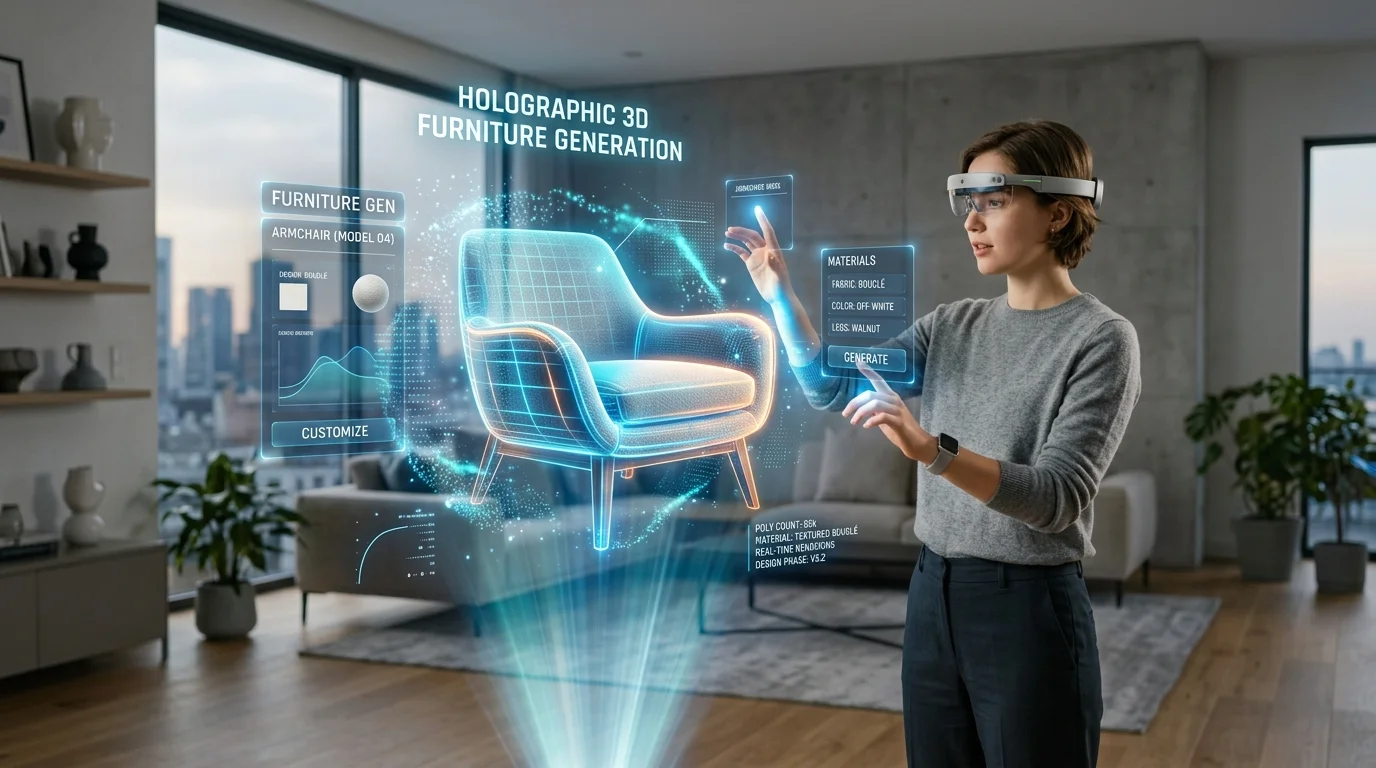
Освоение размещения мебели в AR с учетом реального освещения
Профессиональное руководство по синхронизации реального освещения и PBR-материалов для безупречного 3D-дизайна пространства.
Размещение виртуальной мебели в физическом пространстве часто приводит к появлению «парящих», оторванных от реальности объектов, которые нарушают визуальное погружение. В современном ИИ-дизайне интерьера в 3D эта проблема полностью связана с тем, что статические 3D-ассеты не реагируют на динамические условия освещения реального мира. Передовые пространственные вычисления и искусственный интеллект теперь решают эту фундаментальную задачу, синтезируя данные о реальном освещении пространства с физически точными материалами, гарантируя, что виртуальный декор точно соответствует атмосферным условиям конкретной комнаты.
Ключевые выводы
- Динамическая оценка HDR (расширенного динамического диапазона) заменяет статичное студийное освещение для полноценной пространственной интеграции.
- Физически корректный рендеринг (PBR) необходим для того, чтобы виртуальные материалы правильно реагировали на изменения окружающего света в физическом пространстве.
- Современные конвейеры генерации автоматически выводят форматы, готовые для AR, с предварительно оптимизированными узлами материалов, разработанными для движков рендеринга в реальном времени.
- Устранение несоответствия теней требует точной синхронизации данных датчиков окружающего света и интеллектуального применения карт нормалей.
Эволюция ИИ-дизайна интерьера в 3D в 2026 году
Искусственный интеллект значительно трансформировал пространственные вычисления, преодолев разрыв между статичными 3D-моделями и динамическими средами дополненной реальности. Критически важная роль синхронизации освещения в реальном времени гарантирует, что виртуальные объекты поглощают, отражают и отбрасывают свет точно так же, как их физические аналоги, обеспечивая подлинное пространственное погружение.
Переход от примитивных приложений дополненной реальности к сложным системам пространственного проектирования был продиктован острой необходимостью в визуальной достоверности. Ранние версии программ для дизайна интерьера просто накладывали цифровые объекты на двухмерное изображение с камеры, игнорируя сложное взаимодействие фотонов в физической комнате. К 2026 году интеграция передового 3D-генеративного ИИ установила новый технический стандарт для отрасли. Эти системы не просто визуализируют геометрический объект; они имитируют то, как именно этот объект существует в конкретном атмосферном контексте.
Почему освещение определяет реалистичность AR
Человеческое восприятие очень чувствительно к аномалиям освещения. Когда пользователь ставит виртуальное кресло рядом с физическим окном, мозг подсознательно ожидает, что кресло будет демонстрировать вполне определенное поведение света. Если виртуальное кресло сохраняет плоскую, равномерную яркость, когнитивная иллюзия мгновенно разрушается.
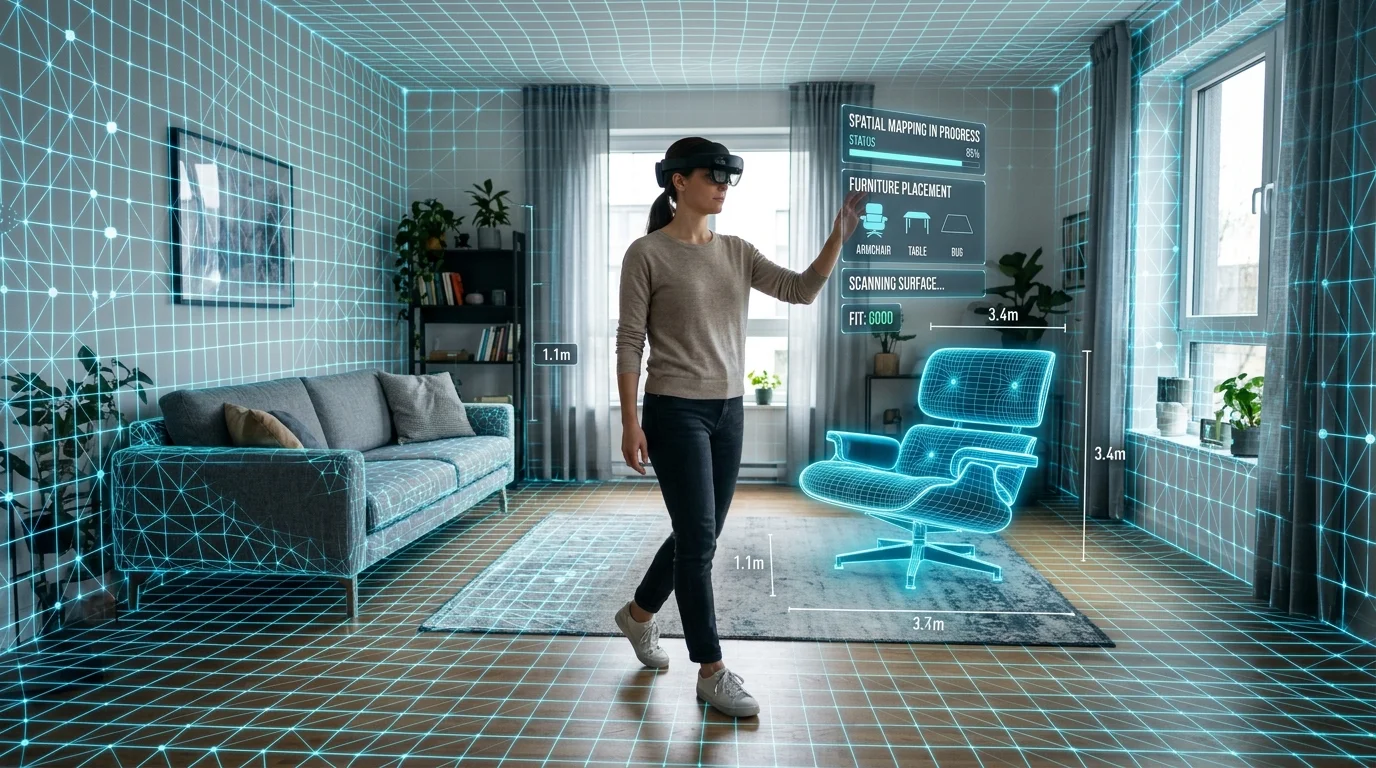
Механика размещения мебели в AR с учетом реального освещения
Современные пространственные приложения опираются на передовое пространственное картирование, датчики окружающего света и методы динамической оценки HDR.
Экологический HDR и генерация динамических теней
Для воспроизведения сложного реального освещения приложения дополненной реальности используют технологию Environmental High Dynamic Range (HDR). Когда камера устройства сканирует физическую комнату, программное обеспечение в реальном времени создает 360-градусную карту освещения. Эта динамическая карта определяет основные источники света и фиксирует их цветовую температуру.
Решающая роль физически корректного рендеринга (PBR)
Точная оценка освещения неэффективна, если 3D-модель не может правильно на него реагировать. Именно здесь на помощь приходит физически корректный рендеринг (PBR). PBR математически моделирует взаимодействие света со свойствами материала, включая базовый цвет, шероховатость, металличность и карты нормалей. Дизайнеры часто полагаются на конвейеры ИИ-текстурирования для автоматического создания этих сложных узлов.
Подготовка 3D-моделей для AR с помощью Tripo AI
Использование Tripo AI позволяет дизайнерам создавать готовые к AR 3D-ассеты мебели, оснащенные оптимизированными PBR-текстурами.
Tripo AI устраняет проблему «запеченного» освещения, генерируя чистые PBR-материалы, которые полагаются на движки реального времени для освещения. Благодаря алгоритму 3.1 с более чем 200 миллиардами параметров, система обеспечивает точную проработку микродеталей поверхности, необходимых для корректного взаимодействия со светом.
Экспорт в форматы GLB и USD
Дизайнеры могут экспортировать эти ассеты напрямую в форматы USD, FBX, OBJ, STL, GLB и 3MF. Для современных пространственных вычислений GLB и USD являются отраслевыми стандартами. Если требуется конвертация формата, специальный инструмент конвертации 3D-форматов может перестроить данные без потери критически важных карт материалов.
Узнайте больше о решениях для ИИ-дизайна интерьера в 3D.
Часто задаваемые вопросы
В: Как AR-приложения оценивают реальное освещение для 3D-мебели? О: Камеры устройств и датчики окружающего света непрерывно сканируют физическую среду для создания динамических карт окружения. Эти данные математически преобразуются в сферические гармоники и виртуальные световые зонды для освещения 3D-мебели под правильными углами.
В: Может ли Tripo AI генерировать материалы, отражающие динамическое AR-освещение? О: Да, процесс генерации специально выводит стандартные PBR-текстуры. Платформа работает на основе кредитов: бесплатный тариф предоставляет 300 кредитов в месяц (без права коммерческого использования), а тариф Pro — 3000 кредитов в месяц для профессионального использования.
В: Почему виртуальные диваны иногда выглядят плоскими или светящимися в моем AR-планировщике? О: Это часто вызвано отсутствием карт нормалей, данных о фоновом затенении (ambient occlusion) или некорректным сопоставлением с окружающим освещением. Без них движок не может правильно отобразить микродетали поверхности или объем.