Utiliser les insights de Dolphin Radar pour créer de meilleurs assets 3D générés par l'IA avec Tripo
Introduction
Instagram et Reels sont devenus des espaces très concurrentiels où l'impact visuel détermine si un contenu est remarqué ou ignoré. Alors que la plateforme favorise de plus en plus les formats dynamiques à fort engagement, de nombreux créateurs et marques explorent les assets 3D générés par l'IA pour se démarquer. Ces assets, qui vont des personnages virtuels et visualisations de produits aux scènes animées et mascottes de marque, offrent de nouvelles façons de capter l'attention et de communiquer plus efficacement.
Cependant, générer rapidement du contenu 3D ne suffit pas. Le véritable défi consiste à s'assurer que les assets créés trouvent réellement un écho auprès du public visé. Sans comprendre à quels styles visuels, détails et récits les gens réagissent déjà, même un travail 3D techniquement impressionnant peut ne pas produire l'effet escompté.
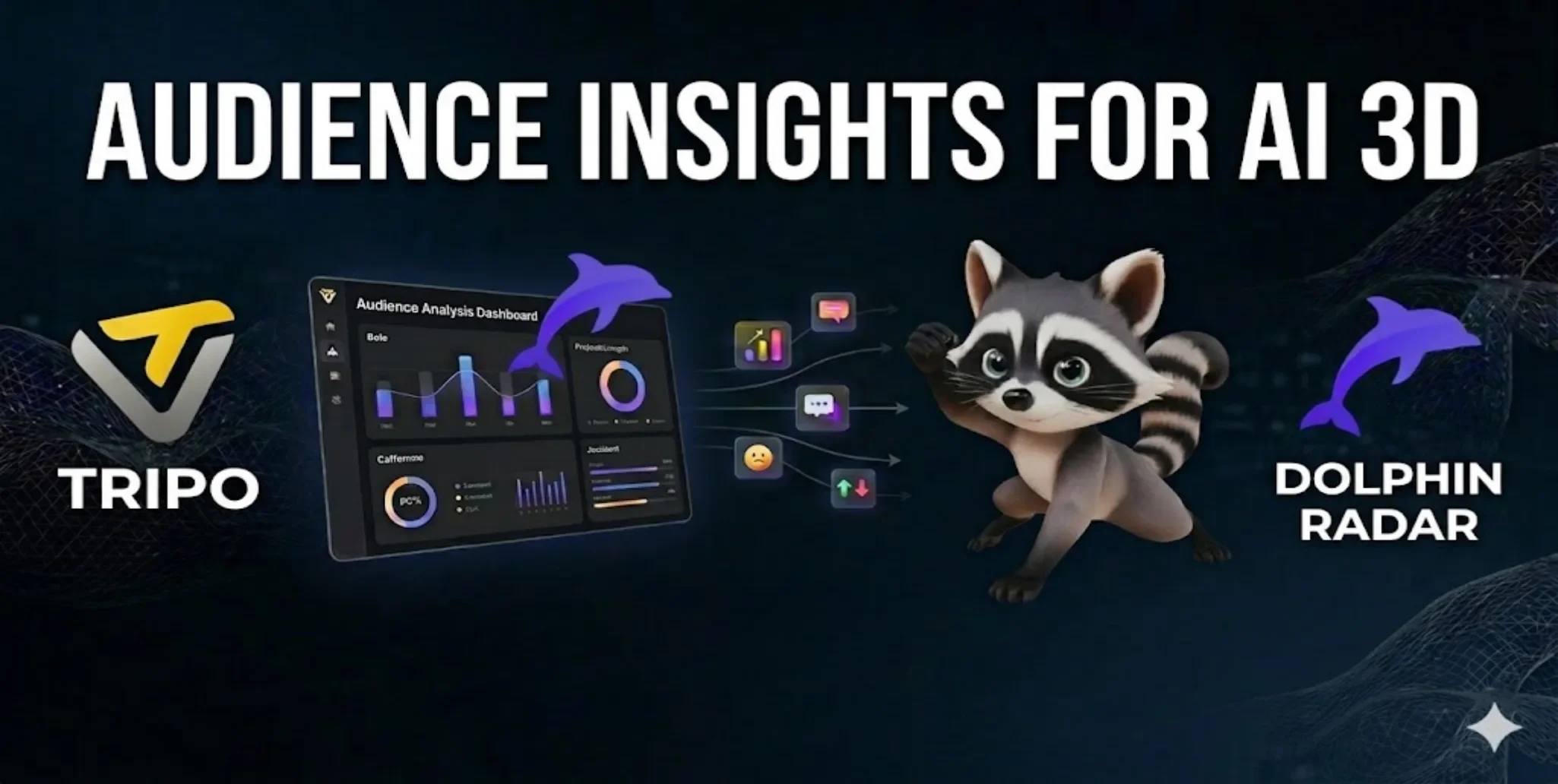
C'est là que Dolphin Radar peut soutenir le processus créatif. En tant qu'outil de suivi d'activité Instagram et d'analytics, Dolphin Radar aide les créateurs à analyser l'activité publique sur Instagram, les centres d'intérêt de l'audience, les hashtags, les likes, les commentaires, les follows et les schémas comportementaux au niveau des comptes. Ces insights peuvent orienter la direction créative avant que les assets ne soient générés dans Tripo.
Cet article explore comment les créateurs peuvent combiner les capacités de recherche Instagram de Dolphin Radar avec la plateforme de génération 3D par IA de Tripo afin de produire un contenu visuel plus pertinent et plus efficace. En ancrant les décisions créatives dans de véritables signaux d'audience, les créateurs peuvent passer d'une expérimentation aléatoire à un développement de contenu 3D plus stratégique.
Pourquoi le contenu 3D gagne du terrain sur Instagram
Plusieurs facteurs alimentent l'intérêt croissant pour le contenu 3D sur Instagram.
Tout d'abord, l'algorithme de la plateforme récompense les contenus qui retiennent l'attention. Les Reels et autres formats basés sur le mouvement donnent souvent de bons résultats parce qu'ils encouragent une durée de visionnage plus longue, les visionnages répétés et des interactions plus fortes. Les visuels en trois dimensions ajoutent une couche d'engagement supplémentaire parce qu'ils semblent plus immersifs et permettent aux spectateurs d'examiner des produits, des personnages ou des scènes sous plusieurs angles.
Ensuite, les assets 3D offrent des avantages pratiques pour des cas d'usage spécifiques. Dans l'e-commerce, les modèles de produits rotatifs aident les clients à évaluer les articles plus en détail que de simples photos plates. Dans la mode et la beauté, des mannequins virtuels peuvent présenter des tenues et des looks maquillage de manière cohérente dans différents contextes. Les créateurs gaming et lifestyle bénéficient de personnages et d'environnements animés qui peuvent être réutilisés sur plusieurs publications.
Troisièmement, les avancées de l'IA ont considérablement réduit le temps et les compétences nécessaires pour produire des assets 3D. Ce qui demandait autrefois des logiciels de modélisation spécialisés et des heures de travail manuel peut désormais être réalisé en quelques minutes. Cette accessibilité a ouvert la porte à davantage de créateurs et de petites marques pour expérimenter la 3D sans gros budgets de production.
Malgré ces avantages, de nombreux créateurs peinent encore à obtenir de bons résultats. Le problème réside rarement uniquement dans la qualité du modèle 3D lui-même. Le plus souvent, il s'agit d'un décalage entre la direction visuelle choisie et ce à quoi le public cible réagit réellement.
L'étape cruciale avant la création : comprendre les préférences de l'audience
Créer du contenu 3D sans d'abord comprendre les préférences de l'audience revient à concevoir un produit sans étudier le marché. Il est possible de produire quelque chose de techniquement soigné, tout en passant à côté de ce que les gens trouvent réellement convaincant.
Les préférences de l'audience sur Instagram peuvent être comprises à travers des signaux publics. Certains styles visuels attirent davantage l'attention dans des niches spécifiques. Certains comptes enregistrent de meilleures interactions avec des textures réalistes et un éclairage cinématographique, tandis que d'autres performent mieux avec des approches stylisées ou abstraites. Le style d'animation, les palettes de couleurs, le niveau de détail et même les types de mouvements montrés peuvent tous influencer la manière dont le contenu est reçu.
Étudier ces schémas avant la génération aide les créateurs à prendre des décisions plus éclairées. Au lieu de deviner quelle direction pourrait fonctionner, ils peuvent identifier les éléments récurrents qui trouvent déjà un écho dans leur niche. Cela réduit les efforts gaspillés et augmente la probabilité que les assets finaux performent bien une fois publiés.
Utiliser Dolphin Radar pour extraire des signaux créatifs avant d'ouvrir Tripo
Avant de générer des assets 3D, comprendre quelles directions visuelles trouvent déjà un écho auprès des audiences peut considérablement améliorer les décisions créatives. Dolphin Radar aide les créateurs à analyser l'activité publique sur Instagram plus efficacement et à transformer des signaux sociaux dispersés en une direction créative concrète.
Par exemple, un créateur qui prévoit de concevoir une mascotte 3D ou un personnage de style jeu peut utiliser Dolphin Radar pour étudier des comptes Instagram pertinents dans cette niche. En examinant les likes, commentaires, follows, hashtags et l'activité des comptes publics, le créateur peut constater que les audiences réagissent fortement aux formes douces, aux visages expressifs, aux couleurs vives ou aux accessoires ludiques.
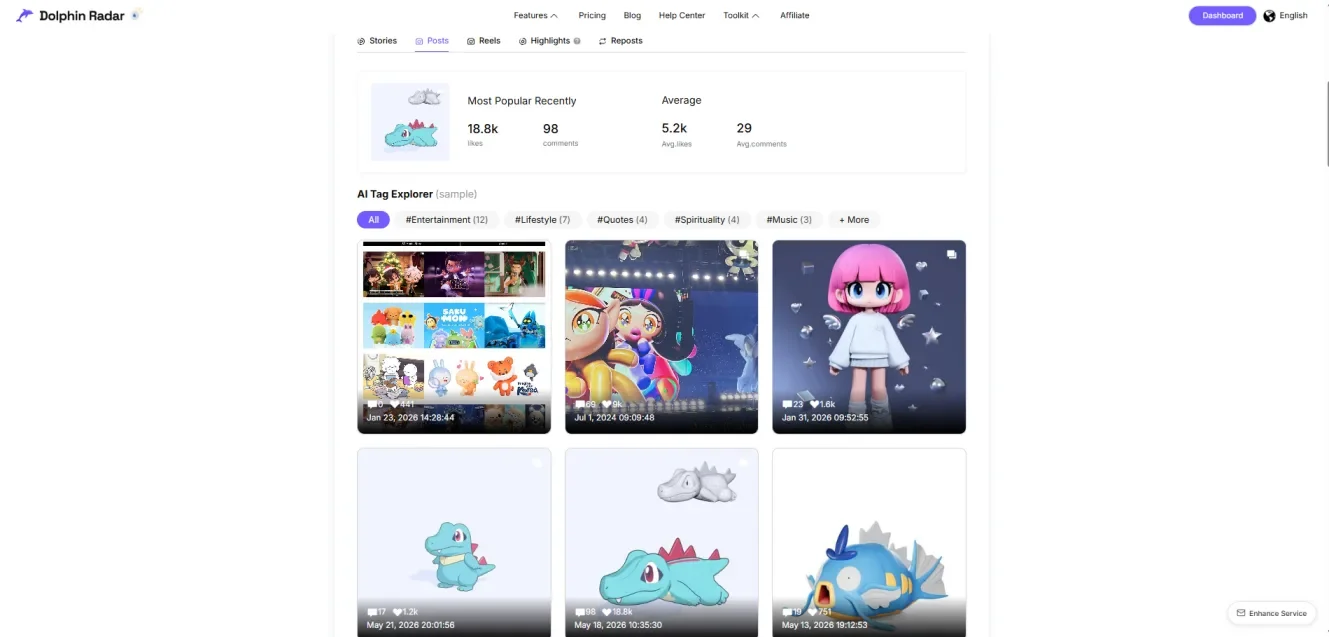
Ces constats peuvent ensuite être traduits en un prompt Tripo plus ciblé. Au lieu de simplement demander à Tripo de générer « un personnage 3D », le créateur peut décrire une direction davantage informée par l'audience, par exemple :
Une adorable mascotte de marque 3D stylisée avec des formes douces et arrondies, des couleurs vives, des traits du visage expressifs et un design ludique adapté aux réseaux sociaux.
Examiner les commentaires peut également aider les créateurs à identifier les réactions récurrentes de l'audience. Les réponses positives à des qualités comme le côté mignon, l'expressivité, la nouveauté ou la clarté visuelle peuvent fournir une direction utile pour de nouveaux travaux créatifs.
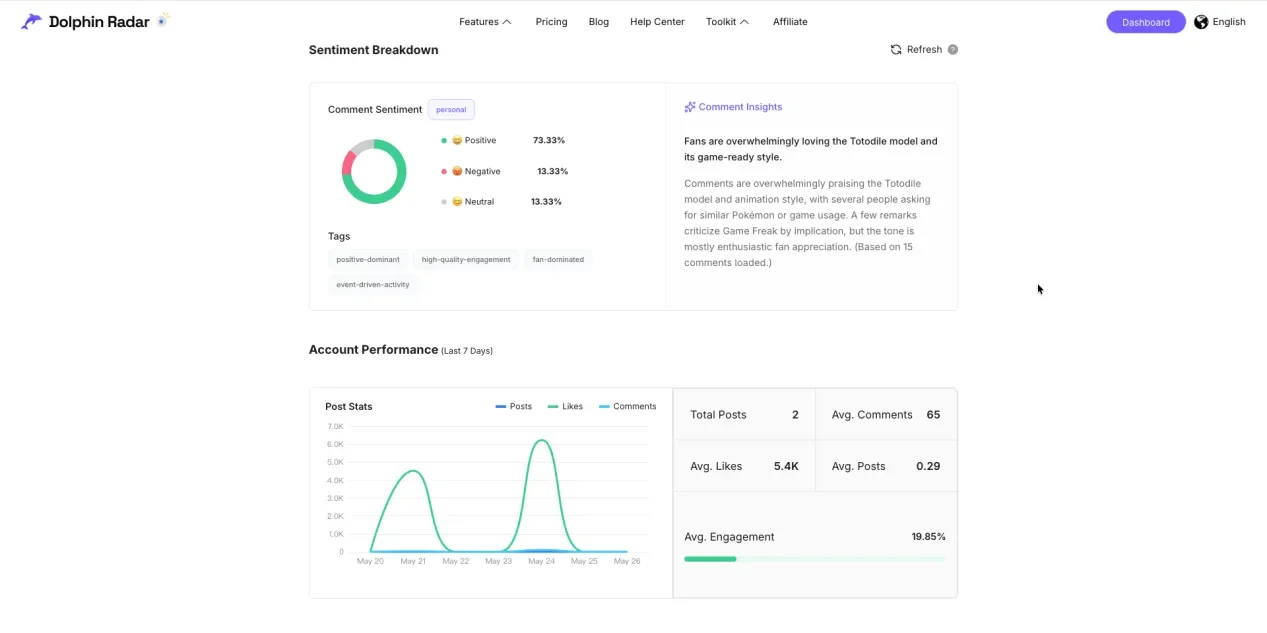
Le Instagram Hashtag Generator de Dolphin Radar peut aussi soutenir la découvrabilité après la création de l'asset. Une fois qu'un créateur dispose d'un modèle 3D finalisé ou d'une vidéo rendue, il peut générer des ensembles de hashtags pertinents selon le thème du contenu, augmentant ainsi les chances que la publication atteigne la bonne audience.
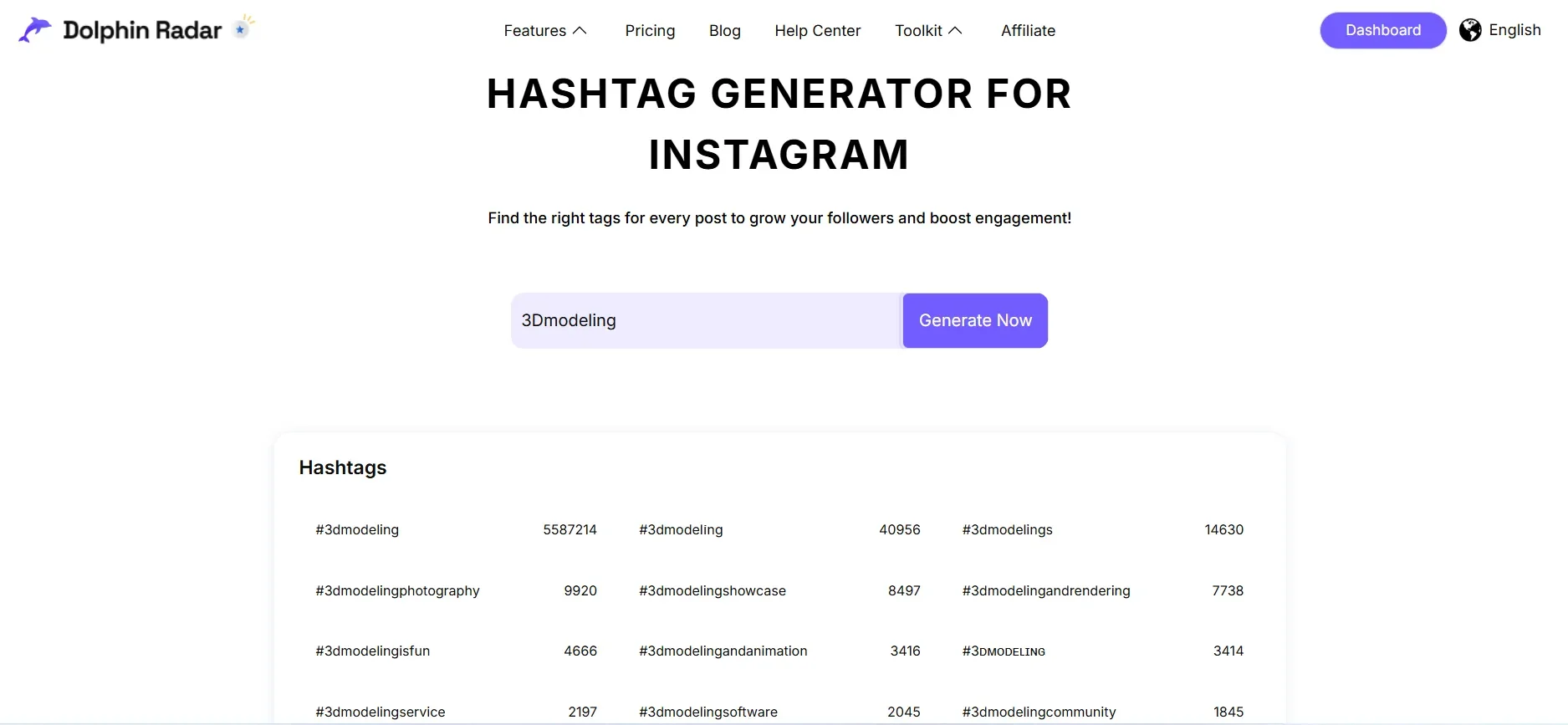
Utilisées ensemble, ces étapes de recherche donnent aux créateurs une compréhension plus claire des directions visuelles prometteuses avant même de commencer à travailler dans Tripo. Cette préparation réduit les approximations et aide les assets générés par l'IA à mieux correspondre aux attentes de l'audience.
Tripo : transformer les insights de Dolphin Radar en assets 3D de haute qualité
Une fois les signaux d'audience collectés et interprétés via Dolphin Radar, l'étape suivante consiste à transformer ces insights en véritables assets 3D. C'est là que Tripo apporte une valeur significative.
Tripo prend en charge à la fois la génération Image-to-3D et Text-to-3D, permettant aux créateurs de partir soit de photos de référence, soit de descriptions détaillées. Au-delà de la génération initiale, la plateforme inclut plusieurs outils qui aident à affiner les assets pour un usage professionnel.
La Segmentation sépare automatiquement les différentes parties d'un modèle, ce qui facilite l'ajustement d'éléments individuels comme les vêtements, les accessoires ou les composants de produit. La Retopology optimise la structure du mesh sous-jacent, produisant une géométrie plus propre et plus performante dans les viewers web et les applications AR. AI Texturing améliore les détails de surface et les propriétés des matériaux, aidant les modèles à obtenir des réactions réalistes à l'éclairage et des qualités de tissu crédibles. Auto Rigging ajoute des structures squelettiques aux personnages, permettant des animations simples sans configuration manuelle.
Ces capacités sont particulièrement précieuses parce que les retours de l'audience mettent souvent en avant des qualités spécifiques, comme le côté mignon, l'expressivité ou une stylisation propre, qui exigent un contrôle précis pendant la création. Pouvoir affiner rapidement ces aspects après la génération permet aux créateurs de produire des assets qui correspondent de plus près à ce que la recherche a montré que les audiences préfèrent.
Exemples pratiques : transformer les signaux Instagram en assets 3D prêts pour la production
De nombreux créateurs appliquent désormais les insights de Dolphin Radar lors de la génération d'assets dans Tripo. Voici deux exemples pratiques.
Exemple 1 : personnage de jeu stylisé
La recherche sur des comptes Instagram pertinents peut montrer que les personnages animaux mignons et stylisés reçoivent de fortes interactions et des commentaires positifs. Avec Dolphin Radar, les créateurs peuvent examiner l'activité des comptes publics, les commentaires, les hashtags et les signaux d'intérêt de l'audience afin de comprendre quels éléments de design semblent les plus attractifs.
Par exemple, la recherche peut indiquer que les audiences réagissent bien aux formes douces, aux visages expressifs, aux couleurs vives et aux concepts de personnages ludiques. Cet insight peut inspirer la création d'une direction de personnage similaire mais originale.
En utilisant la fonctionnalité Text-to-3D de Tripo, les créateurs peuvent rapidement générer un modèle 3D complet à partir de ces idées informées par l'audience. Une fois créé, Auto Rigging permet d'animer le personnage avec différentes poses et actions, ce qui le rend prêt pour des jeux, des Reels animés ou du contenu pour les réseaux sociaux. Des outils comme Segmentation et AI Texturing aident également à affiner l'expressivité et l'attrait visuel du modèle afin de mieux correspondre aux préférences de l'audience observées pendant la recherche.
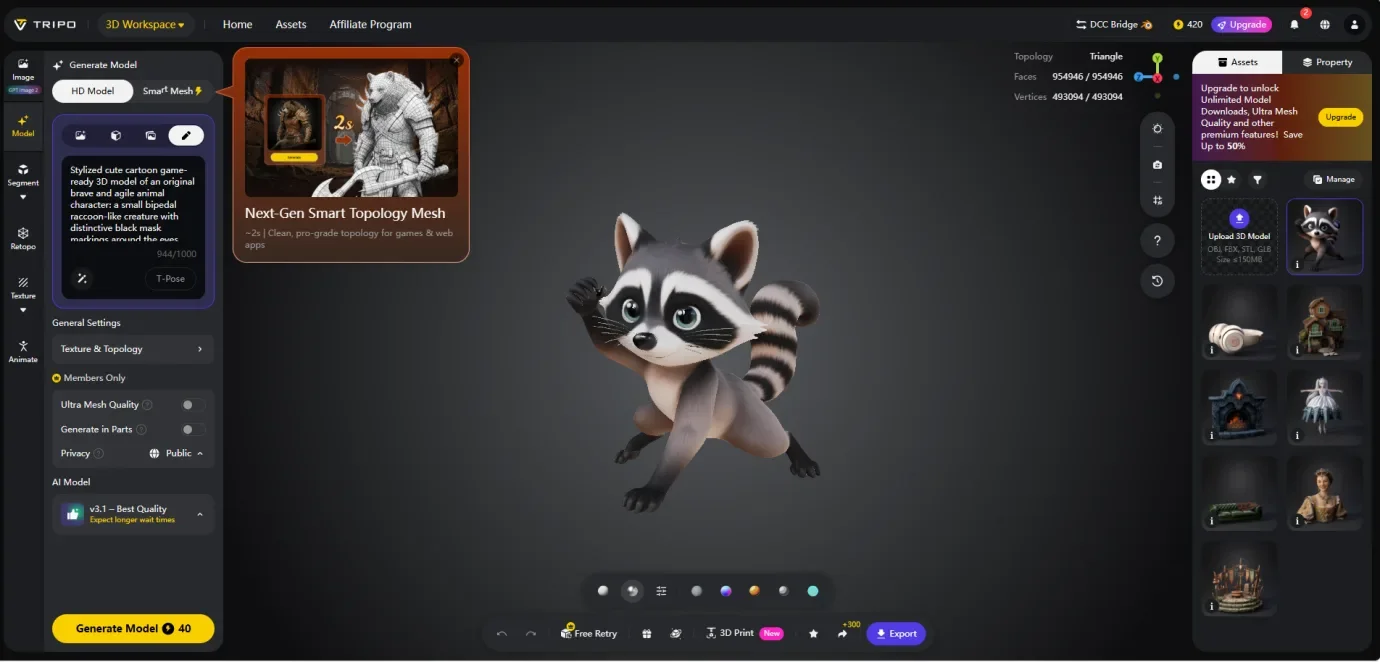
Exemple 2 : visualisation de produit pour l'e-commerce
Pour le contenu centré sur les produits, Dolphin Radar peut aider les marketeurs à étudier l'activité publique sur Instagram autour de produits similaires, de créateurs et d'audiences de niche. En examinant les hashtags, commentaires, follows, likes et schémas comportementaux visibles des comptes, les marketeurs peuvent mieux comprendre quels styles de présentation attirent l'attention.
Par exemple, la recherche peut montrer que les audiences réagissent bien à des angles de produit épurés, un éclairage doux, des variations de couleurs audacieuses ou une présentation orientée lifestyle. Tripo peut alors être utilisé pour générer ou affiner des modèles 3D de produits de haute qualité qui reflètent ces signaux créatifs.
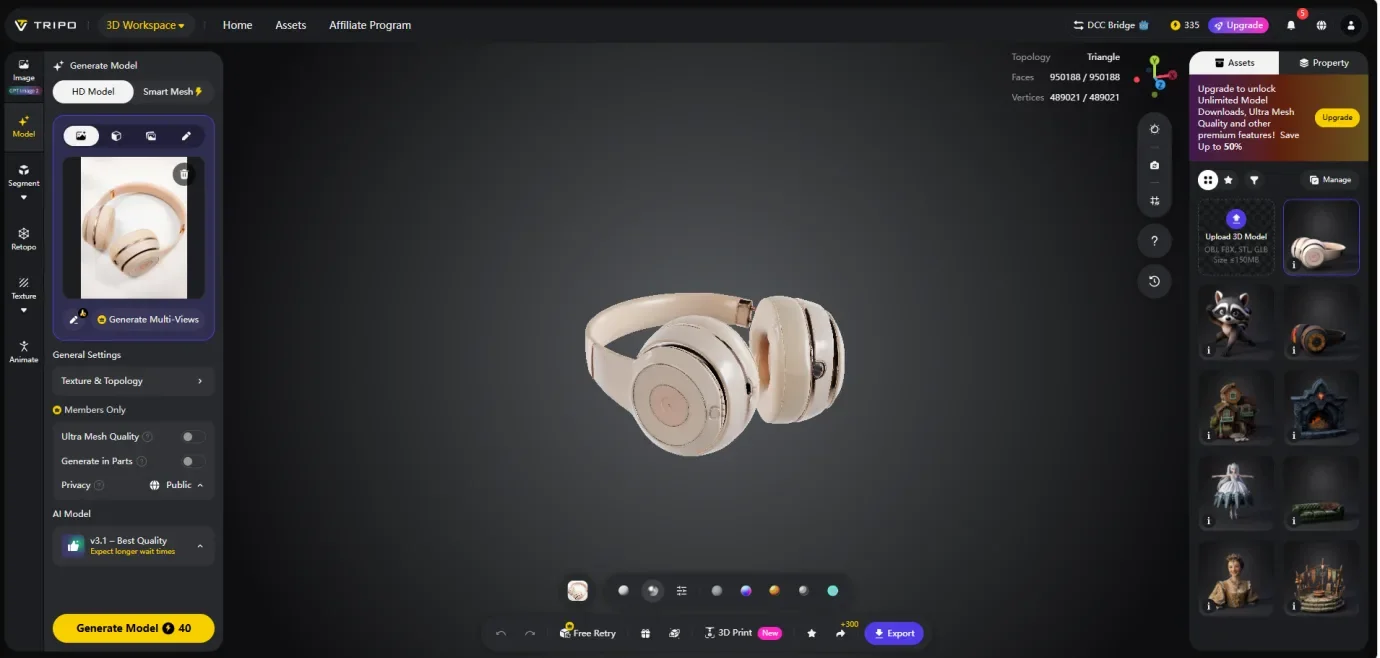
Les créateurs peuvent produire des vues rotatives à 360 degrés, de courtes animations produit et des visuels prêts pour les carrousels. Ils peuvent également ajuster les couleurs et les matériaux pour les aligner avec l'identité de la marque. Les assets obtenus conviennent parfaitement aux affichages interactifs, aux Instagram Reels, aux pages produit ou aux campagnes sur les réseaux sociaux.
Ces exemples montrent comment les capacités de recherche d'audience de Dolphin Radar et les outils de génération et d'affinage de Tripo peuvent fonctionner ensemble. Qu'il s'agisse de créer des personnages stylisés ou des visuels produit professionnels, les créateurs peuvent passer plus efficacement de signaux Instagram observés à des assets 3D polis et prêts pour la production.
Un workflow plus intelligent : rechercher, générer, publier, optimiser
Les meilleurs résultats sont obtenus lorsque Dolphin Radar et Tripo sont utilisés ensemble dans le cadre d'un workflow reproductible.
D'abord, les créateurs utilisent Dolphin Radar pour rechercher l'activité publique sur Instagram, le comportement des comptes, les hashtags et les centres d'intérêt de l'audience dans une niche spécifique.
Ensuite, ils traduisent ces constats en directions créatives claires et en prompts pour Tripo.
Puis, ils utilisent Tripo pour générer et affiner des assets 3D à partir de ces directions.
Enfin, ils publient le contenu sur Instagram et continuent d'utiliser les fonctionnalités de hashtags et de suivi d'activité de Dolphin Radar pour soutenir la découvrabilité et les futures décisions de contenu.
Ce workflow aide les créateurs à éviter de créer à l'aveugle. Au lieu de deviner ce qui pourrait fonctionner, ils peuvent construire du contenu autour de signaux d'audience déjà visibles sur Instagram.
Conclusion
La technologie 3D par IA a rendu la production visuelle de haute qualité plus rapide que jamais, tandis que la recherche sur l'audience Instagram fournit la direction stratégique nécessaire à de meilleures décisions créatives. Utilisés ensemble, Dolphin Radar et Tripo permettent aux créateurs et aux marques de produire un contenu 3D plus pertinent, plus percutant et plus efficace pour Instagram.
Dolphin Radar aide les créateurs à comprendre l'activité publique sur Instagram, les centres d'intérêt de l'audience, les hashtags et les schémas comportementaux au niveau des comptes avant la création. Tripo aide à transformer ces insights en assets 3D de haute qualité pouvant être utilisés dans des Reels, des visuels produit, des campagnes sur les réseaux sociaux et des expériences interactives.
Prêt à donner vie à des idées 3D informées par l'audience ? Commencez par utiliser Dolphin Radar pour comprendre à quoi votre audience Instagram réagit, puis transformez ces insights en assets 3D de haute qualité avec Tripo.
FAQ
Q : Comment Dolphin Radar peut-il aider avant de créer du contenu 3D avec Tripo ?
A : Dolphin Radar aide les créateurs à analyser l'activité publique sur Instagram, les centres d'intérêt de l'audience, les hashtags, les follows, les likes, les commentaires et les schémas comportementaux au niveau des comptes. Ces insights peuvent faciliter l'identification de directions créatives prometteuses avant de générer des assets 3D dans Tripo.
Q : Ai-je besoin d'une expérience professionnelle en modélisation 3D pour utiliser Tripo ?
A : Non. L'IA de Tripo gère la majeure partie de la complexité technique. Des prompts clairs et une bonne compréhension des qualités visuelles qui comptent pour votre audience sont plus importants que des compétences en modélisation manuelle.
Q : Comment les assets 3D peuvent-ils être utilisés efficacement sur Instagram ?
A : La plupart des créateurs convertissent les assets 3D en courtes vidéos, GIFs, séquences d'images, carrousels produit ou Reels animés pour une publication directe. Des fichiers GLB interactifs peuvent également être partagés via des liens externes ou des plateformes comme Sketchfab pour les spectateurs qui souhaitent explorer les modèles plus en profondeur.
Q : Dans quelle mesure est-il important d'étudier les préférences de l'audience avant de créer du contenu 3D ?
A : Cela améliore considérablement l'efficacité. Sans signaux d'audience, les créateurs passent souvent du temps à générer des assets qui ne correspondent pas à ce que leurs spectateurs trouvent engageant. La recherche aide à concentrer les efforts sur des directions au potentiel plus élevé.
Q : Dolphin Radar peut-il aider après la création de l'asset 3D ?
A : Oui. L'Instagram Hashtag Generator de Dolphin Radar peut aider les créateurs à trouver des hashtags pertinents pour le thème de leur contenu, tandis que le suivi d'activité Instagram peut soutenir la planification et l'optimisation du contenu futur.